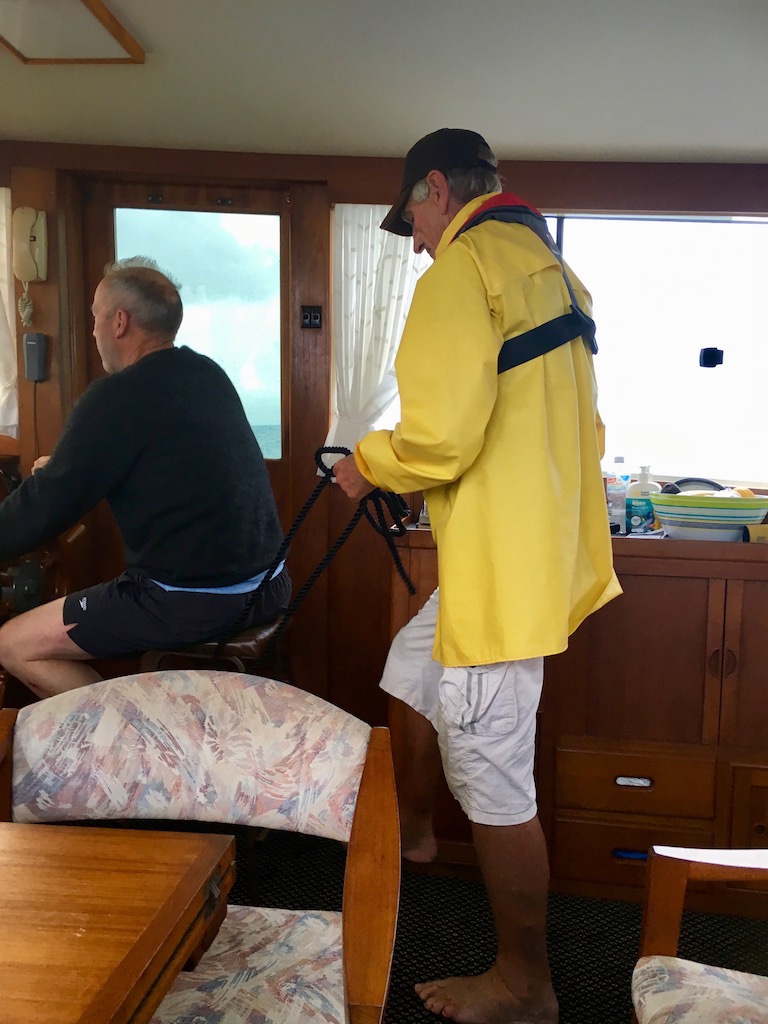
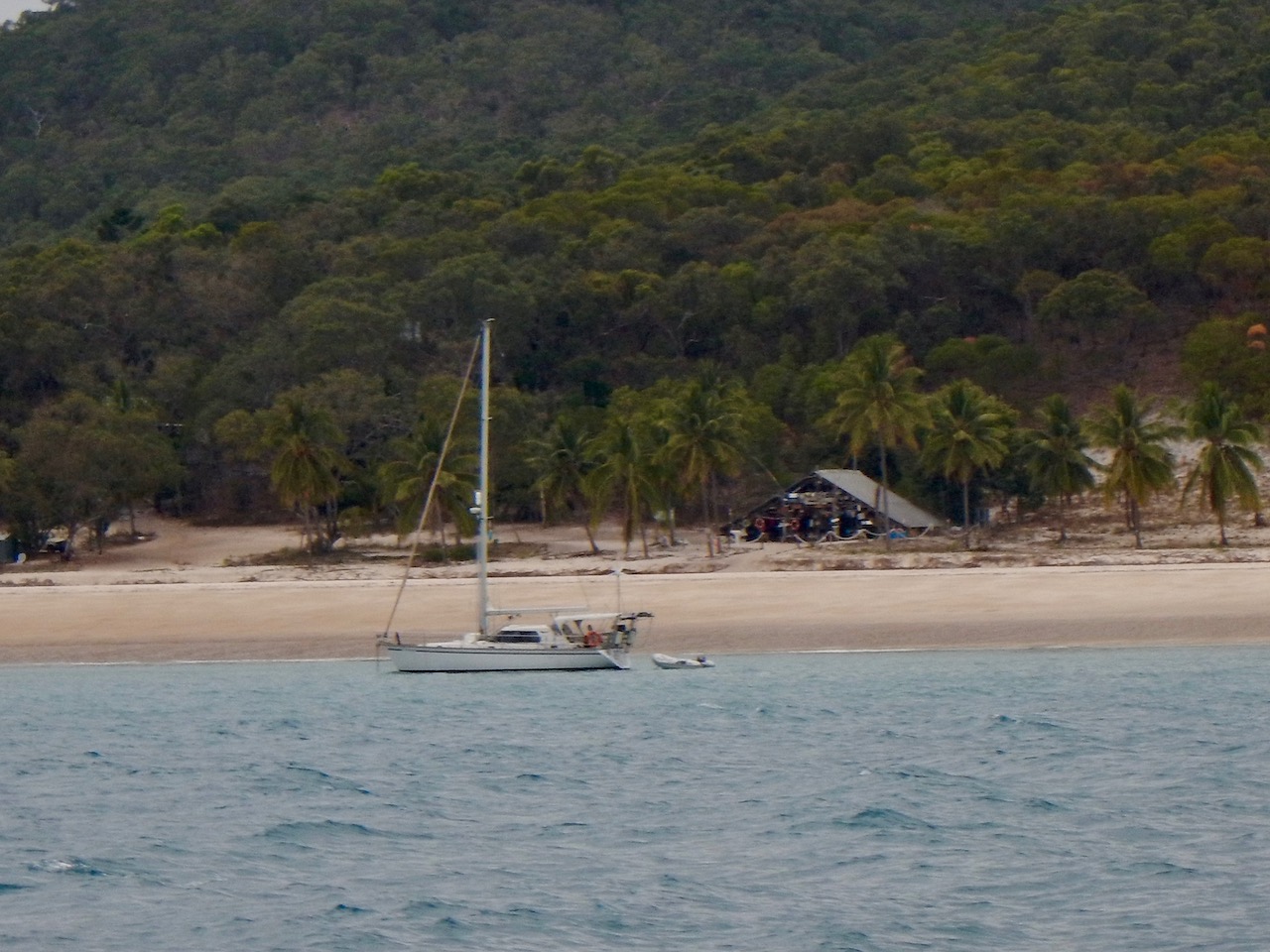
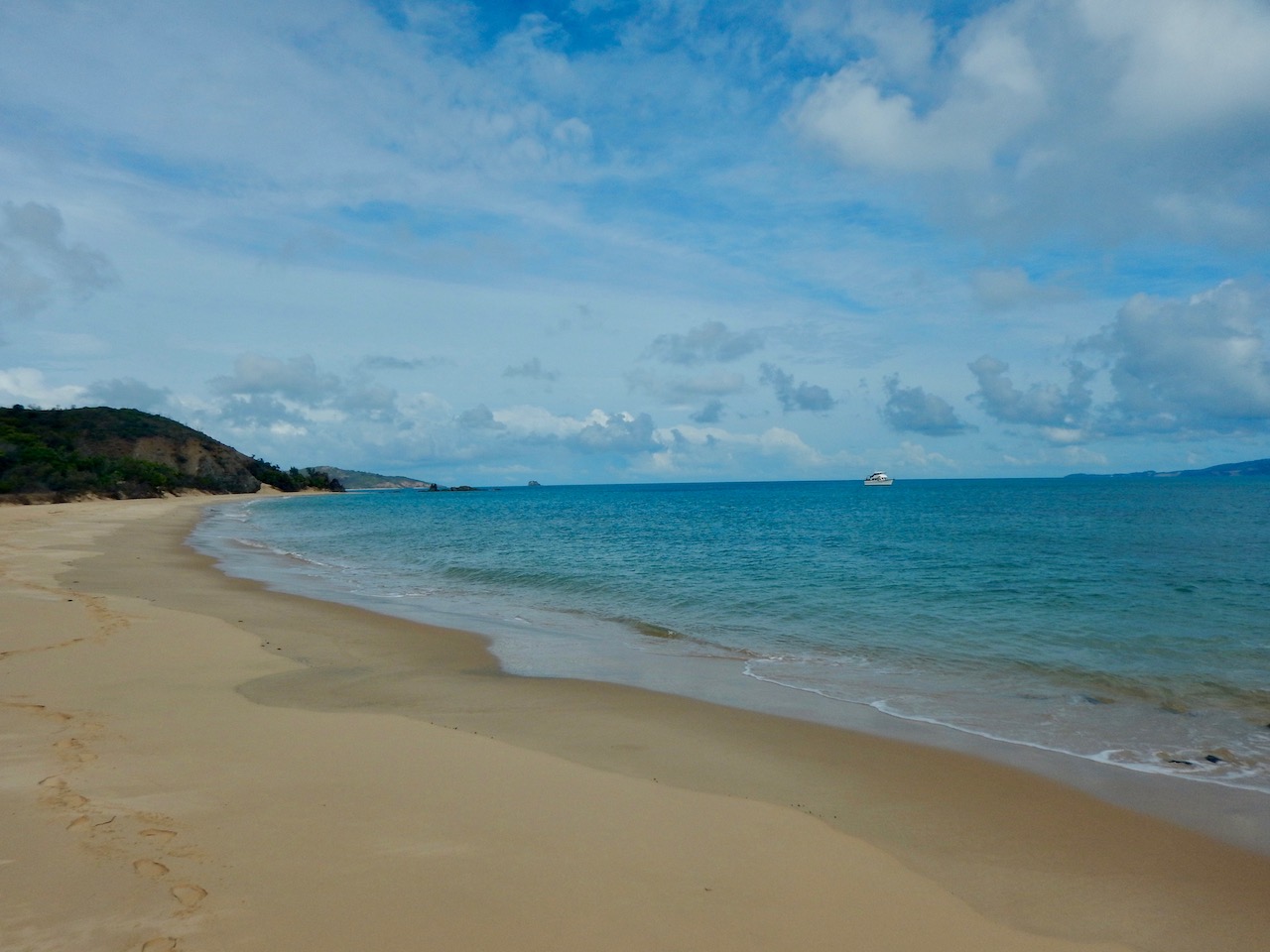
Through the Narrows to Skagway and on to Sitka

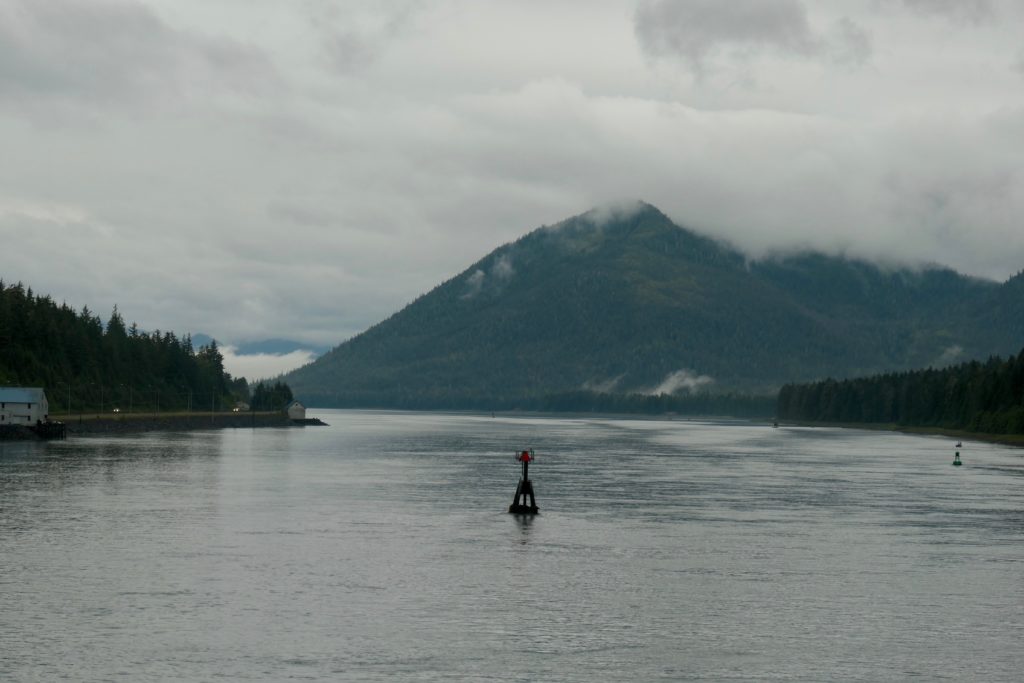
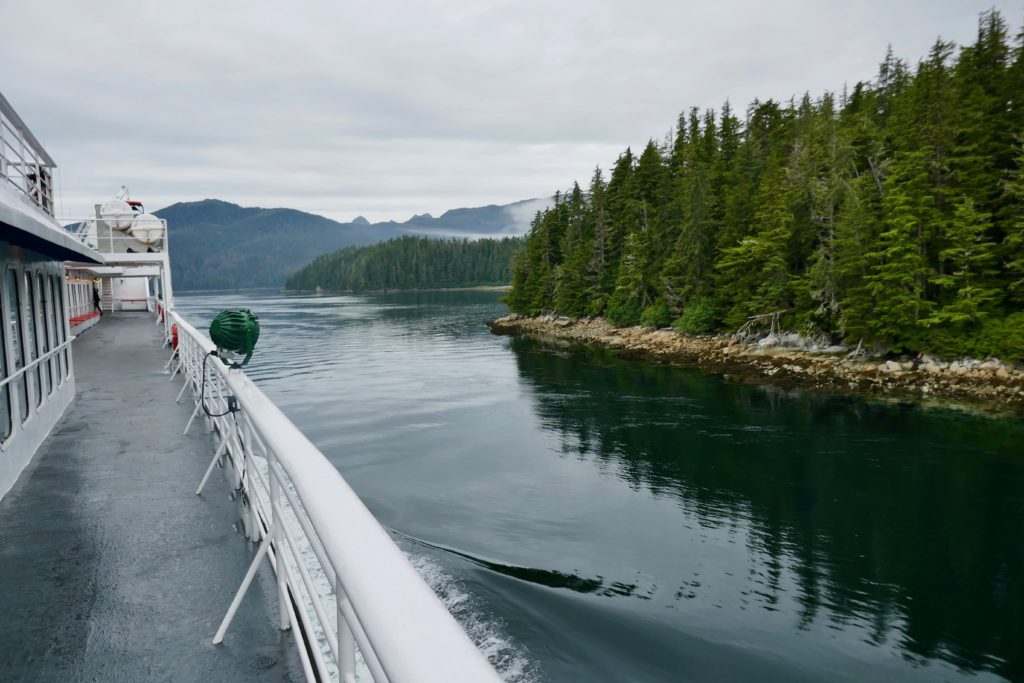
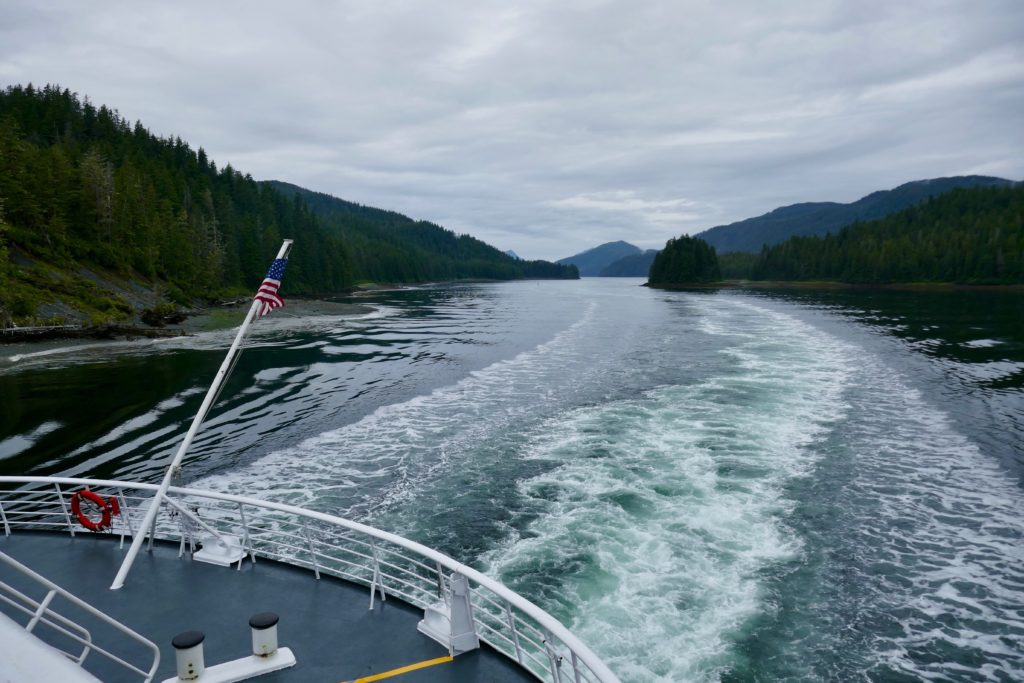
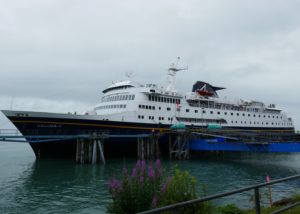
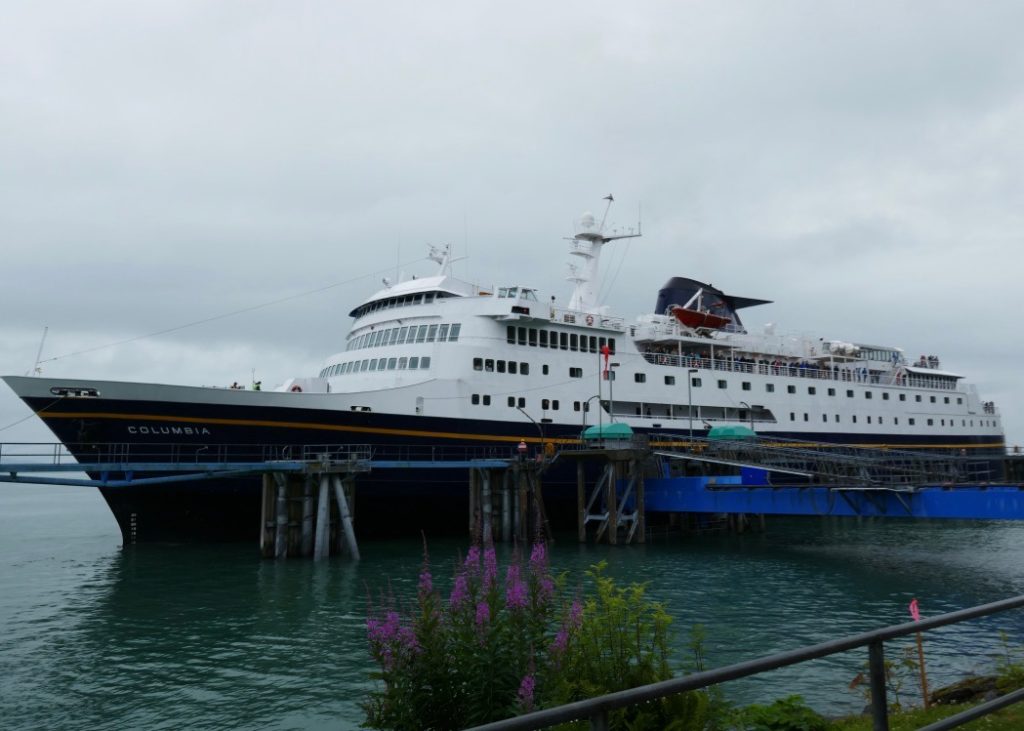
The MV Columbia is the flagship of the Alaskan Marine Highway fleet and the largest. She is 418 feet long and 85 feet wide, with a draft of 17 ½ ft. The Wrangell Narrows is a winding channel between Mitkof Island and Kupreanof Island in the Alexander Archipelago and is only 300 feet wide at it’s narrowest point – barely wide enough to accommodate the ferry. It is used by fishing boats and cruisers and does not allow for the passage of the larger cruise ships.
Known to Marine Highway officers as “The Ditch,” the waterway wends its way around islands, boulder fields, rock ledges, reefs, shoals, and mudflats for twenty-two and a half nautical miles.
It is nearly impossible to turn around and retreat once a ship is committed to the channel, regardless of fog, heavy snow, or complete darkness without moonlight.
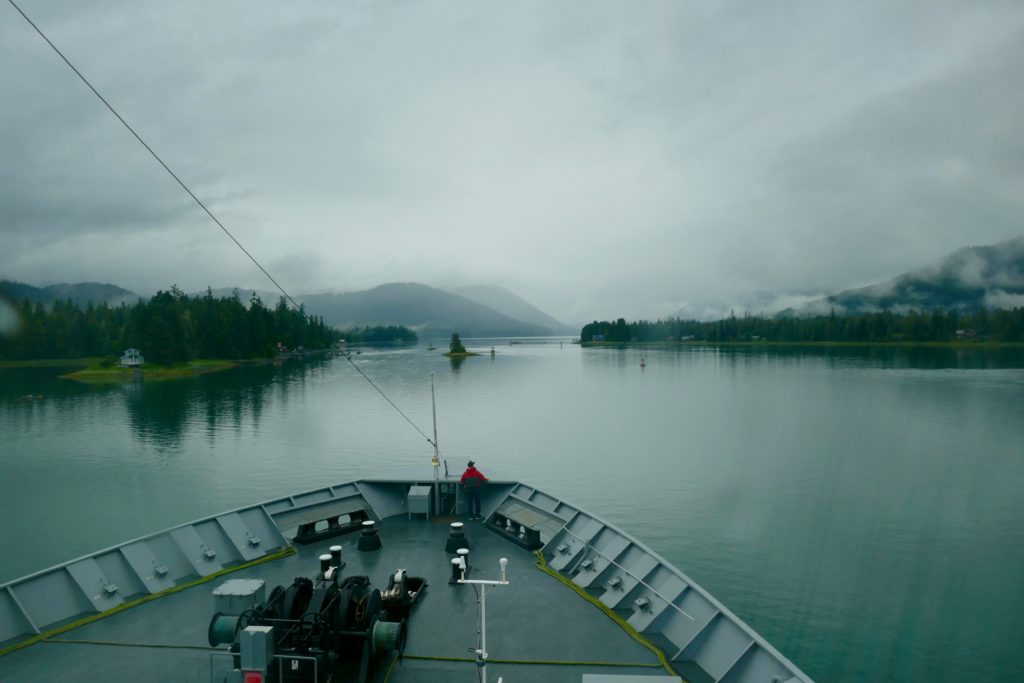
Departing Wrangell for the Narrows
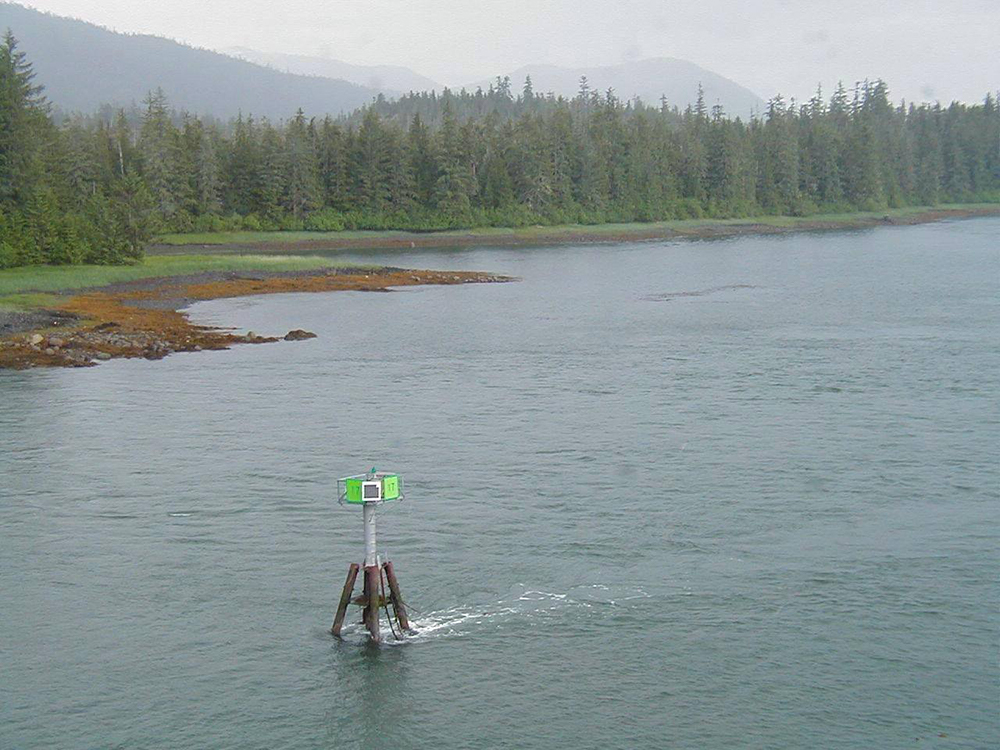
In the Narrows
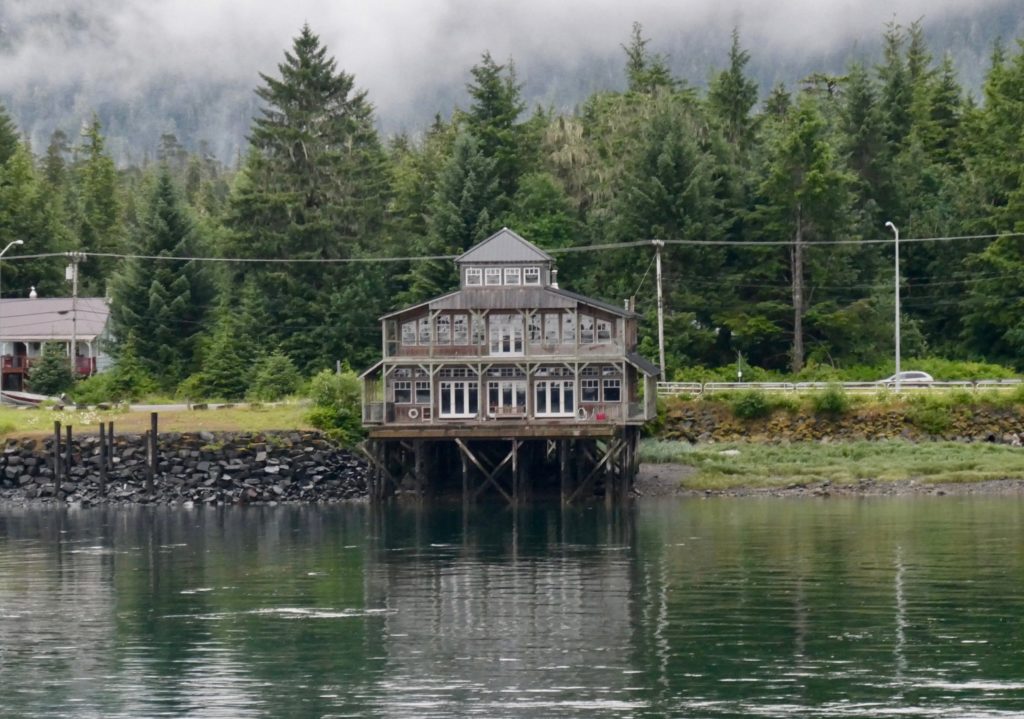
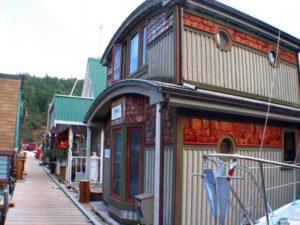
Waterside dwelling

With tides that can range from a high of 21 feet to a low of -4 feet in one day, the water rushes through the Wrangell Narrows adding to the navigational challenges. A ship must conduct its business and be out of the narrows before the water level becomes too shallow for transiting.
No wonder many a captain has heaved a sigh of relief when, in impenetrable fog so thick they are totally reliant on radar and their skill, they see the amber dock lights of Petersburg showing faintly through the murk a few feet in the distance. As one captain said: “It sure does focus the mind”.

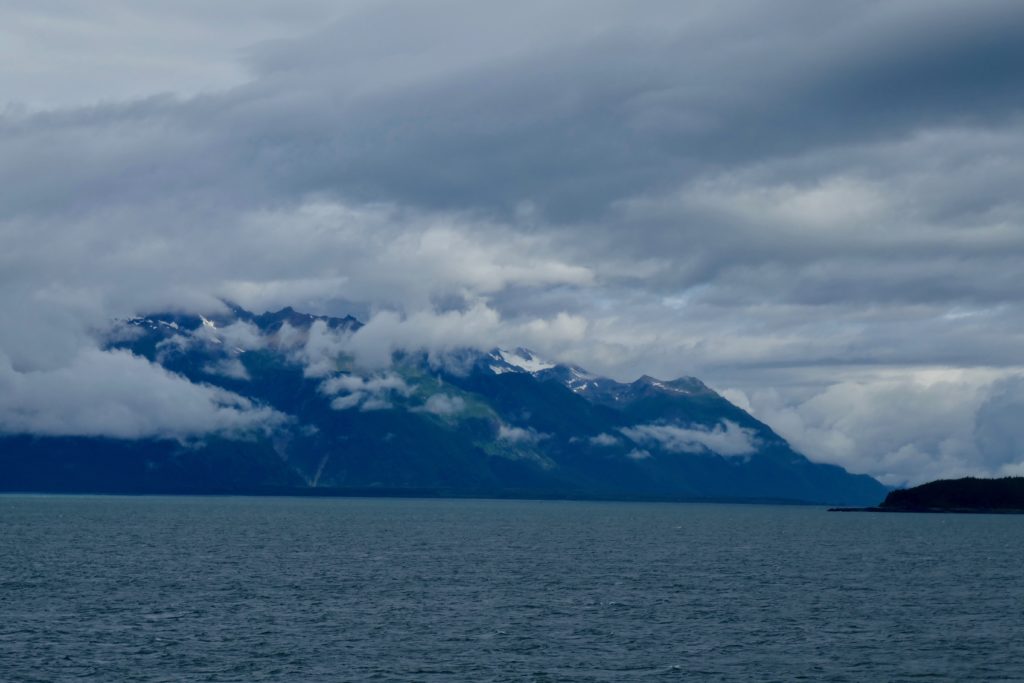
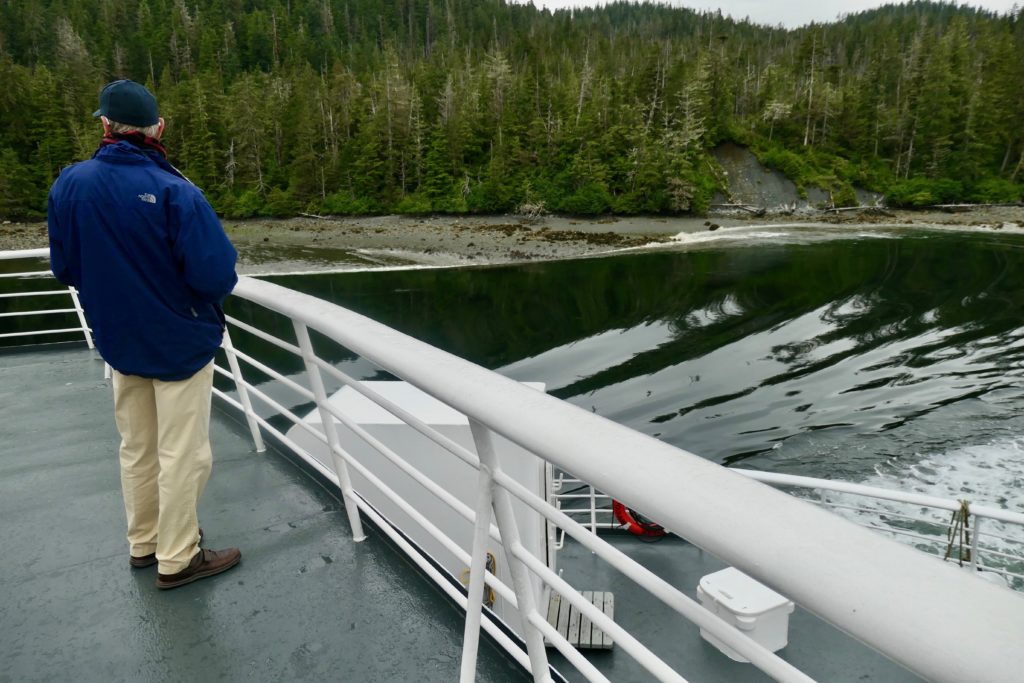
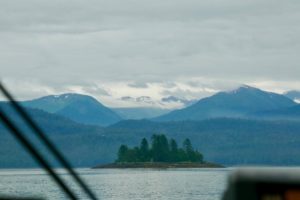
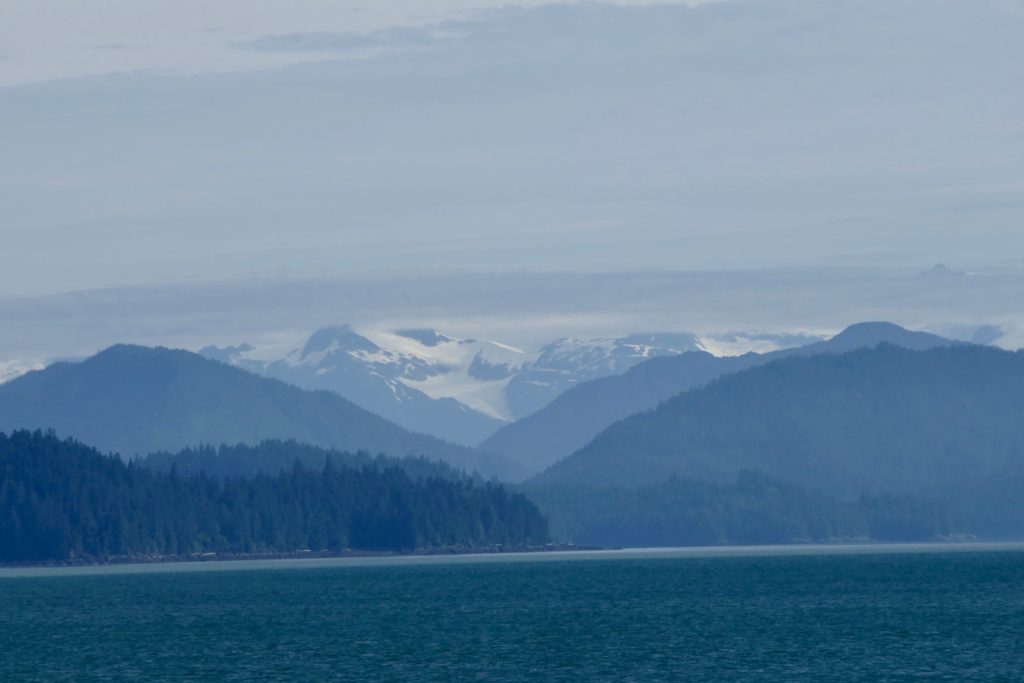
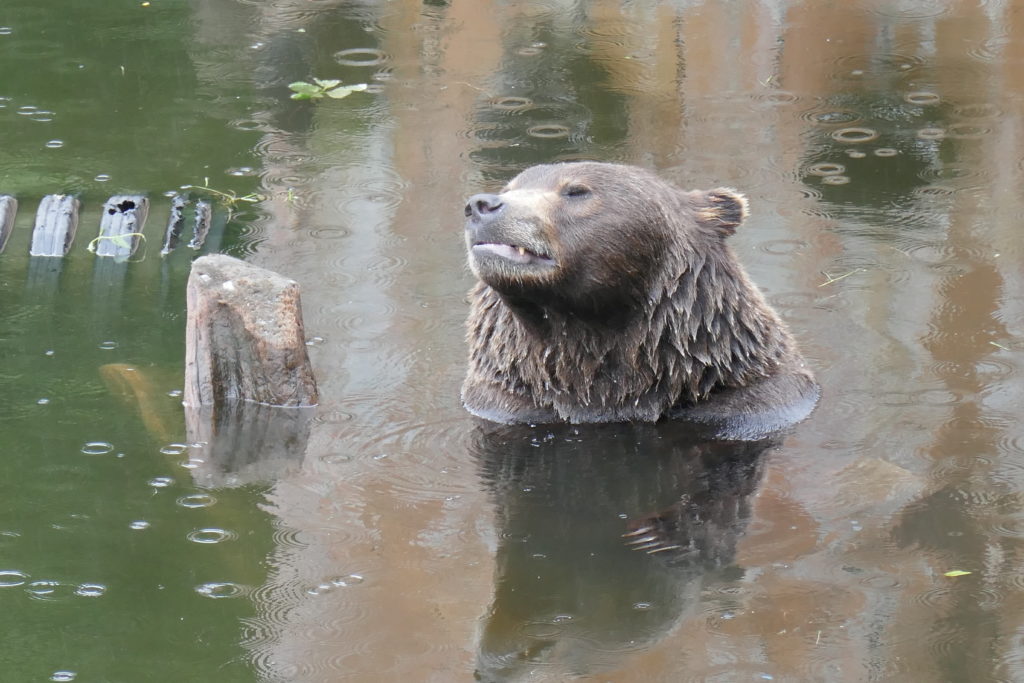
We left for Petersburg in daylight with no fog or snow in sight – just a clear run through the beautiful landscape. At times it seemed as if you could almost jump ashore the ship was so close to the land. Not that you would want to – apparently the islands are inhabited by brown bears who have wiped out the black bears, the wolves and the deer and reign supreme
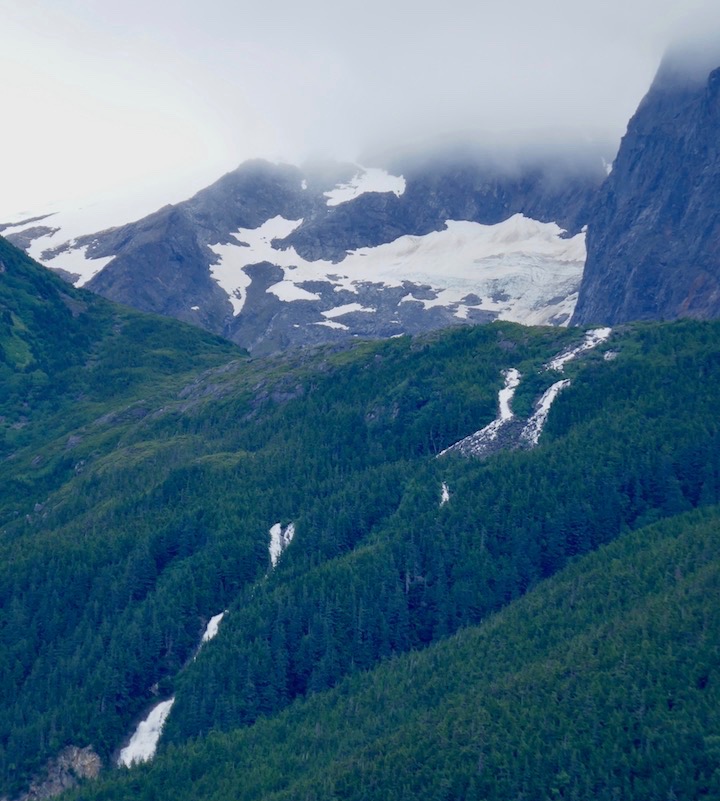
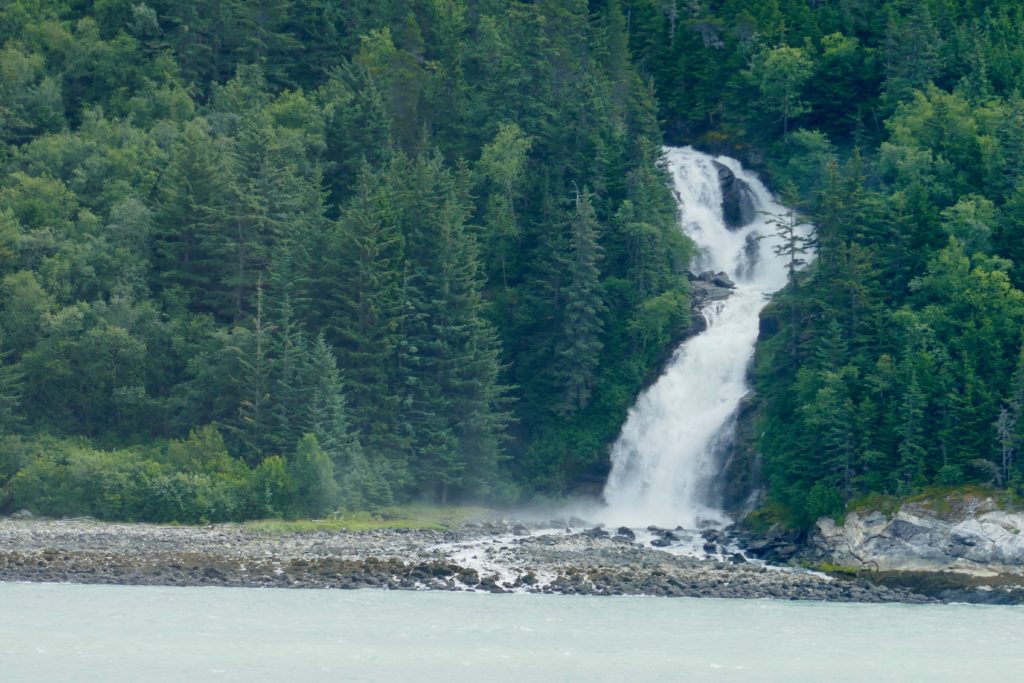
Petersburg is an island community that makes a living from the sea. In the nineteenth century, Peter Buschmann, a Norwegian immigrant, settled there, building a cannery, sawmill, docks and the early structures. The settlement was named Petersburg after him, and it flourished as a fishing port. The town attracted mostly immigrants of Scandinavian origin, thus giving Petersburg the nickname “Little Norway”. Three other canneries were built and the four have operated continuously since.

Commercial fishing is the dominant economic driver of Petersburg’s economy. The top producers harvest well over a million dollars of seafood each and every year. The main producers in Petersburg are the 58-foot limit ‘seiners’. These 58-footers harvest salmon, halibut, black cod, king, tanner crab, and herring. Many of them travel west to trawl, longline and pot cod in the western Gulf of Alaska and the Bering Sea. The fleet now boasts crew jobs that approach six figures.
There are three beautiful harbours, which attract the smaller cruise ships, private yachts and pleasure boats to town in the summer months.
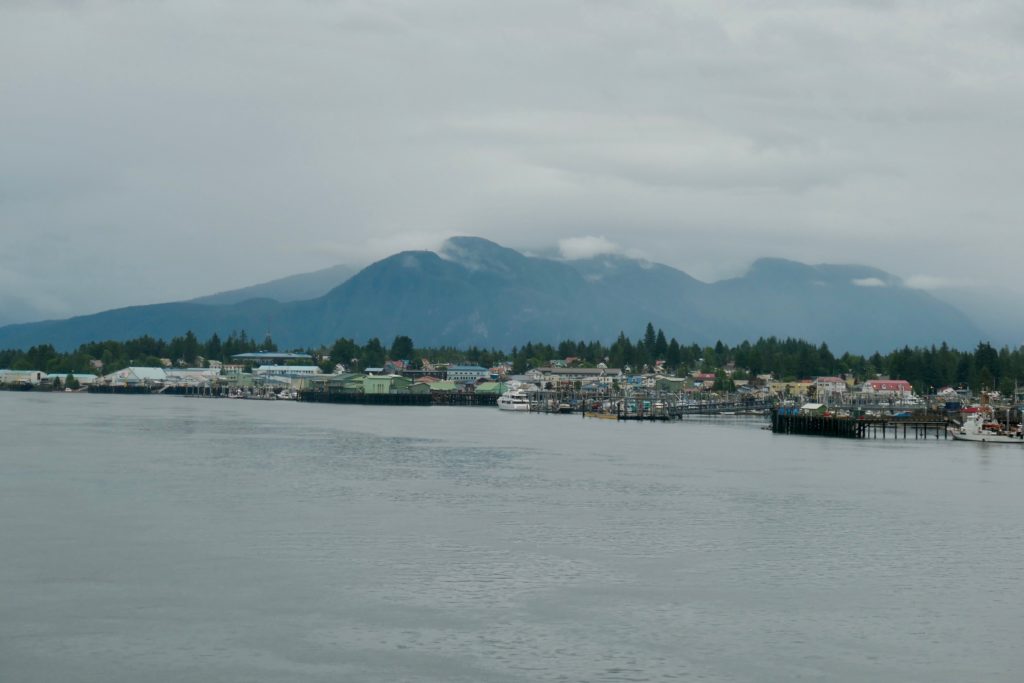
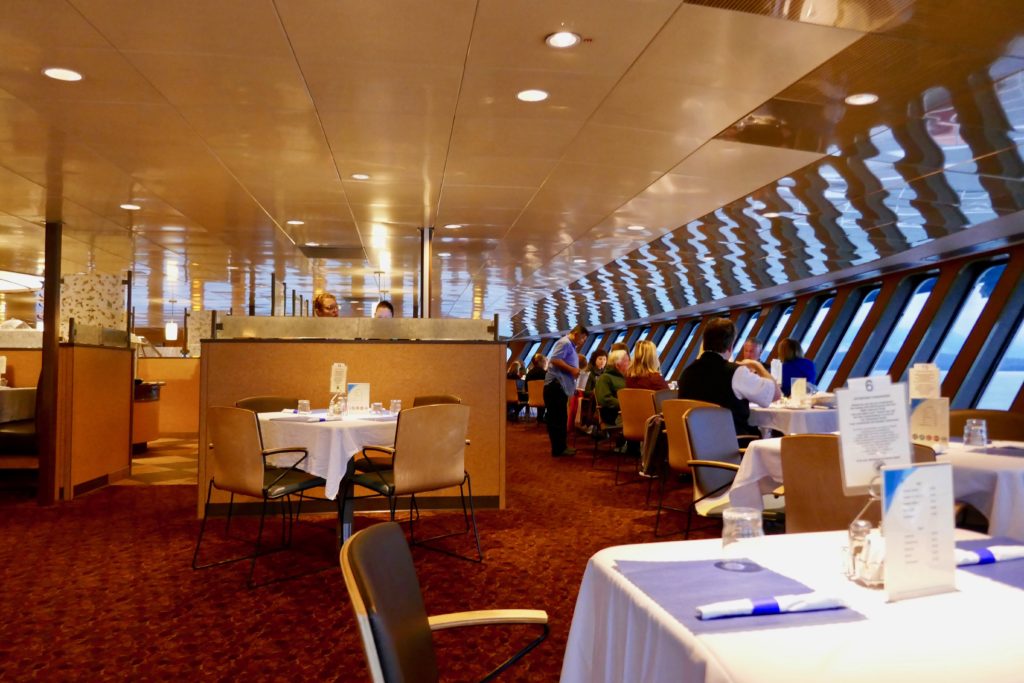
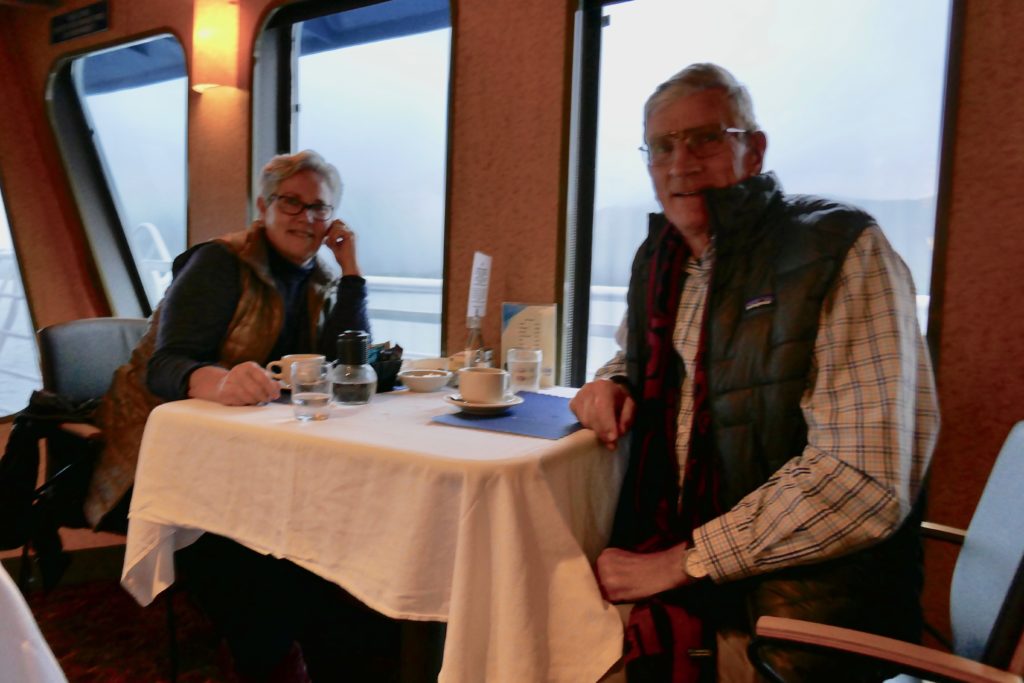
We arrived at around 7.30pm and only stayed for 45 minutes so didn’t have time to go ashore. Instead we opted to visit the dining room where we had a magnificent meal as the ship wended it’s way towards Juneau, the next stop. It arrived there at 3.15 am, by which time we were well tucked up in bed!
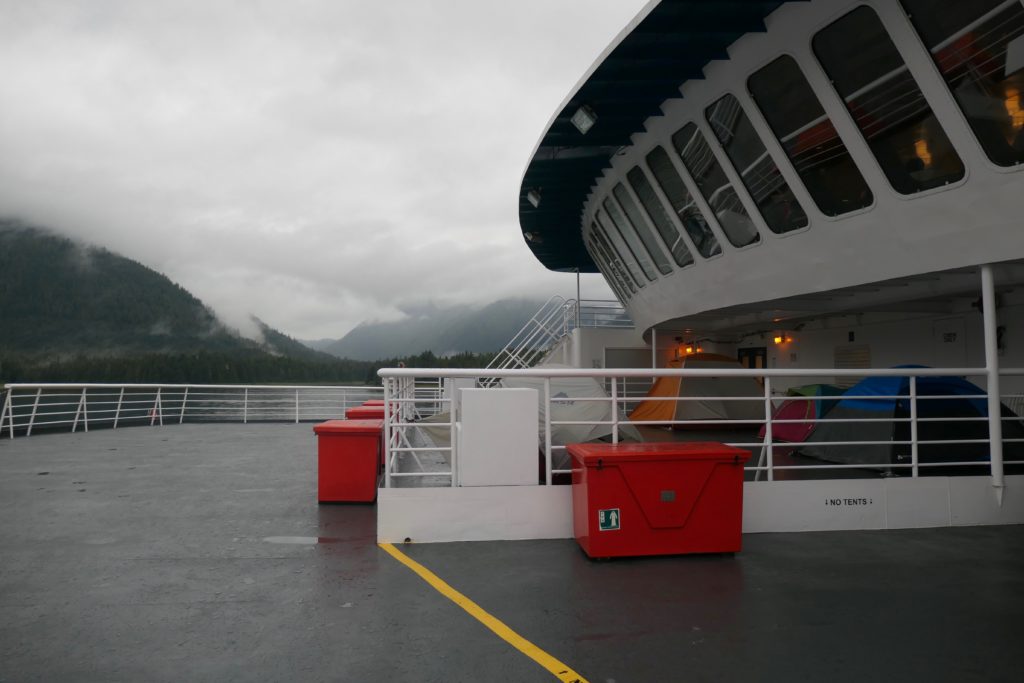
The curved dining room with an excellent view of the passing scenery
Dining out with the best view in Alaska

Our next stop was the Port of Haines, one of the most beautiful ports of the Inside Passage. Their docking facilities only allow for one large cruise ship and possibly a small ship so unlike many other ports you may visit, the town is less crowded.
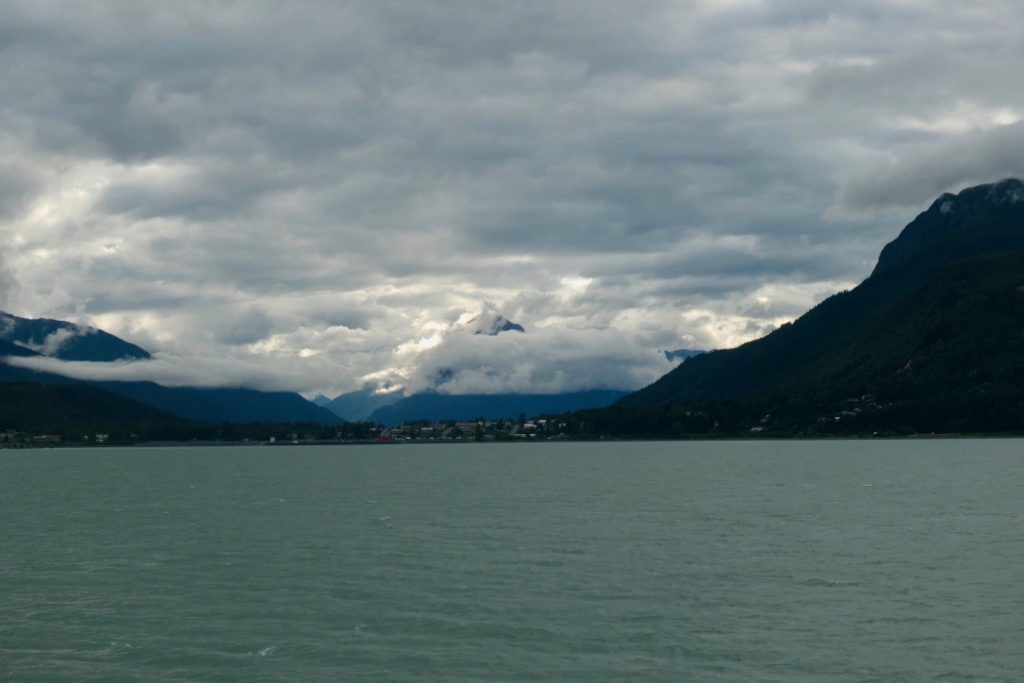
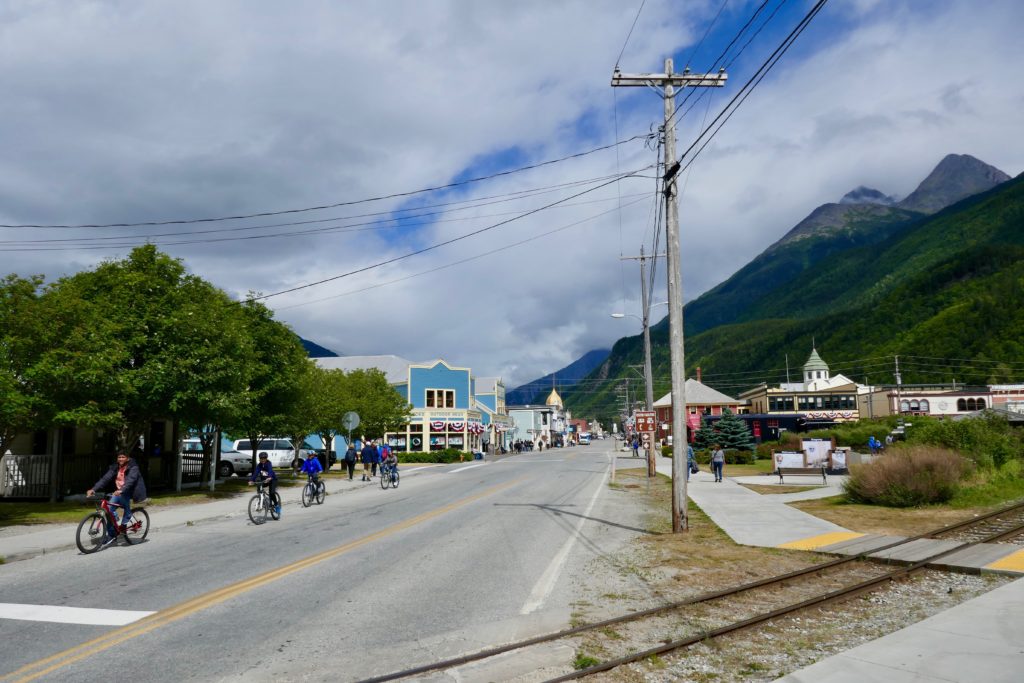
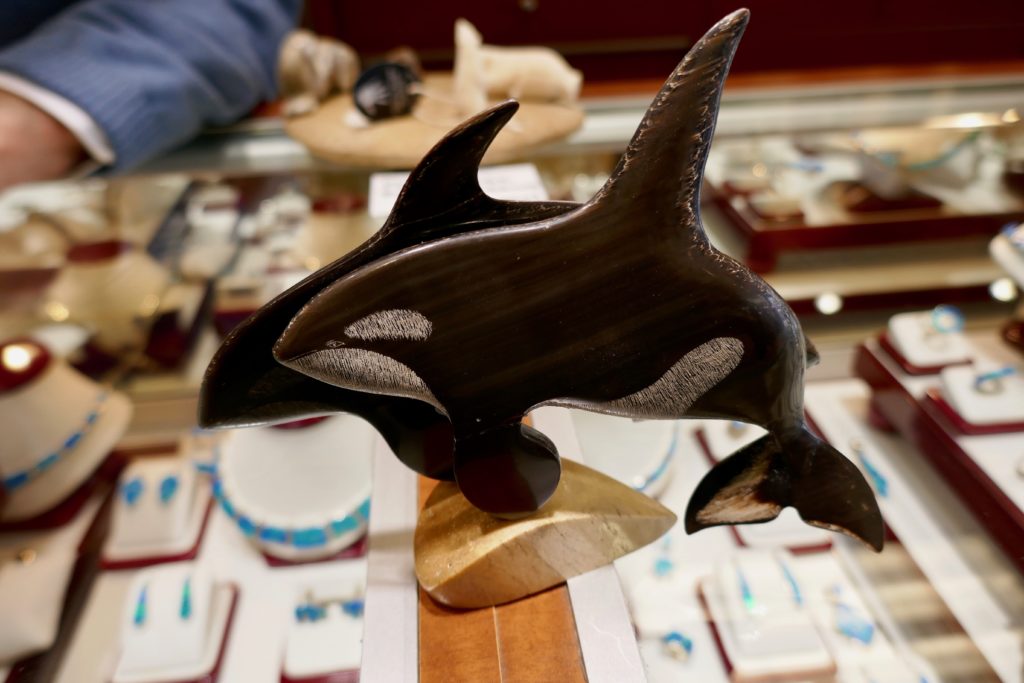
In sharp contrast to Skagway. We had enjoyed our time in Skagway in 2010 and had bought some lovely pieces from the interesting and helpful galleries, so had decided to go ashore there and have a bit more of a look. The town had changed almost beyond recognition from a shopping point of view. We later learned that the cruise companies buy up many of the shops and galleries and put in their own people and merchandise. In the winter months the people and the shops move to the Caribbean and then back again the following summer. The result is lots of diamonds and furs and artwork that is not unique and can be picked up at any of the ports. The salespeople tend to be high pressure and have little knowledge of the pieces or the artists. We found a nice pair of orcas done in baleen and bought Andrew a lovely knife for his birthday but the town was crowded and pushy and we had no desire to stay.
The Travellers!!
When we got back to the docks we saw that another two cruise ships had arrived to join the others already there.
These were there when we arrived and were joined by others

The cruise ship industry is a double-edged sword. In many cases the economic contribution brought in by the hordes of tourists is dwarfed by the disruption caused each holiday season. Unlike other visitors, cruise passengers tend to enjoy a vast array of amenities on board reducing their need to spend money ashore and when they do, it is often in facilities owned by the cruise companies. Most Alaskan towns are small and the impact of several thousand people completely overwhelms them.
Nevertheless there is a race on to build bigger docks to encourage the bigger ships and, whilst the ships are discouraged from staying overnight, the hours are being extended in most places from 10am to 10pm. The places you can go and still find the unhurried relaxed atmosphere of a true Alaskan town are fast disappearing. It’s a pity that, like Haines, some of the towns don’t put a limit on the number of ships docking at the same time and thus get the benefits without destroying what attracts people in the first place.

Our trip down to Sitka was also very interesting as we sailed through more picturesque narrows. Squeezing to only 300 feet wide in one spot and a shallow 24 feet deep it is notoriously difficult to navigate due to raging currents and whirlpools. All vessels wait until slack tide when the currents are at their slowest to start manoeuvring. The narrow passage wanders through the heavily forested steep hills of the Tongass National Forest.
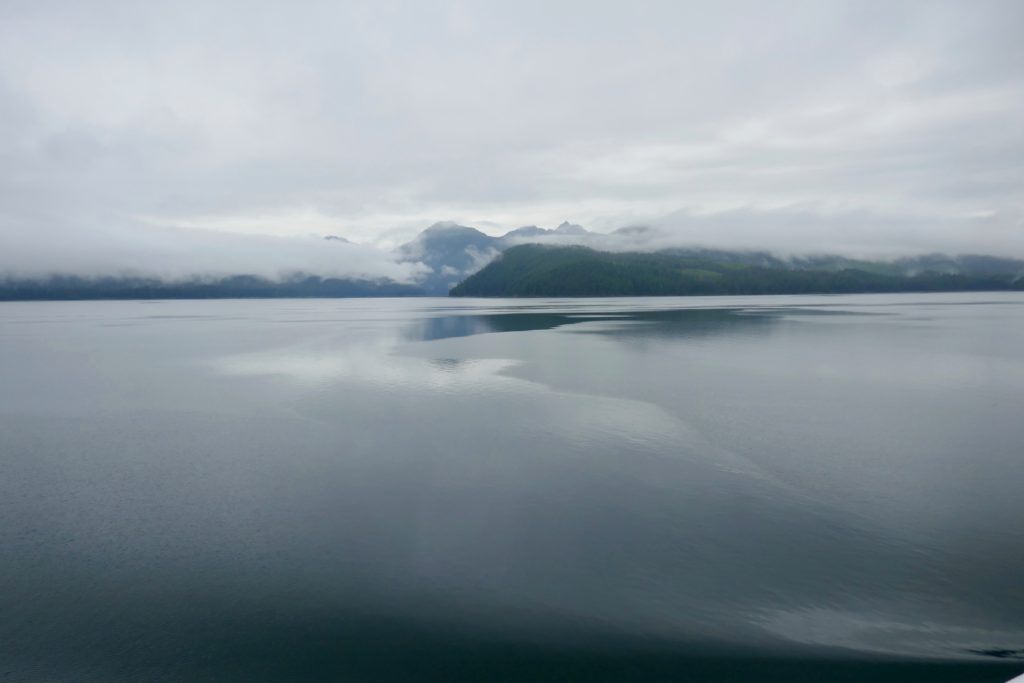
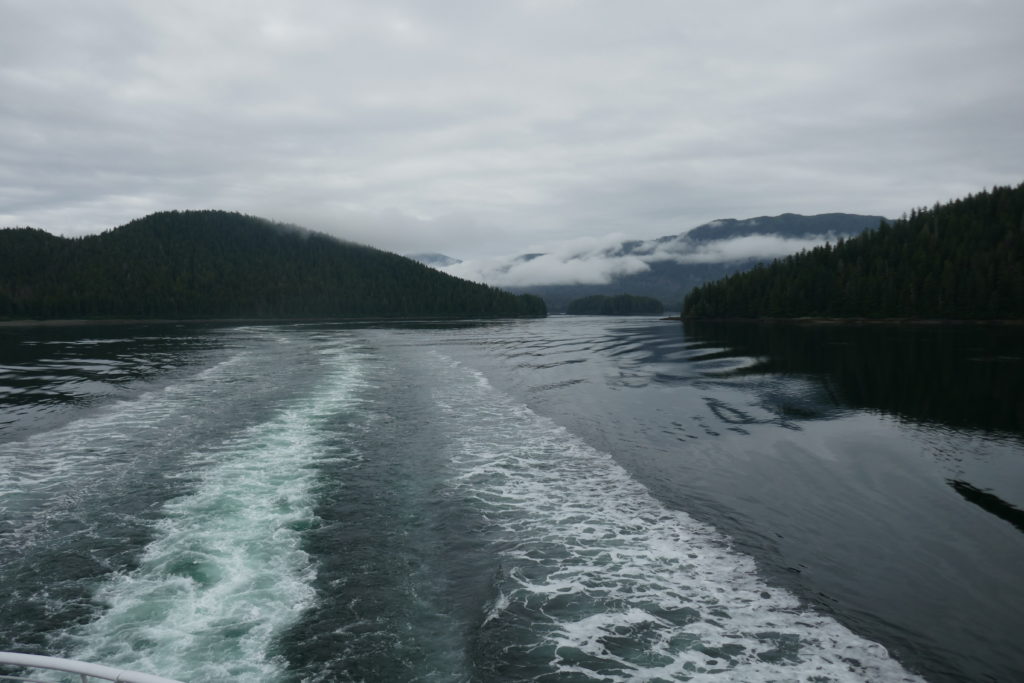
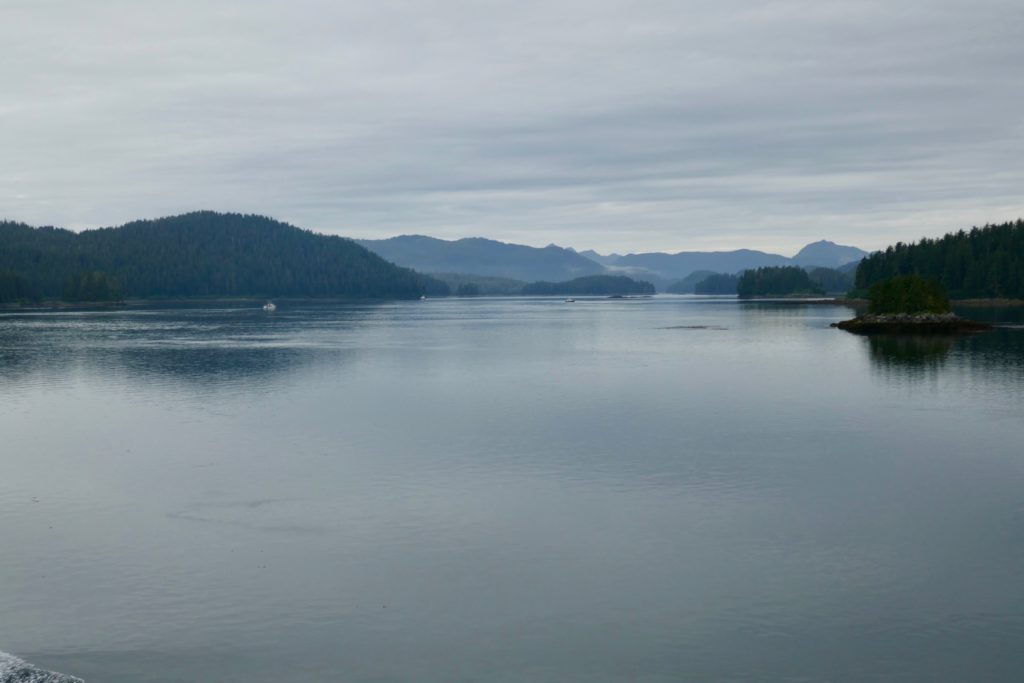
Early morning on the way to Sitka
The Narrows are well named

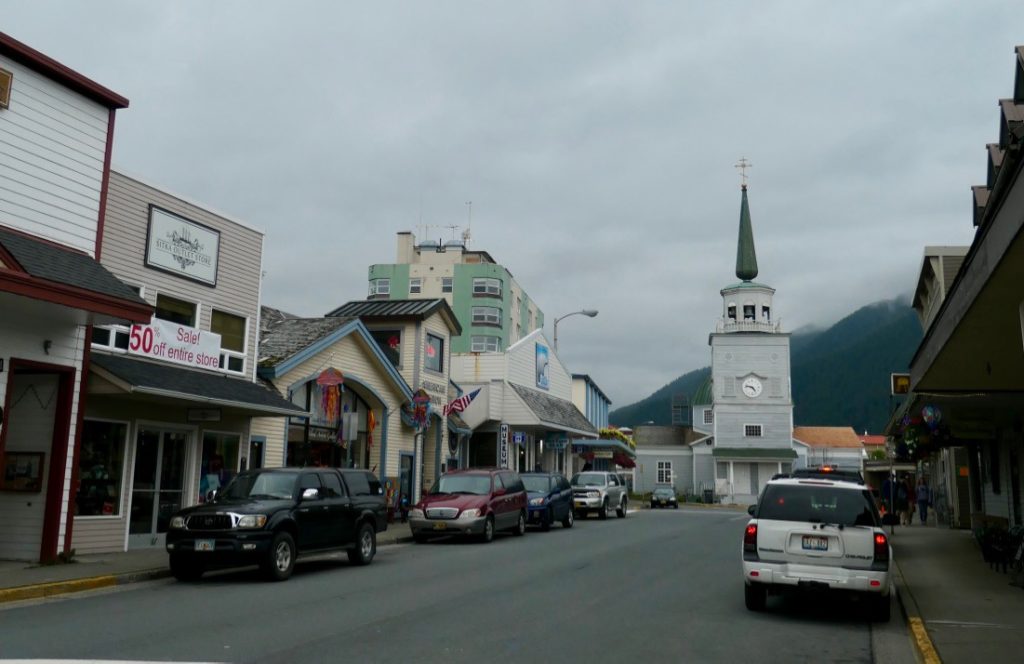
Walking the streets of Sitka, you may find it hard to believe that this quiet coastal community was once the hub of the West Coast: a center for trade, diplomacy, and the arts. When San Francisco had less than 10 residents, Sitka was home to 800 Russians, Europeans, Tlingits, and Aleuts. The oldest town on the West Coast, it was the capital of Russian America—called New Archangel—and was booming from the early 1800s through the United States’ purchase of the territory in 1867.

Sitka was our favourite stop in Alaska. We checked in to our hotel, the Super 8 (definitely budget end but clean and with good facilities), picked up a hire car from the airport and headed in to town. The streets of Sitka are relatively uncrowded and the Russian influence is quite noticeable. Here many of the gallery owners have banded together and refused to sell out to the cruise companies and the number of ships is limited so shopping is pleasant. We found some lovely pieces – some of which we bought and some we just lusted after. Our first stop was Robertson’s Gallery where we met Gay, who showed us a number of pieces by local artists. One in particular took our fancy. It was a brown bear carved in soapstone and was one of the nicest we had seen. Gay gave us a lot of information about the local galleries who had held out and refused offers to sell and we worked our way down the street visiting them. We found a lovely copper necklace crafted by one of the local artists, which we bought for Christine’s birthday and some beautiful pieces in whalebone. As there was some question about getting whalebone back into Australia we bypassed them and returned to our bear.
The bear was sculpted by Dale Hanson, an accomplished sculptor, carver and artist, who has certainly led a life of adventure. He is a black belt martial artist, writes literature and poetry, parachutes, flies airplanes and gliders, does aerobatics and is a Special Forces underwater diver. He is also a member of MENSA.

During the Vietnam War, Dale was a highly decorated Green Beret who served three years as a commando in the famous SOG program, whose missions involved extremely dangerous raids far behind enemy lines. On one of these raids, Dale had his right hand mangled by a burst of machine gun fire earning him a purple heart . It is ironic that he became a sculptor, a field in which one’s hands are so critical. Most of his sculptures are of wildlife and can be found in collections all over the world

He lives in Sitka and has his studio there. He has a reputation for being somewhat reclusive so our request to meet him and look over his studio was doubtfully received by Gay. To all our surprise he agreed and asked us to come around the following evening. We finalised our purchase of the bear, organised it’s shipping and headed for the docks for dinner on the waterfront. A table overlooking the water, a gin and a whiskey, two seafood jambalayas and a couple of desserts saw us well satisfied with our day.
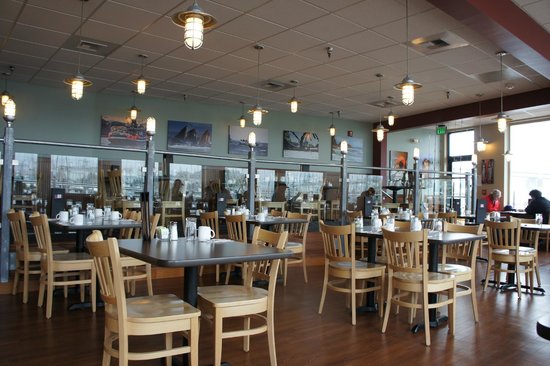
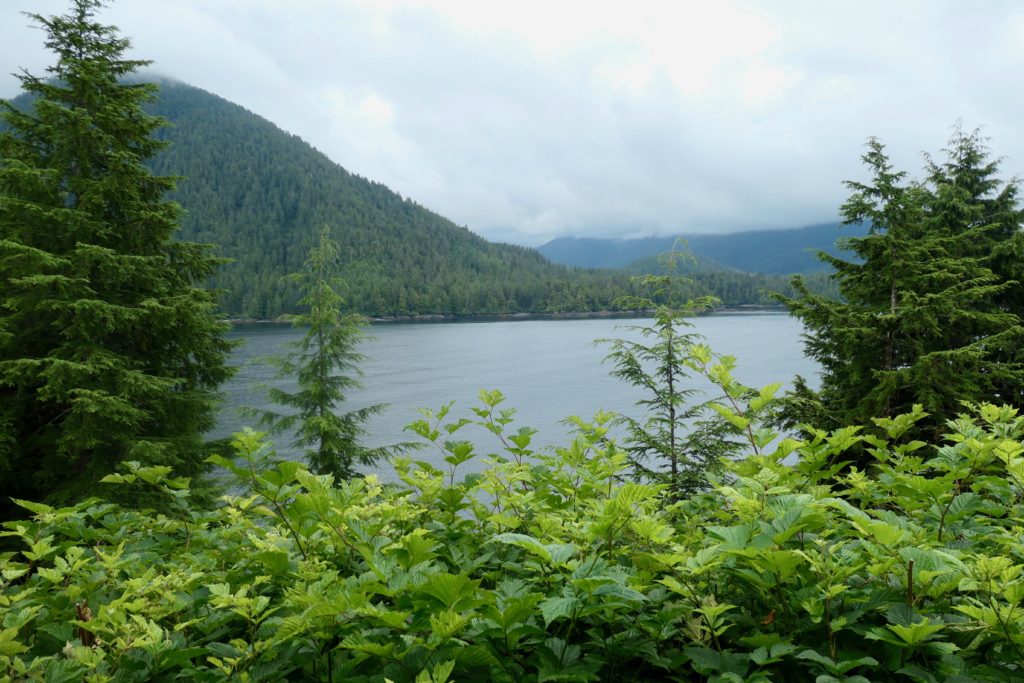
The next day we had decided to go to the Fortress of the Bears, where they rescue bear cubs whose mothers have been killed. It was not well marked and we were busy looking at the scenery so overshot the mark and ended up in a parking area for hiking through the National Parks. The paths looked inviting and we were contemplating going for a bit of a walk when a ute pulled up and one of the locals got out with his dog to take him for a walk. We couldn’t help notice that he was wearing a pistol in a shoulder holster and when we queried him he told us that there was bear scat everywhere and there had been lots of bear sightings. He regularly walked this area and had had several encounters with bears. He hadn’t had to shoot one but had come close. We decided to go back to the Fortress of the Bears and forgo the walk.
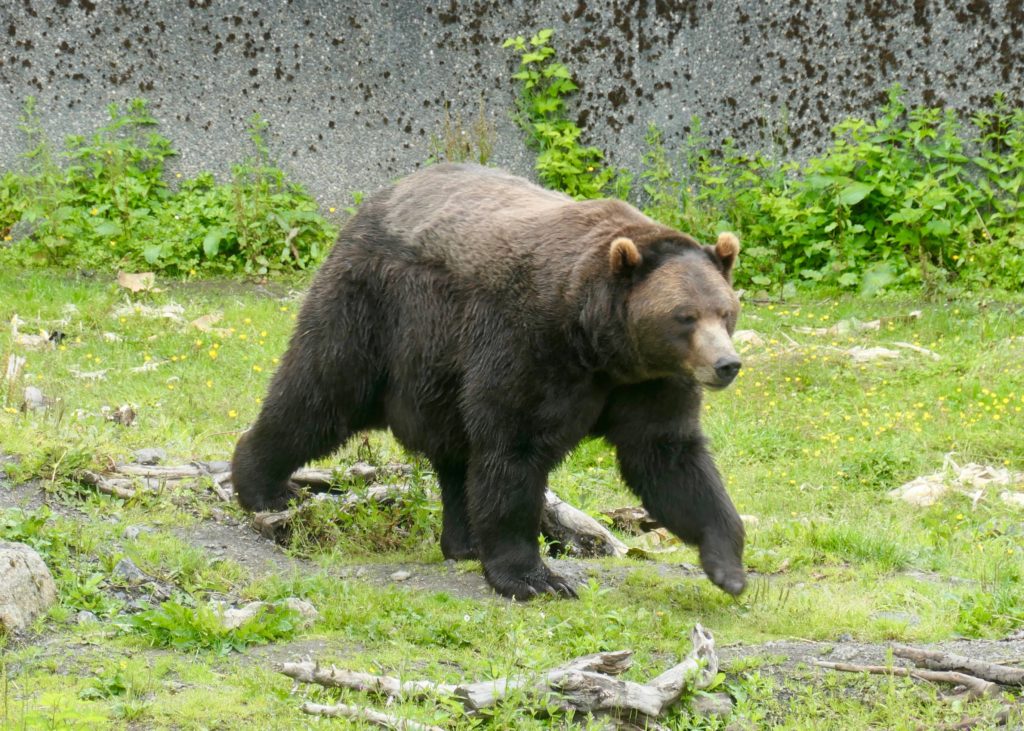
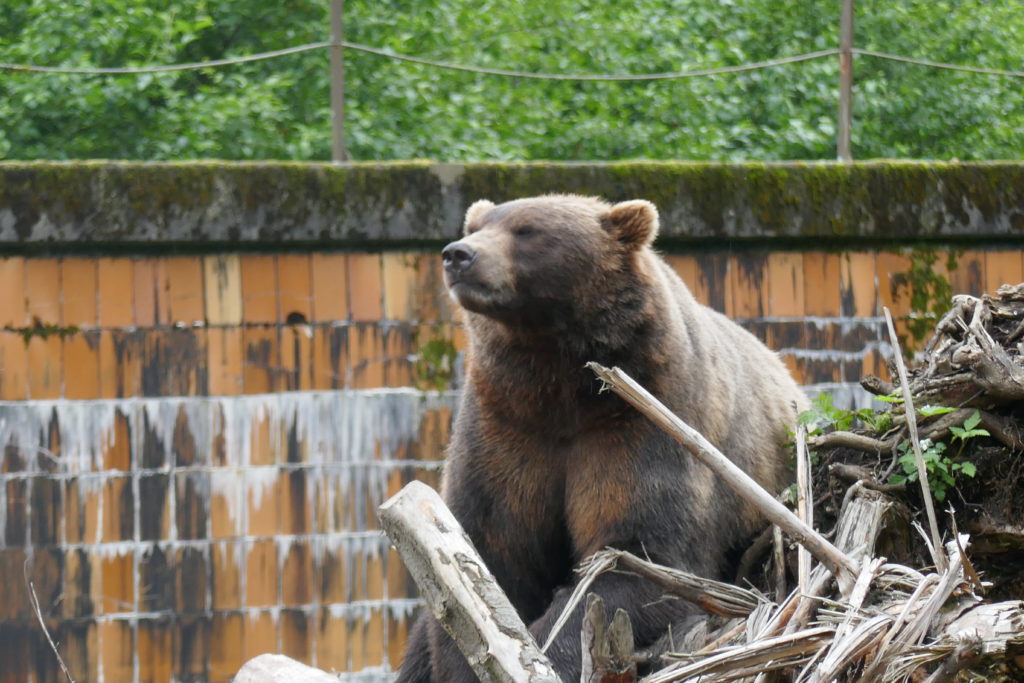
Whilst the theory behind the rescuing of the cubs sounds good, in practise it leads to a rather depressing result. It is customary when a mother is killed for the rangers to shoot the cubs rather than leaving them to the mercy of the elements and other bears. Once a bear cub has been taken into captivity it cannot be released back into the wild and has to be kept in captivity for the remainder of it’s life. There is a limited demand from zoos and often the area they are kept in is small. The bears at the Fortress of the Bears were in a much larger area but there was little for them to do and they could not get away from the viewing public. They displayed all the signs of bored animals – rocking and walking to and fro. Whilst the volunteers were obviously passionate about what they were doing we left feeling quite depressed.
Rain was threatening and we had heard good things about the Sheldon Jackson Museum so decided to pay it a visit. It is housed in an interesting octagonal building and is listed on the National Register of Historic Sites. It was constructed in 1895 and is the oldest concrete building in the state.

The collection is extensive and includes items from Eskimo, Aleut, Athabascan, and Northwest Coast cultures. Masks, carvings, tools, and boats from all the cultures are exhibited here; highlights include an Aleut baidarka (skin kayak) and Tlingit dugout canoe. In the center of the gallery are drawers that contain artifacts organized by category (rather than culture) where you can compare Tlingit and Eskimo tools, children’s toys, and hunting and fishing tools. Because the items were collected at the turn of the century, you can trace the impact of European materials on Native crafts.
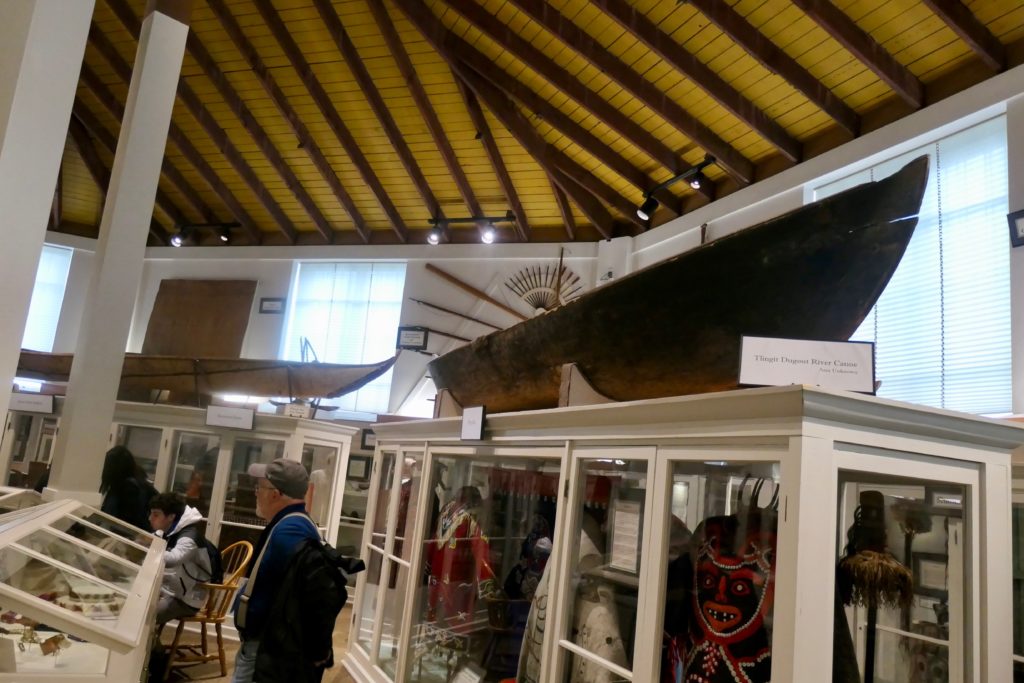
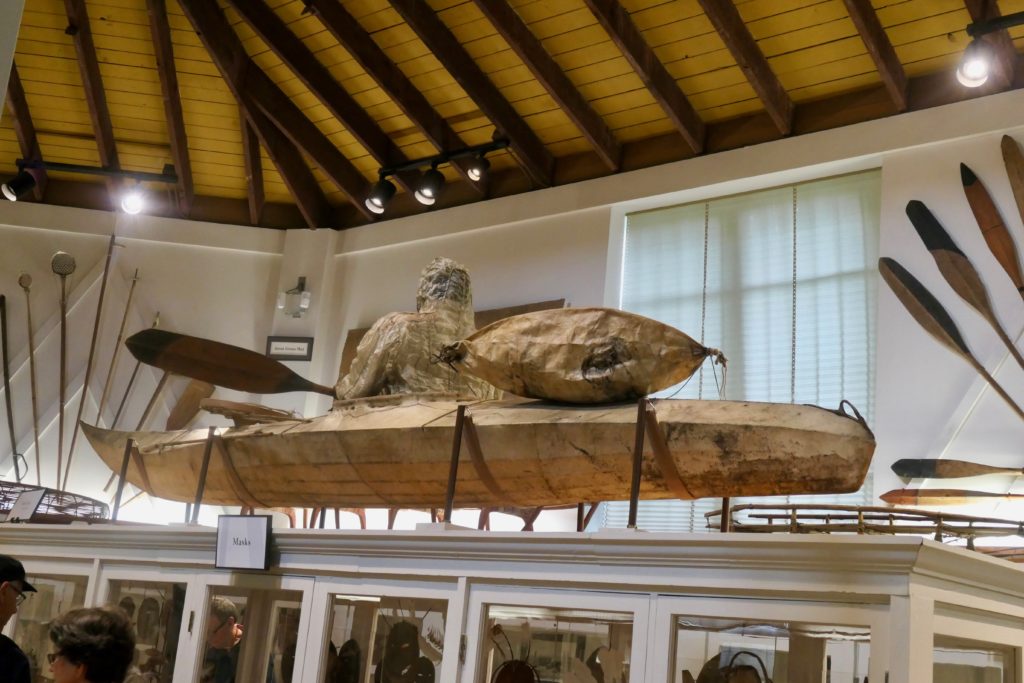
What was going to be a relatively short visit turned into hours and we only left because we had our appointment with Dale at 5pm.

That too was a short visit that turned into hours. He was a charming host, both interesting and interested. He had fought with Australians during the Vietnam war and had a great admiration for them. Our conversation ranged through the war, the military and into politics and Australia in general, his life after leaving the army and our travels through Alaska. We then went into his gallery where he had his latest works, mainly bronzes with some stone and wood.

He explained his process when approaching a new work, how he did a template then discussed it with a forest ranger, a zoologist and a kinesiologist to make sure he has it absolutely correct before casting or sculpting the piece. If he doesn’t, he explained, people write to him and tell him what he has wrong. One of the bronzes he had, which was lovely, was of a timber wolf at rest. He rather dejectedly told us that pieces like this were hard to sell as people wanted their wolves snarling and their bears attacking! He showed us some of his poetry – he has published several books – and we finally bade our farewells and left. It had been a most enjoyable visit.

We left Dale just before 8 o’clock and hastened to the Channel Club for dinner. It came highly recommended and when we got there we could see why. Located a few kilometres out of town it overlooks the water and has a varied menu of seafood and steak. It was packed but they managed to find us a seat and we had a couple of very good steaks washed down with red wine. They offer a free pick up and set down for those who want to indulge, which could prove very handy if you were after a night out on the town.
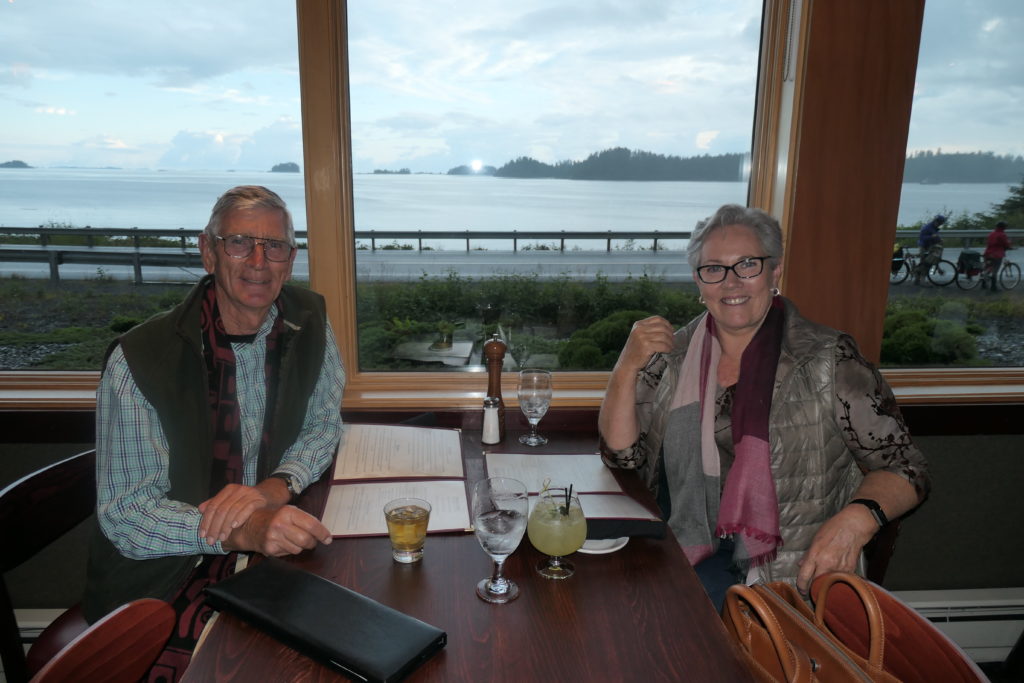
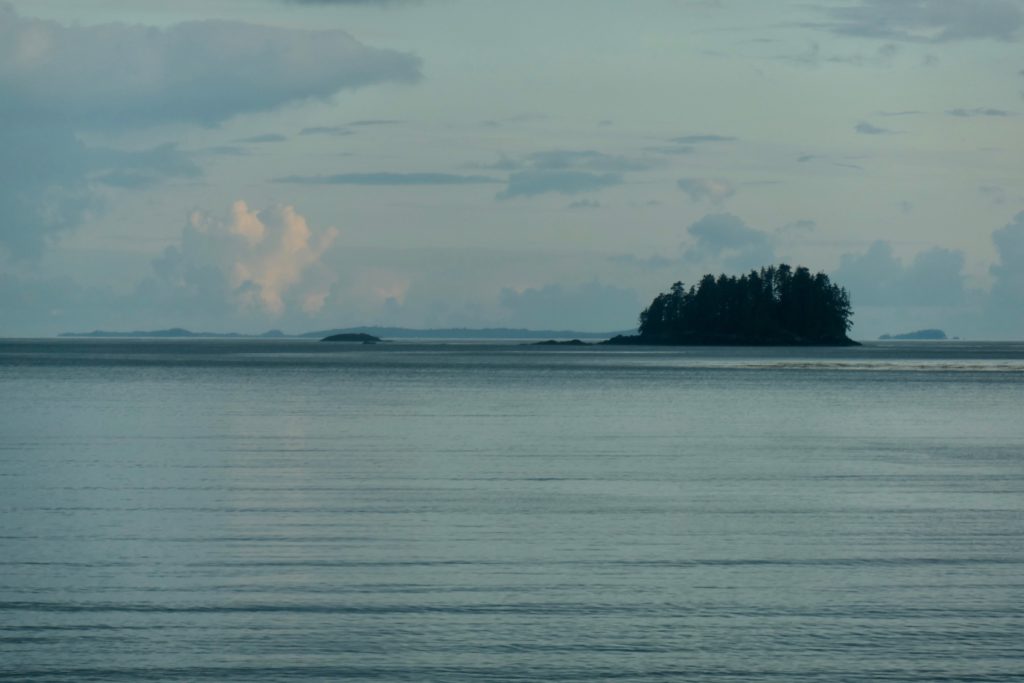
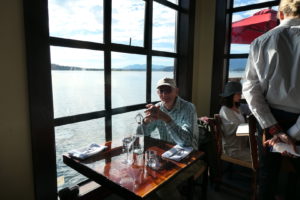
View out the window

A slow start the next morning and then off to the Raptor Center. Here they take in and tend to all injured raptors and either release them or rehouse them. We started off with a talk about the work they do and were introduced to a juvenile bald eagle, who fixed me with a very stern look when I took out my camera to photograph him.
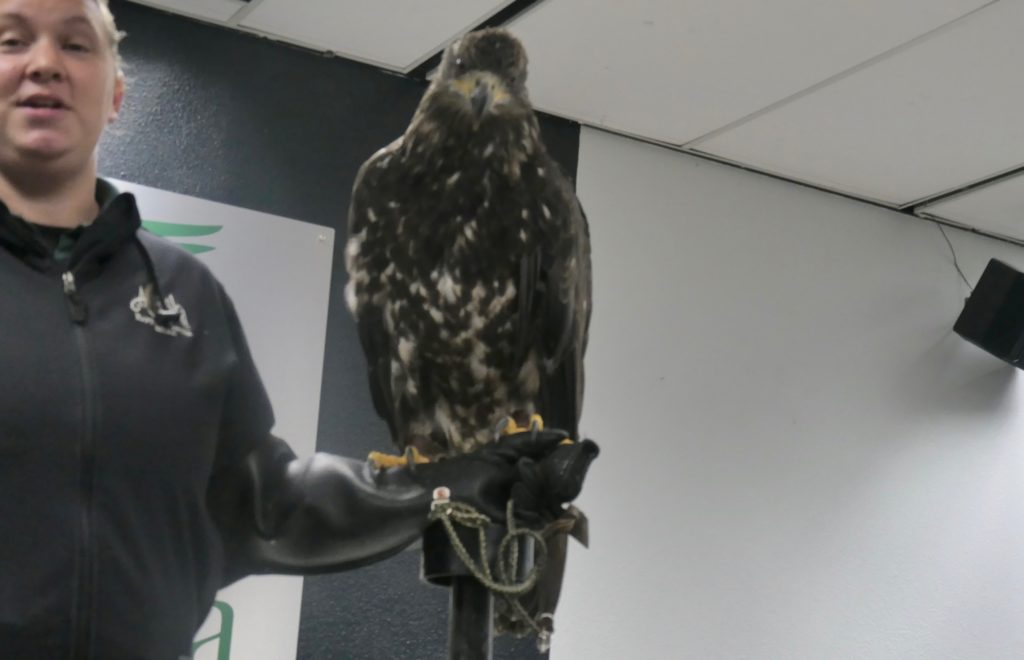
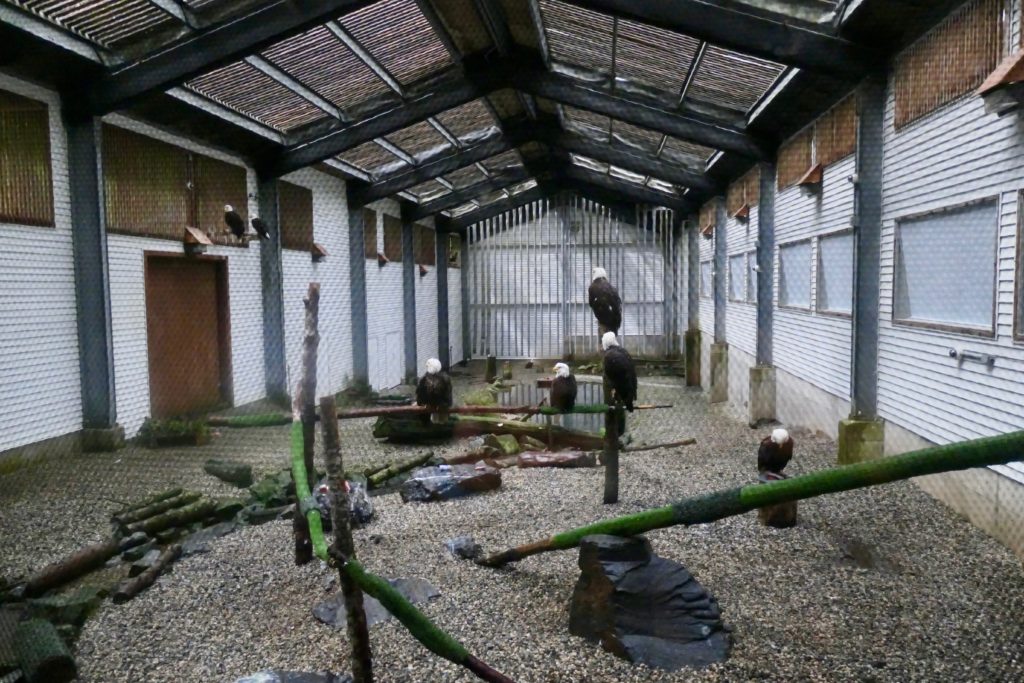
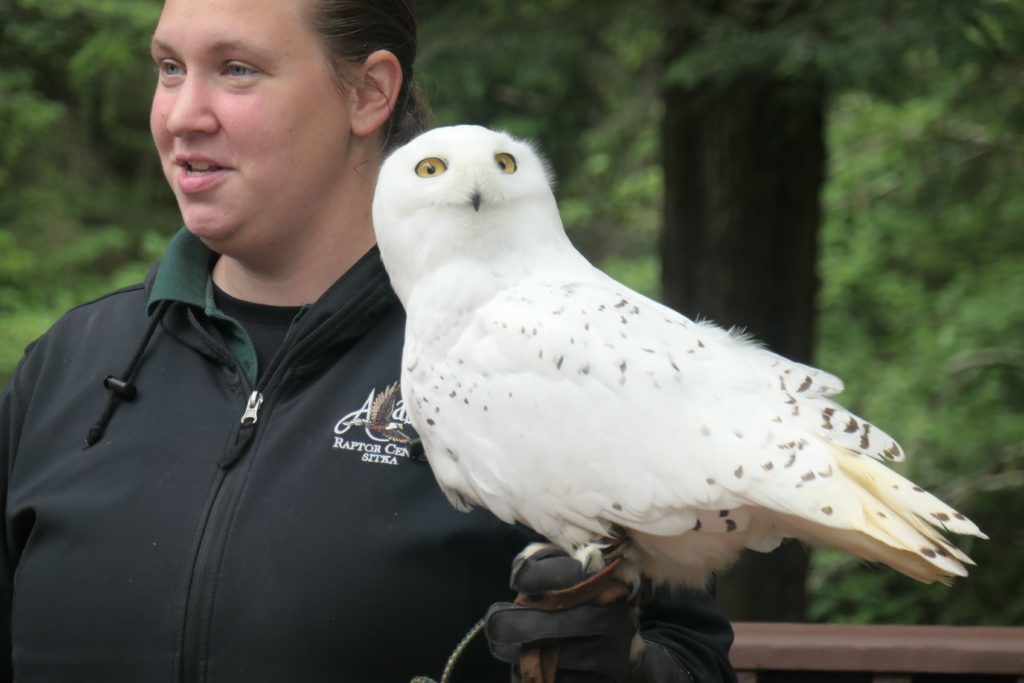
Unlike the Fortress of the Bears this was a most inspiring place with obviously dedicated staff and volunteers. We were taken first to the flight hall where the recovering birds are taught to fly again. The process is so simple but so effective. Raptors hate to walk on the ground so they are first placed on the ground at the bottom of a slope and their food about a metre off the ground half way up the hall. As they regain their ability to fly they move to higher and higher perches until they are flying freely. Then they are scheduled for release. Those who are too badly damaged to release are kept and become ambassadors for the breed going to schools to educate the young about raptors.
We had lunch and a local beer at the Sitka Inn and set out to visit some more galleries and buy a birthday present for Frankie. The Rose Gallery was a stand out with some marvelous bronzes by a husband and wife team, Jacques and Mary Regat, which we would have loved but didn’t have enough left in our budget having already bought two sculptures, a print by Ray Troll and a painting by Mary Deveau.
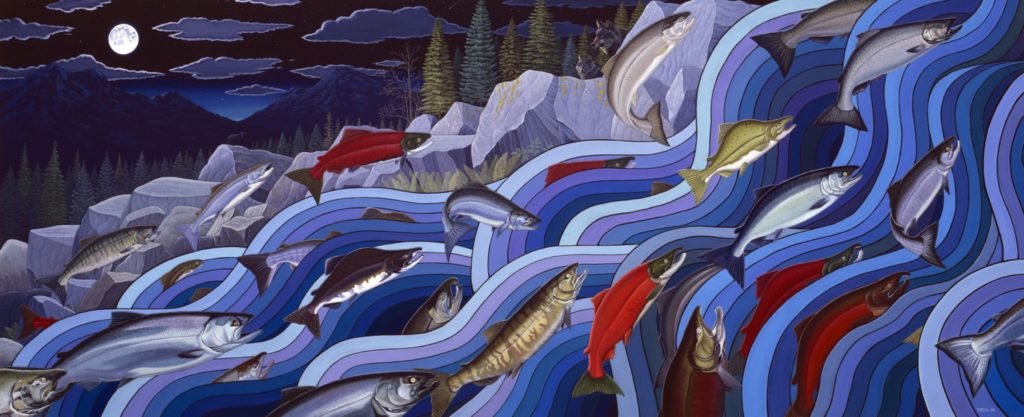
Midnight salmon run. Alaskan Artist Ray Troll has developed a huge cult following for his humorous and scientifically accurate paintings of fish and fossils. He has successfully carved out his own category of artwork using colorful pen and ink to create drawings about fish, fish worship, evolution, and dinosaurs, all humorously captioned and technically accurate. This artwork depicts all the different types salmon in varying stages
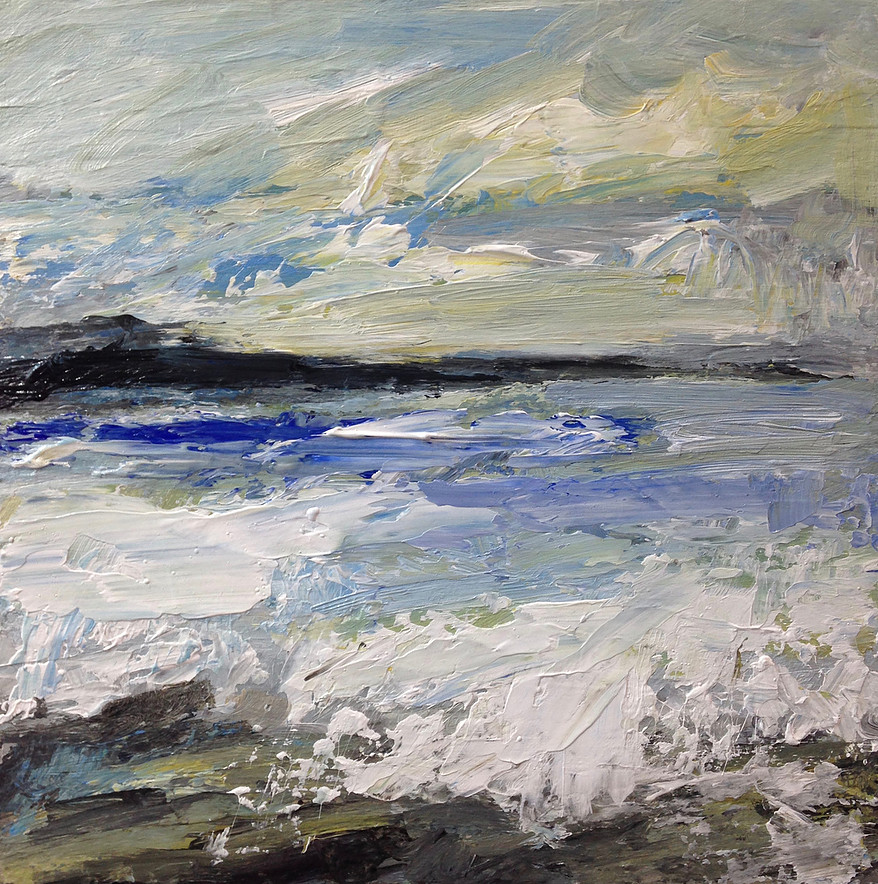
We found this painting by Mary Deveau iin Tofino. She gets the cold sea and sky just right

Wrangell and the Bears of Anan Creek

Wrangell is one of the oldest non-Native settlements in Alaska. Starting off with fur trading it became a bustling centre of commerce in the gold rushes. Good times continued with the growth of the fishing and fish canning industries, which provided much of the economic life for the town before the rise of logging in the 1950s.
Changes in legislation led to the collapse of the timber industry in the early 90’s and the decline in fish numbers hit the fishing industry. Wrangell went from a bustling city to a sleepy town existing on some fishing and tourism with most of the young leaving to find work and houses for sale everywhere

In 2006 some enterprising businessmen decided to take advantage of Wrangell’s sheltered and ice free deep harbour and invested heavily in a full service boat yard and storage area. The yard now employs 120 people and has three lifts (300 ton, 150 ton and 40 ton trailer). It hauls out about 270 boats per year with the numbers rising as boats from all over Alaska take advantage of their service.

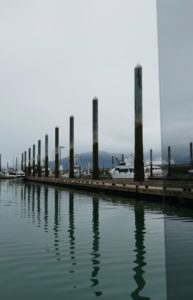
A floating pontoon with VERY high tides

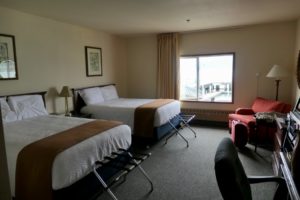
Our abode for the night was the Stikine Inn, Wrangell’s foremost hotel. We arrived early and had coffee and a bite to eat sitting out on the deck overlooking the harbour before being shown to our very comfortable room with the best deep bath I have ever come across. Ed went for a walk in town whilst I used the space to sort through the bags – and have a bath! Our stay was somewhat marred by the super thin walls and the guest next door who had his television blaring all night despite me thumping on the walls – a pity because otherwise it was a lovely place.

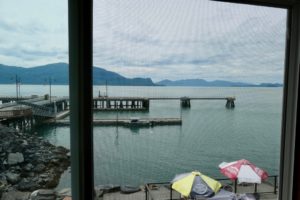
View from window
Wrangell is not back to its former glory – a sleepy rainy Sunday is very sleepy – but there are new houses being built and things are looking up. The tourist industry still plays a big part and is based mainly on fishing and hunting and, during the summer months, the Forest Observatory at Anan Creek.

Anan Creek is an ancient Tlingit native fishing site at the south end of Wrangell Island and has the largest pink salmon run in Southeast Alaska. It attracts significant numbers of black and brown bears to feast on the bounty during the months of July and August. It is a unique spot because of the interaction between black and brown bears. Generally, brown bears run off the smaller black bears and the two species don’t share habitat. But at Anan Creek, most of the brown bears are adolescents, and the large, adult black bears don’t always back off, so you may spot brown and black bears fishing the same hole for pink salmon.

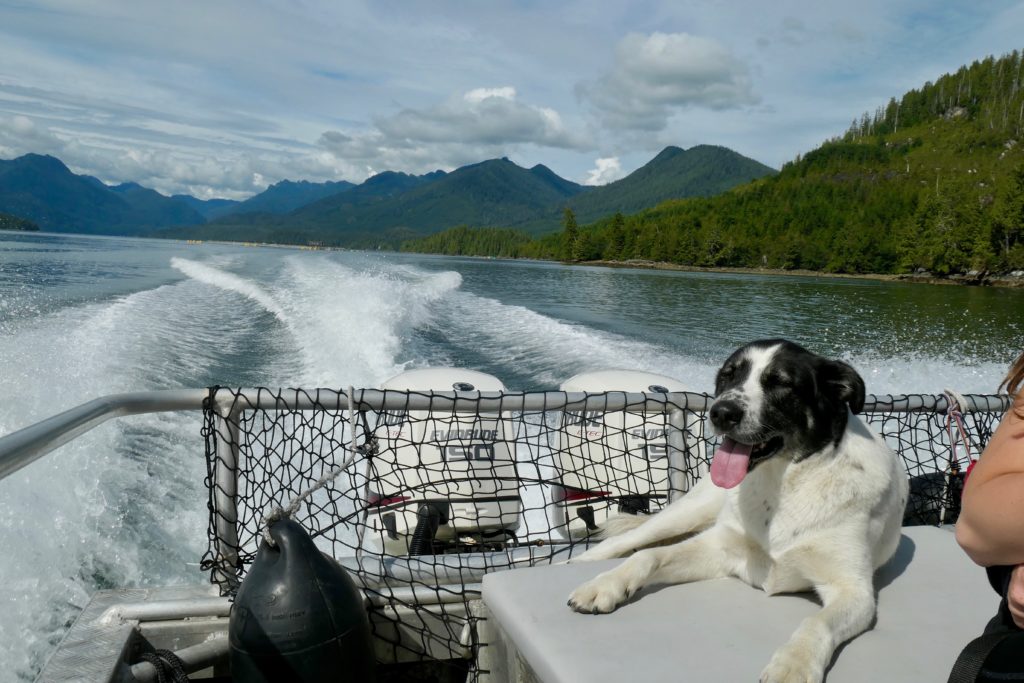
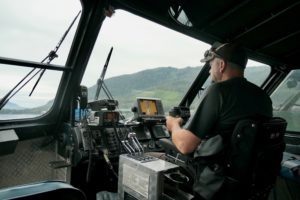
We had a great trip up the river to Anan Creek. It takes a little over an hour, the scenery is really beautiful and the going smooth. Our boat is purpose built and can be run up on the beach when the tide is out so you don’t get wet feet! James was our guide and Glen, having spent 10 years in the Navy, our expert helmsman (necessary because of the amount of logs, timber and crab pots in the water. When we arrived at Anan Creek we were given a safety brief and warned again of the dangers of taking food ashore as this would attract the bears and lead to an interaction that you don’t want.
B&B at Anan Creek – just don’t take any food!
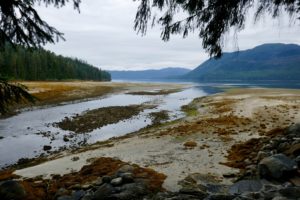
Anan Creek running into the sea at low tide
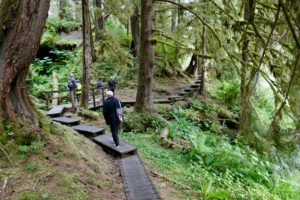
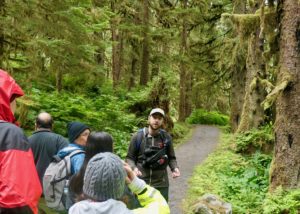
There is a half -mile trail leading to the observation deck and it is highly likely that you would see bears on the trail. The Forest Ranger at the trailhead again warned us about food (if you have anything other than water take it back to the boat immediately) and provided information on how to negotiate the path safely. If we met a bear coming the other way we were asked to keep our voices low and not to make any jerky movements that could upset the bear and whatever you do don’t run (emphasised and repeated several times) as bears will give chase.

James advice was to back off and leave him to deal with the bear. In his opinion the most dangerous part of the walk is falling off the walkway whilst looking around or photographing, the second most dangerous thing was slipping in the bear scat, which is everywhere. The bears see no reason to traverse the area through the wet forest when there is a perfectly good, dry walkway built for their convenience and they are very indiscriminate about where they poop.

Whatever you do DO NOT run

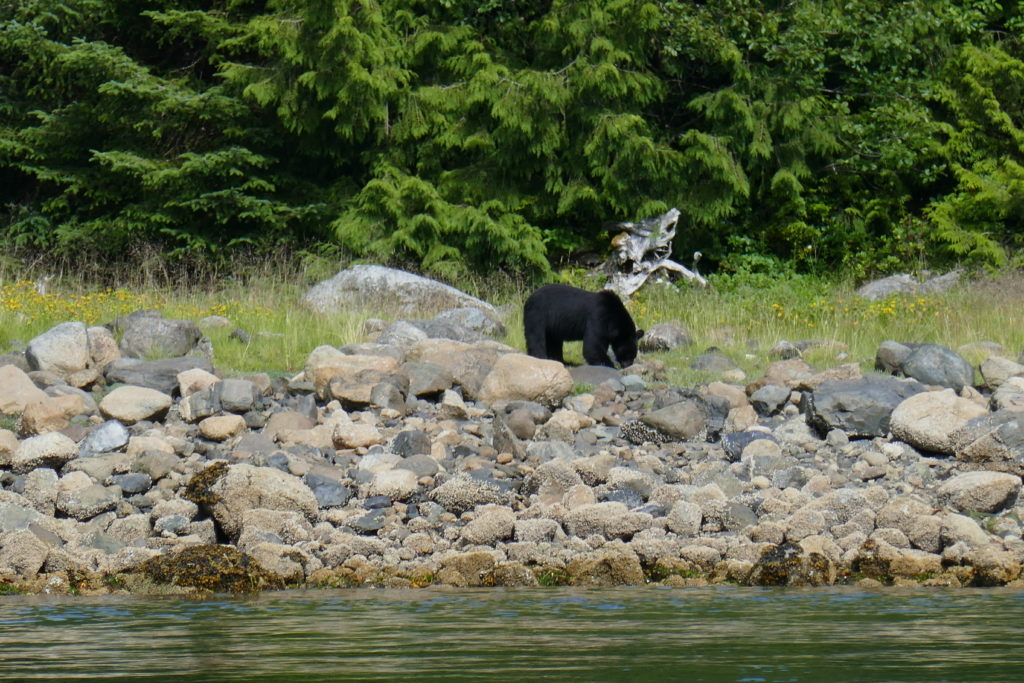
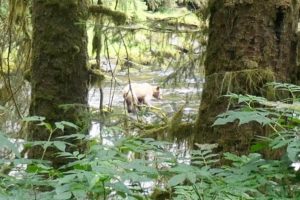
In the event we did not come face to face with a bear, brown or black just enjoyed the beautiful scenery Though we were warned there was a brown bear ahead it had crossed the path before we got there and we spotted it ambling along the beach. This was the only brown bear we saw.
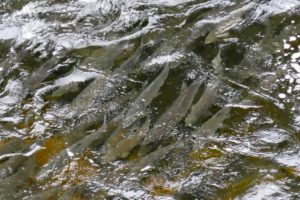
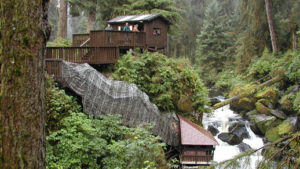
The facility consists of a covered viewing shelter, decks and a photo blind overlooking the cascading falls where the salmon jump up river and the bears catch their meal.

Pink salmon making their way up stream
You get 15 minutes in the hide with four others and the rest of the time you can see the bears from the platform – which is nearly as good if not better.

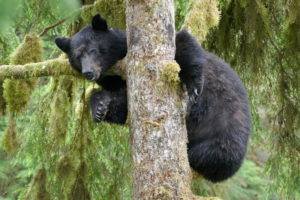
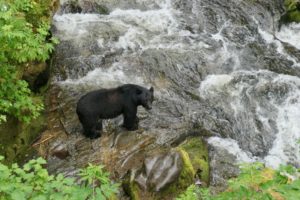
When we arrived there was a young black bear up a tree, calmly observing us, with two others in the creek fishing. During the time we were there we met Arrow, the largest and oldest male bear, who hangs around the platform ambling down to catch a salmon every now and then and retreating to under the platform to eat his catch.
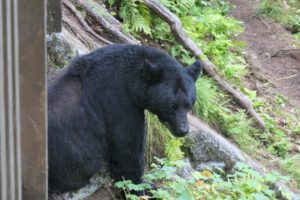
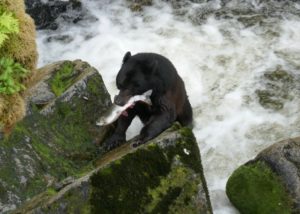
Taking up position
He passes so close you could pat him if you weren’t concerned about losing a hand.Due to his eating habits there was a definite fishy smell on the platform, which we were informed got worse as the summer progressed until in August it is almost unbearable. The eagles can’t get in under the platform to clean up and the rangers understandably won’t!
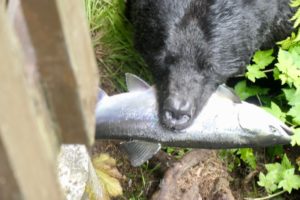
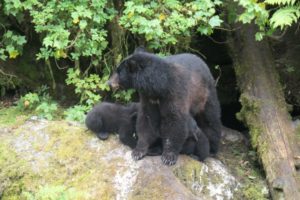
All in all we saw about 20 bears including Contessa, a mature female who was feeding her two cubs on a rock just across the stream. There is a system of caves on the other side where the bears live during the summer and they kept popping in and out of the caves to fish or just wander about.
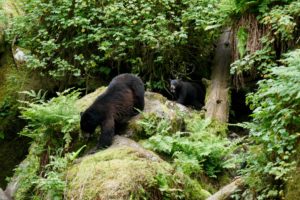
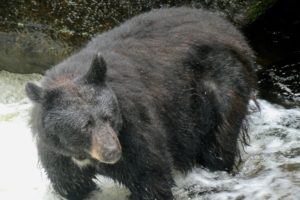
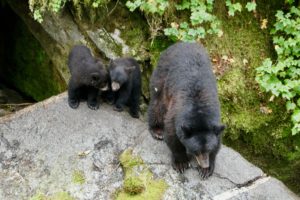
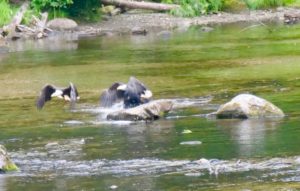
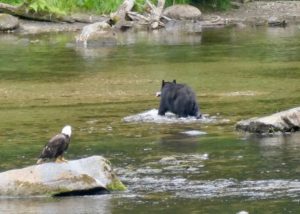
There are a large number of bald eagles, as well, who fish for the salmon a little further up. I watched as one hooked a salmon and settled down on a rock in the middle of the creek to eat his catch when a black bear came out of the forest and swiped it amongst a great flurry of wings.

We spent a couple of hours at the Observatory and then traced our way back to the boat and headed home to a very late lunch/dinner before boarding the MV Columbia in the late afternoon. Our trip to the Observatory was such a unique and interesting experience and it is no wonder there were people from all over the world there and why it was one of the highlights of our trip to Alaska.

Setting sail on the MV Columbia

North to Alaska

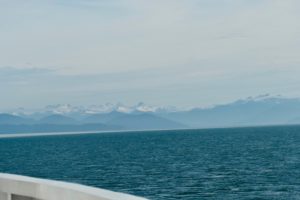
We rose late, tidied our apartment, sorted out the intricacies of exiting our high security abode and headed for the ferry. We had a pleasant, if rather windy, crossing through the little islands that dot the ocean between Vancouver Island and the mainland; with views north of the snow clad mountain area we were heading towards the next day.

The Pacific Gateway Hotel proved to be a good choice with a comfortable room, pleasant staff and a shuttle bus to the airport every twenty minutes. It was quite warm so dinner that night was outside in the courtyard and was a beautifully cooked sirloin steak with Yorkshire pudding, vegetables and lots of gravy. It was so massive I couldn’t finish it and Ed had to help me out. Even so I opted out of breakfast the next morning.

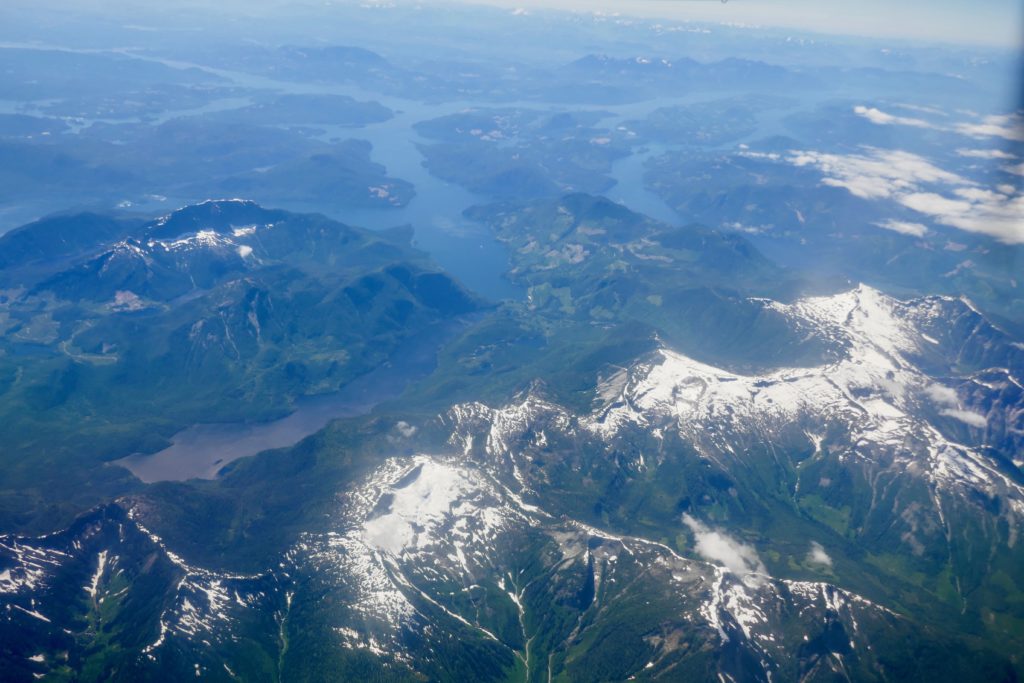
The next day was clear and sunny – perfect weather for our flight to Prince Rupert. We flew in a Dash 8 and I had booked us both window seats so we could see the amazing scenery below. We flew along the coast with alternating views of coastal inlets and snowclad mountain ranges – quite spectacular! There is no suitable place at Prince Rupert for an airport so it is on the adjoining Digby Island. Last time we flew in our bags were put down on the edge of the strip and there was an old bus to take us the rest of the way. This time there was a marked improvement with a new terminal with baggage handling facilities and two shiny shuttle buses to take us on the ferry to the mainland. Tourism must be looking up, though the young man who served us at the bottle shop, who had lived in Prince Rupert all his life, couldn’t understand why anyone would bother to come.
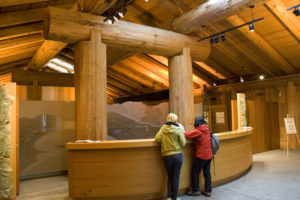
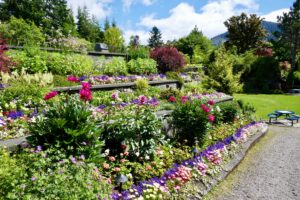
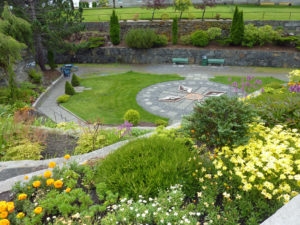
In actual fact Prince Rupert is a charming town with an excellent museum,

Behind the glass screen in this amazing building is a fascinating history of the area and it’s native people. Well worth a visit
some lovely gardens
This sunken garden is named after Lloyd Ernest Bud Pierce, the groundsman for the nearby courthouse who for 33 years lovingly developed the garden for the pleasure of others

and if you walk down to Cow Bay, some good places to eat and shop.
The Crest Hotel, where we stayed, is a top class hotel with spacious rooms overlooking the water and an excellent restaurant.
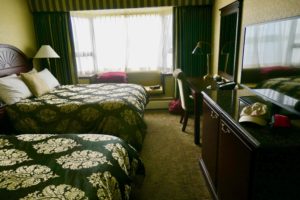
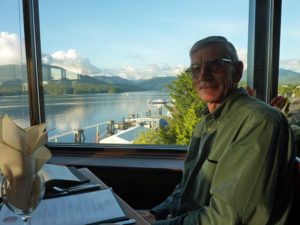
Not a bad view out our window
Fine dining at the Waterfront Restaurant
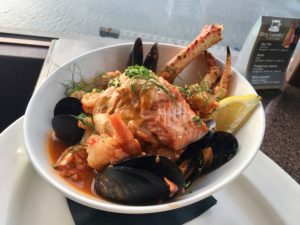
The Seafood Bouillabaisse that stopped even Ed

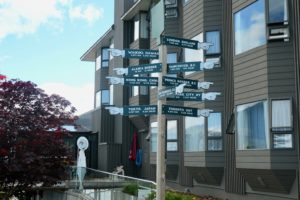
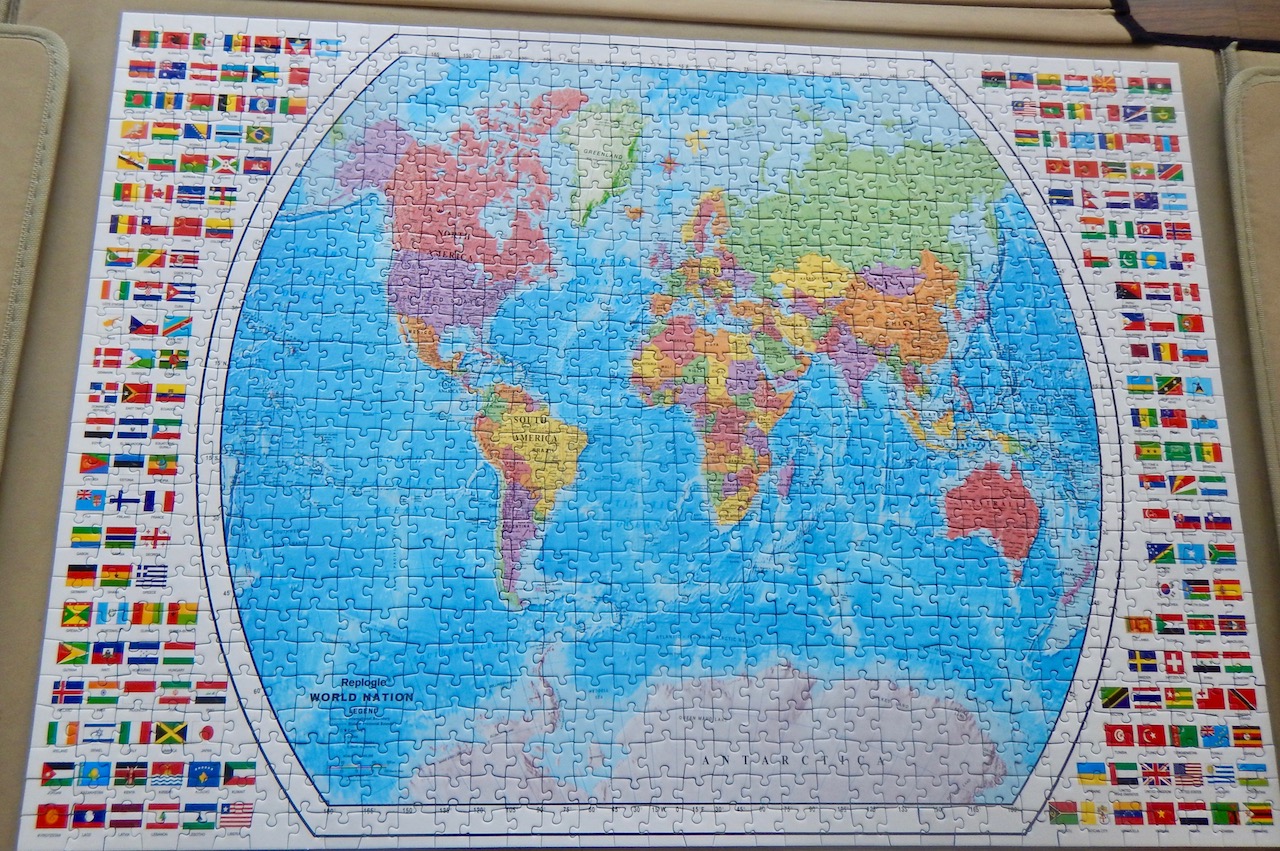
Keeping track of where we are and where we have been!
The next day we went through customs and passport control, left Canada and headed for Alaska aboard the MV Malaspina. The Malaspina is one of the smaller boats in the fleet and doesn’t have all the facilities of the bigger boats, like a dining room or a cinema, but it has plenty of space to walk the decks and look at the scenery and the staff, like all the Alaskan Ferries, are very friendly and helpful.
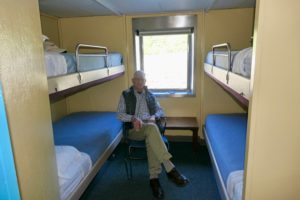
Our cabin was basic but comfortable with a good size window looking out on the passing scenery and a fairly spacious shower and toilet.
In sharp contrast to the night before, our basic cabin, but the views out the window were spectacular
Prince Rupert to Wrangell is not one of the premium routes, so the boat was not crowded. We got a good table by the window where we downloaded our cameras, caught up on our blog and had our meals – all the time attended by the redoubtable Eleanor, who made sure we were looked after, gave us plenty of advice, expressed surprise that anyone would pay to see bears that wandered freely in her backyard and offered to show us around Juneau so we wouldn’t be ripped off by the touristy places (including her good friend Tracey of Tracey’s Crab Shack, though she did admit she had the best crabs).
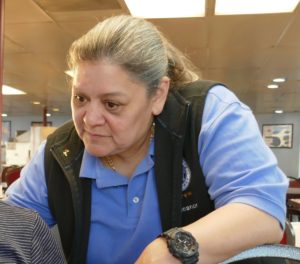
Eleanor making sure we weren’t going to be ripped off
The meal was served cafeteria style where you lined up with your tray and proceeded through the doors to the galley. There you told the cook what number meal you wanted. #1 was hamburger and fries #2 was corned beef, mashed potatoes and gravy #3 was (very fancy) French Provincial Chicken and fries with vegetables. This simple way of serving meals was very effective because if you asked for anything by name you got a blank look and were asked again what number you wanted. I might say the meals, though basic, were very good.

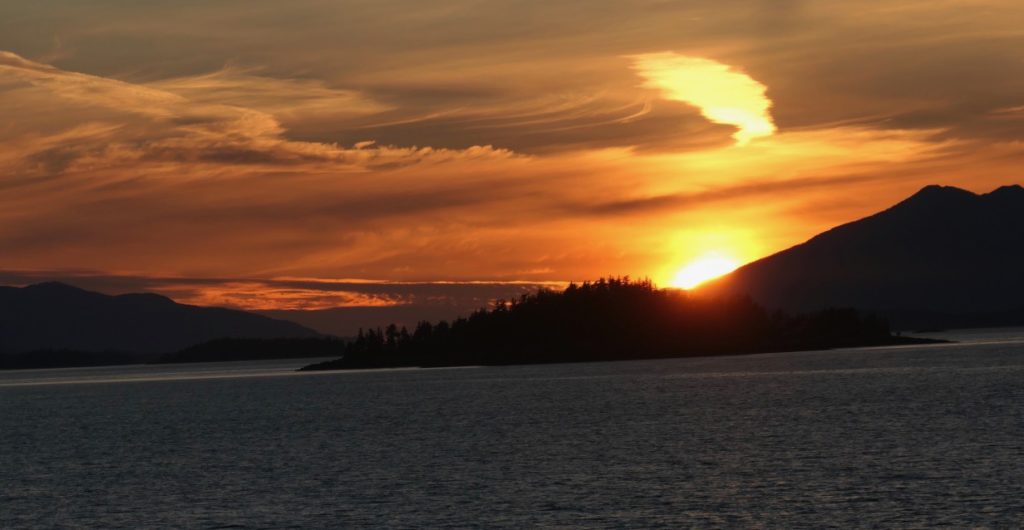
After dinner we sat in the lounge and alternately watched the scenery go by and read getting up to go outside when a particularly spectacular view passed by. We waited until the sun set (about 10pm), took some photos and adjourned to our cabin. The next morning we were packed, ready and breakfasted
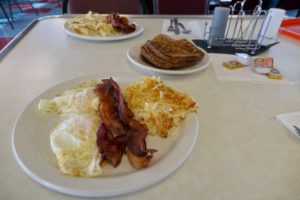
Breakfast menu Item #1
as the ship cruised into Wrangell

Onward to Victoria and the Butchart Gardens with a few diversions

We had enjoyed the breakfast at Darwin’s Café so much the day before that we decided to repeat the performance before heading off to Victoria.
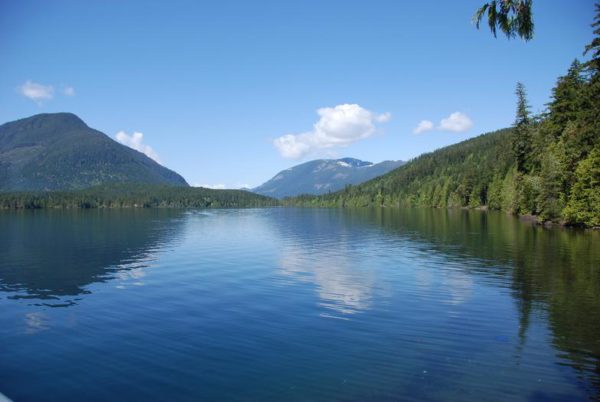
The weather had significantly improved since our trip down and we got to enjoy the fabulous scenery of mountains, lakes and rivers on our way to the first stop, the Old Country Market at Coombs. More than a million visitors arrive each year to see the goats that live on the roof of the Old Country Market. The goats first appeared approximately 40 years ago. It was the Coombs Country Fair weekend, and the grass on the sod roof of the market was higher than the owner liked. Legend has it that after a few drinks, a friend suggested they borrow some goats to mow the grass and perhaps provide some entertainment to passing cars. They proved such a success that the goats became permanent tenants of the Coombs Old Country Market that day.
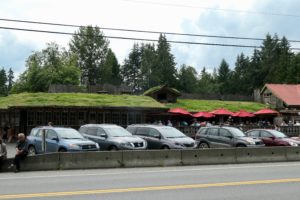
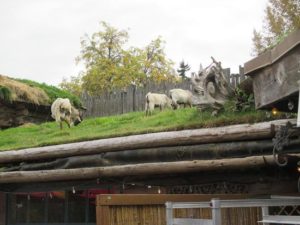
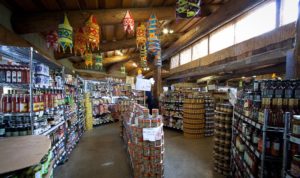
While some of the visitors stop only to have a look at the permanent four-legged tenants, others stay to immerse themselves in the many unique galleries, studios and shops that share the area with the famous goats. The Coombs Old Country Market itself is a great place to shop. They carry international foods, fresh-baked goods and a superb delicatessen that specializes in a variety of international meats and cheeses. There is also a donut shop with a very wide selection of donuts, an ice creamery that is about 20 meters long and a farmer’s fresh produce market.
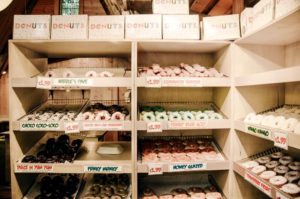

By the time we had finished browsing through the market we were well equipped for our stay in the airbnb apartment in Victoria – breakfast, lunch and dinner!

From Coombs we headed south to Chemainus. If you ever visit this quaint and quiet town, then you are in for a real treat! Chemainus is a beautiful little seaside town and well known for its outdoor gallery of murals. The town has a number of very interesting shops and gardens, which are well worth visiting. Unfortunately for us most of them were closed on Mondays so we missed out on the year round Christmas Shop

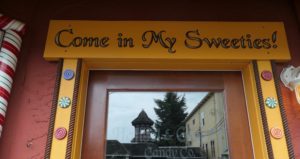
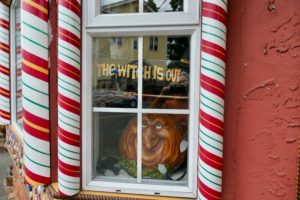
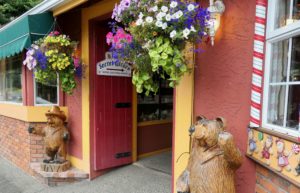
and the Hansel & Gretel’s Candy Store.
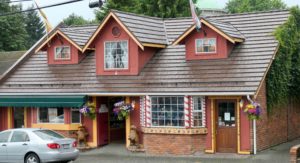

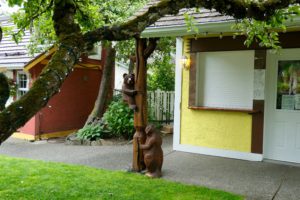
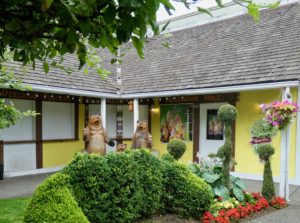
We peered in rather wistfully, as both looked different and exciting. Behind Hansel & Gretel’s is a secret garden, which is full of carvings from fairy tales and must delight many a child.

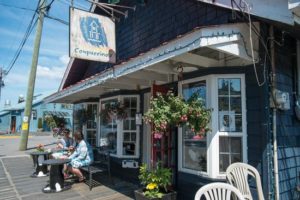
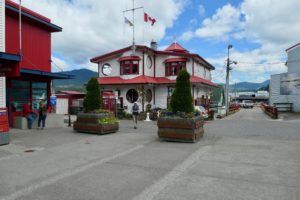
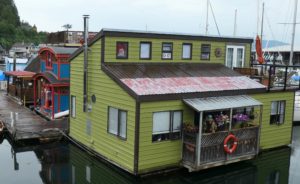
On to Cowichan Bay, a unique and historic waterfront town famous for it’s floating homes, occupied by independent characters that live and work on or near the water.

Then it was Victoria and our downtown apartment which turned out to be a bright airy two bedroom apartment perched high above the town and with it’s own tiny balcony to witness the mayhem below.

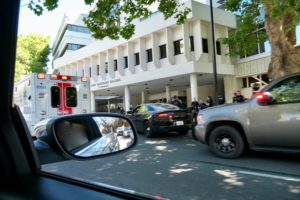
We soon learned that downtown was not the most salubrious area and that sirens were almost a constant background. At one stage we had seven police cars and two ambulances attending a situation across the street. High above all this, we were not affected and had everything we needed – comfortable chairs, comfortable beds, a well equipped kitchen and best of all a large washing machine and dryer!

Such a salubrious area

First order of the day was to unpack our purchases from the Old Country Market and settle down to wine and cheese followed by a mushroom and vegetable pasta. Over the next 12 hours we emptied our suitcases and processed them through the washing machine and dryer before repacking with Honolulu on the bottom and Alaska on the top.

We caught up with our correspondence, organised to move Suzanne into her new berth and did some reading before leaving for the Butchart Gardens about 3pm.

The Butchart Gardens covers more than 55 acres and began from an idea Jennie Butchart had to beautify the her husband’s worked-out limestone quarry. The Gardens, through the skillful mixture of rare and exotic shrubs trees and flowers collected by the Butcharts during their extensive world travels, continually expanded over the years to become the world famous gardens they are today. The Gardens are still operated by the family and are visited by over a million visitors each year.

Even the rubbish bins are beautiful

As we had spent two days at the Butchart gardens on a previous trip, this was a chance to see a slightly different season and to see what changes had been made. We planned to have a look around the gardens, have dinner at the Dining Room, listen to the band playing on the Concert Lawn until it got dark and then revisit the Sunken Garden and Japanese Garden to see them lit up.

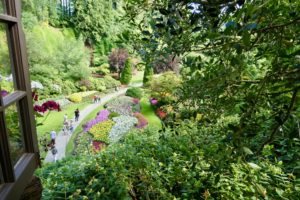
First stop was the Sunken Gardens. Instead of going down into the gardens we viewed them from above, skirting around the perimeter and looking down into the various garden rooms. We passed the Bog Gardens

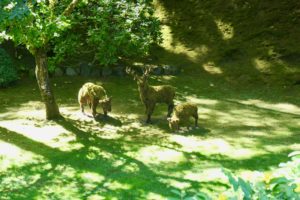
Rather green deer in the glen
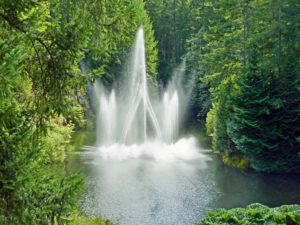
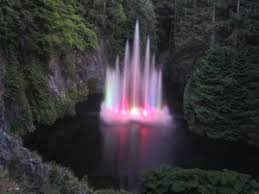
and finished up at the Ross Fountain, designed and installed by Jenni Butchart’s grandson. The fountain rises 21 meters and continually alters, with jets of water weaving themselves together as if dancing to a hidden orchestra. At night it is lit and is quite spectacular.
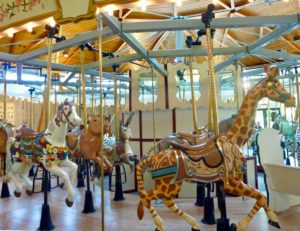
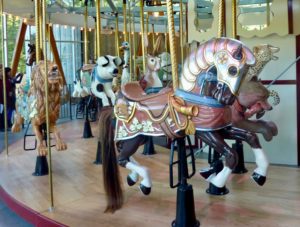
We then made our way to the Rose Carousel, a menagerie carousel with 30 hand-carved wooden animals and two chariots. The Carousel was imported from France where the Butchart’s spotted it on their travels. Each animal is different and the attention to detail in both the carving and painting makes them absolutely exquisite.

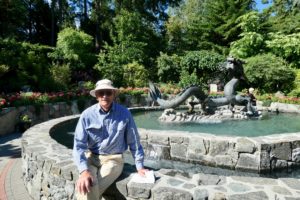
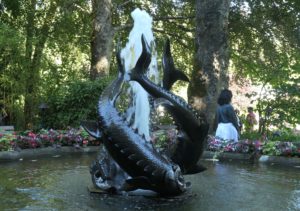
We didn’t linger at the Firework Field, the Organ Pavilion and the Dahlia Border (just coming into bloom and spectacular when it does) but spent a little time sitting in the sun at The Dragon Fountain before wandering through the Rose Garden (though there were still some lovely roses it was past the Spring and early Summer flush and not quite into the Autumn one) and arriving at one of my favourite fountains, the bronze Sturgeon Fountain, cast in Italy and featuring three entwined sturgeons.
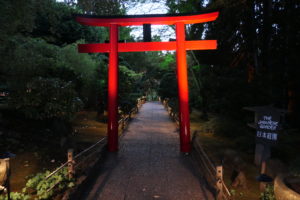
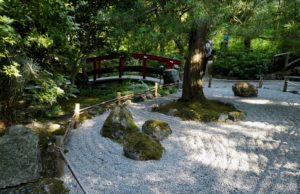
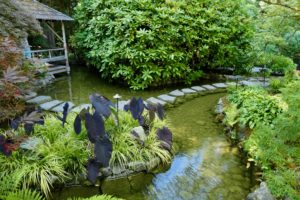
Situated between the Butchart’s house and the house dock at Tod Inlet, the Japanese Gardens are the oldest gardens, started by Jenni as an adjunct to the house in 1906. Through the Torii Gate you find a non-traditional garden that weaves it’s way down to the inlet through Japanese maples, bonsai trees and bamboo with lots of water features to delight the eye.

A quick walk through the Italian Garden, to my mind the least interesting of all the gardens, and it was time for our dinner.
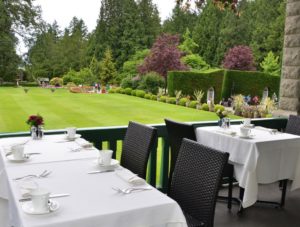
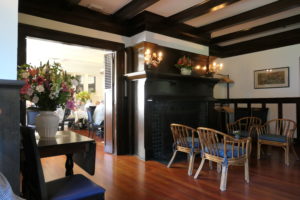
Situated in the Butchart’s original house, The Dining Room is one of the leading restaurants and I booked several months ahead to get in and get a highly prized table on the verandah overlooking the garden.

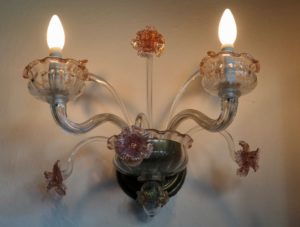
One of the many wall lights

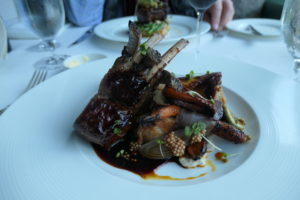
We started with a Gin and Basil Cocktail whilst we perused the menu. After a lot of toing and froing I decided on West Coast halibut cheeks with Nettle leaf raviolo, sea asparagus, shimeji mushrooms and beurre blanc sauce as an entrée followed by a Half rack of Peace River lamb with a buckwheat celeriac blini, king mushrooms, fiddlehead ferns, northern birch syrup and cashew aioli as a main course. Ed was taken with the Albacore tuna with compressed cucumbers, garden radish, Gemlik olives, Meyer lemon, coriander and Gulf Island mussel vinaigrette followed by Alberta beef tenderloin with Tiger Blue cheese sourdough bread pudding, bush beans, hemp seed, kohlrabi pickle and garlic scape pistou.
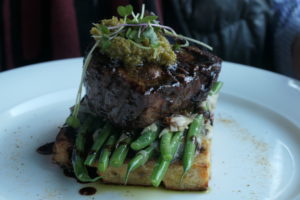
Our meals were so beautifully presented and interesting in their flavours it was hard to pick which of us had made the better choice! To finish, Ed had coffee whilst I tried the Verrine – a light and frothy combination of raspberry gelee, rose mousse, vanilla honey macaron and Italian meringue.

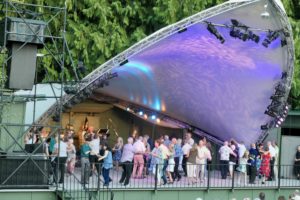
We could hear the music from Chris Millington and his band coming from the Concert Lawn so made our way up there. There were about a hundred people sitting on the lawn listening and thirty plus up dancing on the stage. There were some very good dancers up there strutting their stuff and we decided to join them for a bit of fun. We danced our way through a variety of numbers as the skies darkened and the lights came on, then it was off to see the Gardens by night.
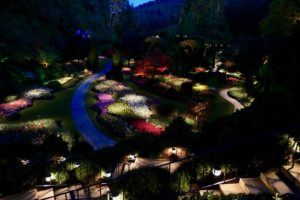
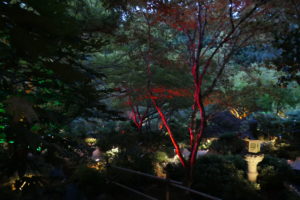
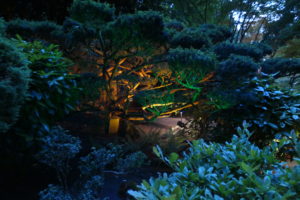
Ed felt there should be more overall lighting rather than the lighting of individual areas but I liked the way they had done it. In any event the overall effect was stunning and well worth staying up for.

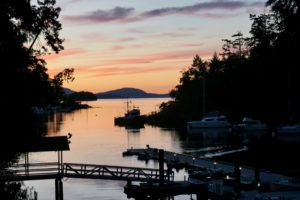
Sunset at Tod Inlet


It was midnight before we got back to our apartment and fall asleep to the sounds of sirens wailing in the night.

Botanical Gardens and Black Bear Kayaking

Next morning we decided to go for a morning walk in the Tofino Botanical Gardens after having breakfast in Darwin’s Café. Darwin’s Cafe has been described as a cross between a library, a living room, and a cafe! There are books to read, sofas to sit on and excellent food
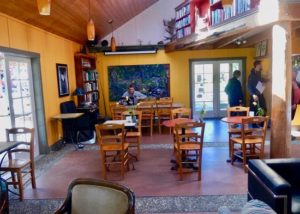
Inside the cafe are books to read and sofas to sit on

We chose an outdoor table on the verandah next to a comfy sofa with a sign saying ‘Reserved for those over 65 and retired’. There was a gentleman there who smiled at us as we sat down. I asked him if he fitted the criteria and he replied “You never retire when you have a garden”. This was George, the owner of the garden and a keen gardener and resident of Tofino for over 30 years.

George’s dog surveying the garden
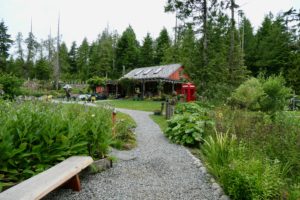
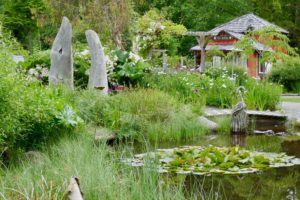
Looking over the frog pond to Darwin’s Cafe

Twenty years ago he decided to develop a garden on his 5 hectares of waterfront land – a garden to share with others. After spending a year climbing trees to peer through the canopy and planning the garden and walks, they started with the closest gardens, the café and the gift shop and gradually worked their way out. Having sculptures in the garden were always an objective and George started approaching sculptors to ask if they would loan some sculptures to be displayed in the garden.
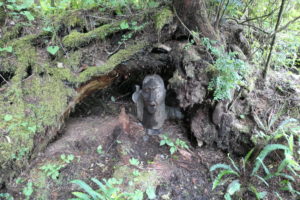
Now the garden is an interesting mixture of semi formal gardens, waterfront walks and old forest areas with large trees. Everywhere there are whimsical sculptures and quirky signs . Sculptors now approach him to display their work and everyone benefits – not least the visitors to this obviously loved garden.
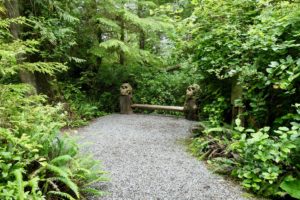
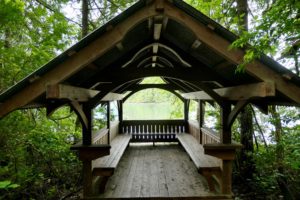
These skulls were reconstructed from bone fragments discovered at an undisclosed location.
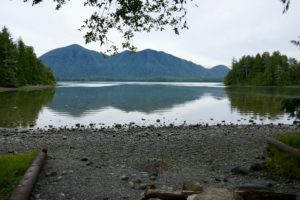
A place for contemplation by the water
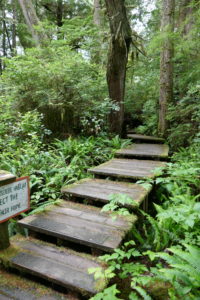
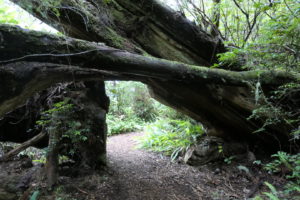
Walkway to the old growth forest
Old growth forest

We had a very sustaining breakfast of power packed granola, baguettes with homemade butter and homemade jam and hot chocolate/coffee and then wandered around the gardens until it was time to check in for our kayaking adventure.

We met Adam, our guide, and T. J. our boat driver and also the owner of the company. Adam kitted us out and warned us to use the washroom as for the next 4 hours the only toilet facilities would be squatting on the beach whilst everyone looked the other way or going behind a bush and risk running into a bear. Needless to say he had instant obedience and we all dutifully traipsed off to the washroom.

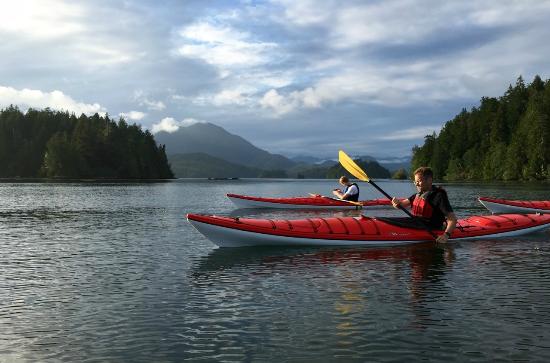
Down a steep walkway and onto T.J’s boat we headed for bear territory. After about 30 minutes we came into a bay with a bear and it was time to launch the kayaks. Adam demonstrated and I noticed I was not the only one looking nervous. We were assured that no one ever fell in and then had a briefing on what to do if we did.
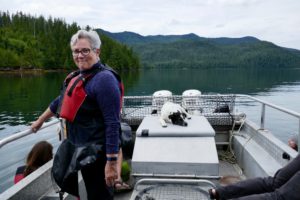
Not too sure about this

Not reassured, the first ones to board were a young lieutenant in the British Army and his 20 something girlfriend. After a somewhat shaky descent they were in and paddled off the side. Then it was our turn – Ed first and me second with both Adam and TJ holding the kayak firmly. Piece of cake, well almost! We set off for the beach and the bear promptly disappeared into the bush.

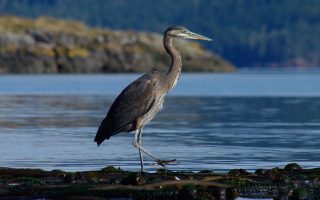
It was a beautiful sunny day and quite warm on the water. We paddled around the coves for about 2 hours. No bears but plenty of birds including some beautiful herons, a seal rolling around in the water cleaning itself and dolphins. It was a lovely way to spend a day, so we weren’t too stressed out about not seeing any bears. Our concerns about keeping up with all the young ones were baseless and we soon hit our rhythm and put on a very credible performance.
Back on board the boat (somewhat more difficult than getting in having been sitting in the same position for over 2 hours) we went in search of bears further afield and soon found one in a cove and then a very large female a little further along. We got in quite close and took lots of photos. No sign of cubs or male bears – not a good combination as Adam related how they were horrified to witness a big male kill a cub the previous week.

Slightly weary and rather damp we returned to the hotel for a shower and change into dry clothes before having an early dinner at the Ice House Oyster Bar.
This time we chose to sit inside which was very pleasant, if a little warm. We had perused the menu the night before so were pretty quick to make our choices.
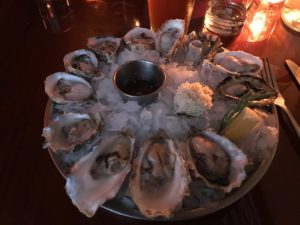
There were six different types of oyster on offer so we each had one of each type with a side of Hokkaido Scallops.

The oysters all lined up. Our favourites were the Effingham and the Royal Myagi
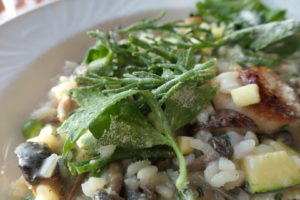
For main course I had the Mushroom Risotto – probably one of the best I have ever eaten – unfortunately there was a mix up and they added another side of Hokkaido Scallops on top, which I was forced to eat as well.
A mix of mushrooms confit and ragout with toast rice powder, grana padano cheese, fava bean and zucchini and served with wild sea asparagus or samphire
Edgar had the early dinner special, which was Phillips Tiger Shark citra pale ale beer batter with local snapper, savoy cabbage and apple slaw, smoke potatoes and a rémoulade sauce. He also tried a beautifully presented selection of local preserved vegetables and pickled eggs as a side.
To drink I had Black Widow Pinot Gris from Naramata, BC and Edgar tried a couple of the local beers.
We adjourned to our hotel for a quick walk on the beach and then a quick trip up the road to Chocolate Tofino for dessert. Their honey lavender icecream was something else!

Tofino

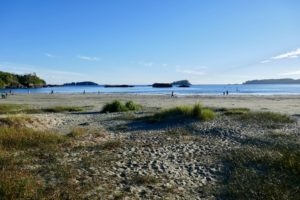
When the sun came out the next day Tofino turned out to be a lovely coastal holiday village with a number of beaches and wonderful scenery.

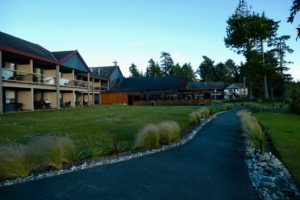
Our Resort
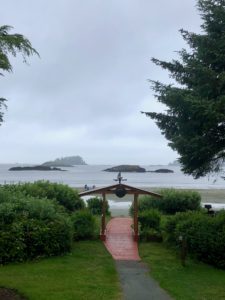
Down to the Beach

Being a weekend in school holidays it was pretty crowded and parking nearly impossible, but we managed to negotiate the 4-way stop signs, stay on the right side of the road and find a park near our rendezvous with Kate McCallum from Tofino Food Tours.

This could not have been a better way to get to know the town. We were the only people on the tour, which was great for us. Kate had had a very big tour the day before with some rather unpleasant people so she was happy that there were only two amiable Australians to look after.

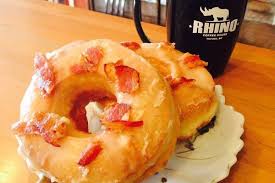
We got to know each other over maple bacon donuts and jelly berry donuts at the Rhino Coffee Bar, the go to place for the local fishermen in the early morning and the tourists for the rest of the day. Then it was a wander through the town whilst Kate told us the history, and gossip, of Tofino.
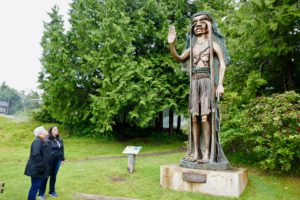
Weeping Cedar Woman is an iconic statue representing an important period in the history of Clayoquot Sound. The first blockade in Canadian History took place in 1984 in response to the proposed logging of Meares Island.
Carved from a 300-year-old windfall cedar, the 6.4-metre body and tears are of one piece, with hands and feet carved separately and mortised in.
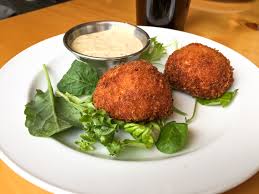
A stop at SoBo Restaurant for crispy shrimp and cod cakes with sweet mustard sauce and a glass of apple spritzer where we met Lisa, the amazing owner and chef, and heard the story of the restaurant.

SoBo was started in a well-equipped purple catering truck to rave reviews from locals. News of the its fresh and amazing food soon reached visitors and they were named one of the top 10 Canadian restaurants in En Route magazine in their opening year, 2003. Since then they have moved into a purpose built permanent restaurant. When Lisa’s son was born she scaled back and now chefs at lunch time which is mainly fish and vegetarian, her love. The nights are catered for by another top chef who specialises in meats of all description. The awards still keep coming in.

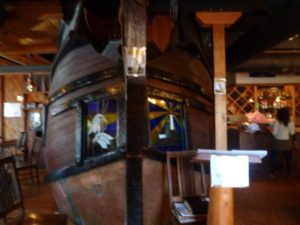
On the Schooner Inn for some fish chowder. One of the oldest eating establishments in Tofino it first opened its doors in 1949. Visitors to Tofino were a rare and hardy breed back in those days and willing to brave a four-hour, white-knuckle, unpaved logging road from Port Alberni. It gets its name from the schooner, half of which sticks out the back and half in the restaurant and was the vision of three wayward draft dodgers from the Vietnam War.
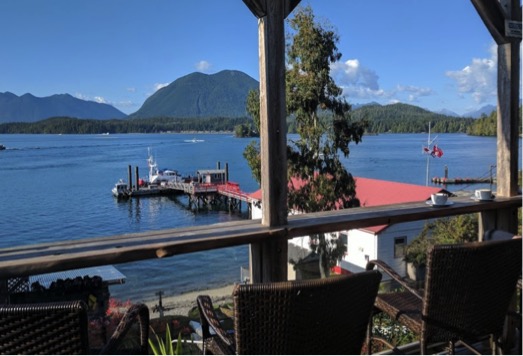
The Paddler’s Inn, which was Tofino’s original hotel, was constructed in the early 1900’s when guests arrived by ship and there was no road access to the west coast. We sat on the balcony and sampled a range of produce from the Picnic Charcuterie Company whilst overlooking the fabulous harbour and Meares Island with bald eagles soaring overhead and seaplanes taking off.
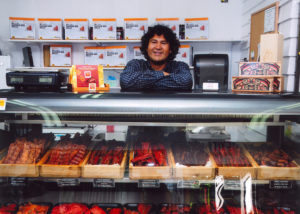
From there it was down to the Dockside Smoked Fish Store where wild smoked pacific salmon is served in all it’s forms. Run by the First Nation people of the area it is situated behind the Himwista Native Art Gallery, which we also visited. We were served a platter of Wild Smoked Sockeye Indian Candy, Wild Smoked Chum Honey Garlic, Wild Smoked Chinook Lemon Peppered and Wild Smoked Chum Teriyaki – all of them delicious!

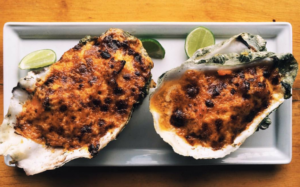
Our last stop was the Ice House Oyster Bar situated on the Tofino Fish Company pier, where the fishermen top up with ice. We sat out on the patio in the sun and tried the Umami Tsunami Oyster, a Baked Middle Beach oyster with mushroom ragout, marmite and anchiote mayonnaise.To drink with this we had a Tofino Brewing Company Kelp Stout. The kelp is infused in the beer at three different stages of the brew. This results in a fairly robust stout with a smoky cocoa and caramel flavor and the rather subtle salty presence of the sea.
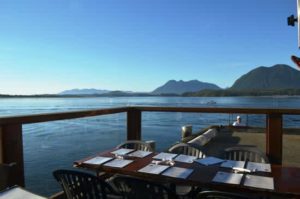
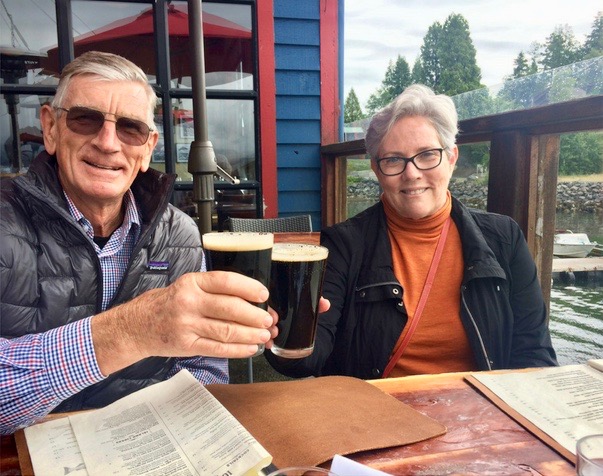
We admired the tiny kitchen, which used to be a coldroom, and heard the story of the young chef who came to Tofino and transformed the restaurant from a mediocre eating establishment to an award winning restaurant. That, and a read of the menu, was enough for us and we booked in for the next night.

Kate left us there to enjoy the sun and with vouchers for the Tofino Chocolate Ice Creamery, which was on our way back to the motel. It had been a fabulous, relaxed and informative tour and we can’t recommend it highly enough.

We headed back to the motel via the Ice Creamery and sampled their icecreams. Just as delicious as promised!

A long walk on the beach and then back to our room to get ready for the next day – sea kayaking to find the black bears. This was also a recommendation from Tim and Sandra but in the intervening period the company had bought a boat and they now launched the kayaks from the boat. Climbing into a kayak from a rocky boat was something I was viewing with ever increasing trepidation.

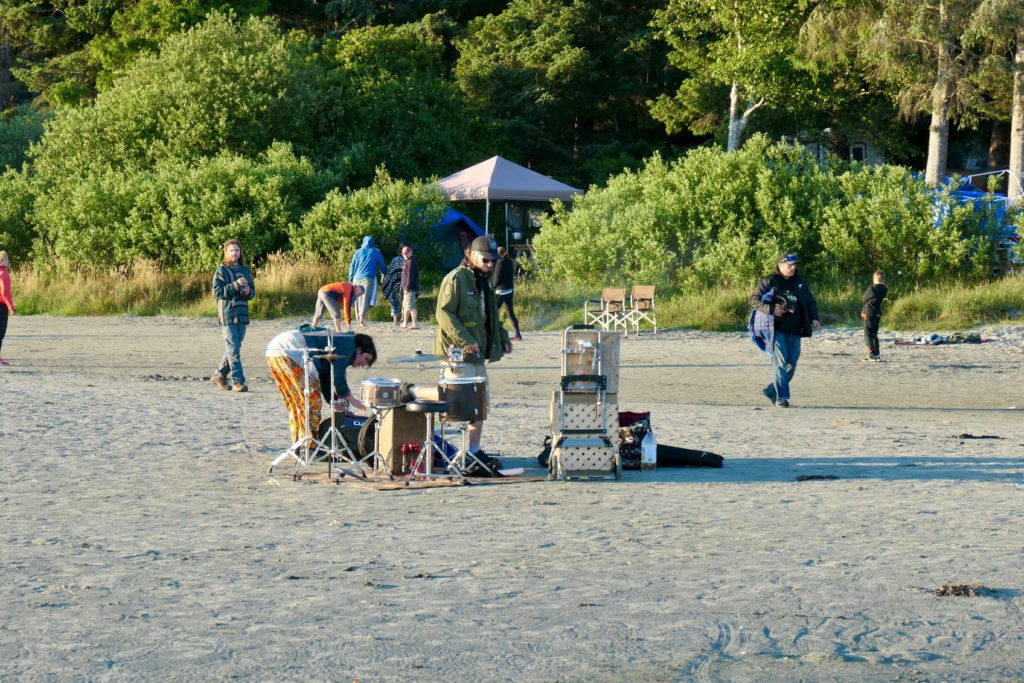
Beach Entertainment

Pearl Harbour

Up at 4.30am and packed, checked out and in the lobby by 5.30 saw us ready for what was to prove a long day, an even longer night and a mind numbing day the next day.

Our eleven hour “luxury” Beyond the Call of Duty Tour proved to be somewhat disappointing though the visit to Pearl Harbour was not. Our breakfast turned out to be a local donut, our guide was not very enlightening and our lunch was hardly luxurious. We did, however, have immediate access to all the highlights of Pearl Harbour, which were very moving and educational and we were glad we had gone – but next time we will get an official pass, take ourselves and save over a hundred dollars. To be fair, the day was hot and tiring and no one wanted to stop at the Royal Palace and State Buildings in Honolulu to take photos on the way back so the tour wasn’t as extended as it might have been.

There is no question that the attack on Pearl Harbour was the biggest mistake Japan ever made and led it into a bloody war costing millions of lives. You can only speculate as to whether America would have entered the war to (largely) protect other countries assets in Asia if it had not been attacked and what would have been the subsequent world outcome if it hadn’t. If the radar detection of the incoming planes had not been mistaken for the early arrival of American planes would the Americans had time to get more of their planes in the air and thus lessen the impact and subsequent American outrage. If the cancellation of the third wave of Japanese attack planes aimed at the fuel depots, the submarines and the dry docks had not been cancelled leaving them virtually undamaged how long would it have taken America to retaliate. Would that have given the Japanese time to achieve what they were aiming for in Asia.

A visit to Pearl Harbour answers a lot of questions, raises some more and leads to a lot of speculation.

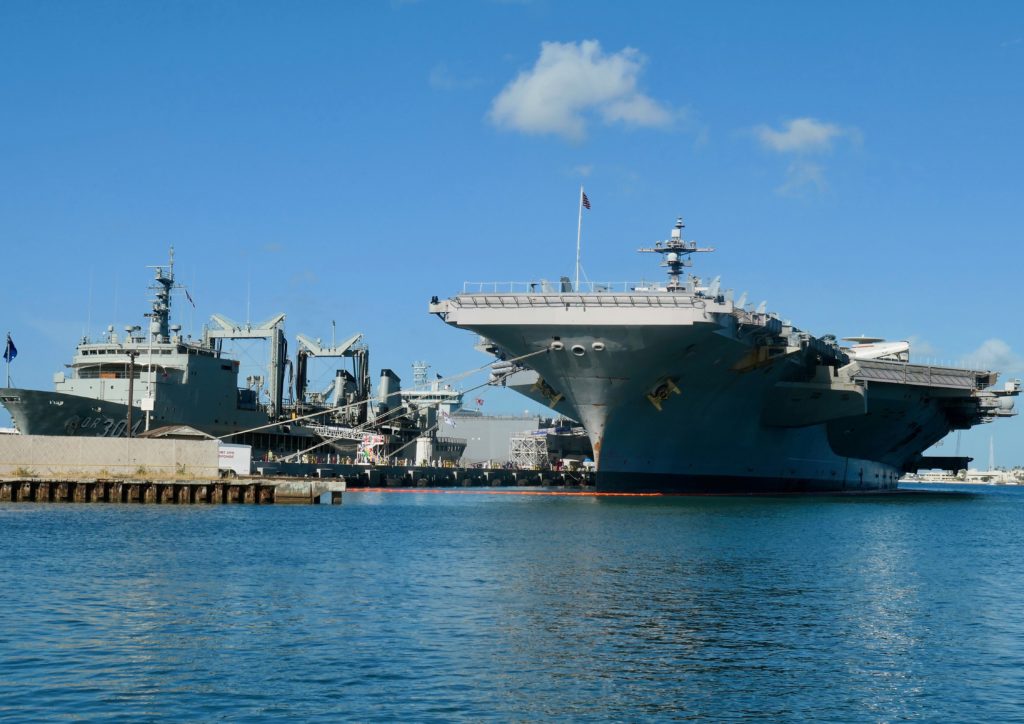
We boarded a navy shuttle boat and travelled down destroyer row where most of the destroyers had been anchored and sunk. Operation Rimpac had just finished and ships from all nations were now anchored there.

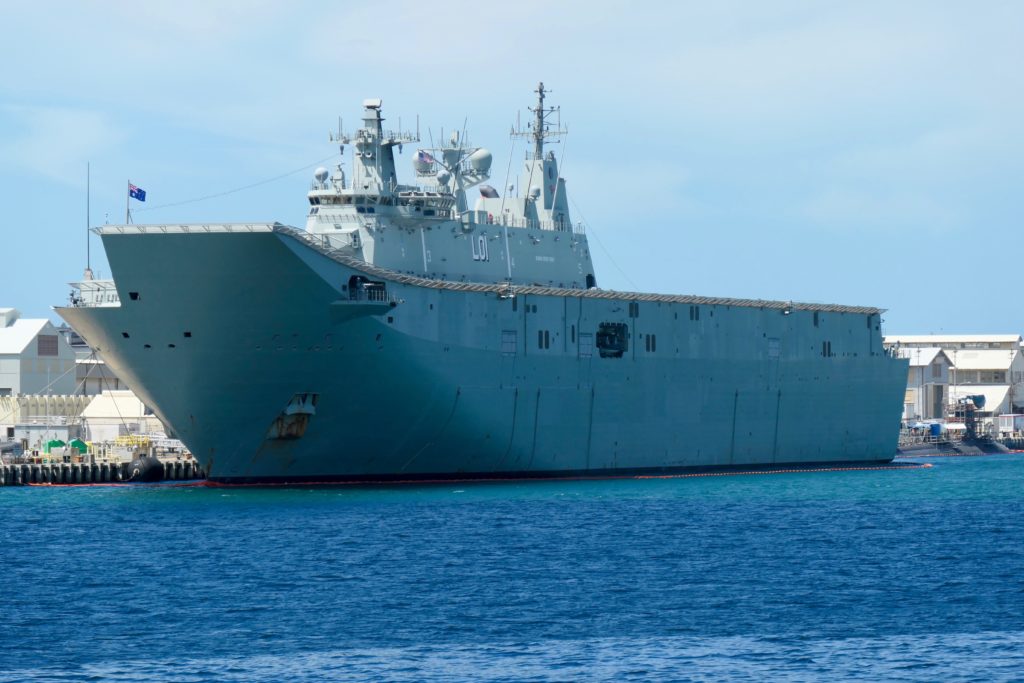
Australia, Japan and America side by side
A familiar sight. The “Canberra” in port
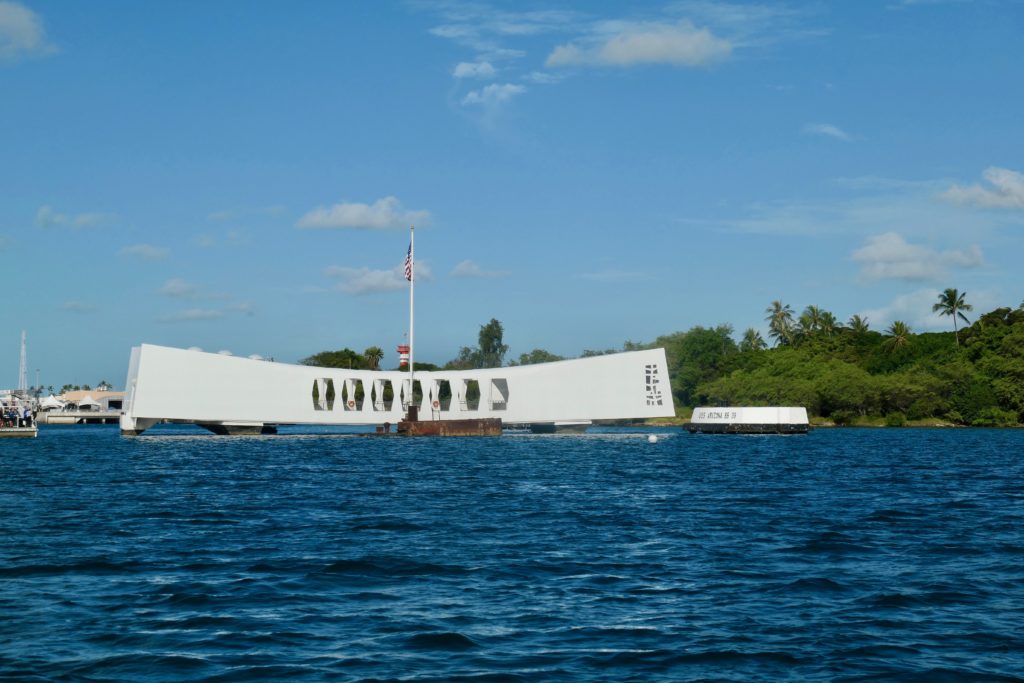
The Arizona Memorial was closed as the dock was damaged but we circled the site and could make out the outline of the ship below. It is still the burial site of most of those killed and many of the survivors have chosen to be buried there along with their comrades.

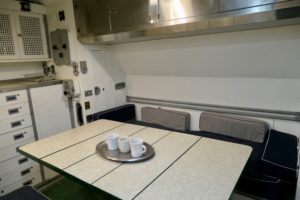
We boarded the submarine USS Bowfin and inspected it from end to end. Not quite the “Canberra”!

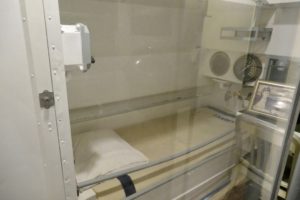
Officers Mess
Captain’s Cabin
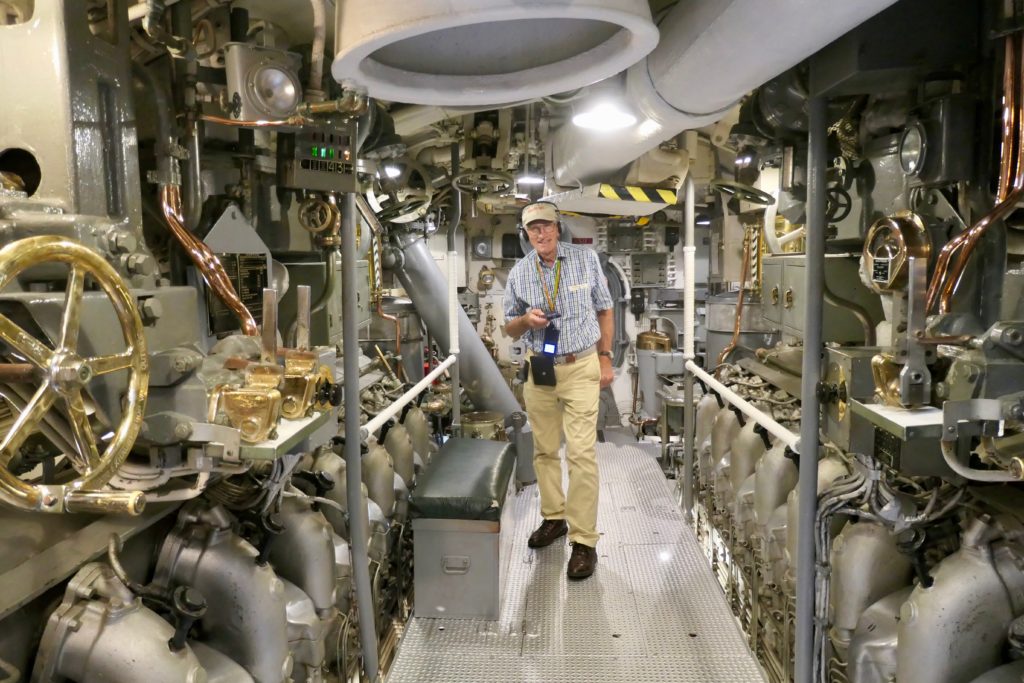
Ed checking out the engine room
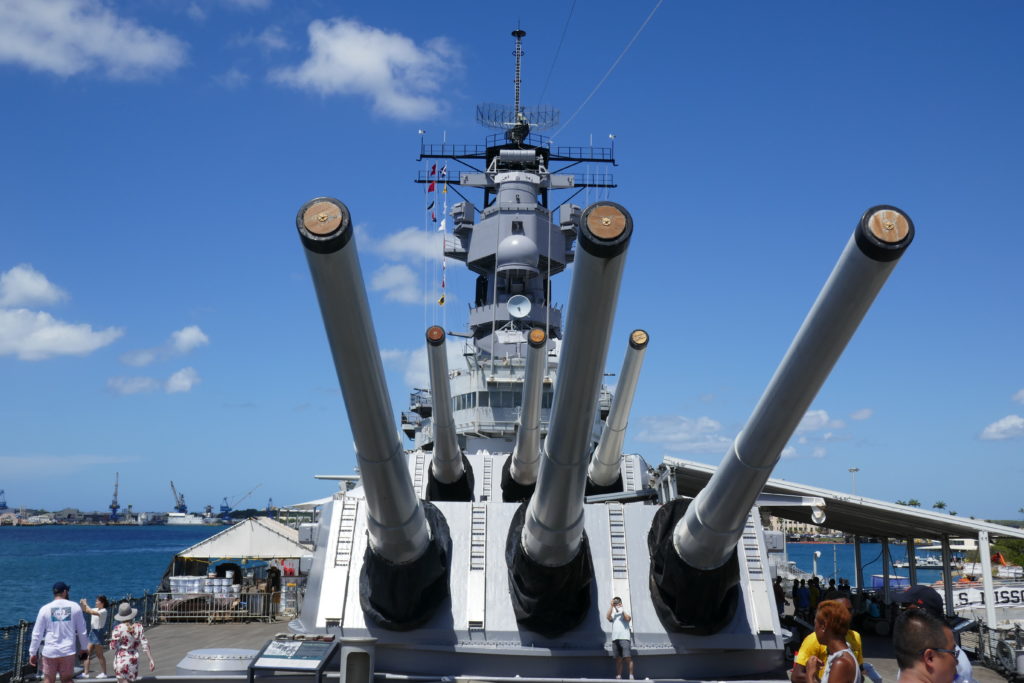
We then boarded the battleship USS Missouri where history was made
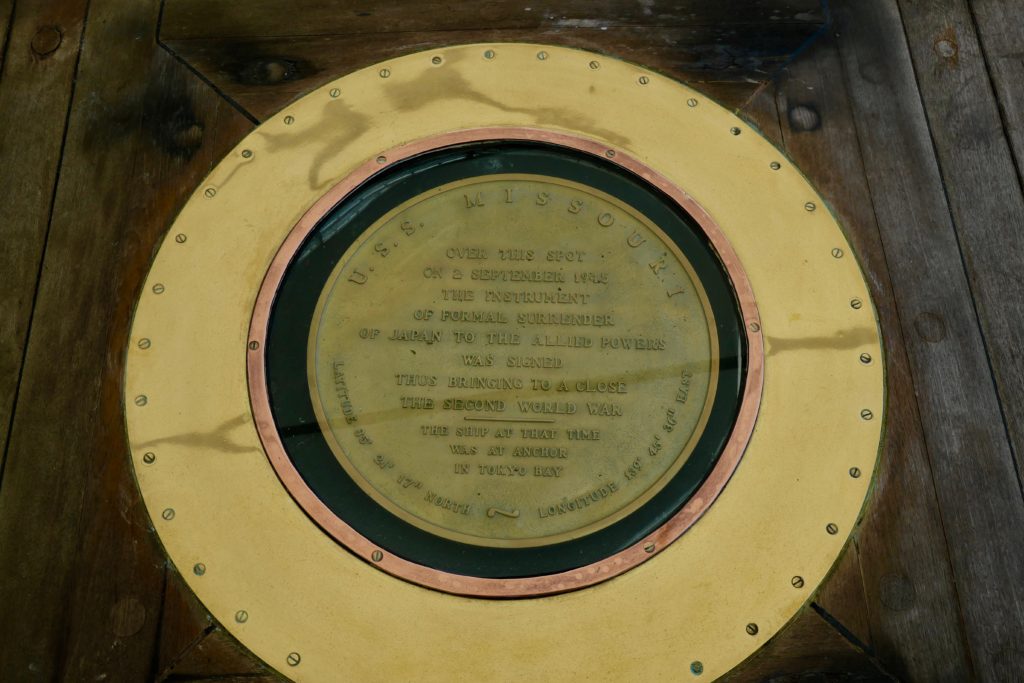
The plaque in the deck of the USS Missouri marking where the surrender was signed to end World War II
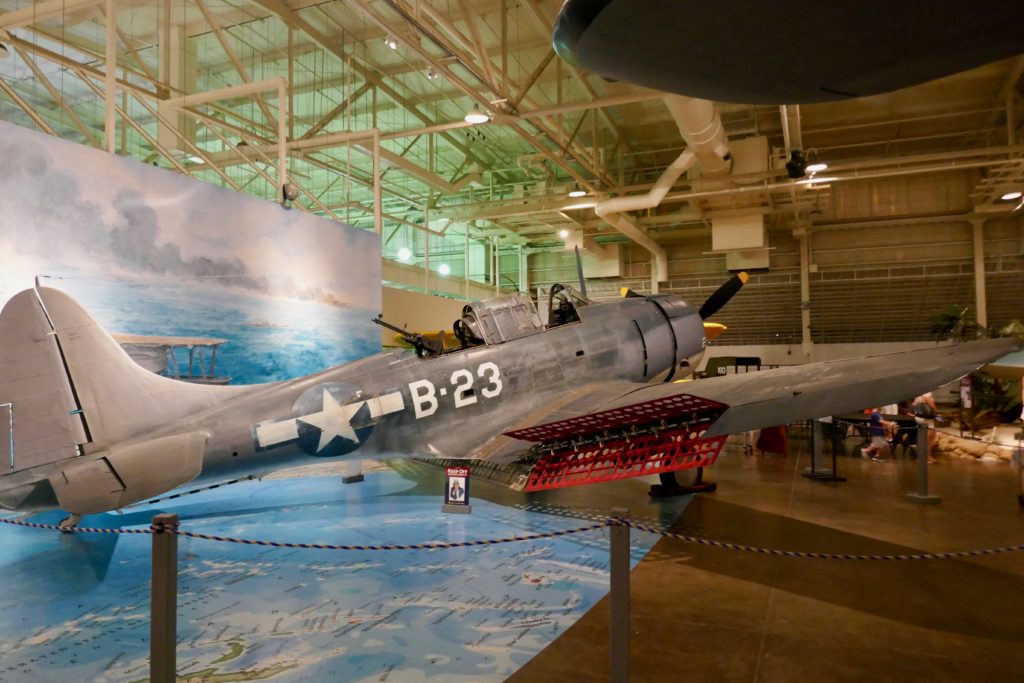
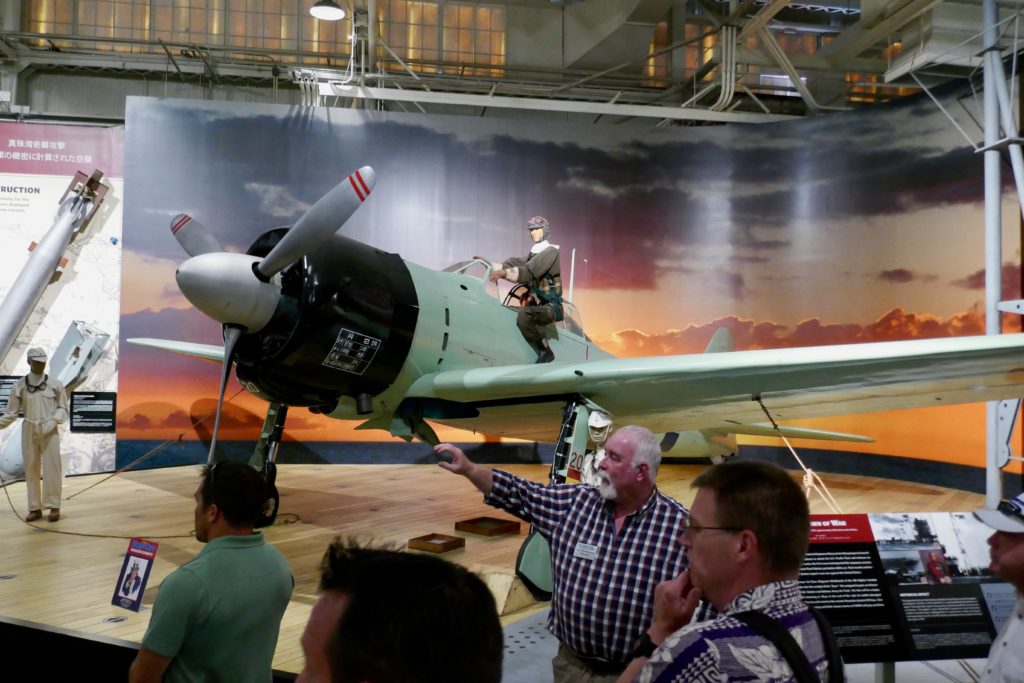
Then it was on to the Pacific Aviation Museum for lunch before completing our tour
Dauntless Dive Bomber
Rebuilt Zero

We were back at the Halekulani by 3.30pm and were given admission to the Hospitality Suite for the rest of the afternoon. We unpacked our togs and headed back to the beach and the pool for the rest of the afternoon before having a shower and going back to the House without a Key to see if the Steamed Onaga was as good as the previous time – it was!

This time at the Halekulani was our saving. The ability to use all the facilities long after we had checked out meant that we arrived at the airport in reasonable shape for our overnight flight to Vancouver. Though the Halkulani may be expensive it is worth every penny. It is not only its friendliness and helpfulness during your stay – and it’s excellent facilities – but the fact that you could check in early after the arrival of an early flight and use the facilities late before the departure of a late flight means your stay is extended and comfortable. We have joined it’s legion of fans.

Halekulani “The House Befitting Heaven”

Day Two
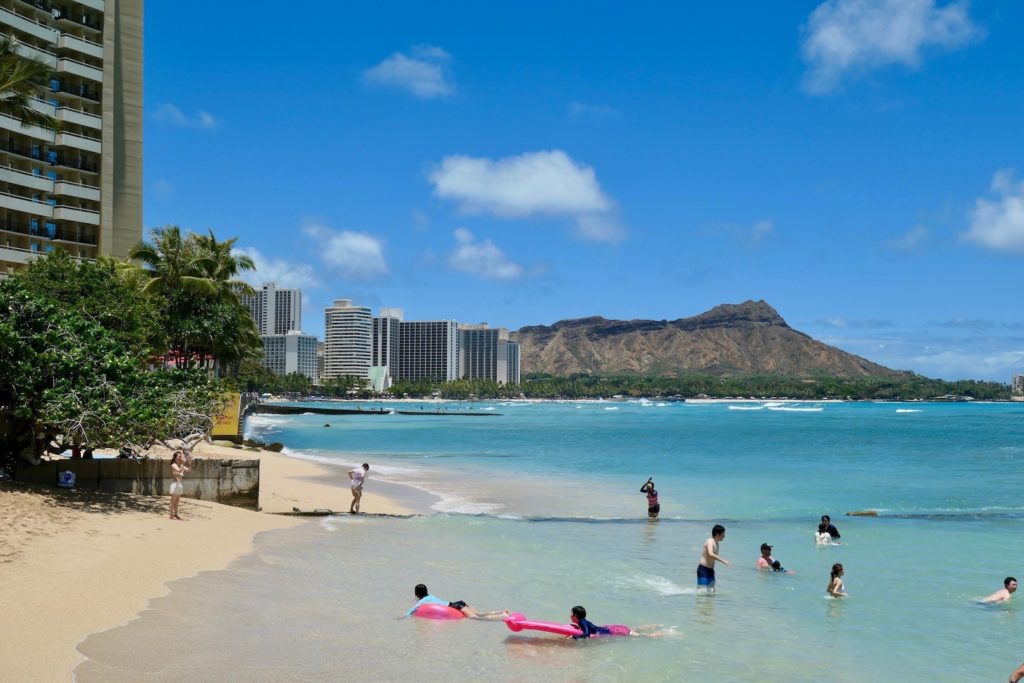
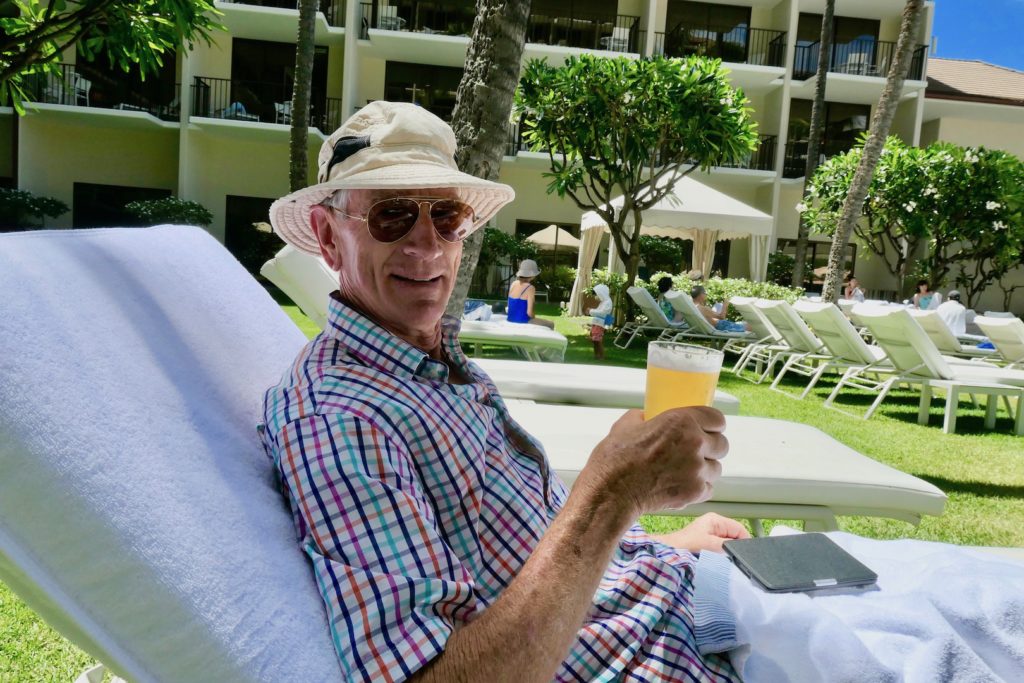
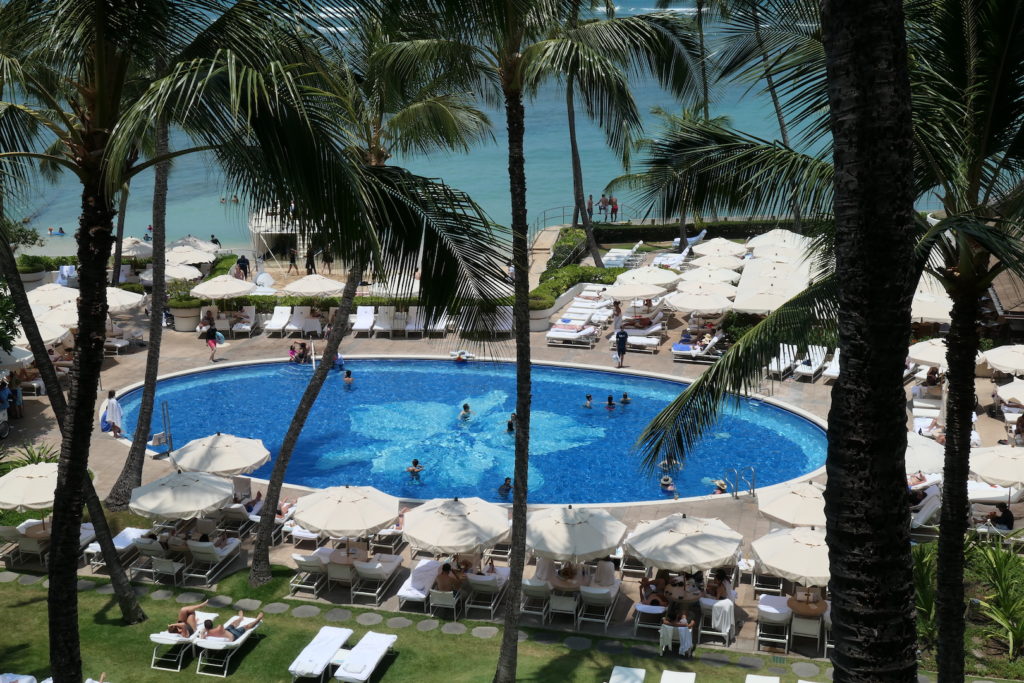
Having learnt yesterday that you need to be pretty smart getting down to the pool to get a good seat under an umbrella, we selected our seats from the balcony and then hotfooted it down to stake our claim. We bypassed the pool, which, though lovely, was a little warm for us and headed for the beach and the ocean – gentle waves and cool and refreshing.

Halekulanis private beach in the foreground with Waikiki and Diamond Head behind

That was pretty much our day – a swim, a cocktail, some reading, crab sandwiches, more swims, more swims, more cocktails, more reading, a wander into town looking for the elusive Crazy Fish Boutique (sorry Sandra but no longer exists), some gelato, an afternoon nap then dinner.
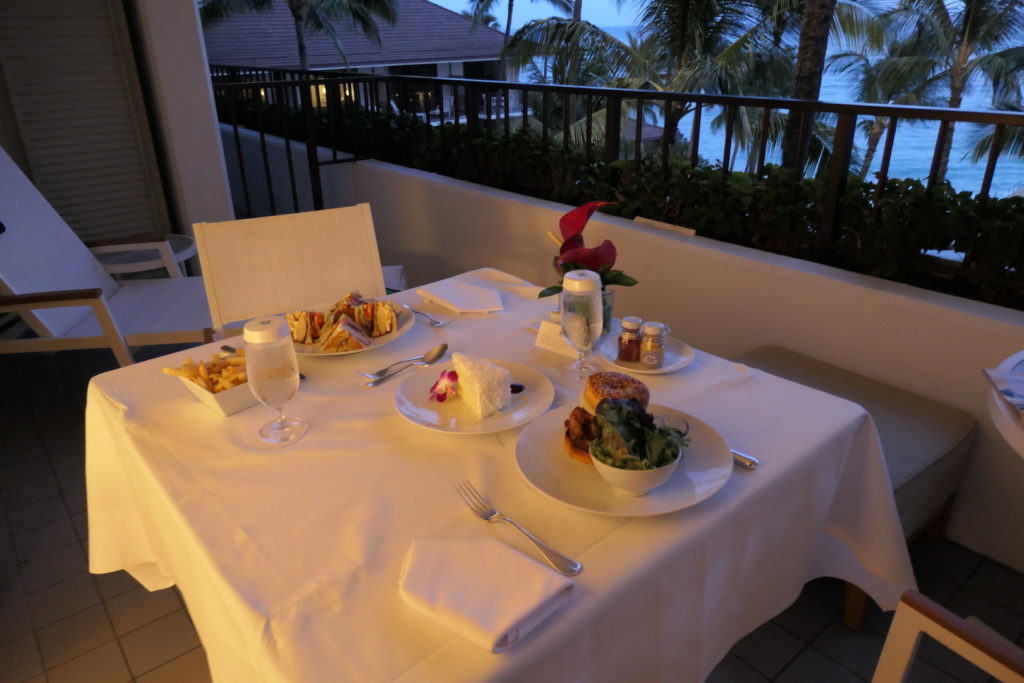
The night before, at Tim’s excellent suggestion, we had had room service on our balcony and listened to the Hawaiian music from down below. Tonight we decided to get a little closer and went down to the Room without a Key for dinner to listen to the music and watch the dancing.

Our love affair with the Halekulani was well underway when we were ushered to our ringside seat and looked after with friendly professionalism. The meal was superb – for entrée Ed had Cajun Spiced Ribeye and I had the Local Ahi Sashimi, we both had Halekulani Signature “Steamed Onaga” with braised baby bok choy, shiitake mushroom, green onions, parsley, steamed rice, which was out of this world, followed by light refreshing desserts and accompanied by excellent wines.

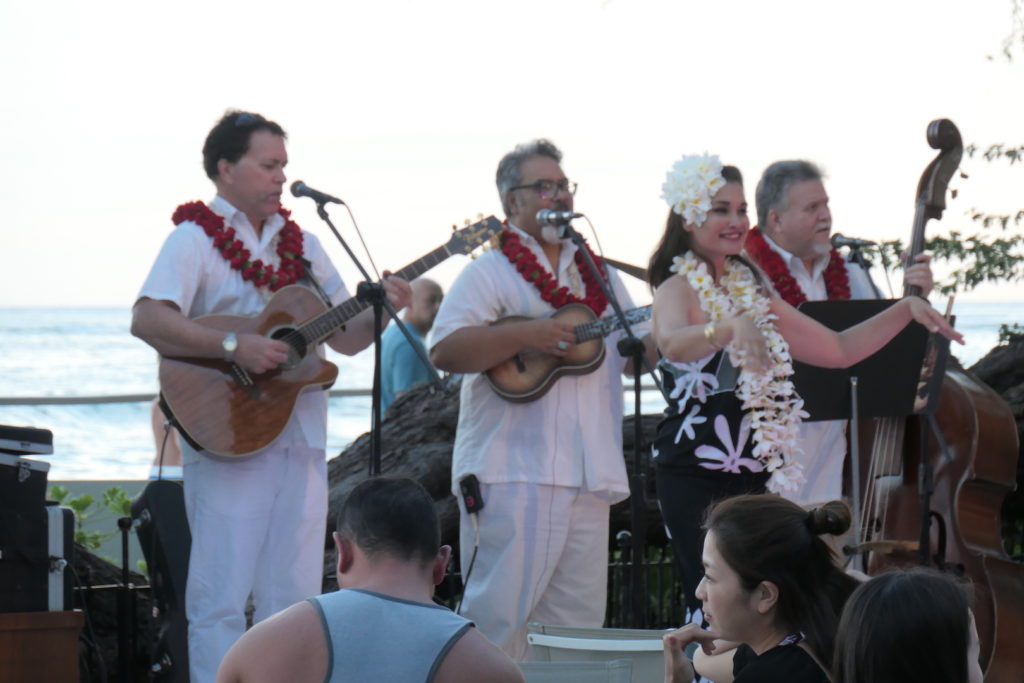
The music and dancing were not the grass clad hula girls with their rapid tempo but the old traditional Hawaiian songs with an ex Miss Hawaii, Miss World, Miss Universe doing the slow, graceful traditional dances. She was good but half way through the evening they spotted one of the older women in the audience who had taught hula for many years and persuaded her to come up and do a number for us. Despite the fact that she was so much older (and so much larger) she was so graceful and expressive that we felt we had seen the best Hawaii had to offer.
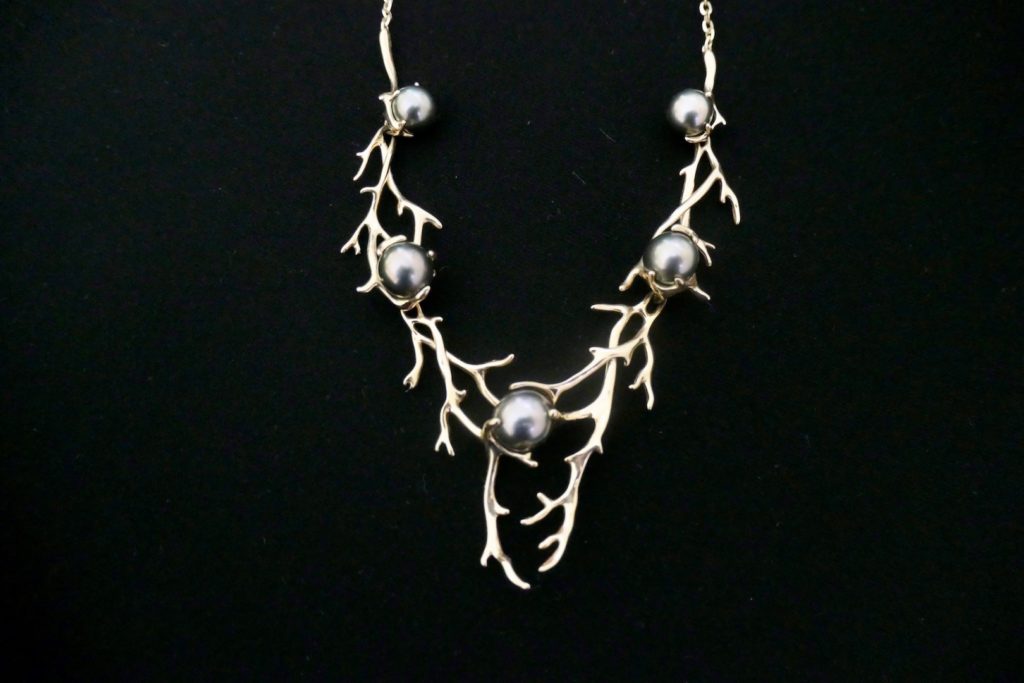
Day Three dawned with an invitation from the General Manager of the Halekulani to a cocktail party that evening. After the buffet breakfast – which we decided was the best value as afterwards you needed nothing to eat for the rest of the day – we went into town and checked out the galleries and local boutiques. We bypassed the numerous brand outlets, which were extremely expensive and aimed at the lucrative Japanese markets, and looked for local artisans. I had decided to travel with very little jewellery after my nasty experience in Washington and felt somewhat underdressed in that department for the forthcoming cocktail party, so when we spotted a beautiful necklace of gold and Tahitian pearls designed by a local artist I needed little encouragement.

The cocktail party was quite an experience. There were about a hundred guests. When we arrived at the stated time of 6.30pm most had already arrived and where piling their plates with food as if they had never eaten before and were never going to be offered food or drink again. It was quite a display of greed by already very wealthy people that was very off putting.

We chatted to a few people and ended up spending some time with a very nice couple, who lived in the Hunter Valley close to where we stayed on our road trip. Invitations to look them up when we did our Hawkesbury trip followed before they headed off to dinner in town and we to our room for an early night before our dawn rising trip to Pearl Harbour.

Our Adventure begins….

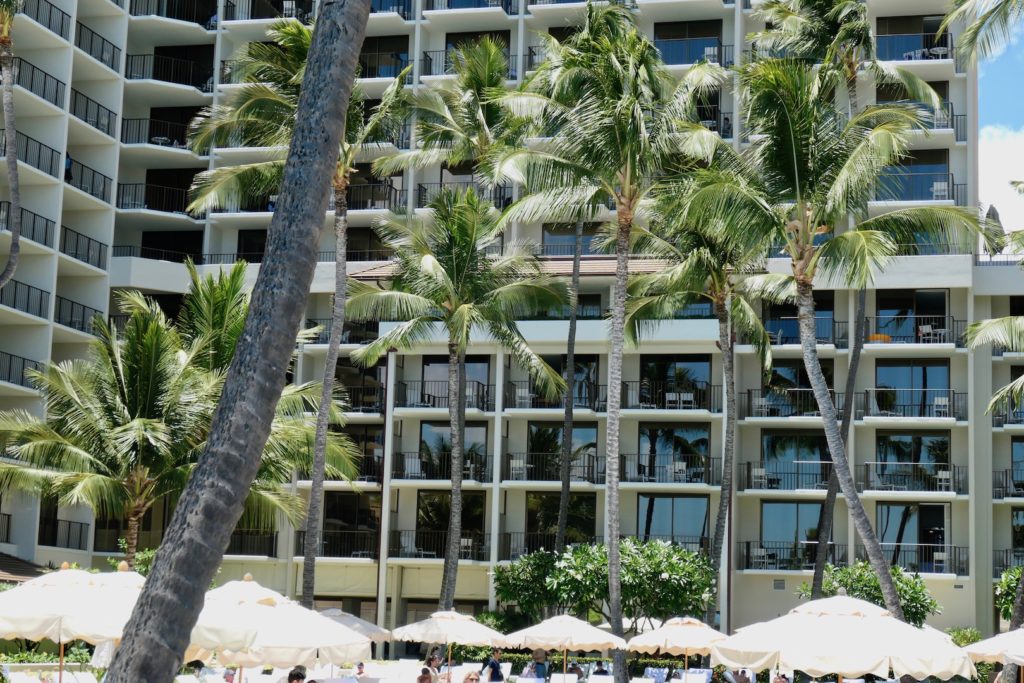
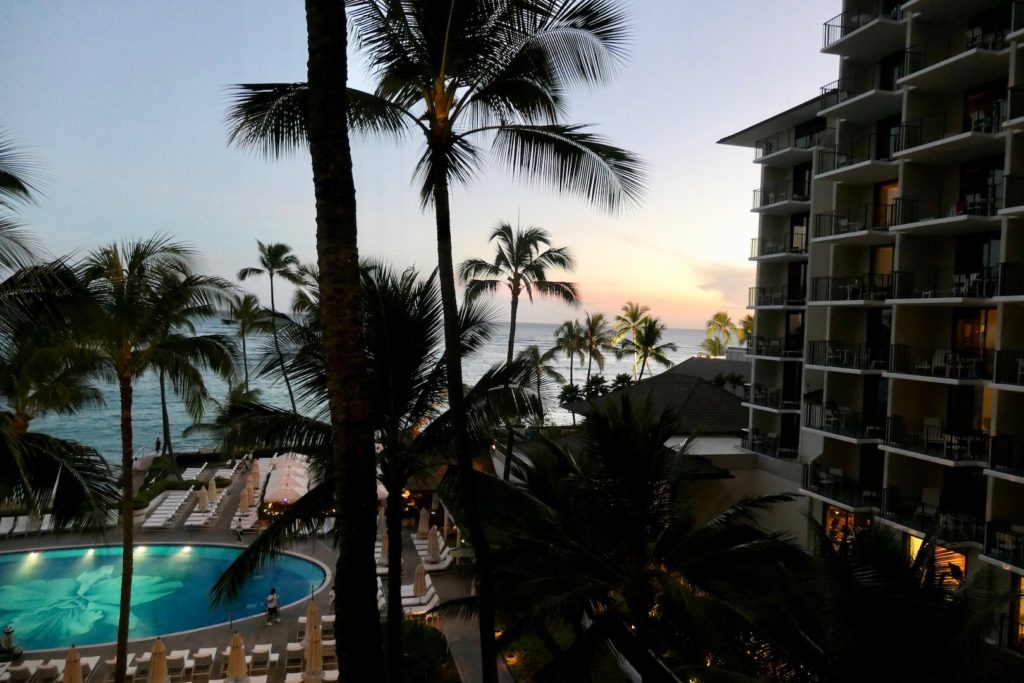
Here I am sitting on the balcony overlooking the ocean, Waikiki Beach and the famous Halekulani swimming pool – and I have absolutely nothing to do except read, relax and enjoy myself!
June has been an incredibly busy month with lots of tenants to welcome and farewell, our trip to Canberra with Sterling for his holiday with his uncle Vranken, (not an initial success but hopefully improving), catching up with family, welcoming our beautiful granddaughter Lily and attending a lovely celebratory lunch for Mike Tyquin’s 80th birthday.

Departure day arrived and, even though I was still mopping the floor when the taxi arrived, we had the downstairs ready for an incoming tenant, upstairs ready for Clare and Terry to housesit and had packed our bags (16kg for me – a record!)

Despite a slight debacle with changing money (yes, we should have done it days earlier) and a kerfuffle with our Jetstar meals (there has to be an easier way) we had a good flight on the Dreamliner and arrived in Honolulu, only slightly dazed, at 5.50am on the same day we had left. We were picked up at the airport by a very amiable driver and whisked off to the Halekulani to be warmly welcomed and told that our room was ready and we could check in immediately.

That’s us in the middle . A lovely private balcony behind the white wall on the fifth floor

A leisurely buffet breakfast under the palm trees followed by a shower and a sleep was the order of the day and as I write this Ed is still in dreamland.

Our plans are to have a swim in the pool and then the beach and wander into town to have a look around and find a money changer (yes, we should have done it days ago), a little shopping, dinner on our balcony and an early night.

Hervey Bay to Manly

Monday 30th October
At 7.00am we saw Lyndal off for her drive home to Brisbane in Scott’s car, then Edgar and Scott had a bit of breakfast and secured everything in the saloon before heading out at 10.00 into a brisk northerly. We took the shortcut across the top of Woody Island so there was only about half an hour of pushing into the choppy waters before we were running down the Sandy Straits with the wind behind. At 1.00pm we dropped anchor tucked in to the south of Turkey Island in a nice gutter across the channel from South White Cliffs.
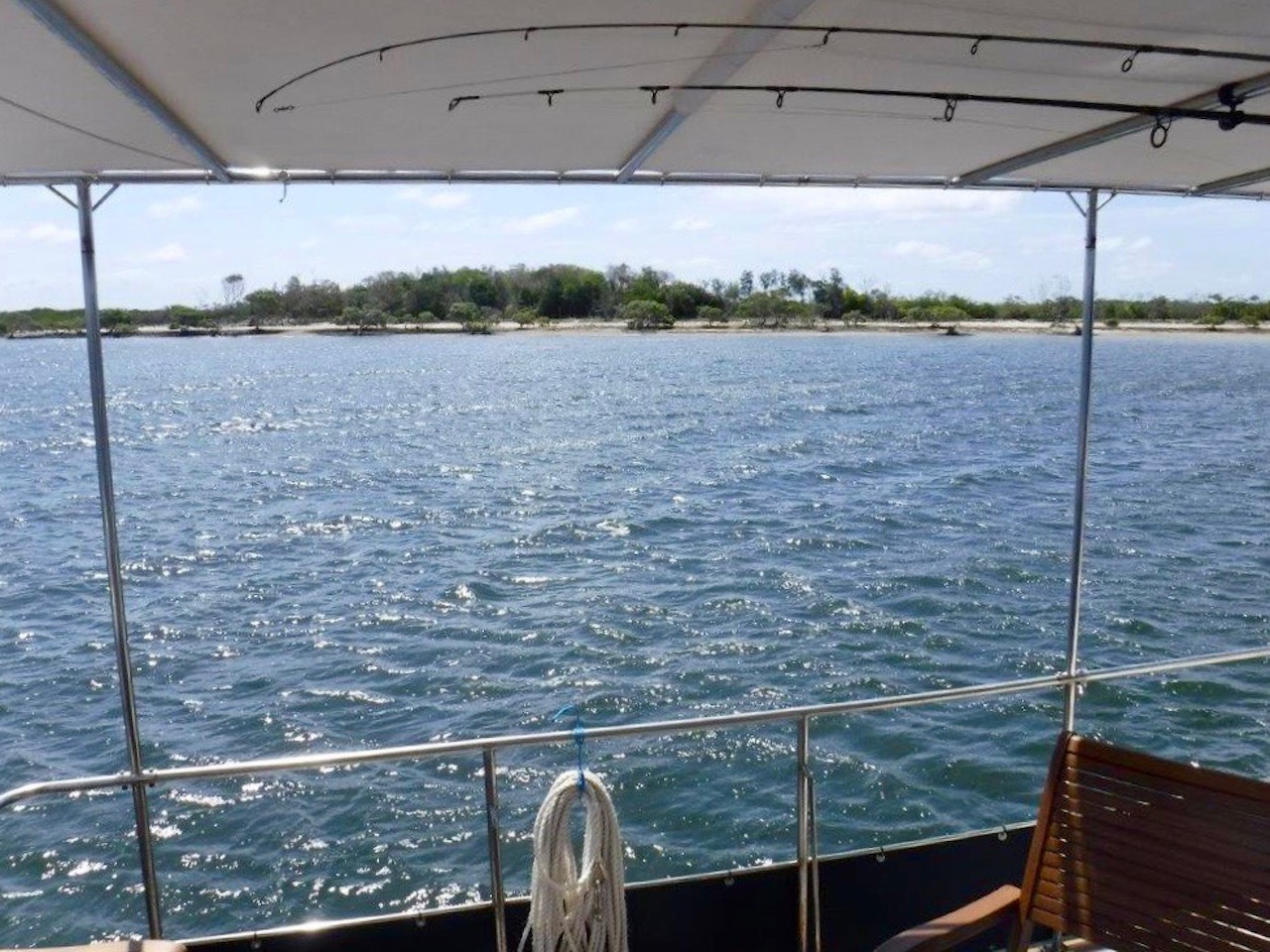
Anchored in the shelter of Turkey Island
An old Hervey Bay veteran living on his boat next to us in the marina had told me this was a good spot in a northerly and we noticed that “Moreton Lady” which had been anchored further back in the Curtis Coast book spot, moved up to anchor next to us when they realised it looked like a better position.

The wind was 20knots plus throughout the afternoon so we were not tempted to put the dinghy in the water even though there was quite a nice little beach opposite. A quiet afternoon aboard followed by one of Lyndal’s pre-cooked dinners from the freezer went down very well.

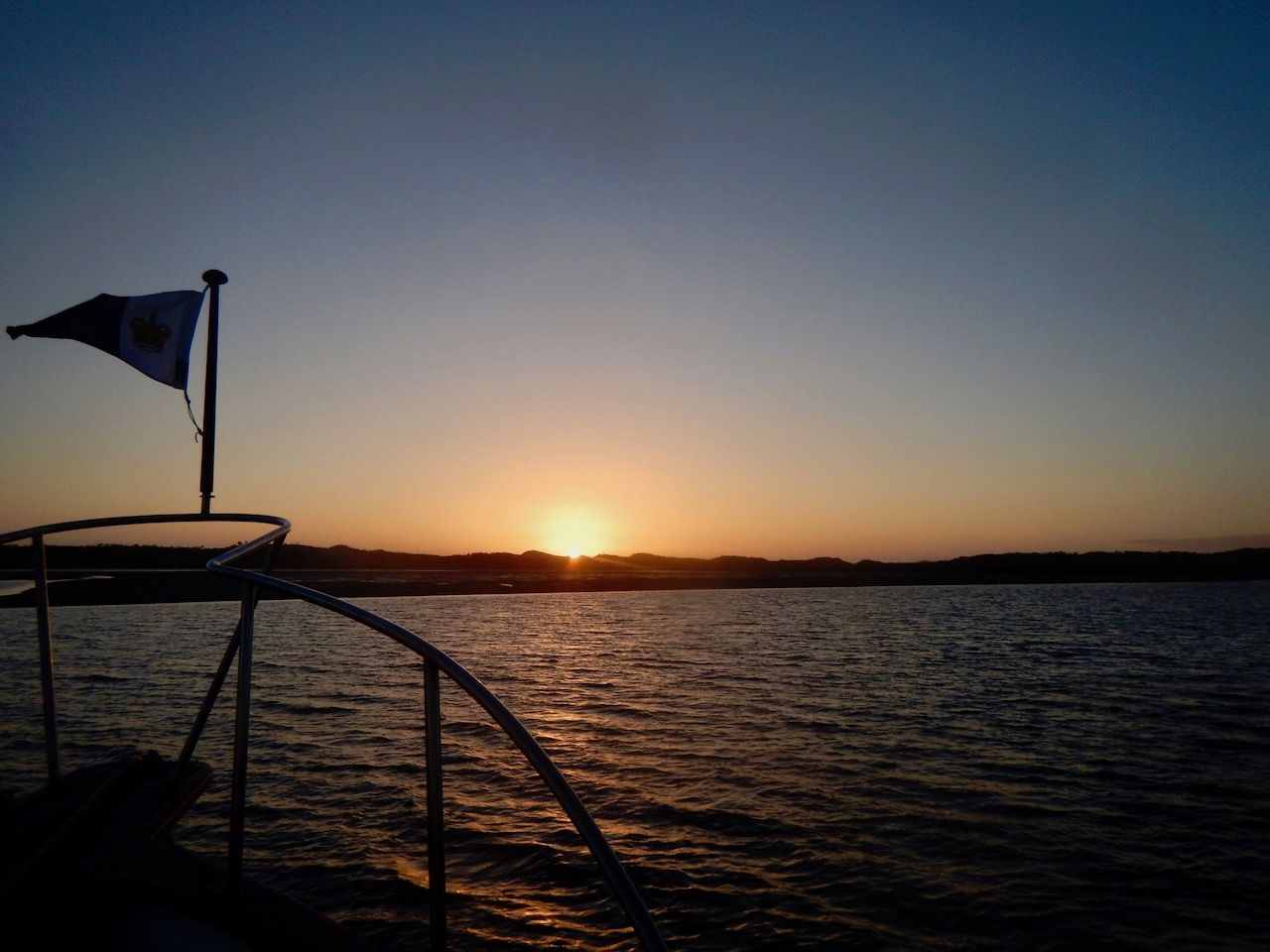
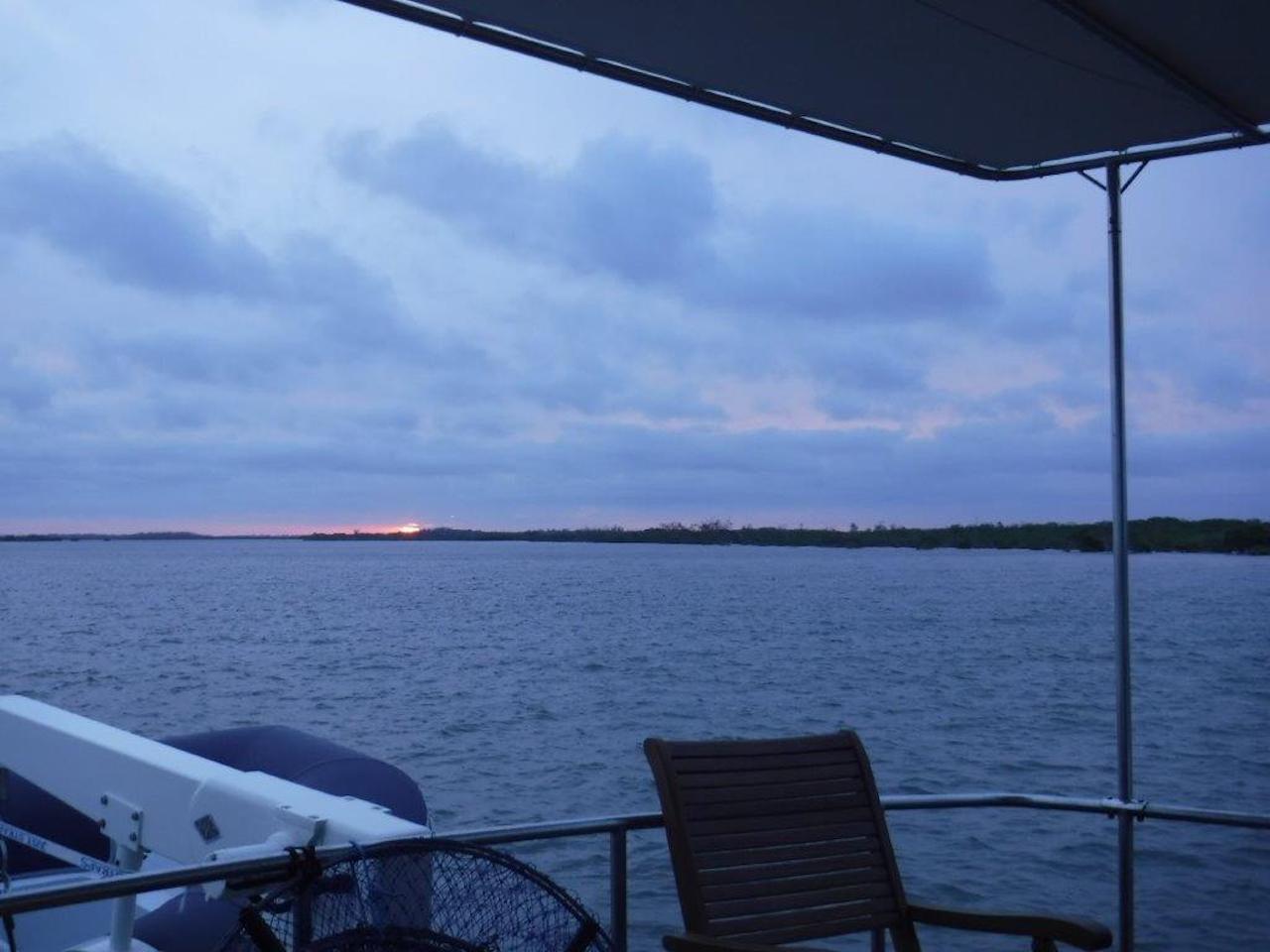
Sunset at Turkey Island

Tuesday 31st
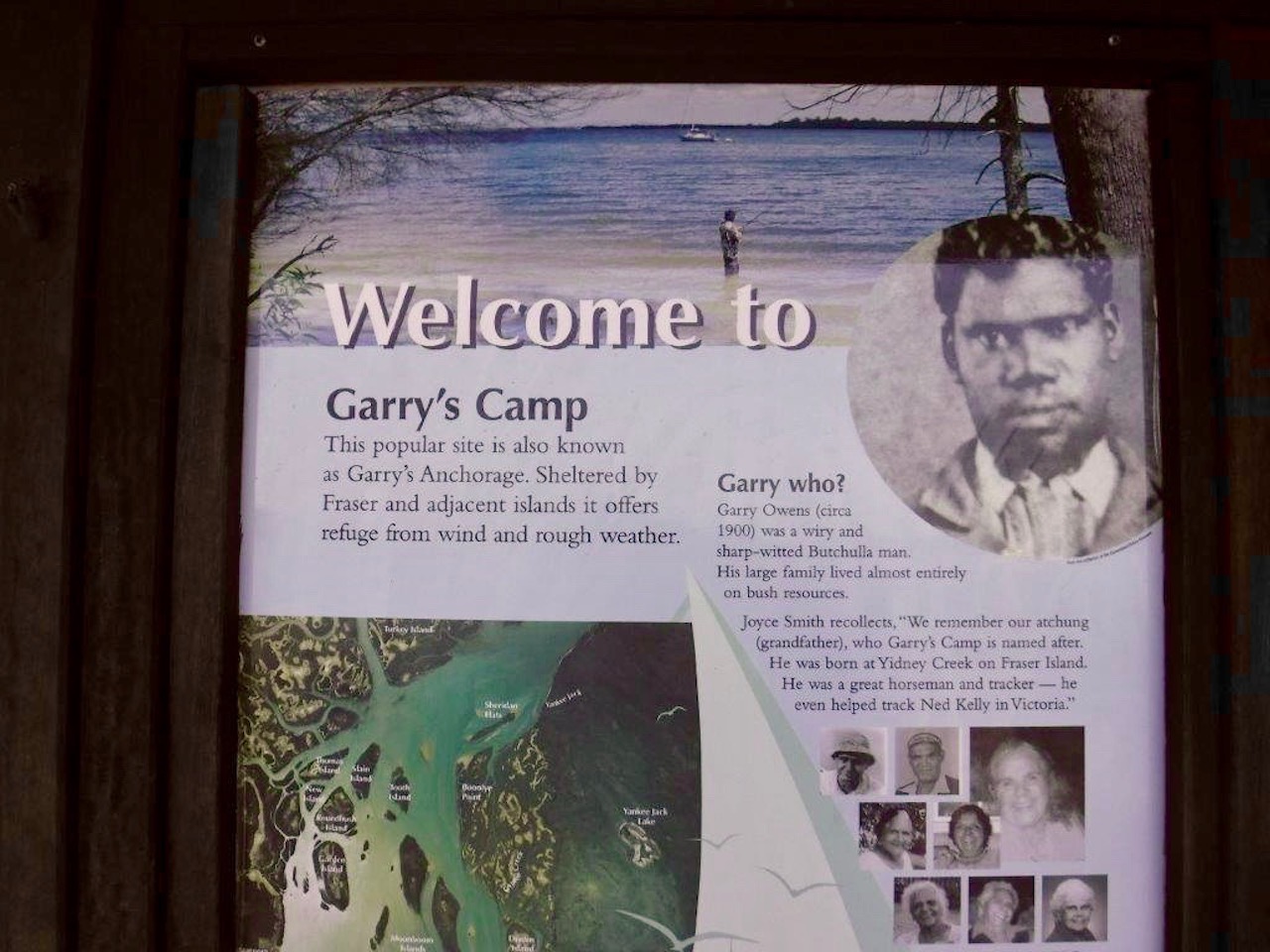
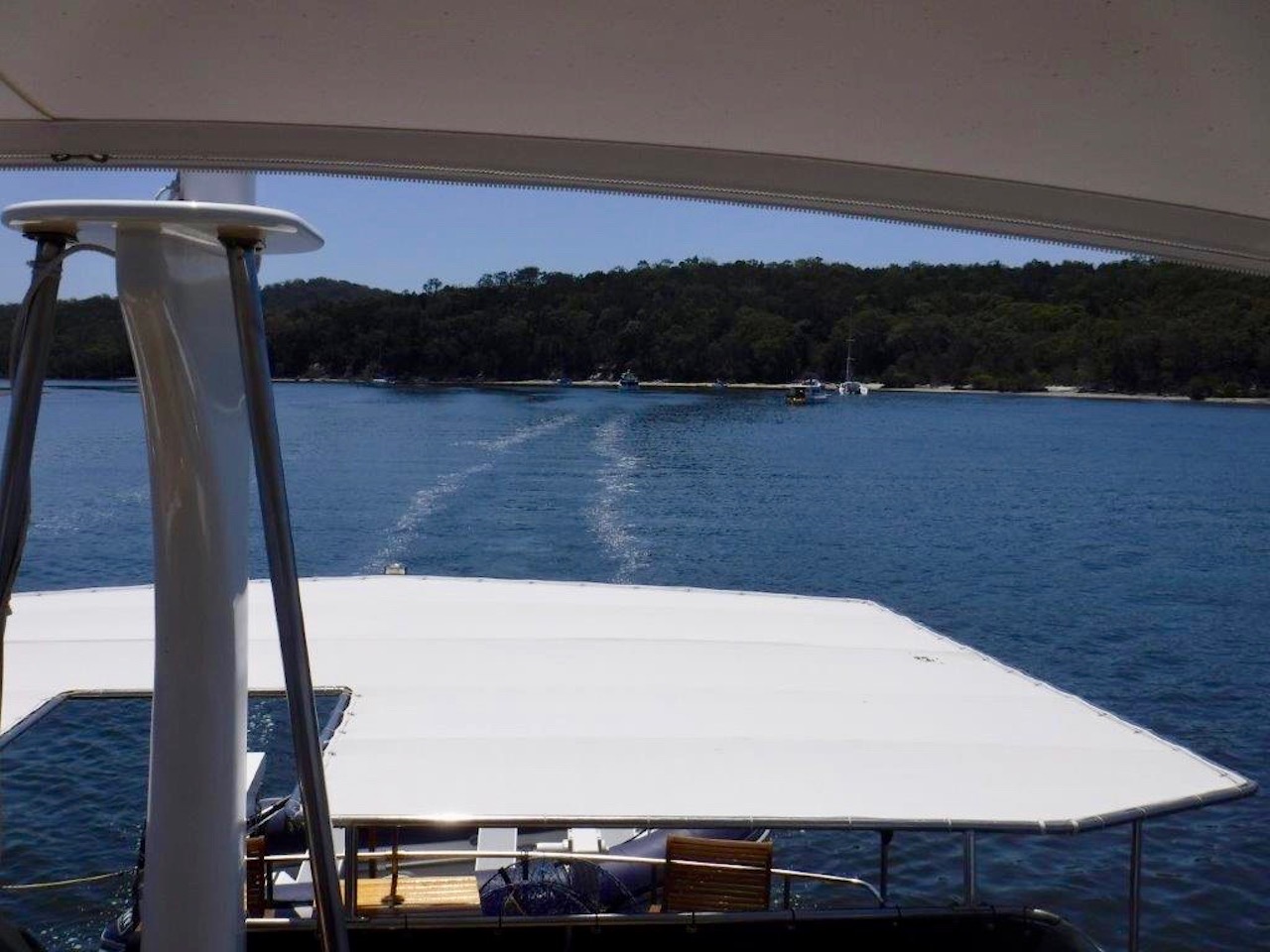
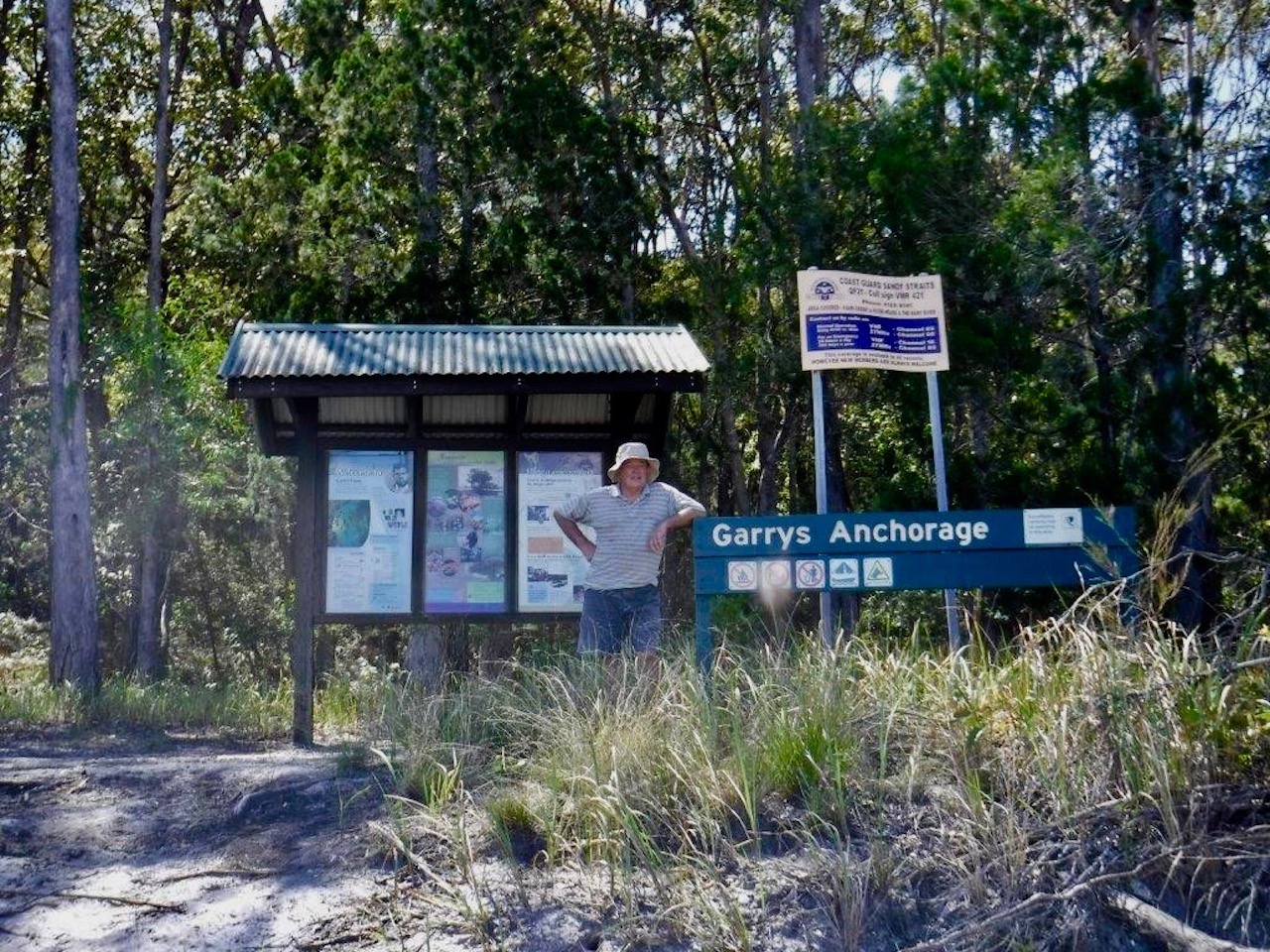
High tide was 0640 so we got under way at 6.00 so as to cross the shallow section of the straits which was just a mile or so beyond our anchorage. The wind had died down overnight and gradually dropped to a complete calm so we had a very pleasant hour cruising over the shallows and on to Garry’s Anchorage, a sheltered channel behind a low island. Here we dropped anchor right opposite the little beach so after breakfast went ashore for a walk. We followed the track through some attractive semi rain forest which gradually petered out to dry woodland.
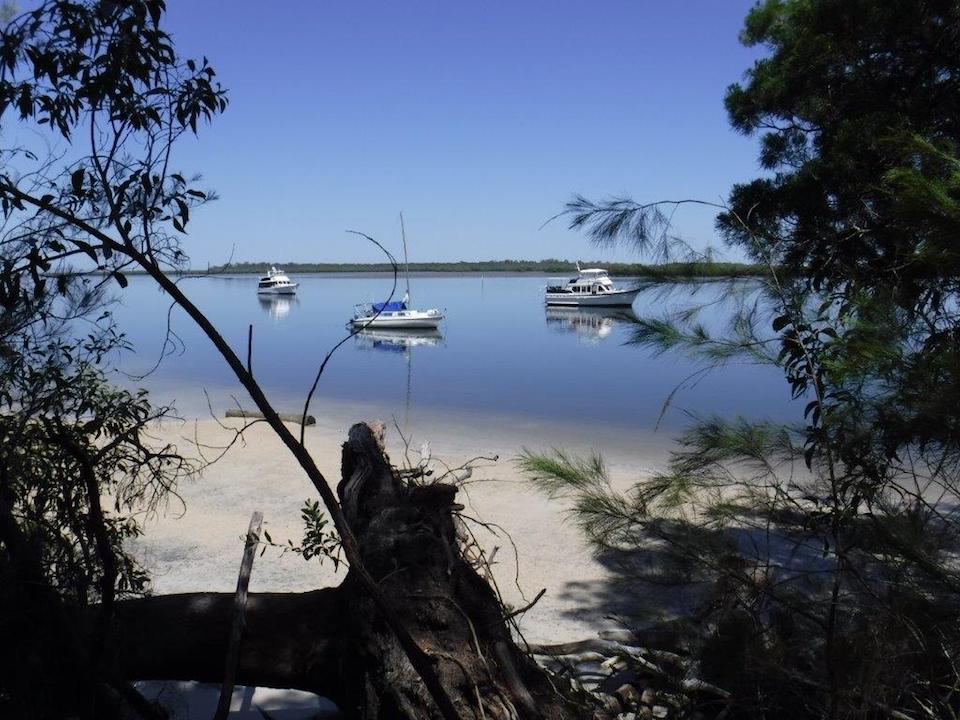
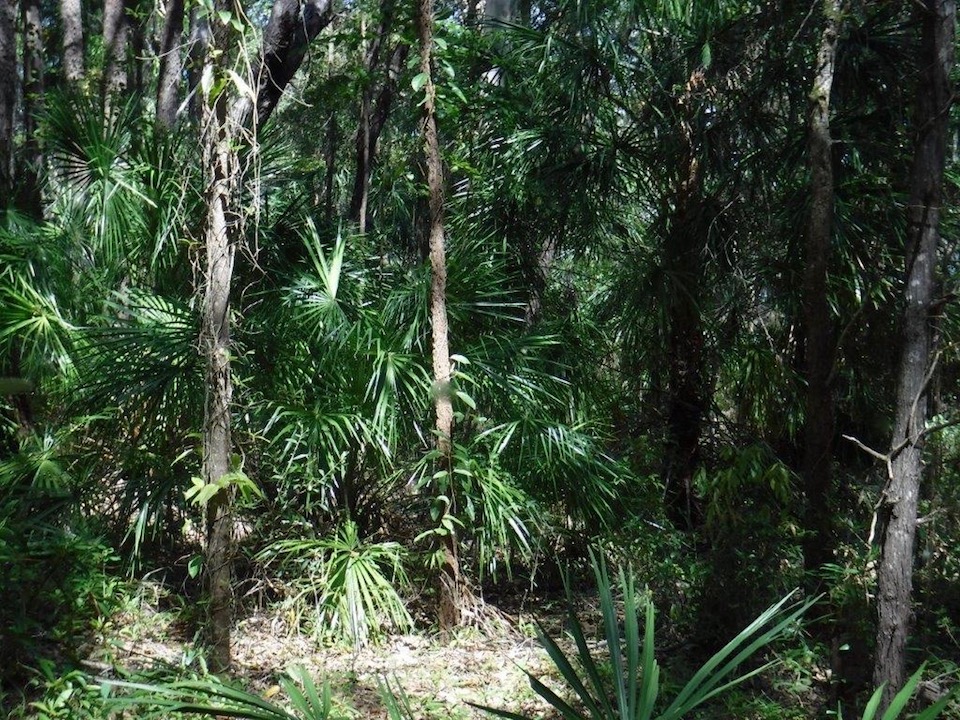
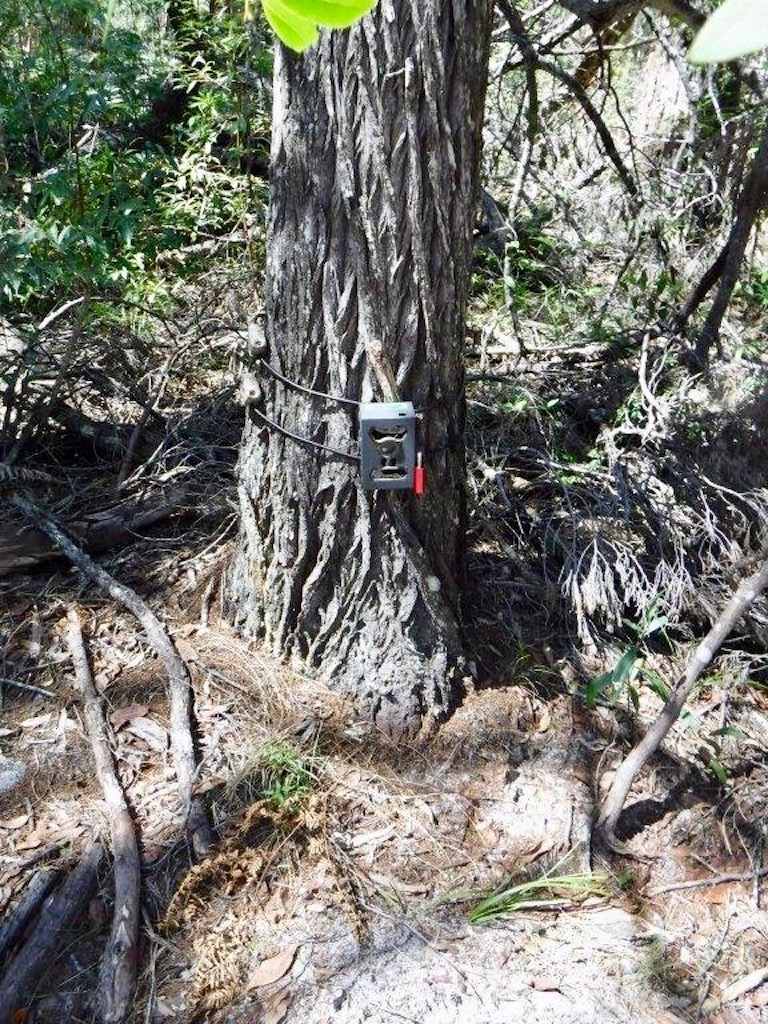
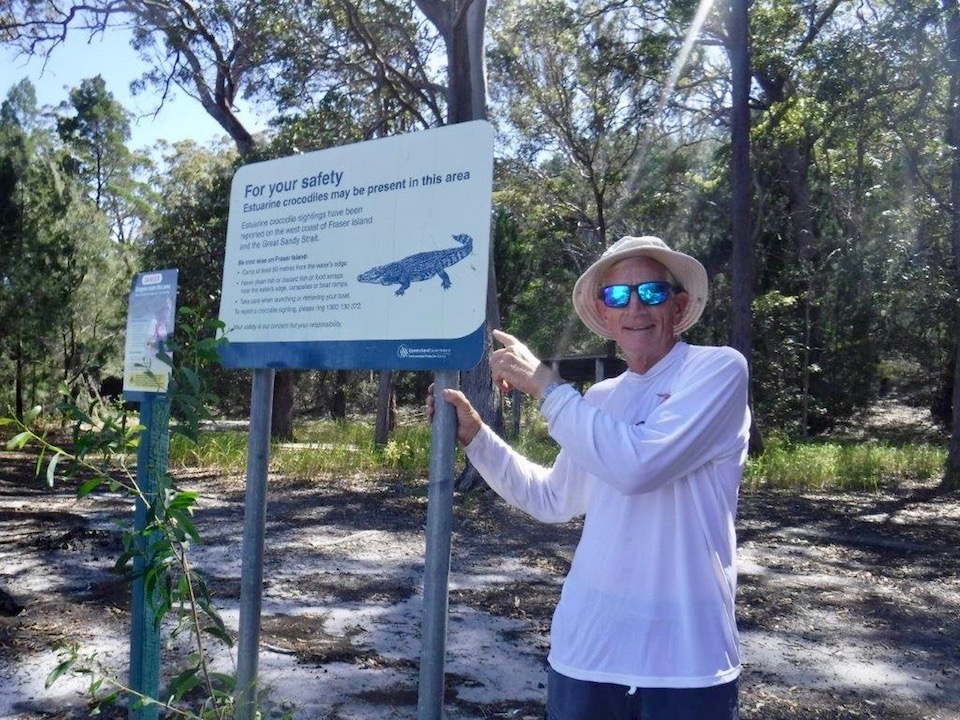
Palm grove near Garry’s Anchorage
Two blokes captured on the wild life camera
We had taken note of the sign at the landing place which warned of the possibility of crocs being present so we avoided the alternate track back along the shoreline which would have involved wading around logs etc.

Since the wind had now completely died it was becoming rather hot at Garry’s Anchorage and there were plenty of mossies about so we abandoned the plan to stay for the night and cruised on down to Pelican Bay, just to the south of Inskip Point.
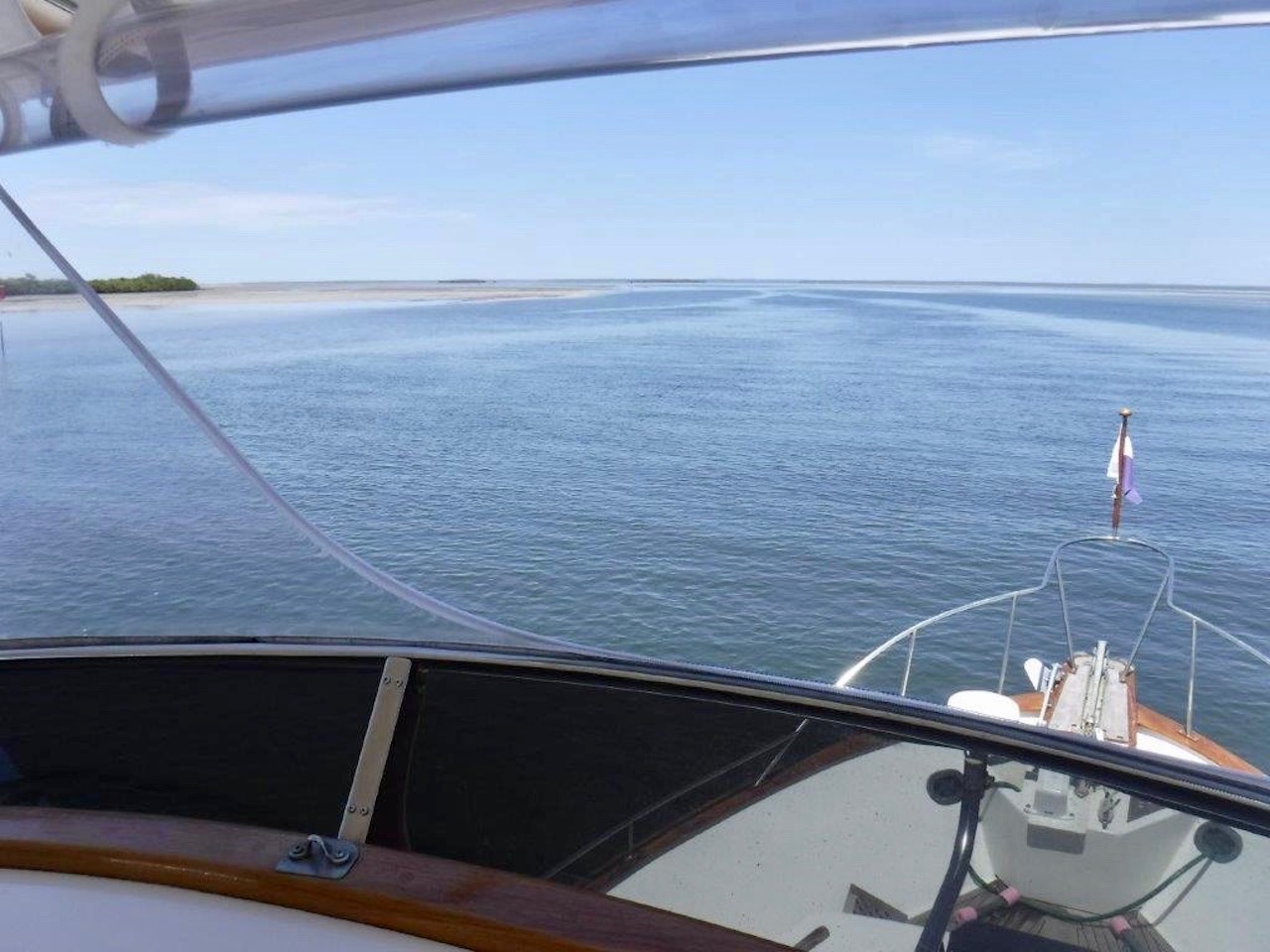
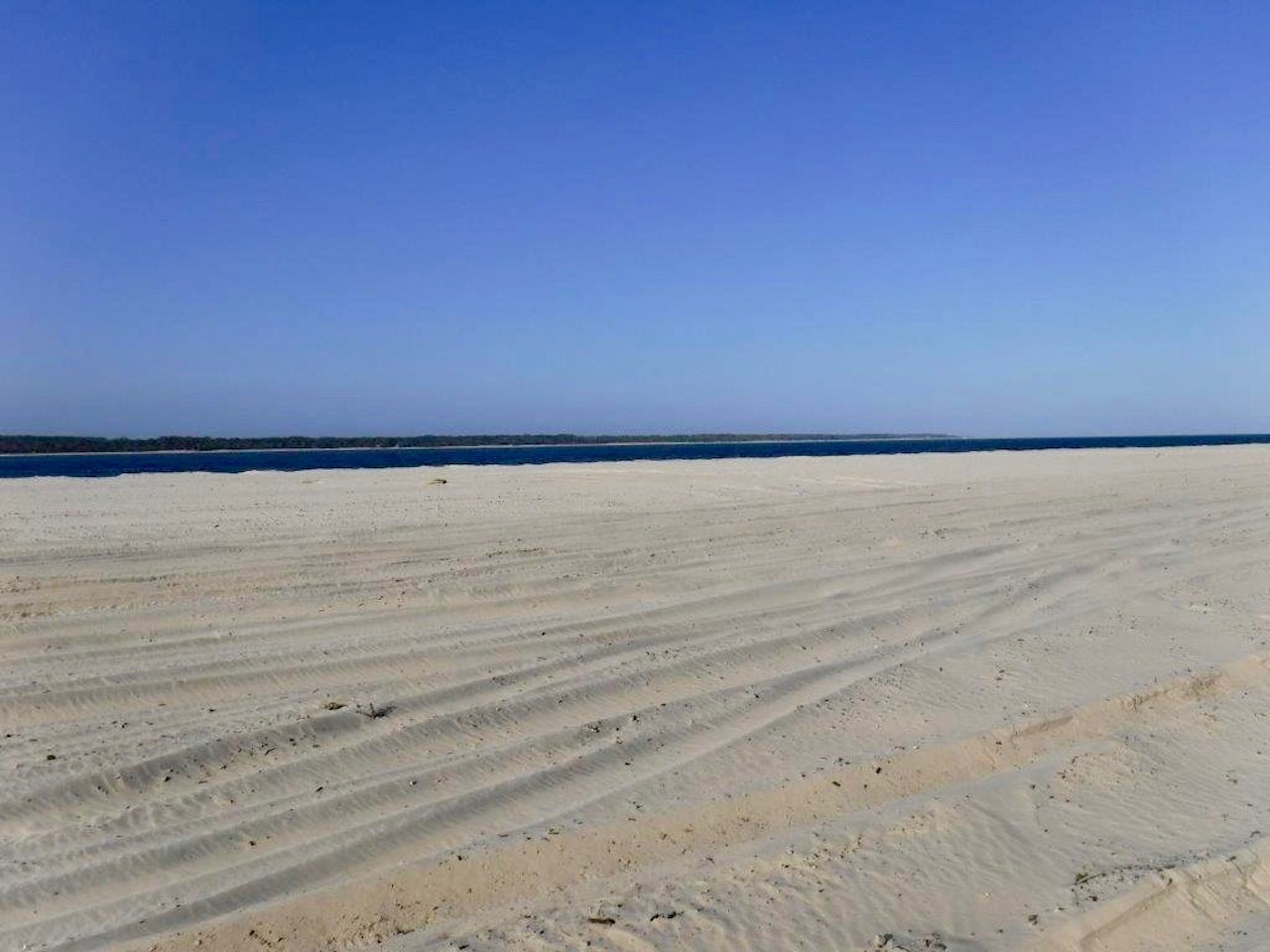
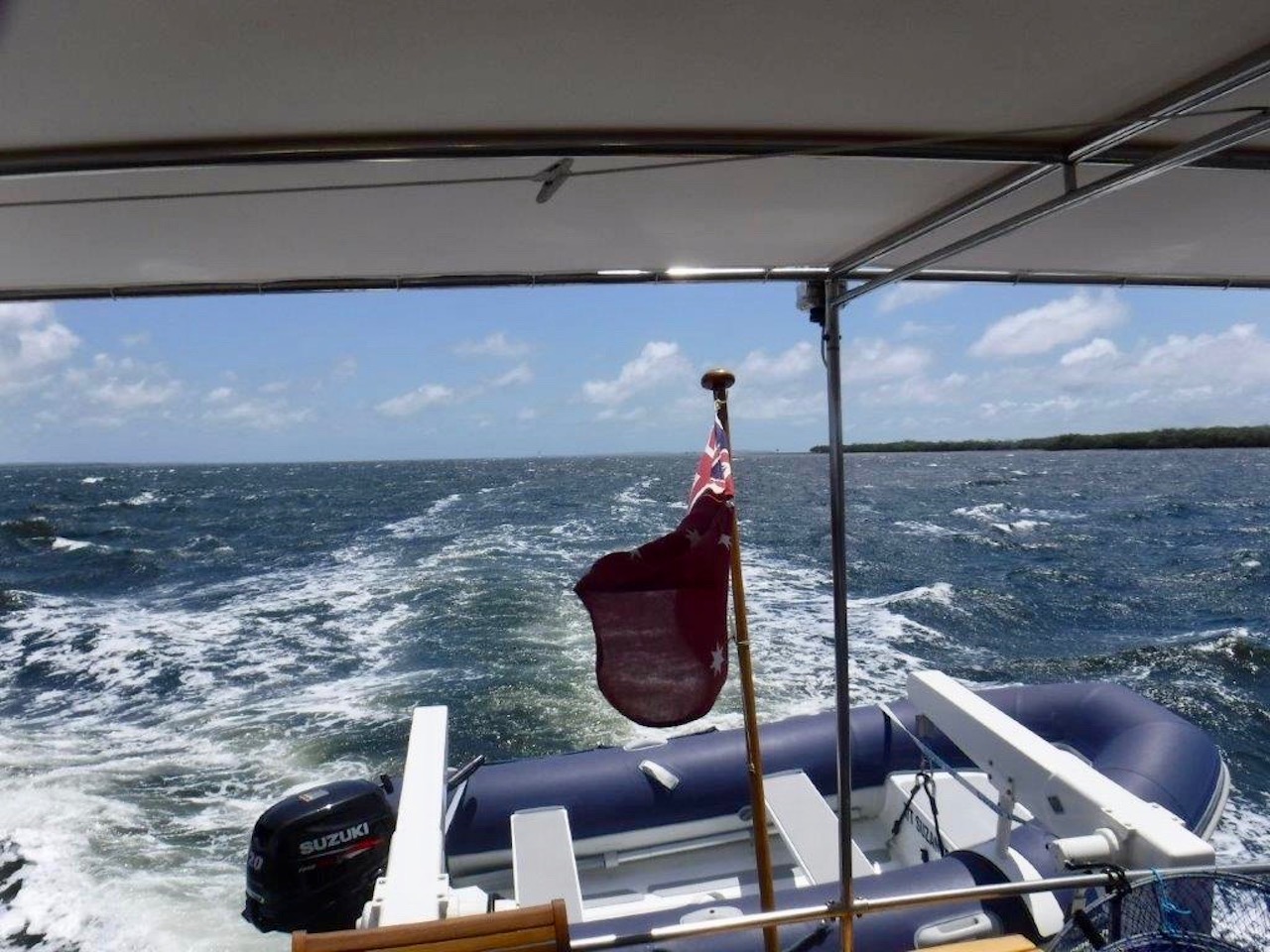
Heading down the Sandy Straits from Garry’s Anchorage
Inskip Point looking towards Fraser Island
This would also give us the option of crossing the bar tomorrow if the weather looked suitable. “Moreton Lady” was already there and the skipper Paul came over in his dinghy for a yarn after we anchored. He said he was waiting another day and after a late look at the forecast we decided to do the same.

Spent a pleasant afternoon aboard where we were able to observe once again the tendency of some boaties to enter an anchorage with plenty of space available yet come and anchor right next to you. Having had one bloke do this at a distance just inside the comfort zone (eliciting some very “grumpy old man” comments from skipper Ed) we were astounded to see another small yacht motor up and commence putting his anchor down in between our two already close boats just as if he was in a Woolies carpark or somesuch. At this the grumblings from Ed escalated to a full throated roar and this bloke was told in no uncertain terms to “back off”. Good thing we did because during the night this noong dragged his anchor and ran into “Moreton Lady”

The wind eased in the afternoon and we went over to Inskip Point in the evening and walked a couple of k’s up the beach and back which definitely cleared the lungs.

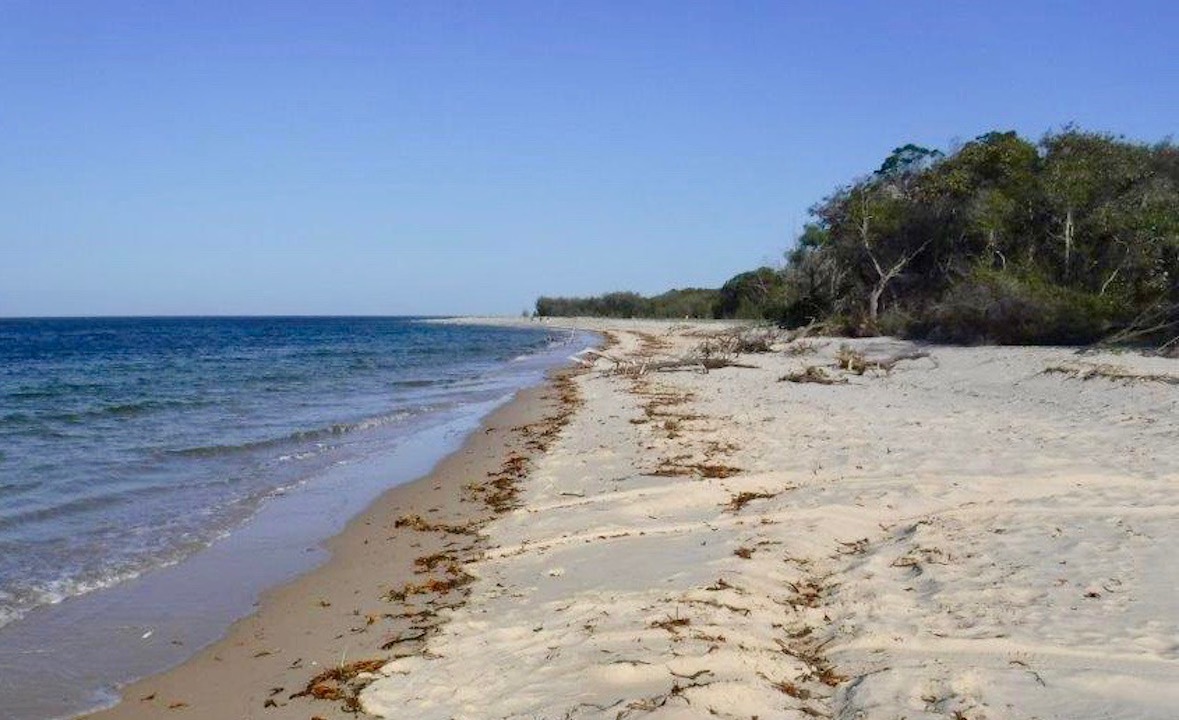
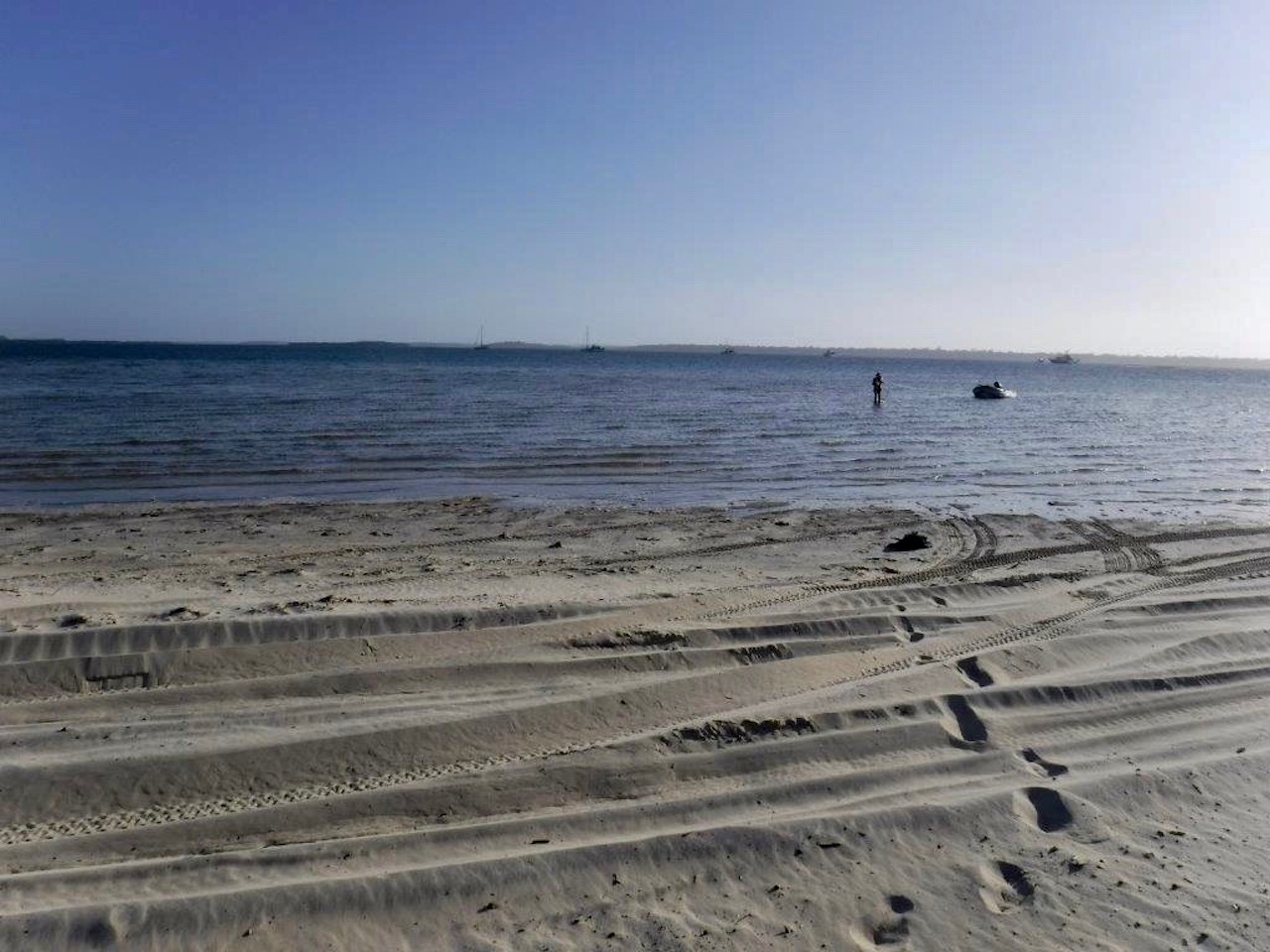
Beach at Inskip Point looking east

Scott retrieving the dinghy

Wednesday 1st November
In the morning the boat anchored next door left so we were able to spend a peaceful day aboard Suzanne. It was windy morning with a couple of heavy rainshowers so we were pleased to be staying in Pelican Bay. In the evening we went over to the beach for a short walk and on the way had a yarn to “Moreton Lady” and heard about his dramas with the wayward yacht last night.
Back onboard we got everything ready for an early start tomorrow.

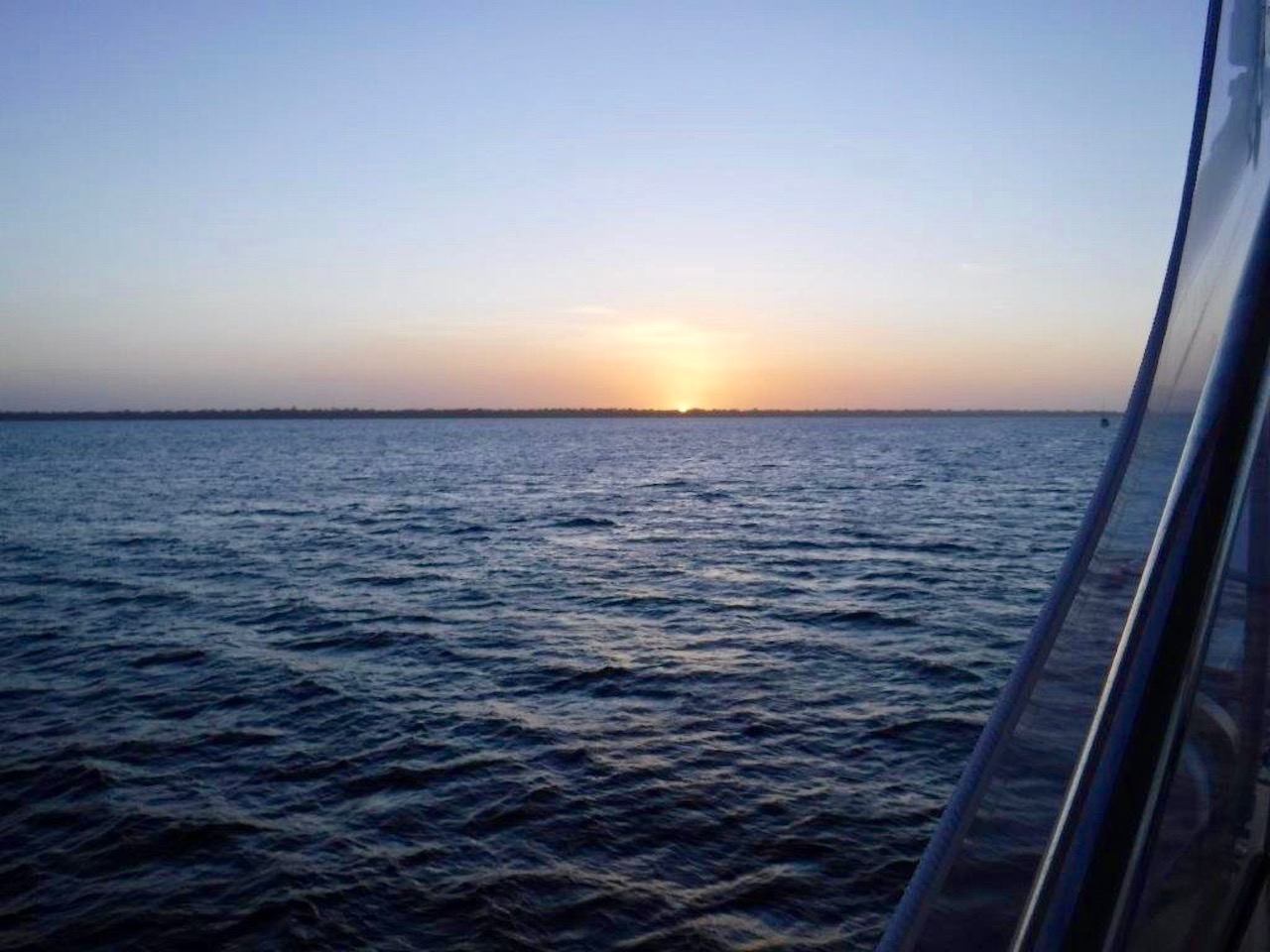
Sunset at Pelican Bay
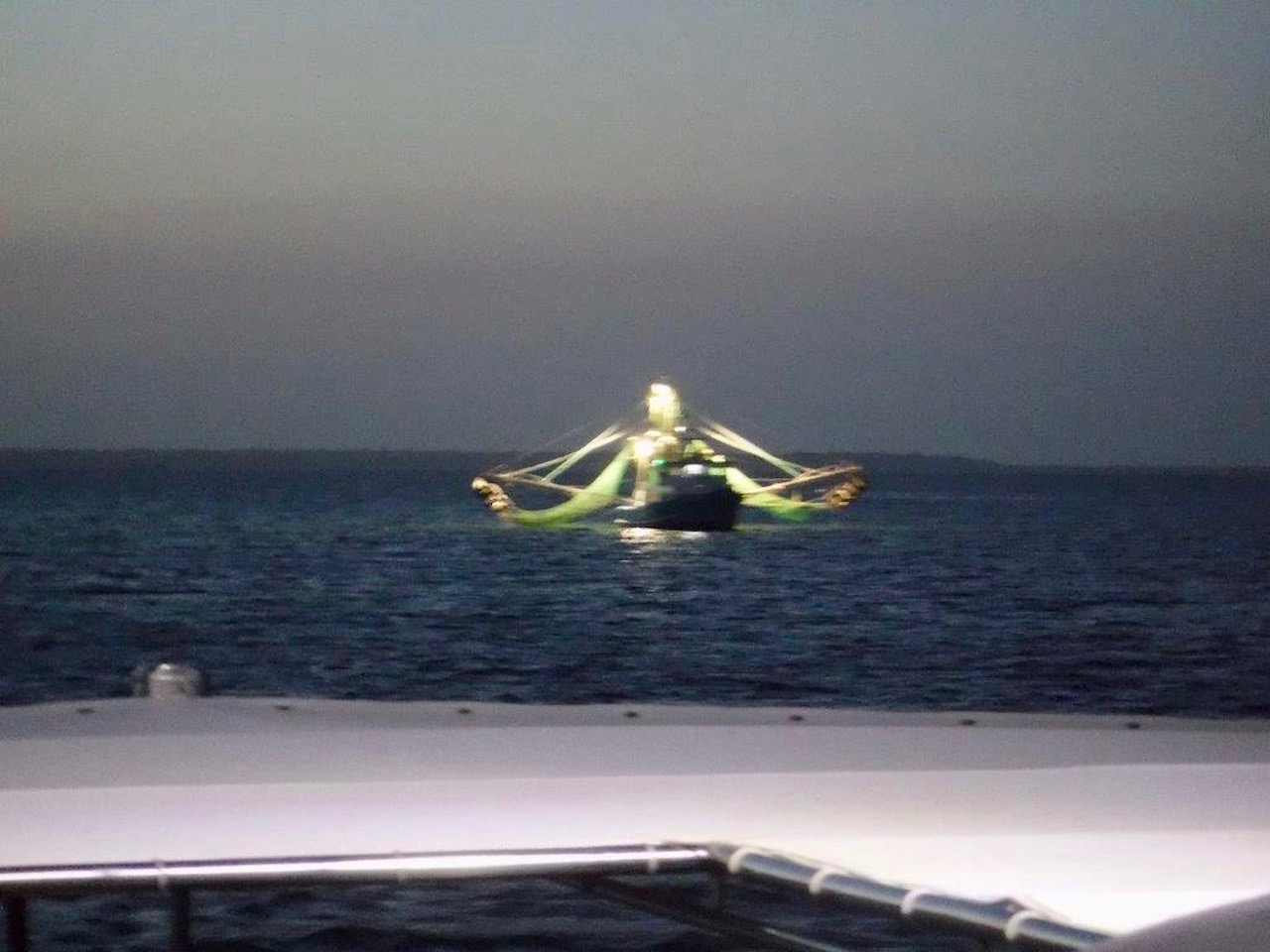
Lit up trawler Pelican Bay

Thursday 2nd
High tide was 0615 so we got under way at 0445. We motored out into another beautiful Queensland dawn and were the first boat of the day across the bar which was nice and quiet but getting quite shallow at the outer edge. “Moreton Lady” was right behind us and about a dozen more boats behind her – obviously a good day for crossing the notorious Wide Bay Bar.

For once Suzanne had the legs on everyone else and we gradually pulled away from the pack

Leading the way after our dawn start
– rather a nice feeling.
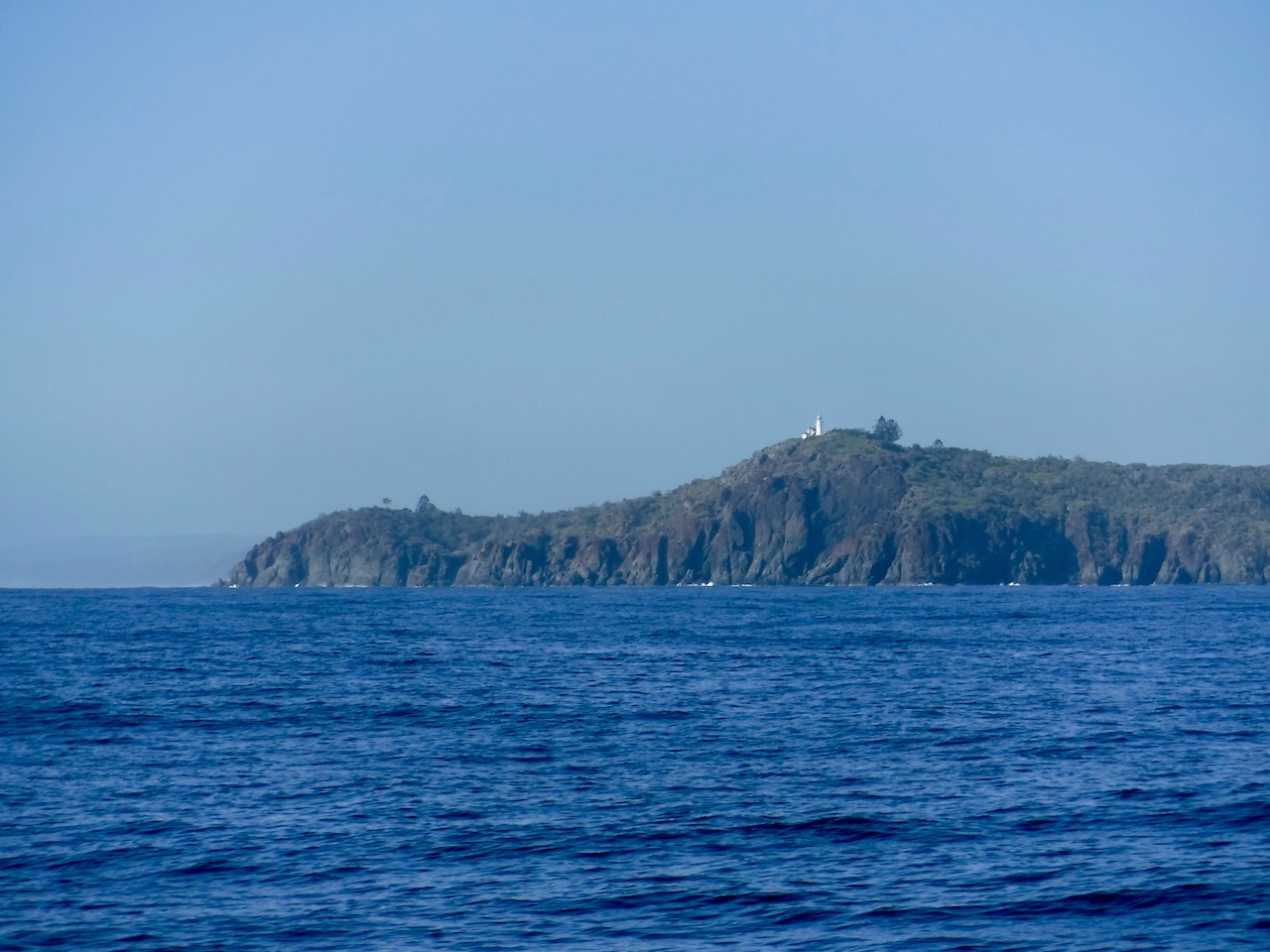
Double Island Point lighthouse
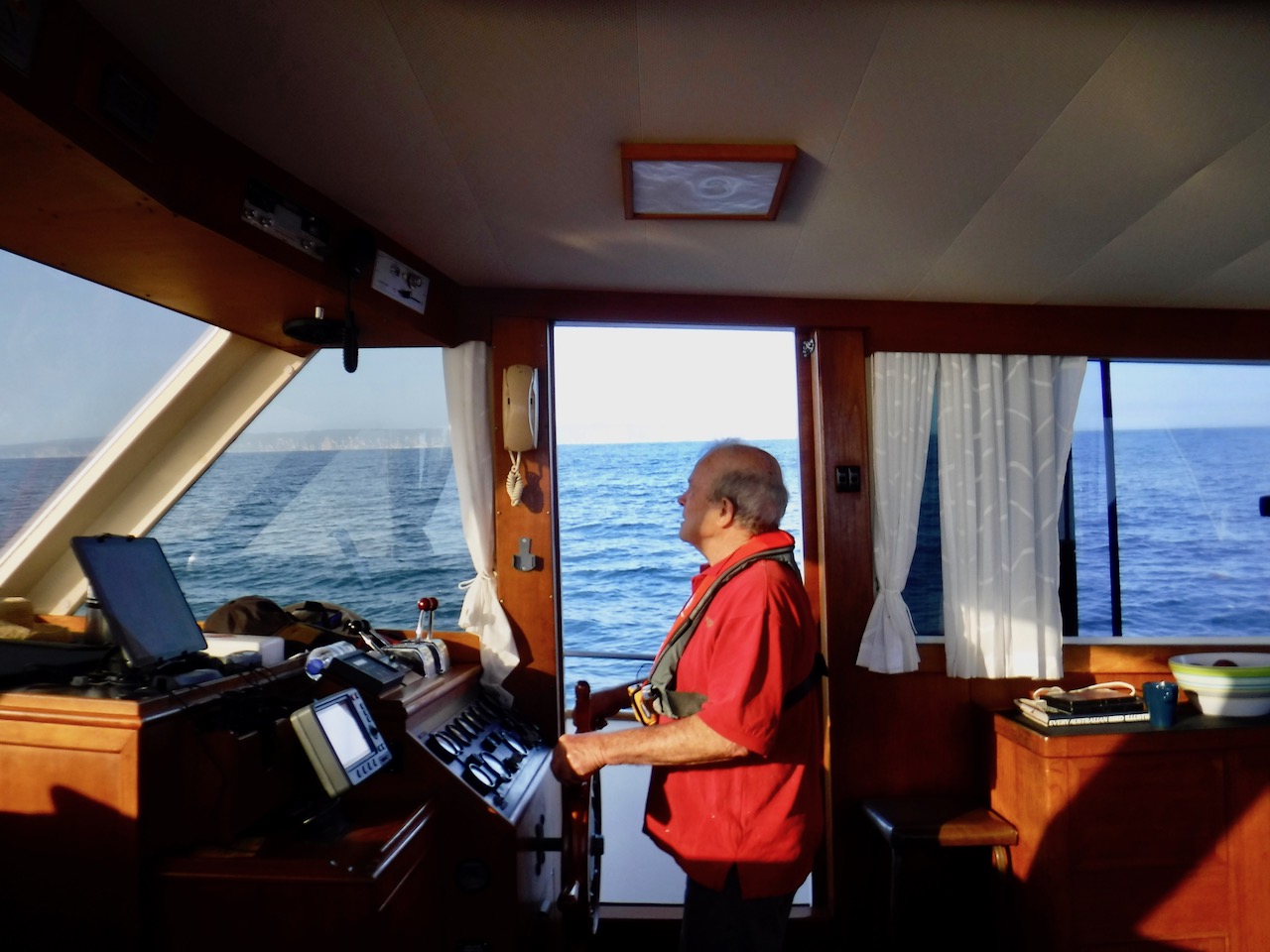
Scott steering Suzanne across the bay towards Double Island Point
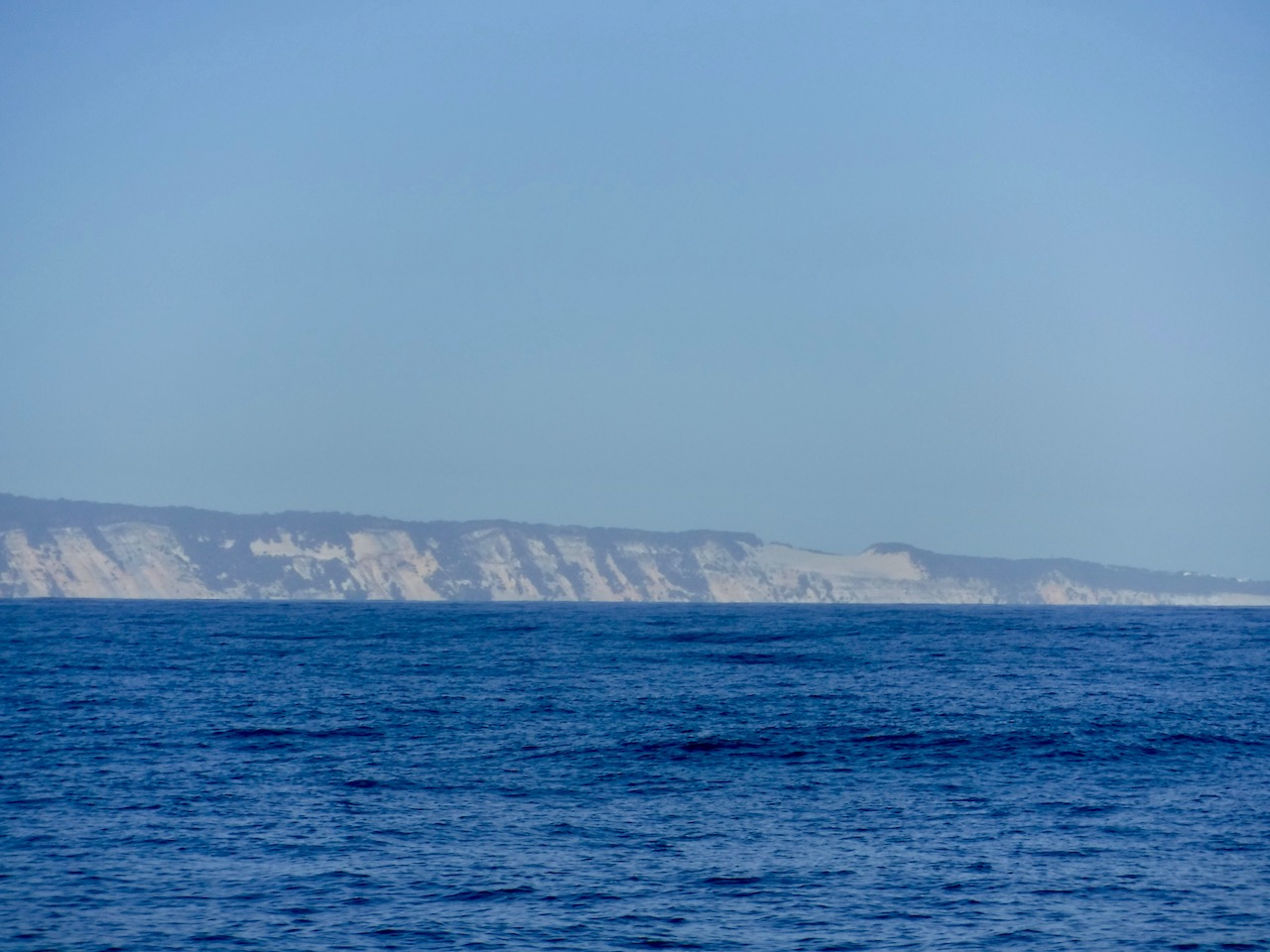
Sand cliffs of Rainbow Beach
We arrived off Mooloolaba at 1220 and coasted to a stop in the bay to get our fenders and ropes positioned. It was right on low tide and we were rather horrified to note that the quite low swell was breaking across the entrance of the breakwater. However a call to the Mooloolaba Coastguard informed us that by staying south of the entrance and entering close to the southern arm of the breakwater we would have enough depth. We watched a couple of boats ahead of us and followed them in.

We tied up a bit before 1.00pm and after a cool drink caught a taxi over to Cotton Tree where Scott shouted a very nice meal of fish and chips at the Boathouse followed by a visit to his unit to view the renovations. It was then back to Suzanne for a scrambled egg supper and quiet night.

Friday 3rd
Under way at 0600 and a pleasant day outside if a little bit rolly with an easterly swell. We had nice views of Kawana and Caloundra and by the time we got in to Moreton Bay west of Tangalooma it was an absolute flat calm – a very pleasant way to finish our voyage.

Clouds over Bribie Island
We tied up in our home berth at Manly a bit before 1.00pm. Lyndal arrived from home and the afternoon was spent washing down the boat, emptying the fridges and freezers and packing up. Finally locked the back door on Suzanne and headed for the Straddie Ferry.

It was a strange feeling to be heading back to our Island home after more than two months voyaging. Ed in particular had not spent a night off Suzanne since our first night aboard on 27th August.

Suzanne had performed splendidly and we had a great store of memories to look back on.

Gladstone to Hervey Bay

24th October
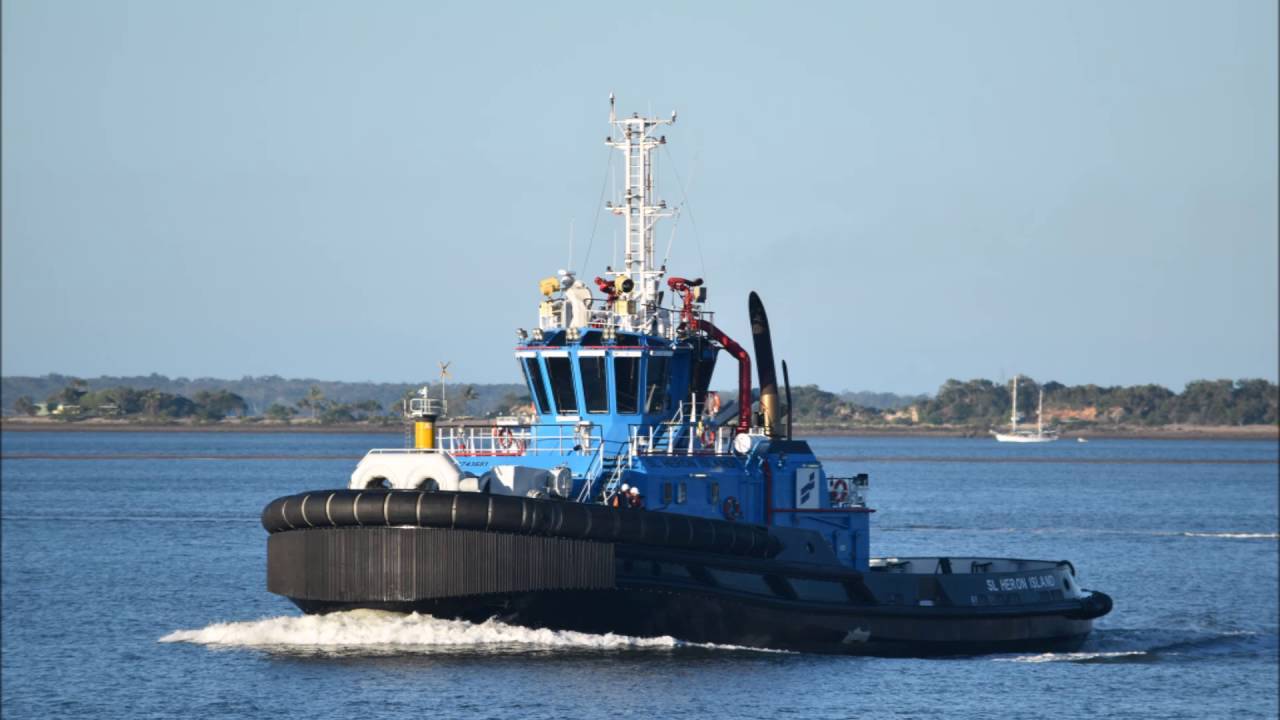
Tuesday morning and after a few final odd jobs such as buying a couple of frozen mullet for the crab pots, we unmoored at 11.00 to go with the start of the outgoing tide. Gladstone tidal flow runs at 2 knots or more so not something to push against. The harbour was busy with tugs and ship movements. There was a bit of easterly breeze outside the harbour so the salt Ed had washed off Suzanne was soon back on again.
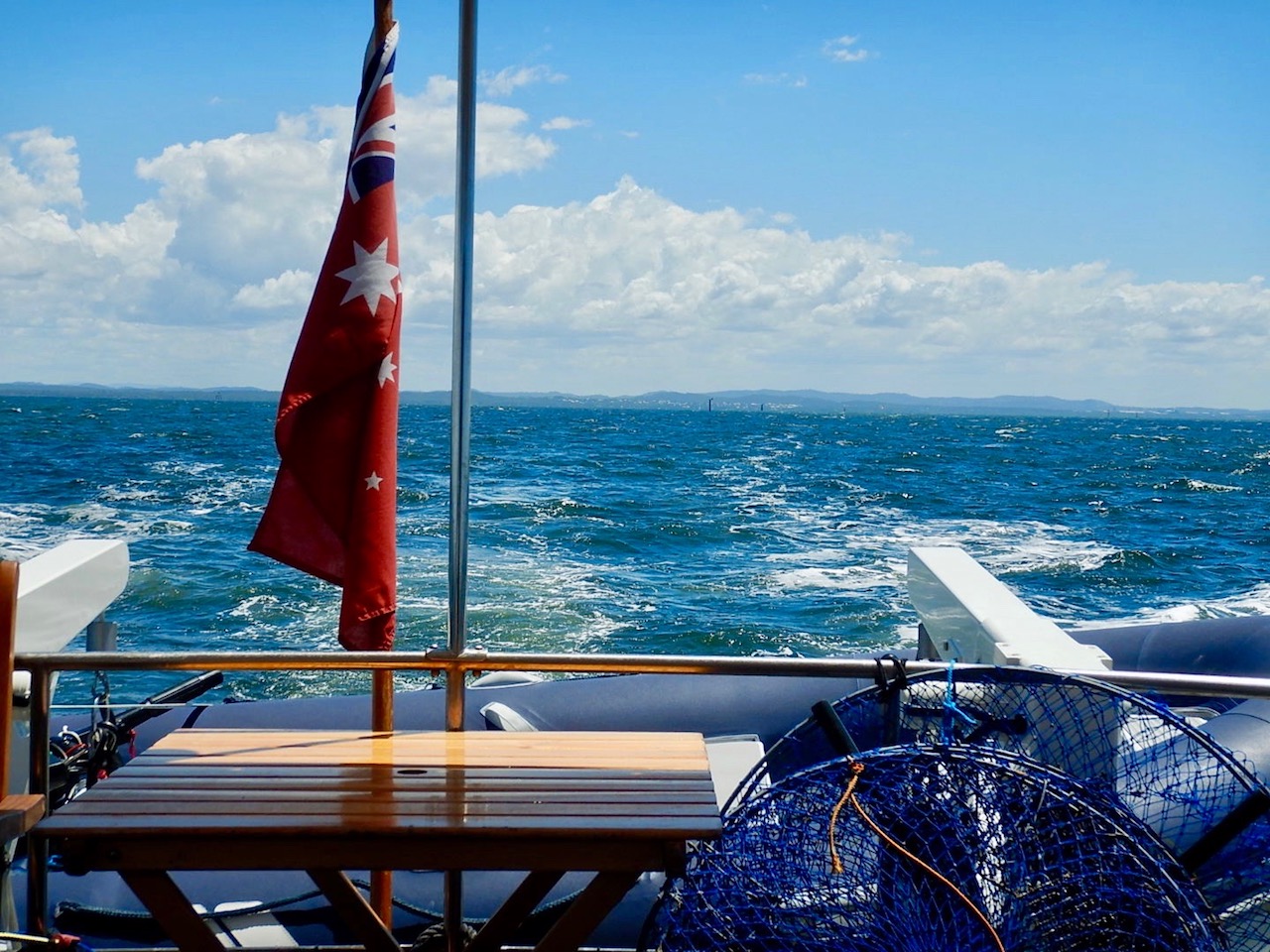
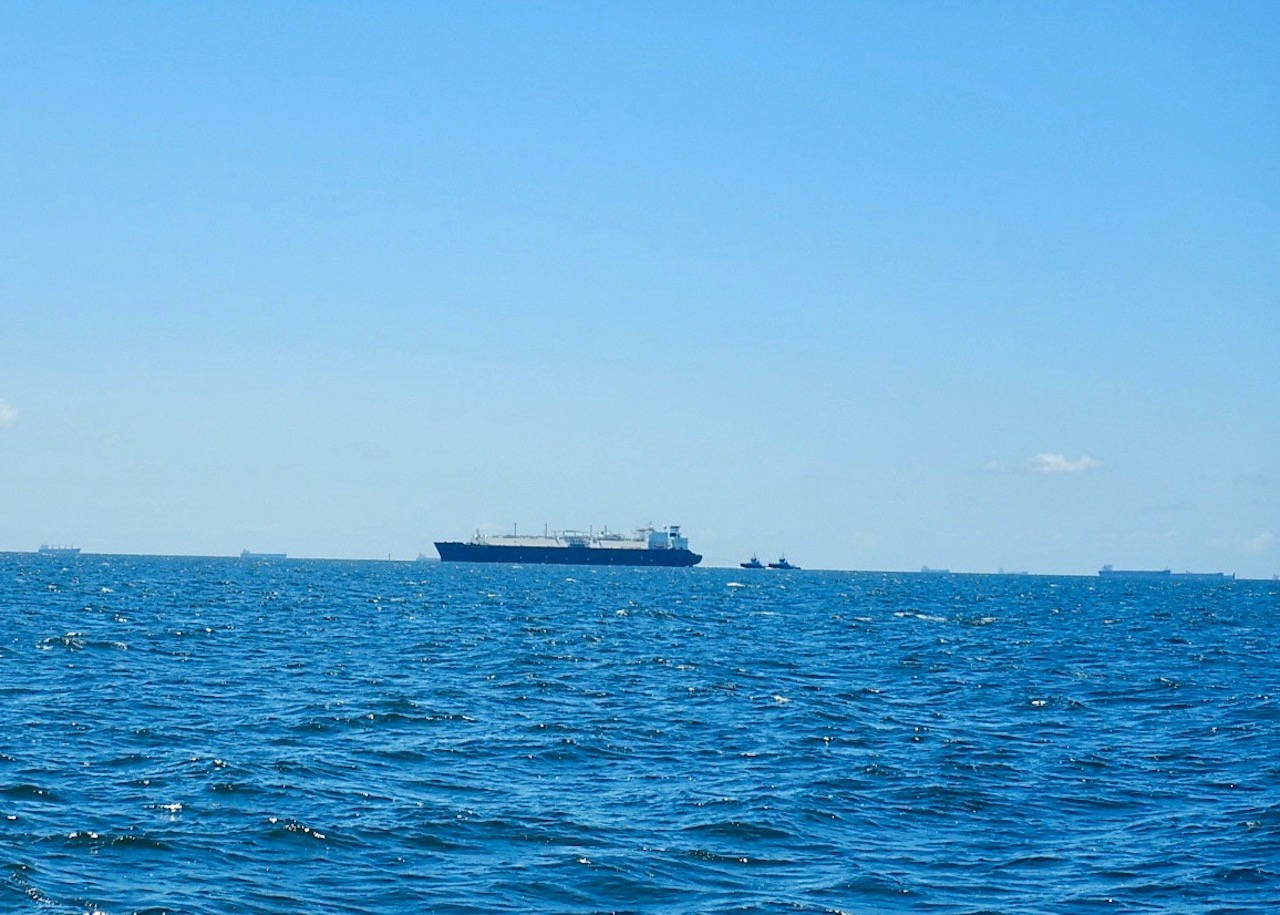
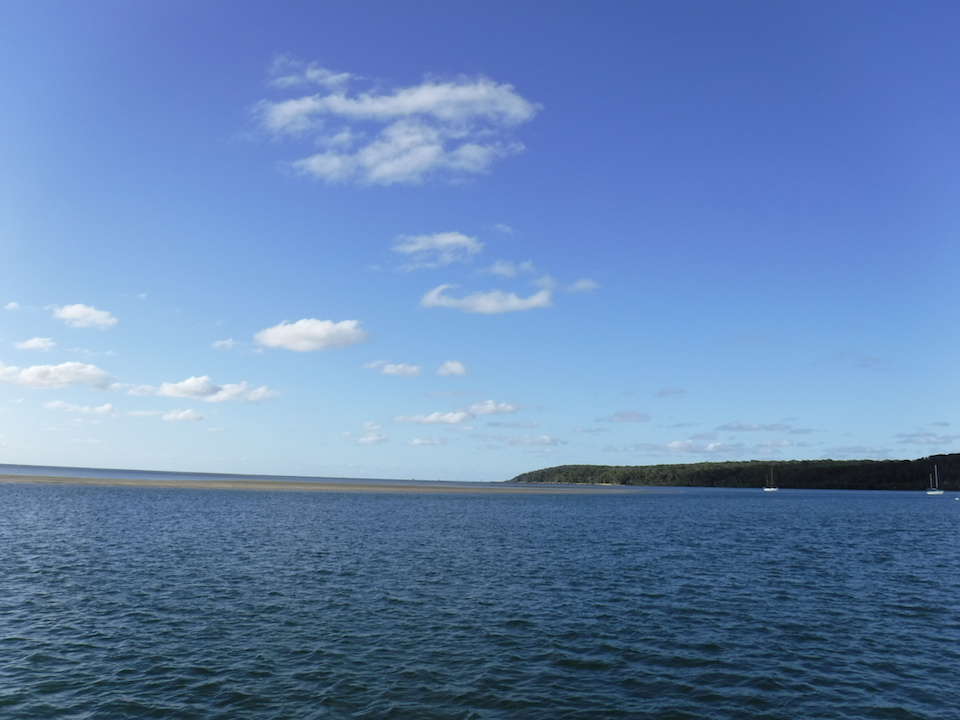
Leaving Gladstone for Pancake Creek
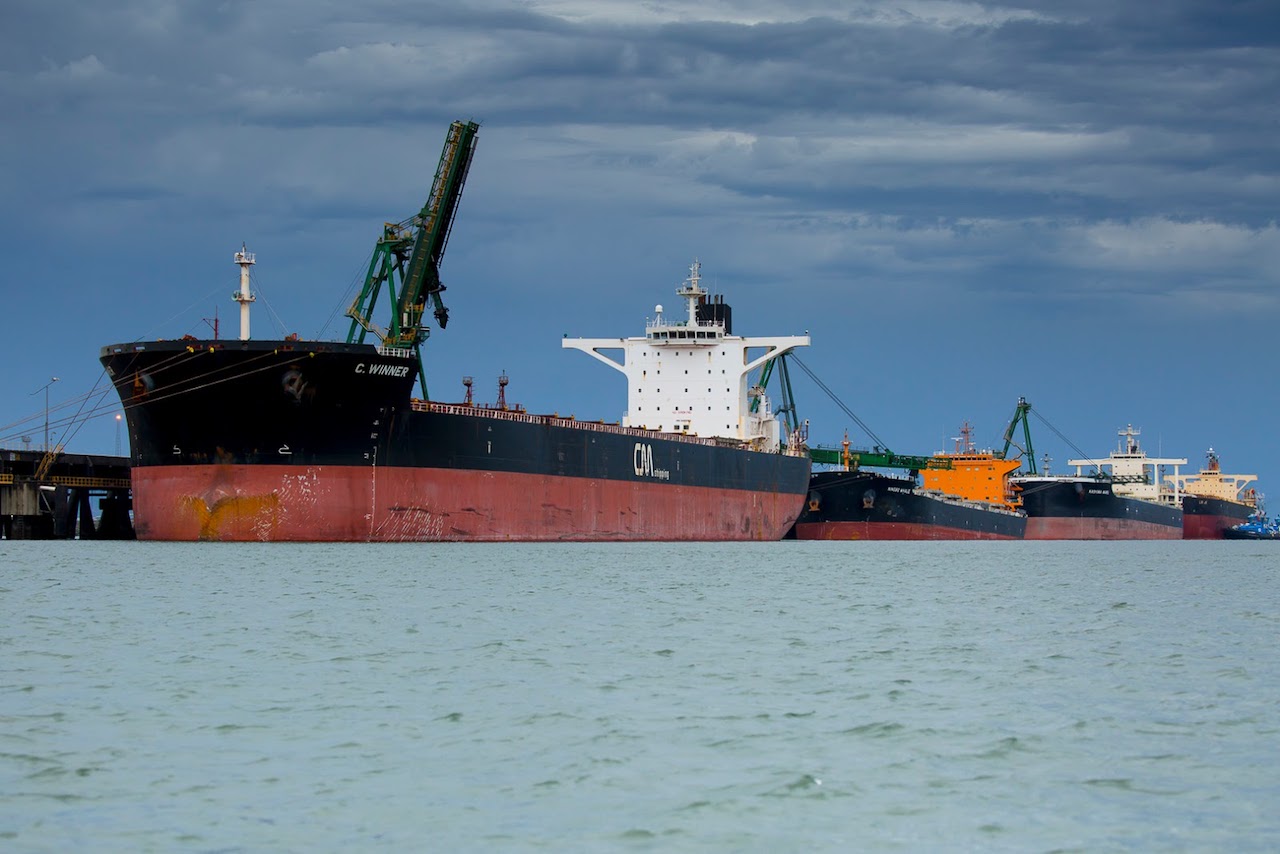
The usual ships waiting to get into port
It was a reasonable run over to Pancake Creek, which was the usual idyll of peaceful calm. We had yet another early start next day as it is quite a long run down to Bundaberg so we left the dinghy up and just relaxed on board for the rest of the day.
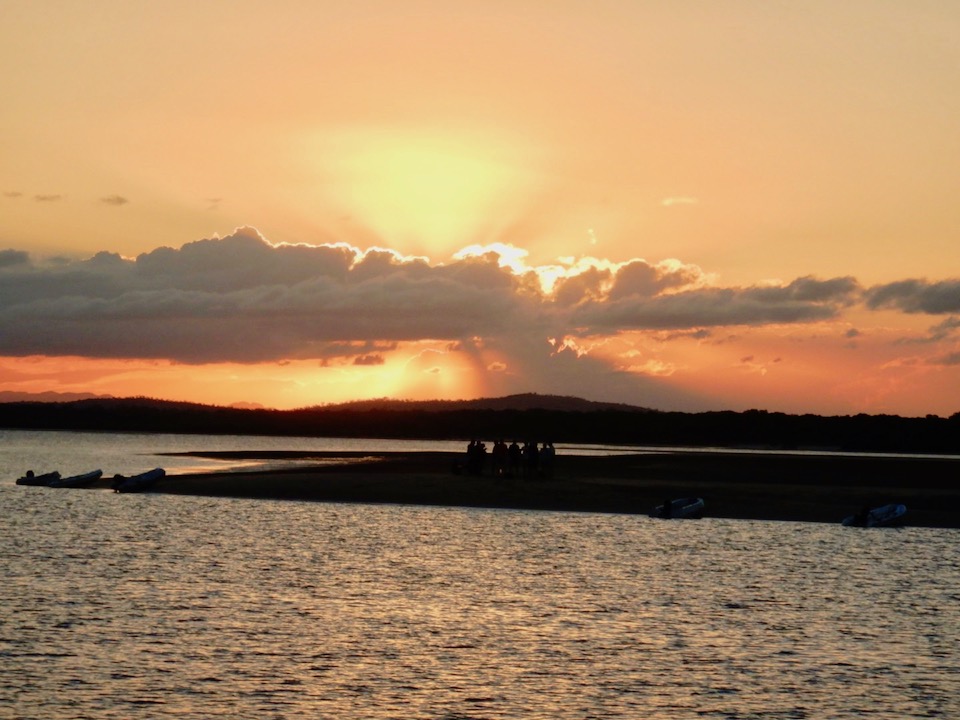
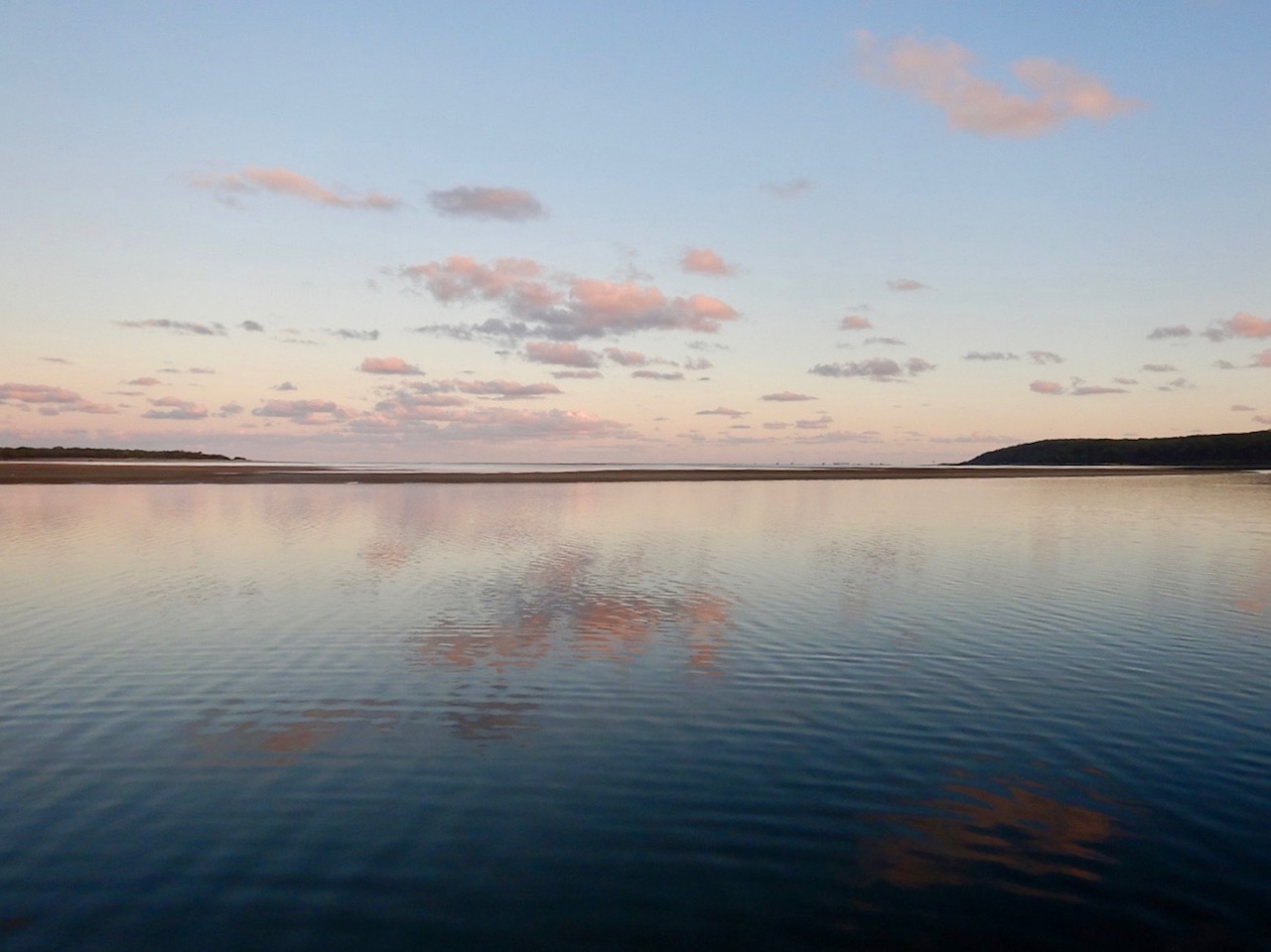
Sunset sand bar party at Pancake Creek

25th October
In the morning we waited a bit past the turn of the tide so that it was on the rise and got under way at 6.00. The breeze was about 10 knots from the north with a bit of a sea still running from the previous day so it was fairly rolly for the best part of the trip.
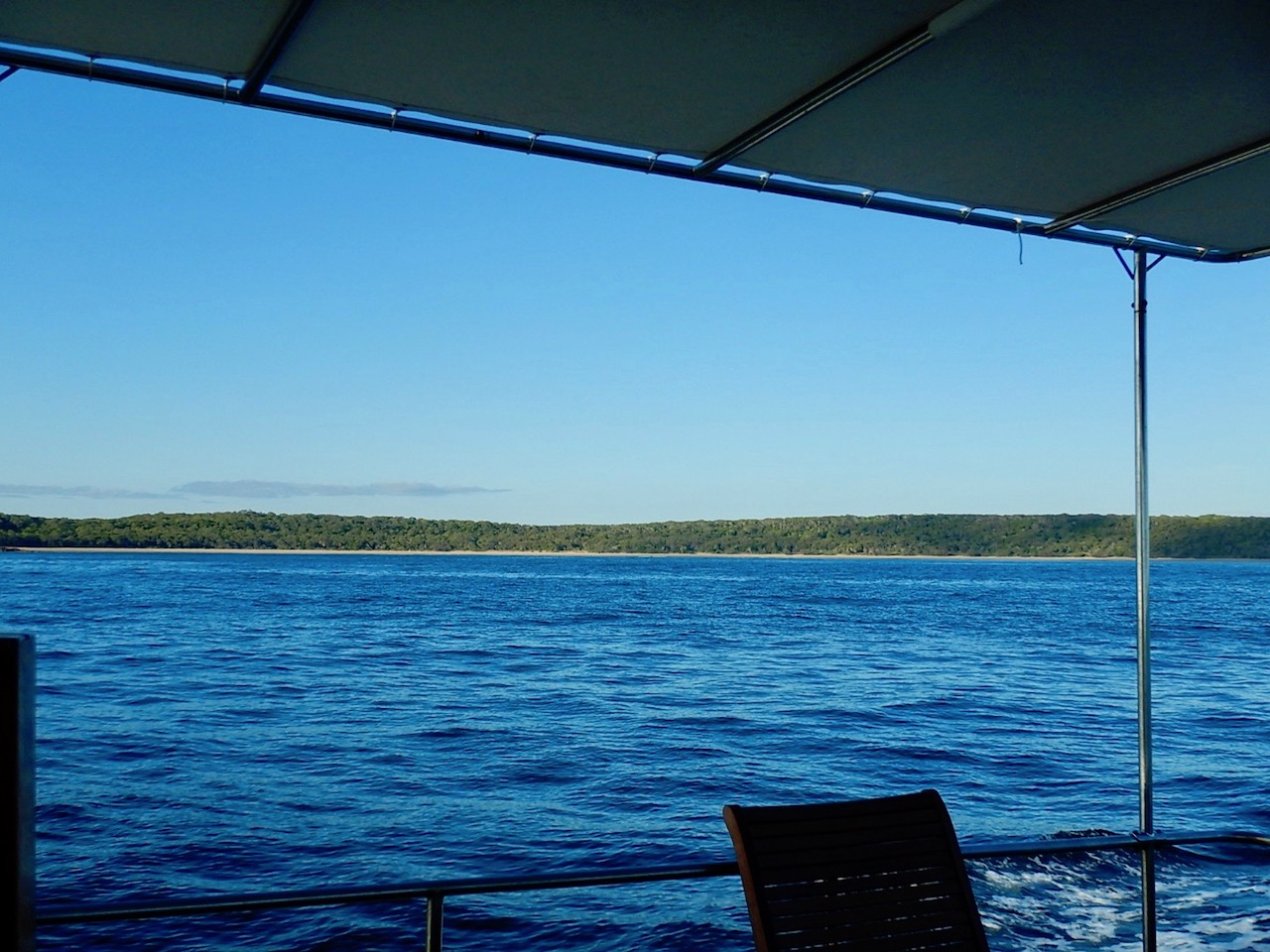
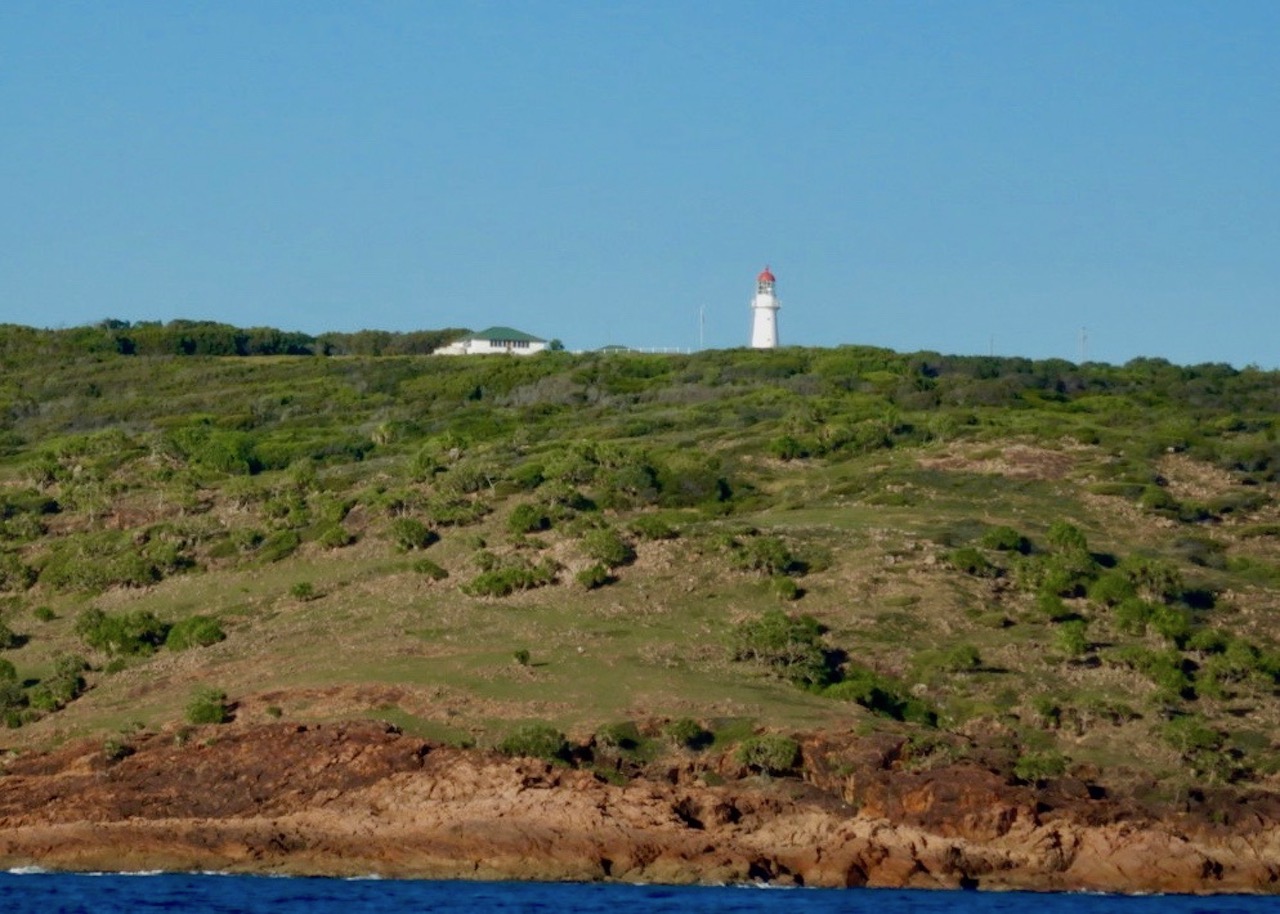
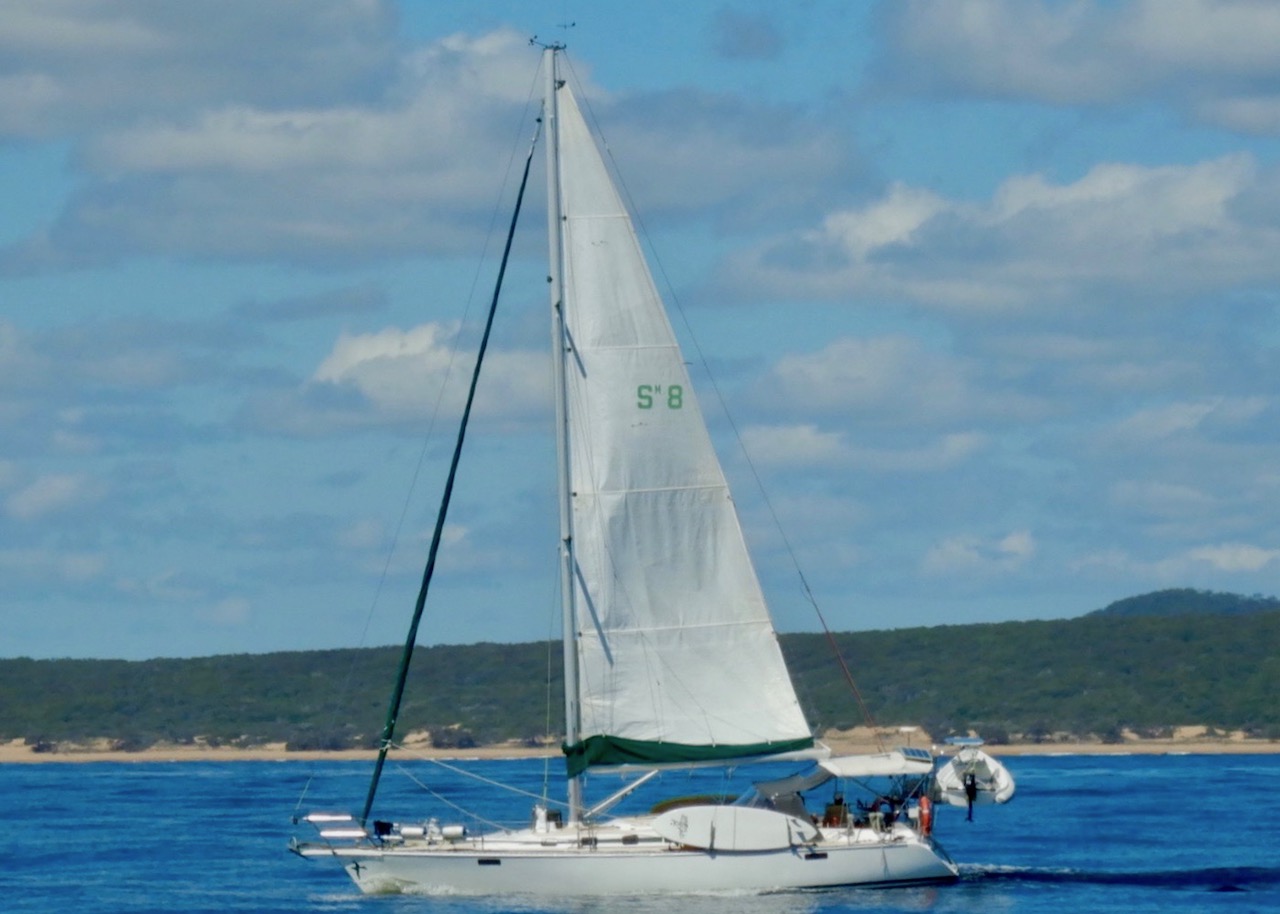
Aircraft beach just out of Pancake Creek. Planes used to bring campers in and out of the beach to the camp sites
Bustard Head lighthouse
Otherwise it was quite a good run apart from a south to north set to the current which slowed us down for the first few hours. We heard various boats on the radio warning of debris in the water near the coast which we later realised was due to recent heavy rain.
Plenty of companions on the way
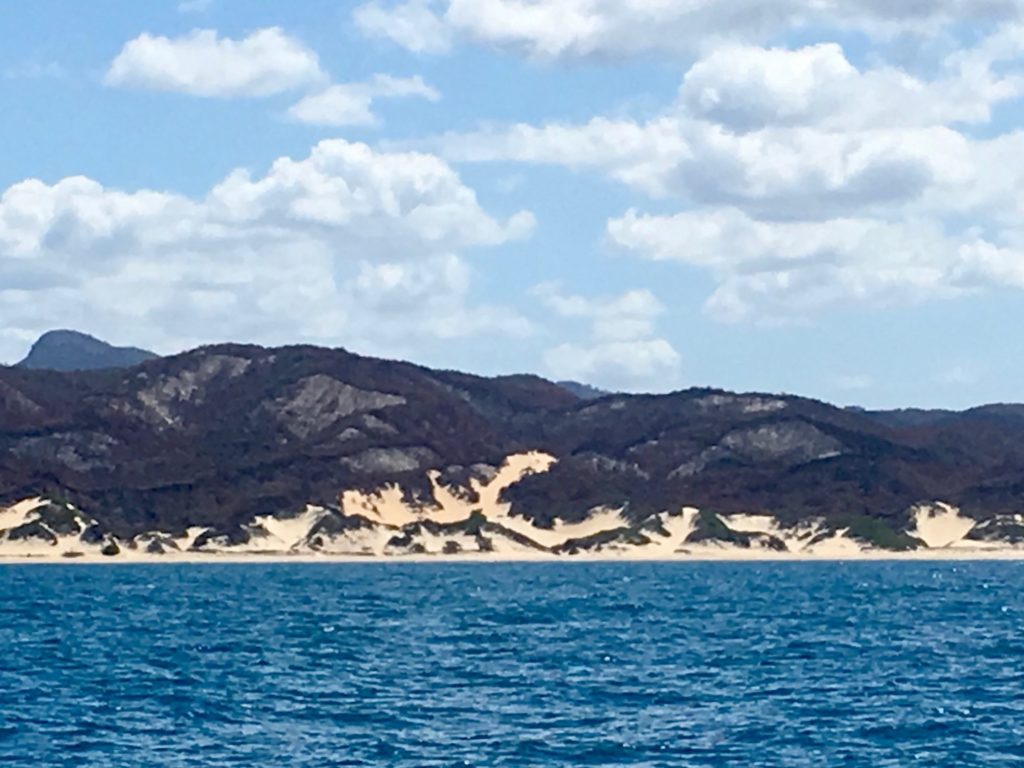
Sand dunes south of Bustard Head and where the trawler ‘Dianne’ sank in mountainous seas on Monday night whilst we sheltered in Island Head inlet
Trawlers searching

On arrival in the Burnett River Channel at 2.30 we could see the source of much of the debris because the river and adjacent coastal water was brown with mud. When we tied up in the Bundaberg Port Marina at 2.45 we were even more horrified about the amount of sticks and water hyacinth in the marina. But it was too late and too far to go anywhere else so we tied up well forward in the bay to keep the rubbish away from the stern, and determining to get away as early as possible we didn’t connect the shore power and left the fridges off for fear of sucking debris into the water intake.
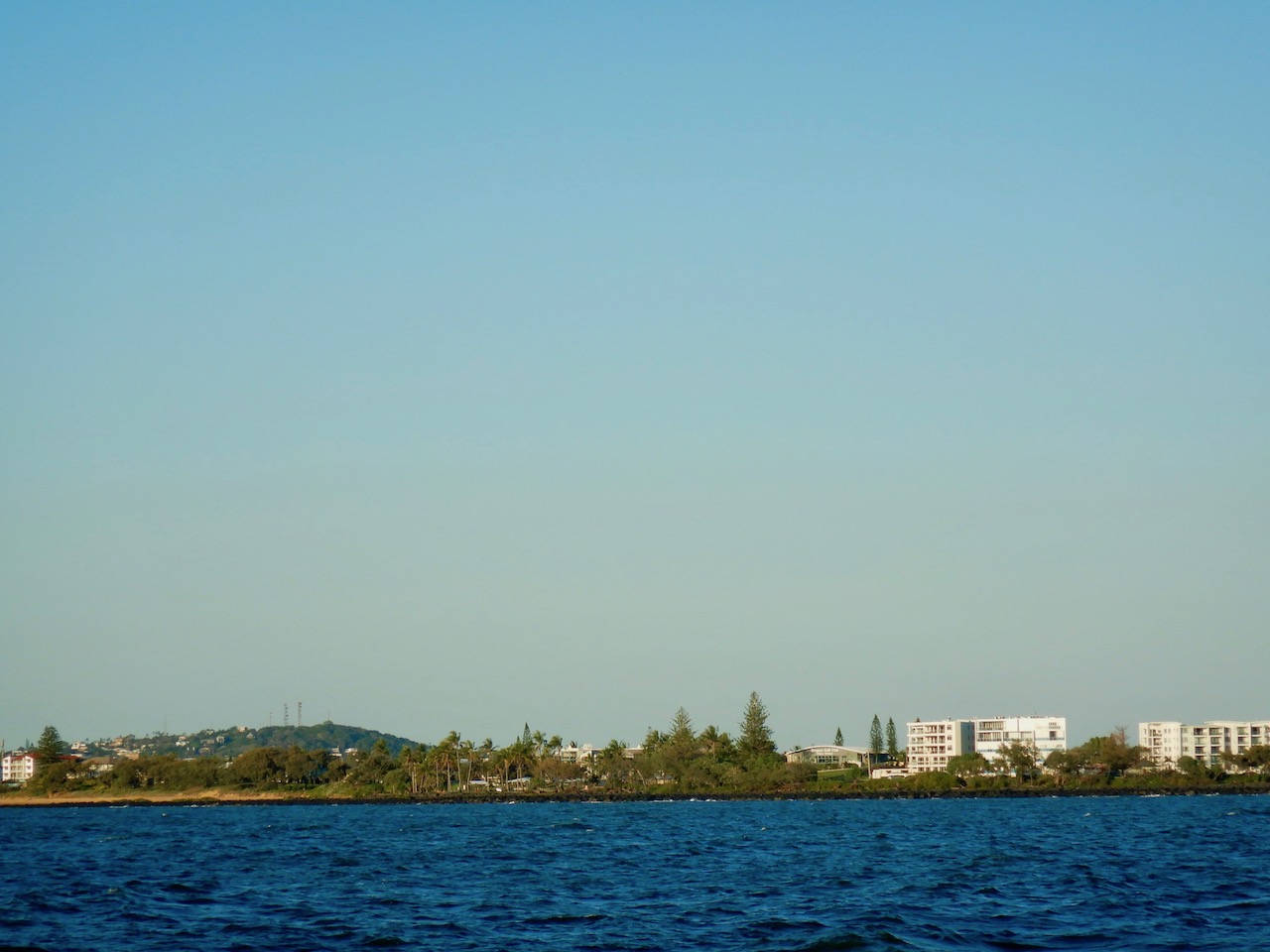
Apart from that Bundaberg was its usual hospitable self with the bonus of some beautiful fresh seafood off the trawlers at the Factory Outlet and another delicious seafood marinara at the marina restaurant.

Back at Suzanne and settling down for an early night’s sleep in anticipation of meeting up with Sandra and Tim at Hervey Bay tomorrow morning, we got a phone call from Sandra throwing all our plans into disarray. The way Ed heard it from Lyndal, with his hearing aids out, was that Tim had “bloat”. Turns out it was Krug, their doted upon German Shepherd! However Ed drifted back to sleep thinking of cows with bloat and “poor Tim, that would be a real bugger!”

26th October
Thursday morning and the deadline of Sandra and Tim’s arrival had gone but we still had the incentive of a rising wind forecast and the desire to get out of the muddy and debris filled marina so it was another “picaninny daylight” start and we motored out of the Burnett River into another dawn.

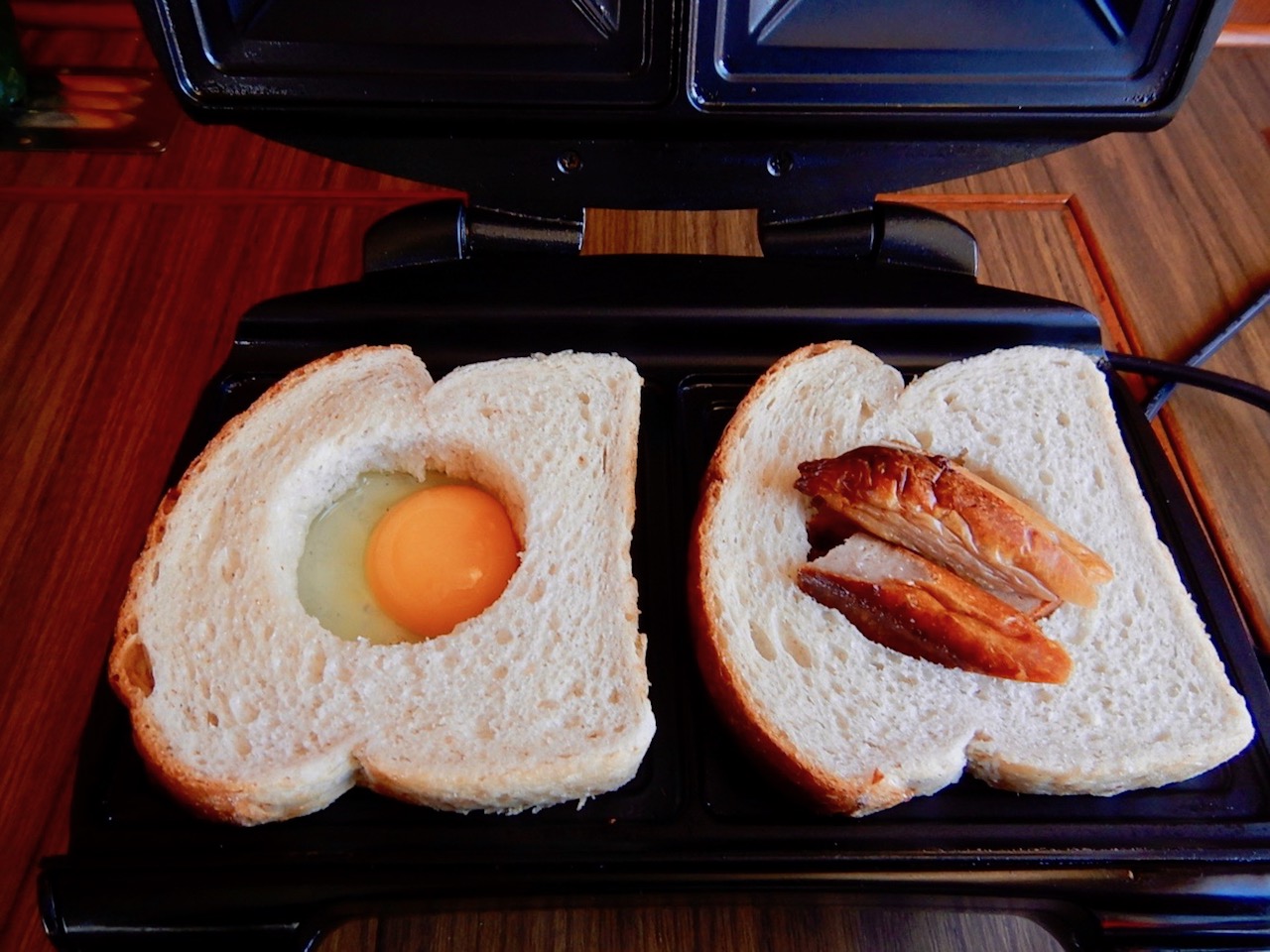
Sausage and egg toastie. Staple food when the boat is rolling and nothing will stay in place
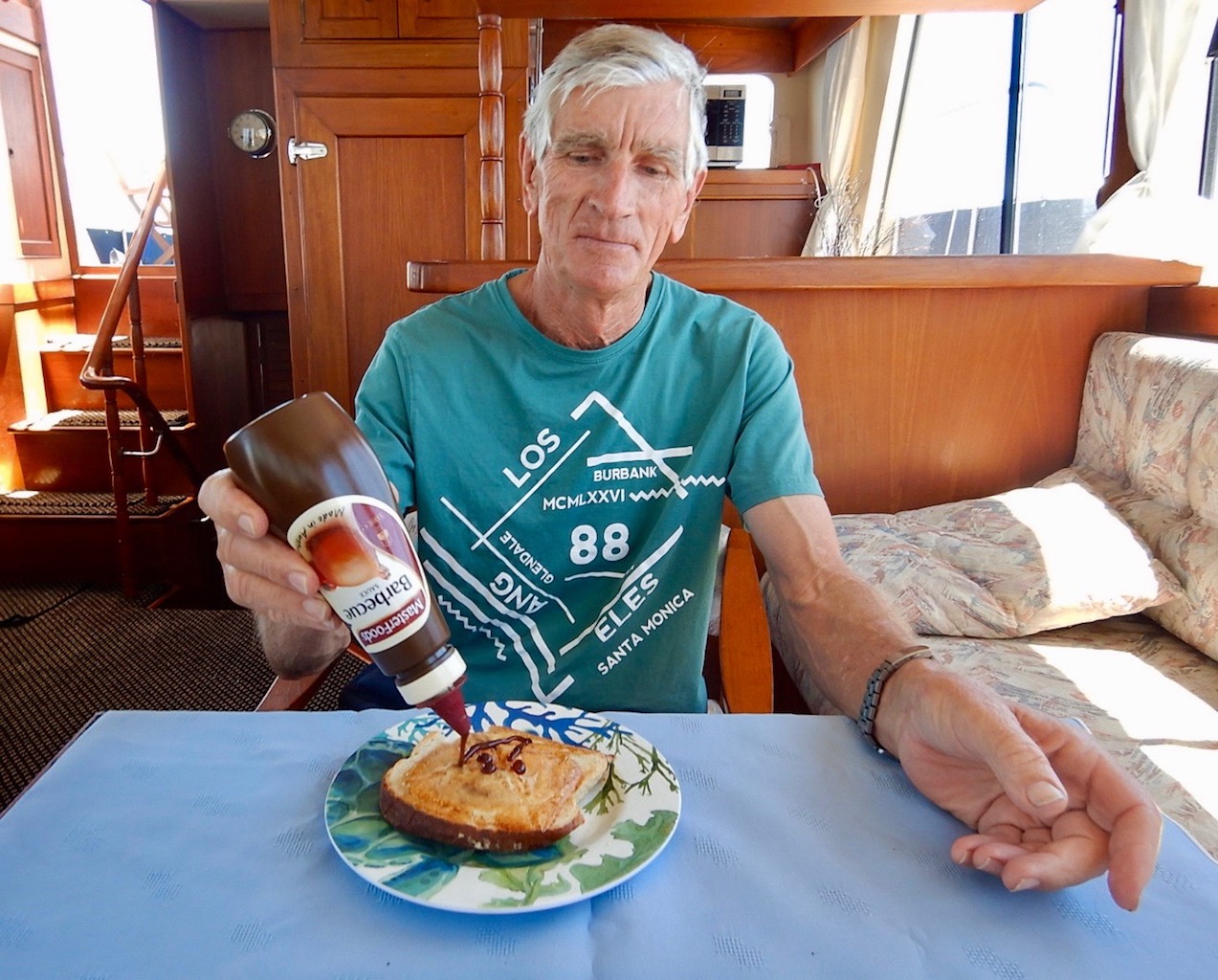
Goes down well with some barbecue sauce!
Bargara with The Hummock in the background

The wind was still northerly about 15 knots, starting to get a bit of a sea running but not too bad downwind. At any other point of the compass Suzanne will steer herself and hold course with barely a touch on the wheel, but not downwind so with the autopilot out it was hand steering all the way for five hours.

Wind starting to get up. It would be handy to have a few more knots!

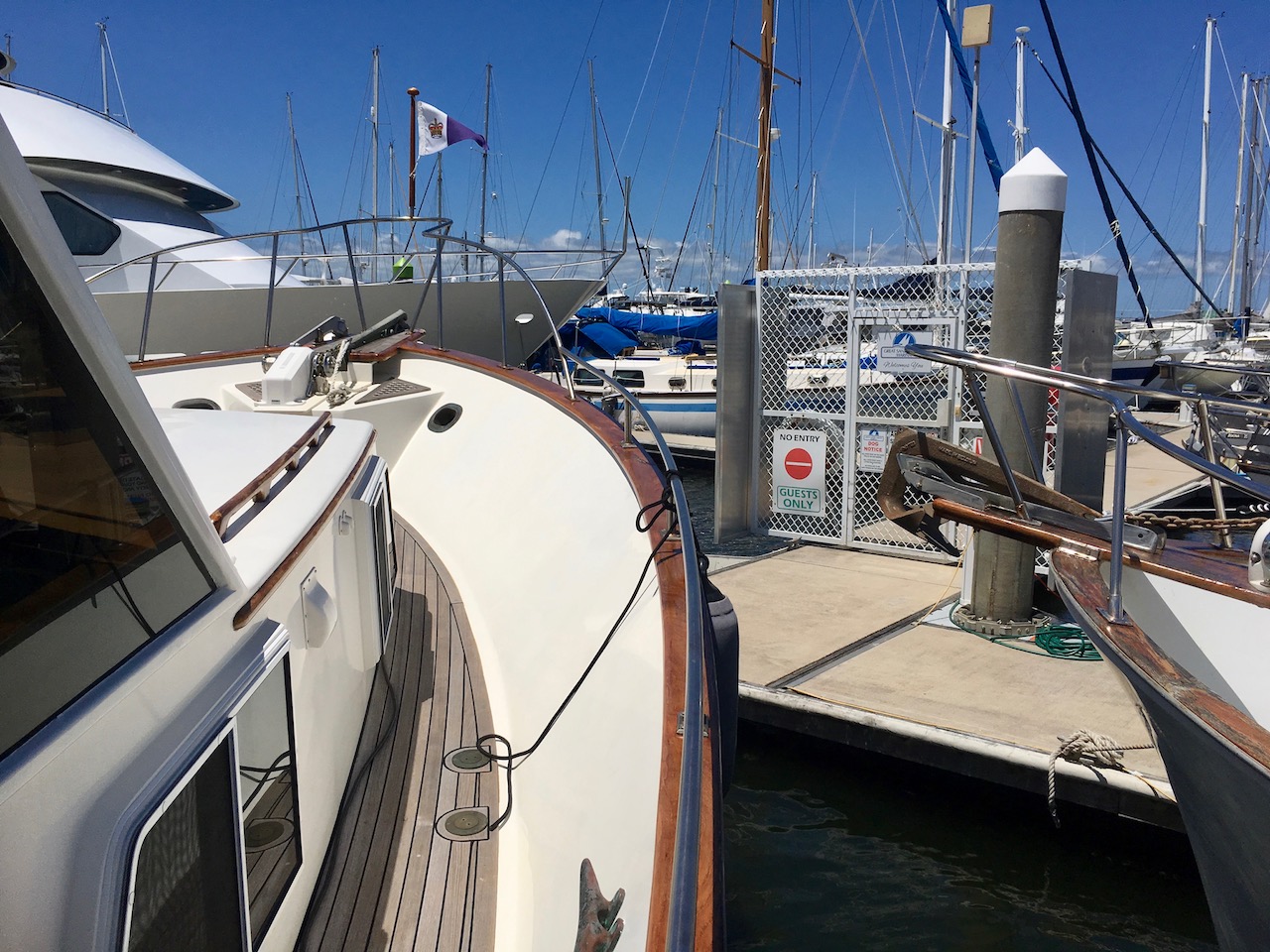
Approaching Sandy Straits Marina there was consternation as we now wanted to stay the night and it seems there were few if any berths available. They finally found one for us on a corner which added to the crowded state of the marina and the narrow laneways was a real corker to get into. However the Marina staff and helpers arrived en masse to take our lines and Suzanne was wedged in to a very tight space with another boat’s bowsprit and anchor only a couple of feet from our bow.

While we settled down and waited for news as to whether the Swains would ever get here we decided to make a start on the seafood and had a very tasty prawn salad dinner aboard.

27th October
The morning saw us talking to Sandra and finally resolved it was not worth their while to come up for a couple of days with the weather a bit doubtful. A bit more re-planning and we decided Lyndal would fly home from here so a call to our faithful crewmember Scott followed. Scott rose to the occasion and agreed to drive up on Sunday and Lyndal would take his car back on Monday morning instead of flying. So up to the marina office to see about a few more days stay which revealed we would have to move to another berth.

Bob the marina manager came down to walk our bow line back so we would not drift against the very close boat on our starboard bow and we then moved to the new berth without further drama.

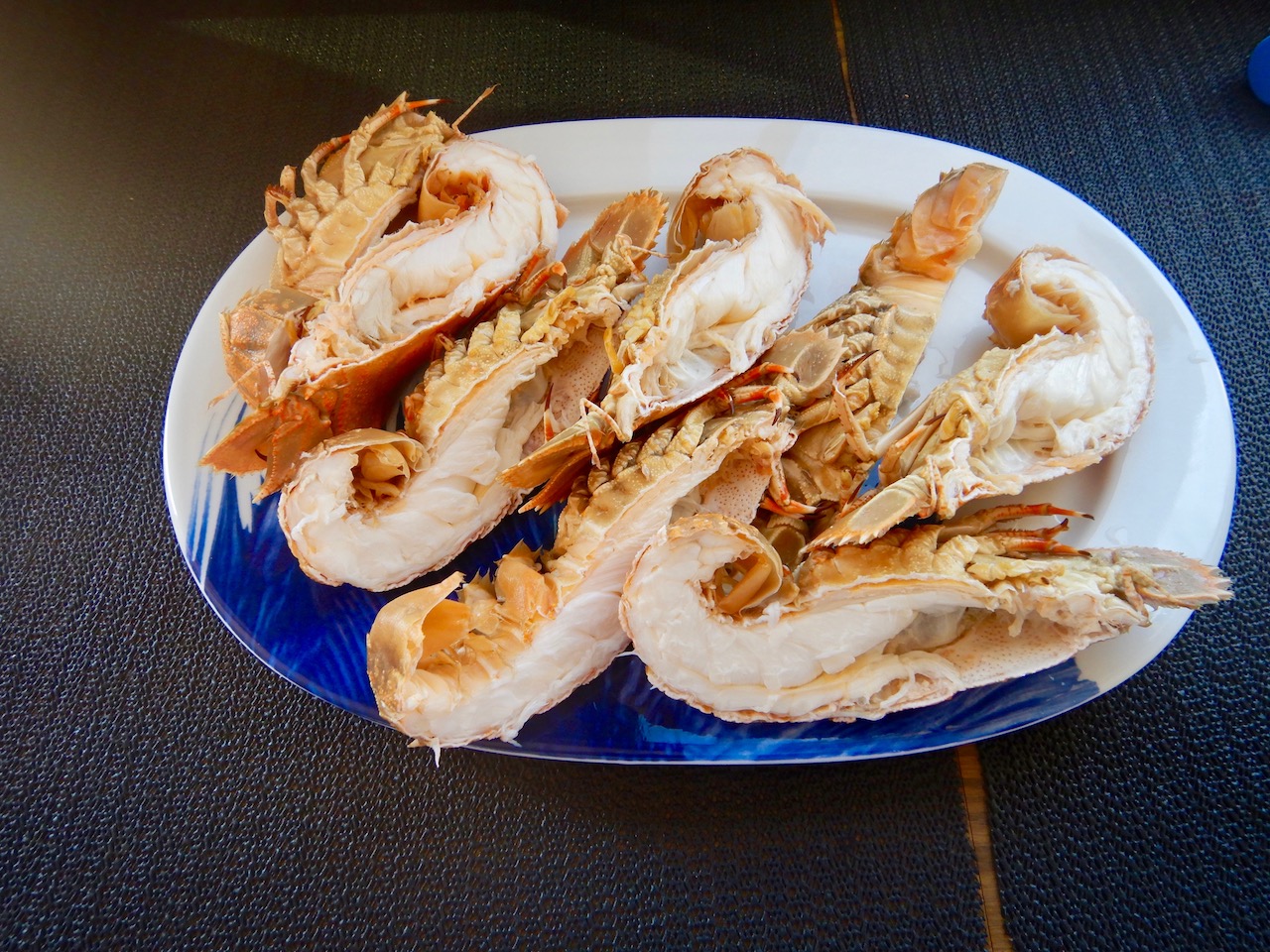
At lunch time, with no Swains present, so we just had to eat four bugs by ourselves – a bit like the proverbial “death of the rich uncle” really – sad the Swains weren’t with us …. but the bugs went down very nicely!

Just waiting for a little sauce of lime, chilli and coriander

Back in Gladstone, when entering the marina, Ed’s interest had been piqued by an old fashioned looking sailing boat just ahead so he walked round the marina later to have a look. On saying hello a fit looking wiry little bloke put his head out of the cabin. On being asked the history of the boat he responded : “Built her myself last year”. The boat is about 25 feet long, built of marine ply, more or less flat bottomed with a “box keel” (perhaps you sailors will know what that is). She is a “motor sailer” – the motor you ask? A 9.9hp outboard fixed in a well ahead of the rudder! Austin is a solo sailor and he left Ballina earlier this year, had been as far as the Whitsundays and was on his way back south. Her average speed under sail or power? 4 knots.

A rather blurry photo of Austin’s boat beside a speedboat. Her top is brown with a square cabin

All this was fairly awe inspiring, so when Ed met Austin round at the Boat Club he invited him round to Suzanne for a bit of afternoon hospitality. We sat on the back deck, comfortably cool with a glass of wine in hand and learnt about Austin’s sailing adventures in “Francis Clare” and his rather knockabout life which encompassed RAF service in North Africa as an air traffic controller, a horse wrangler on a dude ranch in Hampshire, a rouseabout on a Wellington NSW sheep station and time in Alaska (as not sure what). He has drifted all across America, England and Europe, working in some places and just travelling in others. He is from County Tyrone in Ireland and is one of 9 children. His parents are from large families and he has relatives all over the world.

His boating adventures include taking a Dragon keelboat from Malta to Tripoli to help out a mate, having never sailed before and using nothing but a compass and a road map of Europe. It’s a distance of 350 kilometres and took them three days and nights, crossing some of the busiest sea channels in the world, and when they got to the other side they were only out by 12 kilometres. He has also helped to man a charter boat in Bass Strait and sailed around the islands of New Guinea – where many of the natives had never seen a white man.

He came down to Sandy Straits marina behind us yesterday, and was still crossing Hervey Bay when the wind got up to close to 30 knots in the afternoon. He did admit it was the worst experience he had had in his entire voyage to date and he sometimes doubted he would get there at all the seas were so big. He arrived at the Marina well after dark and quite exhausted. He must be closer to 80 than 70 and is quite an inspiration.

Well you certainly meet some interesting people while cruising. We wished Austin well for the rest of his voyage. Perhaps we will catch up to him again later.

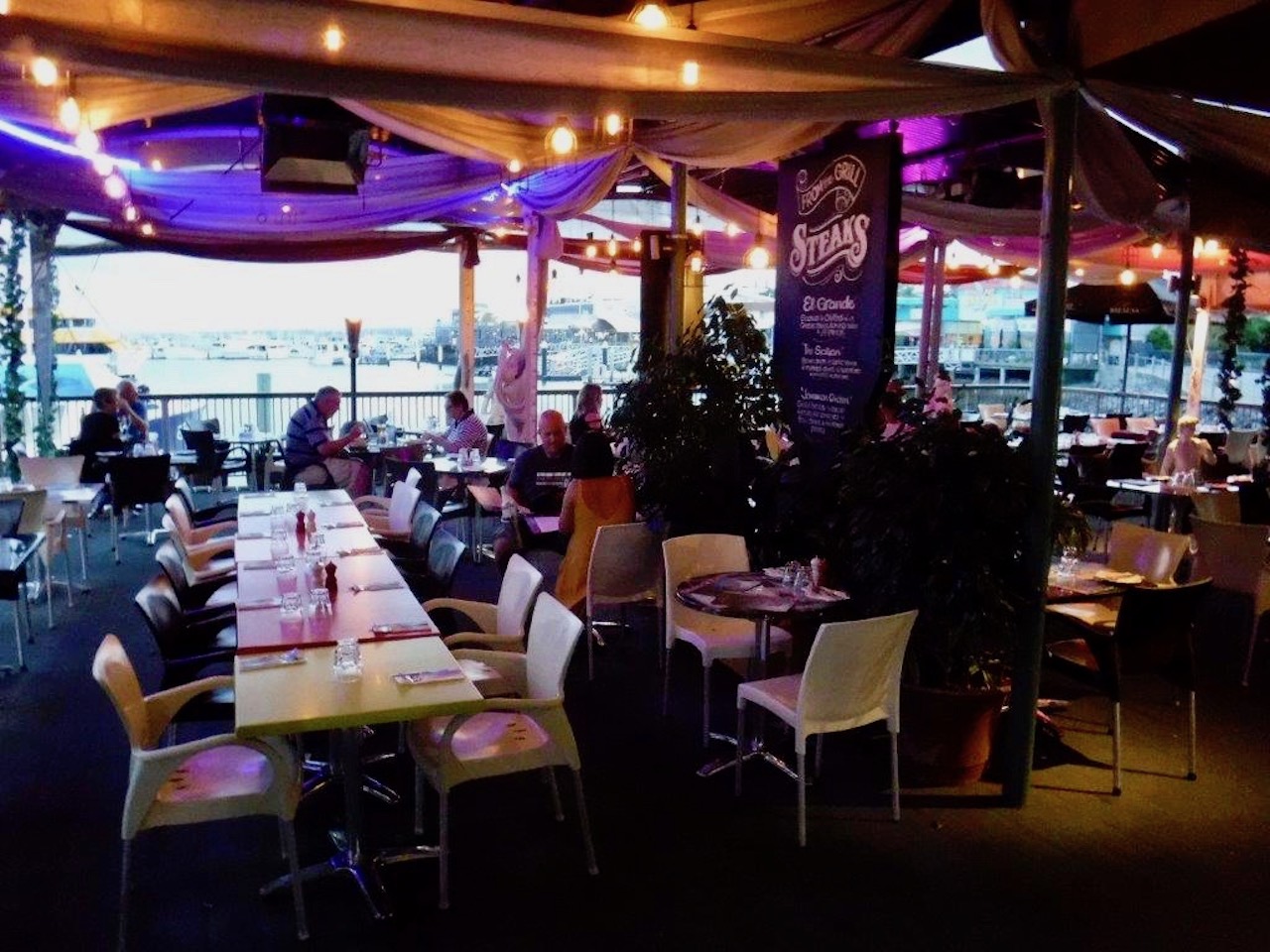
We finished off the evening with dinner at the Cafe Balaena restaurant just at top of our ramp in the marina.

28th October
The morning started slowly, with breakfast on the deck and then a few odd jobs and catching up with some bookwork. Edgar in his investigations had discovered the Boat Club had two movie cinemas and one was showing Victoria & Abdul with Dame Judy Dench. The movie had excellent reviews which, as we discovered, were well founded (the speech Victoria gave to her son and senior members of her household when they were trying to have her declared insane was quite something – a masterful performance by Dame Judy).

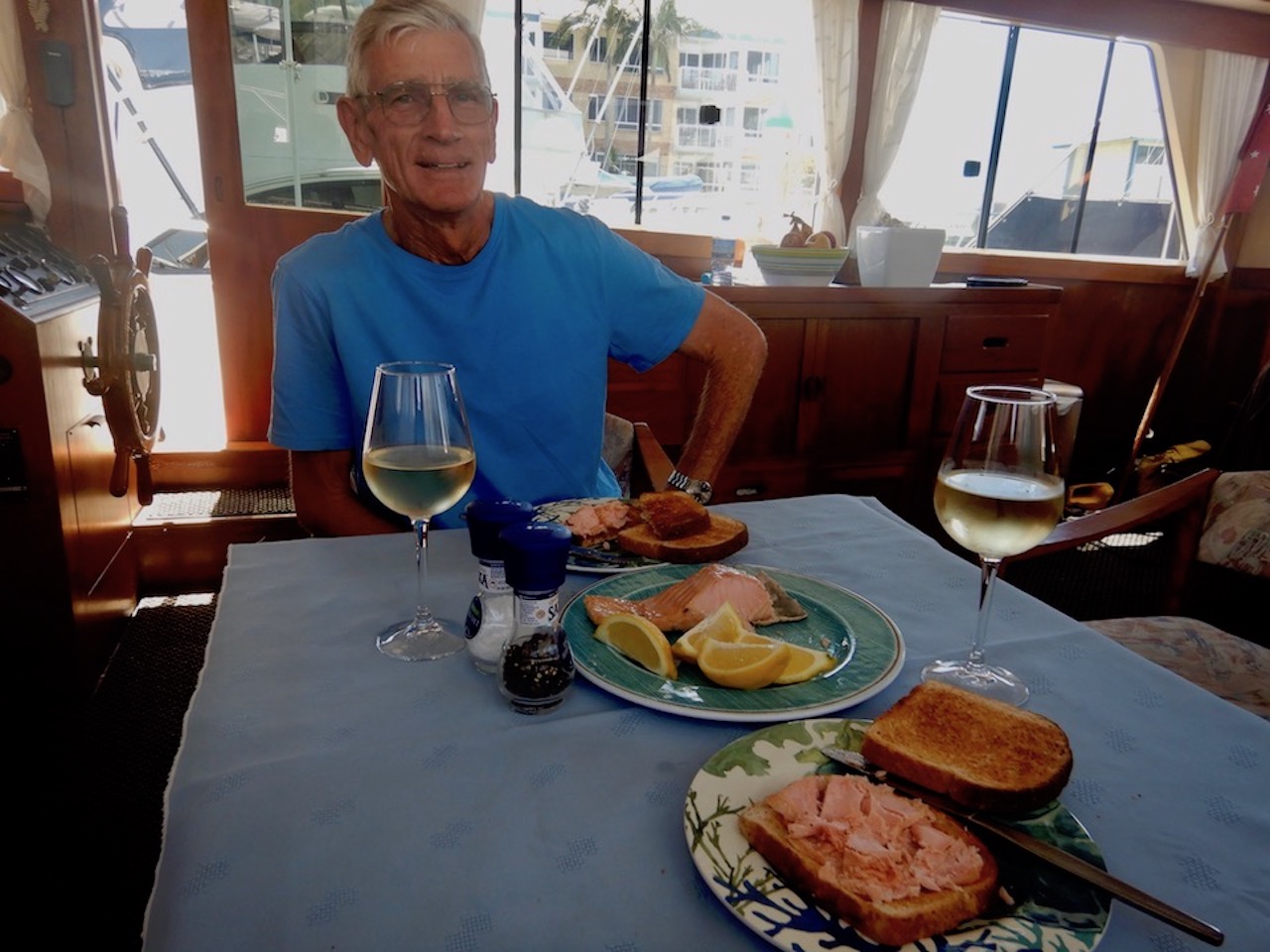
For lunch we tackled the wood smoked fillet of salmon on toast with a lovely Reisling – sorry Sandra and Tim.

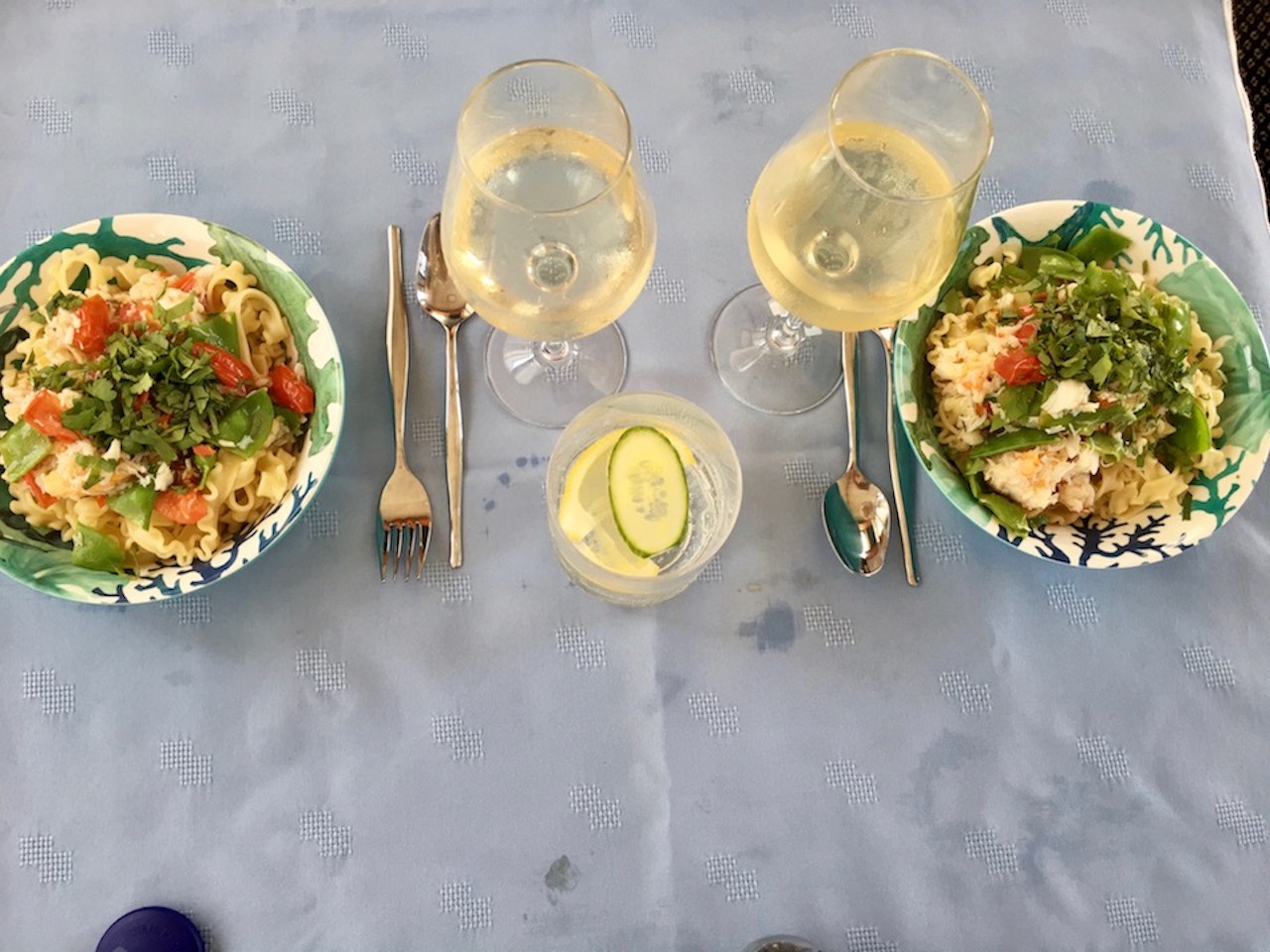
With the crab still to consume (Crab Linguine on the menu for tonight) we thought we should get a bit of exercise so decided to walk to the jetty at Hervey Bay. We had a lovely walk along the Charlton Esplanade and were reluctant to turn back it was so pleasant.

Charlton Esplanade Trail
The result was we walked for nearly two hours so were feeling very virtuous and ready for a drink and dinner.

29th October
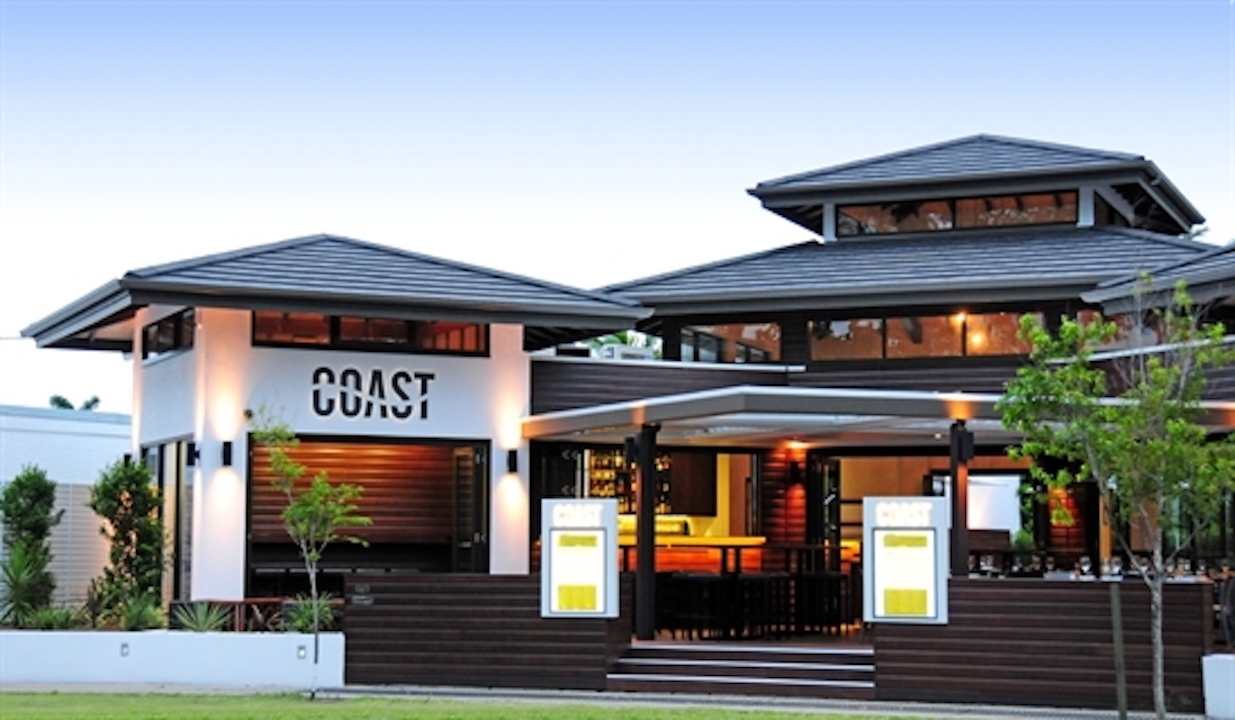
A fairly leisurely day with a walk around the marina and the purchase of snorkelling fins for both of us. Scott arrived late afternoon and settled in and then it was time to head out for dinner at Coast along the Esplanade in Urungan.

We had no great expectations of this restaurant but it had some good reviews and it was open on a Sunday. It turned out to be a fantastic dining experience, reasonably priced and on a par with some of the best restaurants we have dined at.

We started with drinks – Ed had a Burleigh Brewing Co. Big Head lager whilst Scott and I tried the Elderflower Collins. The menu is a share platter arrangement and there were a number of very delicious dishes to choose from – which took us some time – and negotiation! During the ordering process we came across a drink called Gin & The Giant Peach which consisted of Gin, Champagne, Peach and Citrus. We decided we had to have one to celebrate the end of the trip for Lyndal and the close to the end of the trip for Edgar and Scott. It was totally delicious and only the thought that one of us had to drive home stopped us ordering another – definitely on our menu from now on.

In a very short time our entree platters arrived – Grilled Hervey Bay scallops with kombu butter and wakame (absolutely delicious), Whole fried whitebait with preserved lemon aioli and Thai fish cakes with daikon and nam prik pao. These and the rest of the meal was paired with a 2016 Rosa by KT, Granacha Tempranillo from the Clare Valley (also very delicious).

Our main meal consisted of another three platters. Zucchini textures with dill, tomatoes and almonds, Sticky beef short ribs with coconut & ginger caramel and finally Vietnamese spiced chicken with star anise & lemongrass broth and a side dish of Pumpkin, honey, cumin, lemon, fetta and sage. Our waiter had strongly advised us against ordering any more and he was so right! Only the fact that the food was so delicious kept us going.

After a short break we were lured in by the dessert menu. Edgar, wisely, contained himself to coffee but Scott was taken by the Liquorice sponge with caramel, chocolate, vanilla and popcorn and I couldn’t resist the Yoghurt panna cotta with summer berries, spiced granola and lemon balm.

If you are ever in Hervey Bay – Coast is the place to go!

And so to bed well wined and dined. Lyndal was leaving in the morning and Edgar and Scott were setting off to bring the boat home on it’s last leg.

Island Head to Gladstone

20th October

Dawn at Island Head
The forecast was for wind easing to 10-15 knots, so optimistically we headed out at 10 o’clock, with a backup plan to pull in to Port Clinton if we didn’t like it. Well the swell was still up with a sea on top and it was rough with a capital “R”. We got down to Pearl Bay, where there was good shelter, dropped anchor close in to the beach in bright sunshine and had a very nice hour there swimming and walking on the beach.
Good shelter but a bit rolly
Lovely beach
And good for walking – Lyndal and Jon

It was also the site of the demise of Lyndal’s waterproof camera. Ed had decided a water level photo of Suzanne in Pearl Bay would be very artistic so swam out with the camera. Unknown to both of us the side battery hatch was not completely sealed – result: one kaput camera and no artistic photo! Fortunately a very helpful bloke at Hervey Norman Gladstone was able to extract all the previous photos on the camera card, which we thought had been lost.

With the surge coming in round the point it would have been an uncomfortable night there so, ever the optimists and hoping conditions might have eased a bit, we headed out at 1200 only to find the sea the same if not more so. Suzanne battled her way down to Port Clinton – a very long hour. This time the chair Jon was sitting in went over the other way (a first) though this time he was unhurt, only stranded upside down. Have decided that the chairs are (a) very strong and (b) lethal in heavy weather – and Jon has now had his third incidence and should be fine from now on.

We got in to the southern arm of the harbour bit after 1.00 and dropped anchor at 1.30 in a beautiful sheltered spot. We had a very pleasant afternoon exploring our part of the harbour in the dinghy. This was an unexpected paradise which we would never have discovered where it not for the weather. There were birds everywhere – enough to excite any bird watcher – and plenty of turtles and fish. Looking west over Port Clinton with the south arm on the left
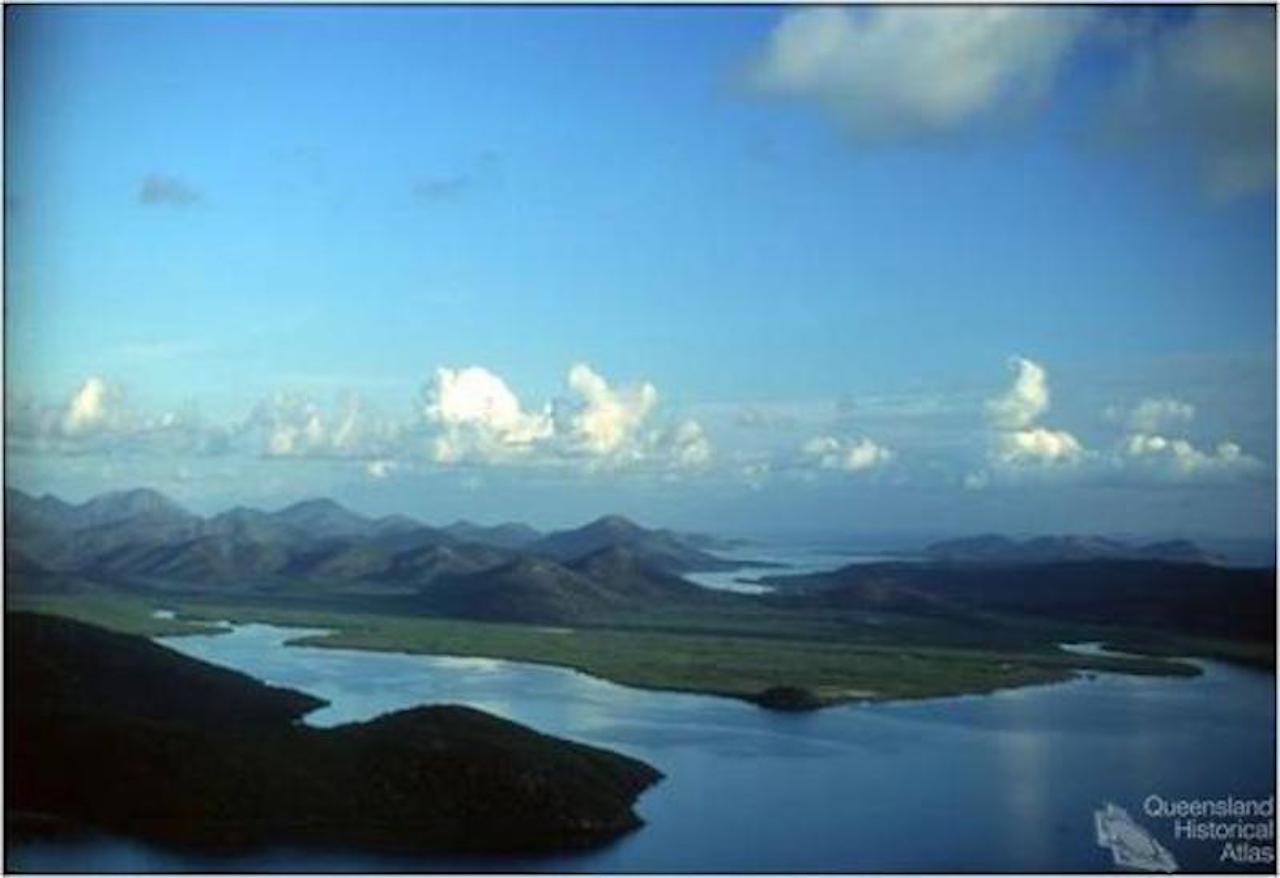
We were anchored opposite the indent behind the hill on the left. You can go way up the south arm of Port Clinton to sheltered anchorages in all weathers, which would be an interesting trip and one to mark for next year
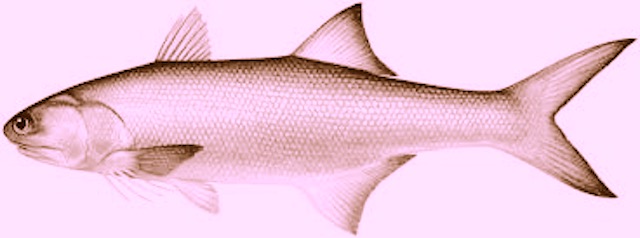
We found a large turtle ashore on the mud bank nearby and as we beached the dinghy next to it noticed what looked like leaves on the edge of the water but it turned out to be a very large thread fin salmon the best part of a metre long.

At first we thought the turtle was dead but on closer inspection found it was alive but had an injured flipper and was obviously taking time out to recover. Apparently when turtles are mating, rival males try to unseat the incumbent male by biting his flipper and trying to drag him off. There were amorous turtles in the water, including a couple in a very interesting position. Unfortunately with only our i-phones to take photos (and extremely reluctant to risk them) we got no photos to share.

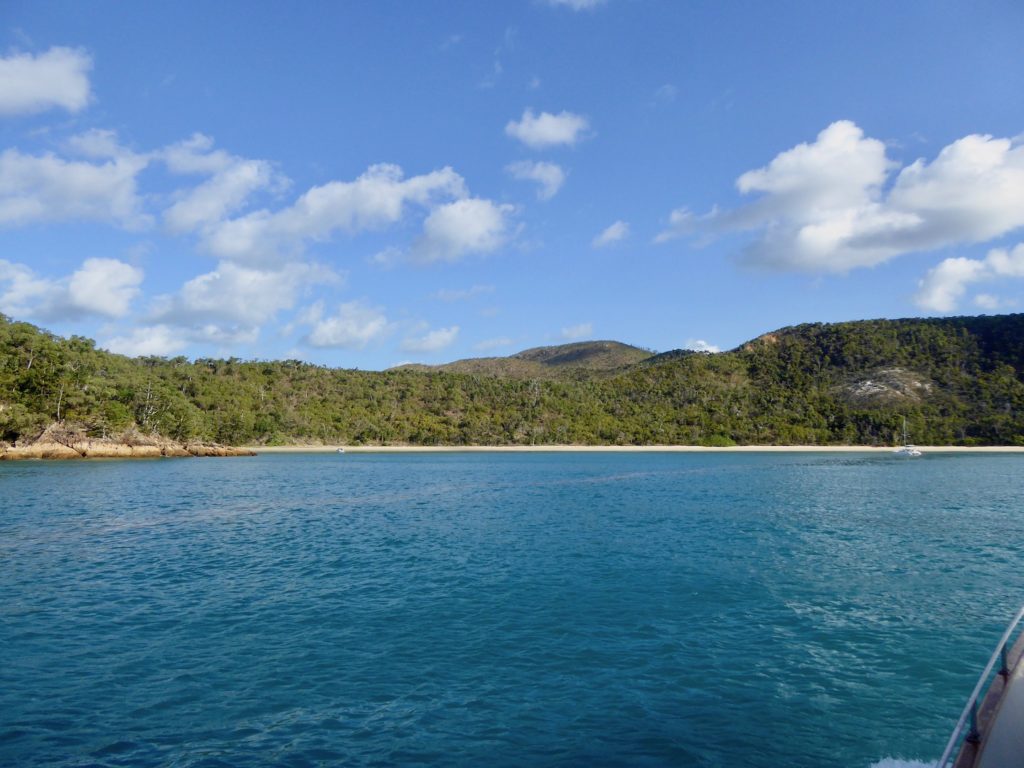
We found a beautiful bit of beach and rock to walk on – all in all it was quite idyllic and a continuation of the theme of our progress south: fairly hard days of cruising followed by beautiful and wild remote anchorages.

21st October
The forecast was for light winds (finally!) and we had a deadline: Jon had a flight booked from Rockhampton and the airport minibus was leaving Keppel Bay Marina at 11.30. So it was early start again and we had the anchor coming up in the “picaninny light” of pre-dawn. We headed out of Port Clinton into the dawn of a pleasant day – it takes a bit of self urging but the dawn starts are worth the effort and quite delightful.

We had a good run down to Keppel Bay and tied up at 10.30. Breakfast together at the very nice little Marina restaurant and then we saw Jon off on the bus looking very relaxed after his adventures in the wilds of the Queensland coast.

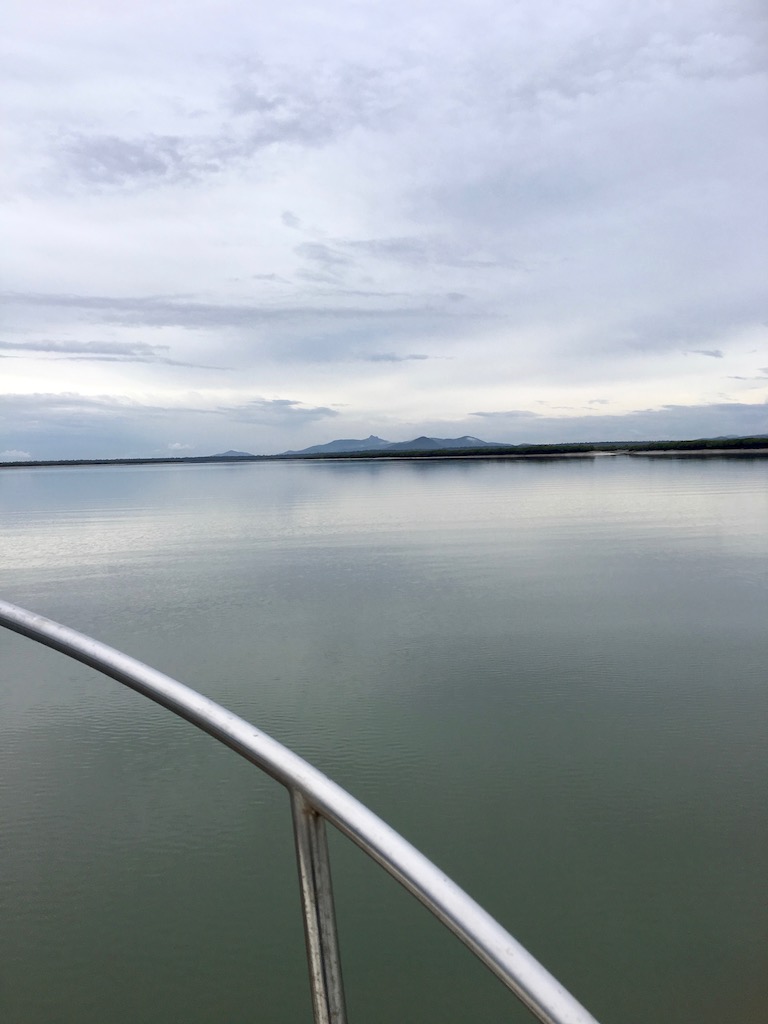
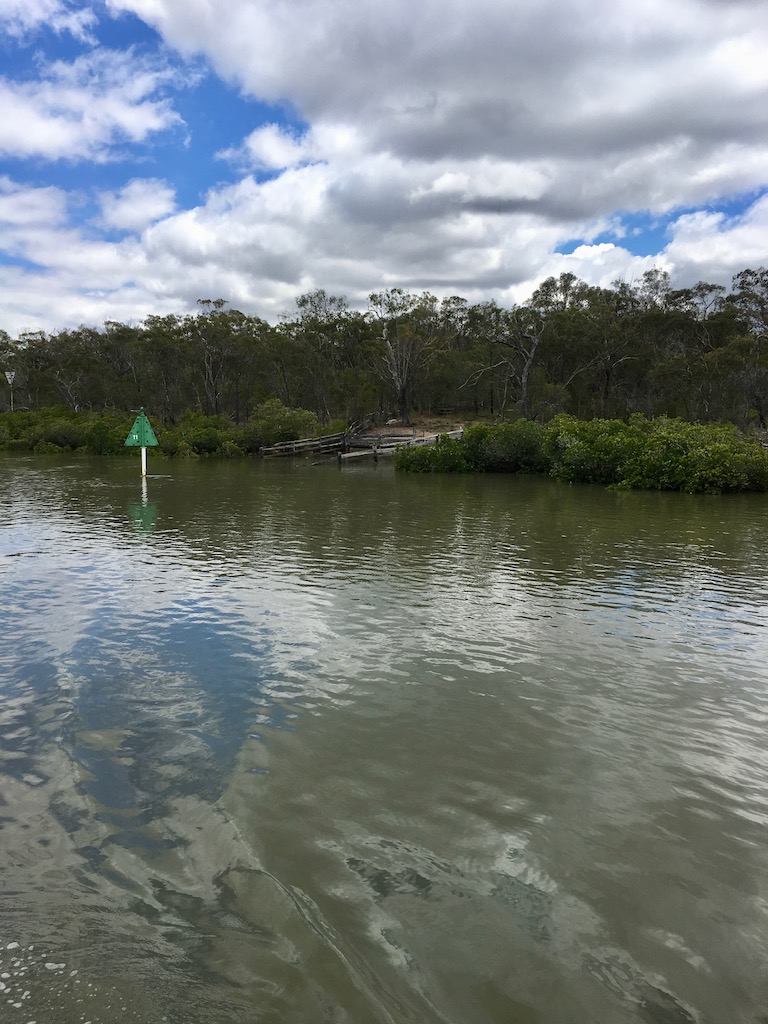
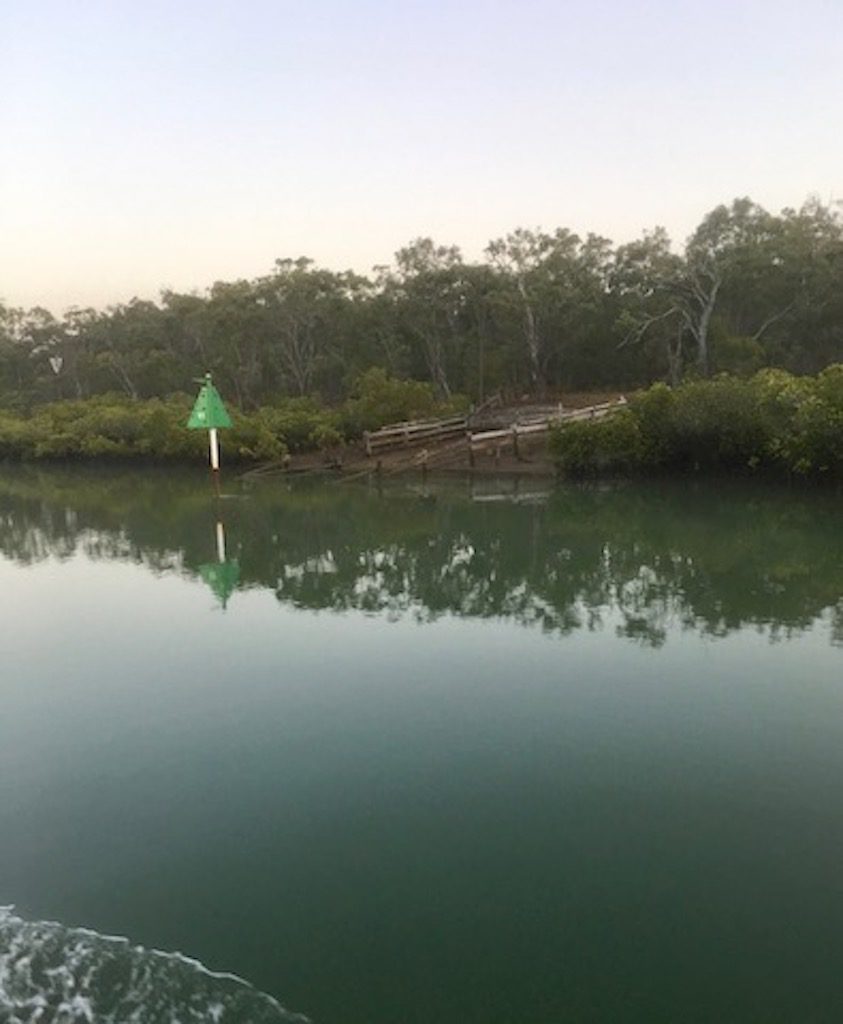
The south-easterly was getting up again the next day so we cancelled our plan to stay in the marina overnight. Our plan to catch up with Richard and Libby Wilson (the owners of the marina) seemed doomed as far as 2017 was concerned. We headed out of the marina at 12.30 and on to the Narrows behind Curtis Island where we anchored just short of The Crossing about 4.00pm to await the next morning’s high tide. A very peaceful spot being in the midst of thousands of hectares of mangroves means only one thing: midge and mossie paradise! So it was bring out the mossie coils and batten the hatches. We had so many mossie coils burning round the decks we looked like our own private smoking ceremony.

A very peaceful spot
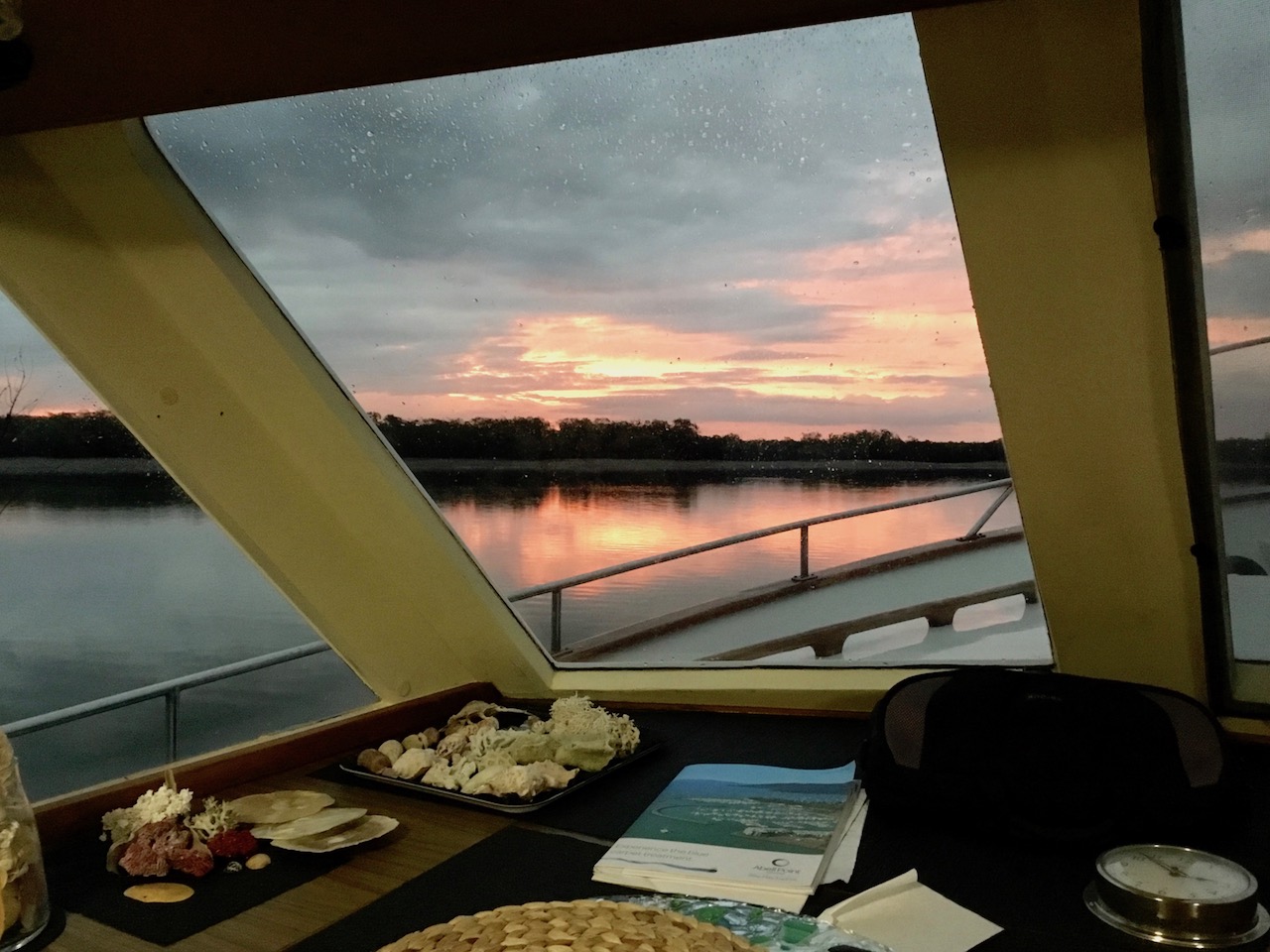
Due to insect life viewed the sunset from inside

22nd -23rd October
The mornings high tide was 10.50am, so a leisurely start was in order for the first time for many days. It was spring tide so we had plenty of water over the crossing – one of the few places outside Moreton Bay where we feel 2 meters under the keel is “plenty of water”. We started the anchor up at 10.00 and crossed at 10.30. A pleasant run down through the sheltered Narrows and into busy Gladstone Harbour followed and we tied up in the marina at 12.30. We had a busy afternoon with Lyndal taking over the laundromat, where luckily being Sunday afternoon every machine was vacant, and Ed washing down and filling water tanks on the Suzanne and also picking up a hire car. In the evening we had a nice reef fish dinner at the Yacht Club.
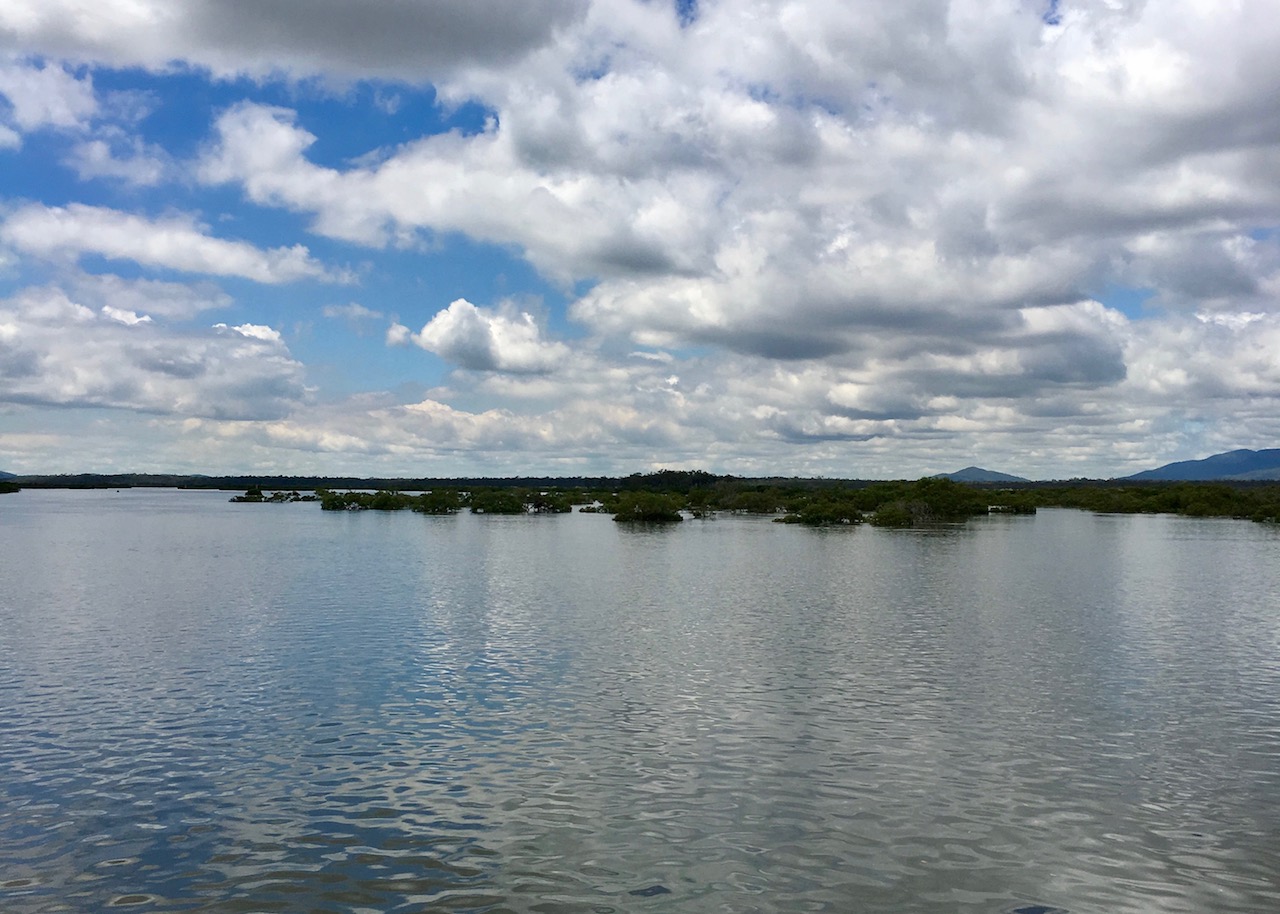
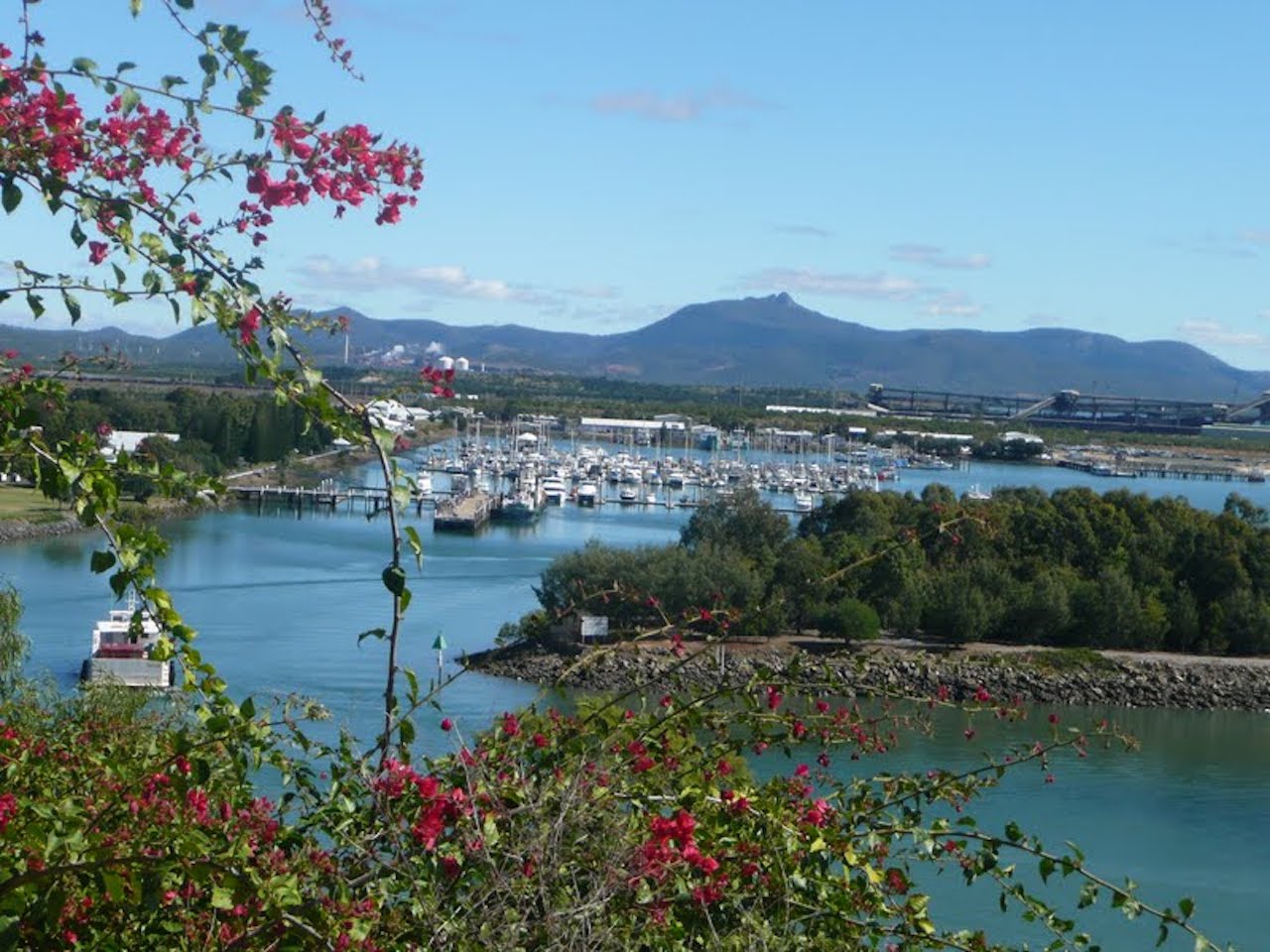
In the morning the diesel fitters from GMM arrived to service our main engines as they did last year. Keiran, the son, eyed the generator with horror and suggested we think of replacing it. He is very taken with the Volvo engines and thinks the generator is a total eyesore! He told us he could make our engine room look truly beautiful – not an adjective you usually hear to describe engine rooms! His father, on the other hand, is of the old school and thinks ‘if it aint broke leave it alone’

It was re-supply time to get ready for Sandra and Tim’s arrival a few days ahead – and of course we can’t stop at any town without visiting Bunning’s and Dan Murphy’s. We also acquired a couple of replacement waterproof cameras. All in all it was a busy day but we managed to fit in a very nice lunch at The Dock followed up by the mandatory gelato. Unfortunately we were running short of time to get the car back so Ed was not able to order the Donut Stack topped with Gelato and accompanied by a syringe of Nutella, which he lusted after – sigh – maybe next time. We had to make do with donuts to take away!!
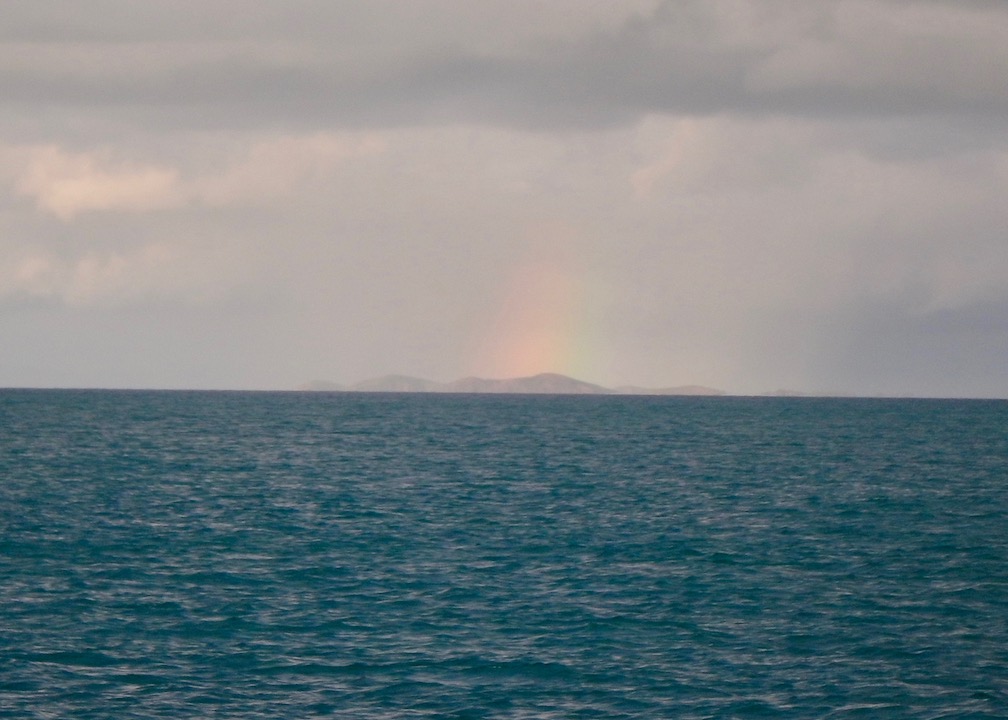
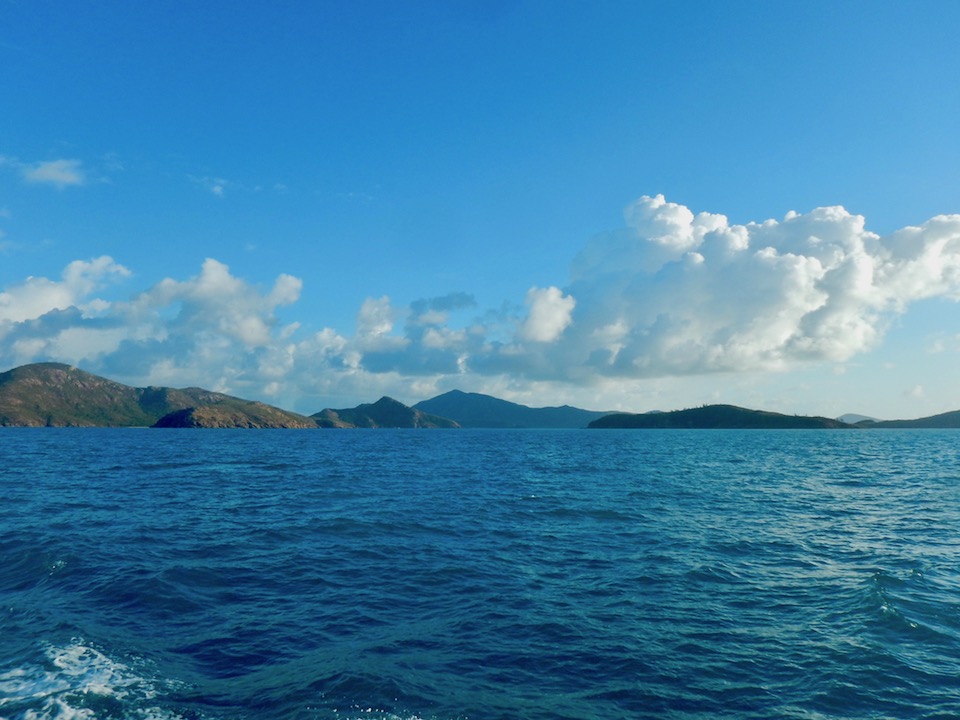
Supplies stored and cabins readied for the next occupants it was time for bed to ready ourselves for tomorrow and the trip to Pancake Creek

Shaw Island to Island Head

15th October
We had had a wonderful run of weather in the Whitsundays but now it was becoming changeable with South Easterly’s forecast so we decided to get down to Keswick / St Bees Islands early and leave ourselves the option of pressing on to the Percy Islands or sitting out the possible stronger south east weather.

So it was up anchor at 0600, rudely awakening our new crew member in the forward cabin.

A rainbow marking the way
Looking back at Shaw Island
As it turned we had a nice run down to Egremont Channel between the two Islands, where we anchored at 10.30.
Suzanne anchored in the Egremont Channel
The wind got up a bit in the afternoon but we had an explore in the dinghy and later on the rising tide went over to a beach on St Bees for a walk and a swim. The wisdom of going down the ladders backwards and using both hands was demonstrated by Jon who, attempting to get in the dinghy with an arm full of fins, snorkels and mask, was throw off balance by a roll of the boat and landed heavily on the duckboard. Assuring us he was all right, he went after the items he was carrying as they spiralled into the depths – retrieving all.

Turns out he was not OK – with a nasty gash on his calf and grazing and significant bruising on his thigh. However after some hasty first aid, he was back in the dinghy and we headed past the resort for a look before landing on the beach.

Goanna tracks
Beautiful water
Beautiful sunset

16th October
We were out of bed early to sniff the weather and it was do-able at about 15knots but had been blowing overnight. We had a big day ahead, about 9.5 hours run which turned out to be over 10 as we were pushing the tidal flow. Our autopilot had gone out about a week before so there was no respite for the helmsman. The first few hours were hard going pushing directly into the sea, which had got up overnight. Suzanne had never had a run like this in her life, being used to Moreton Bay (with the exception of a run north last year) but she took it in her stride. The anchor leaped off its mount on the bow and Edgar had go forward, kitted up in raincoat and life jacket, to tie it down (ruined my varnish too the b thing!) whilst Jon did his share of the steering.
The sea eventually settled down a bit but it was a tired crew that saw Middle Percy Island come up over the horizon. We sailed past West Bay with no time to stop for a run ashore as we had hoped. Our goal was the east end of South Percy, more sheltered from the southeast wind. So on we went past Whites Bay and eventually dropped anchor at South Percy. We felt a need for firm land underfoot so launched the dinghy to go ashore.
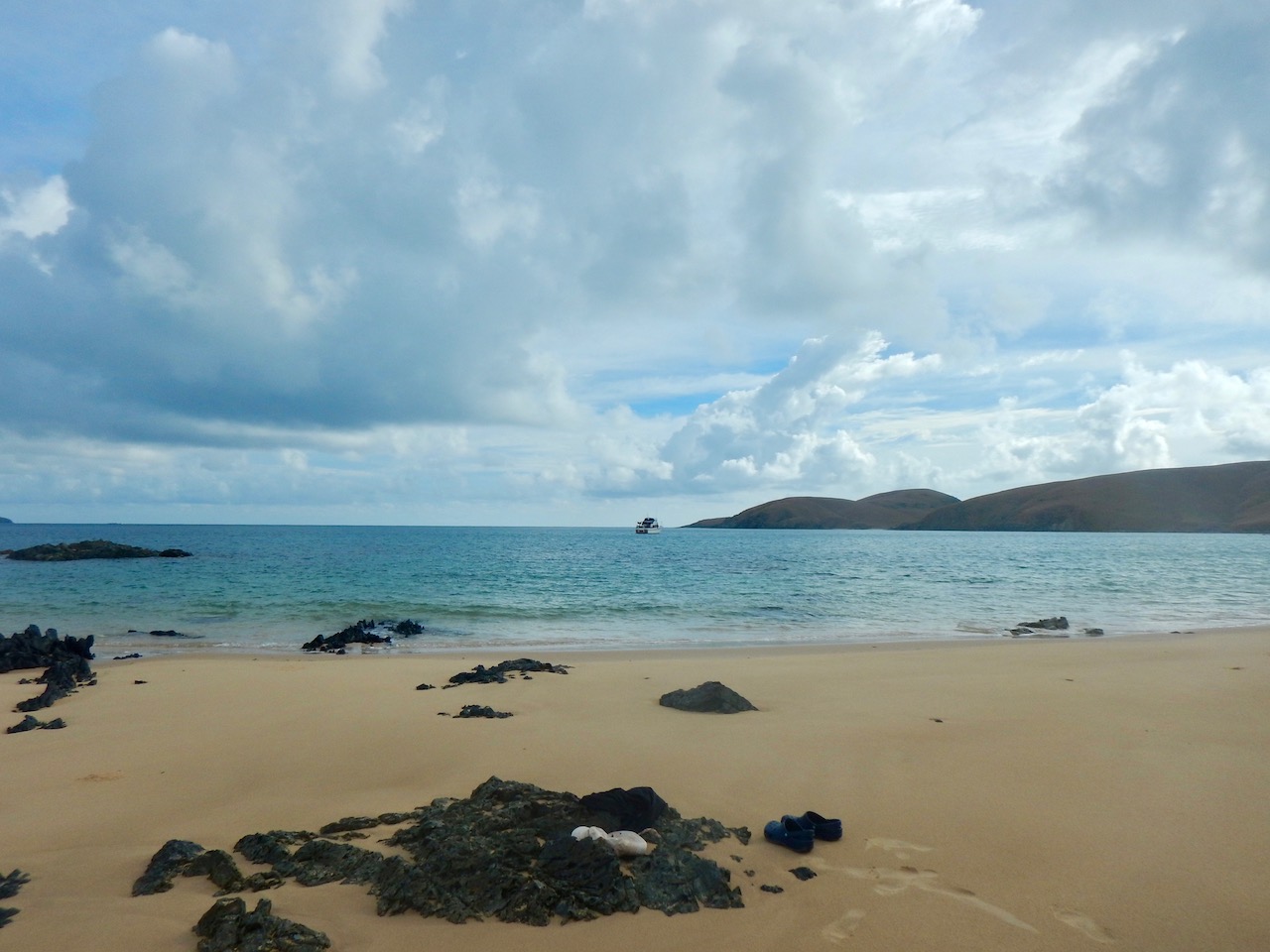
We were the only boat there and when we stepped onto this most beautiful wild beach we all felt the hard day had been worth it. There was not another human footprint besides ours and three tracks where turtles had come ashore to nest, one as recent as the last tide. Numerous shells were added to the collection and feeling totally fulfilled it was back on board for a peaceful night.

The only boat in the bay
Looking back from beach to East Percy – so many beautiful places to stay in the Percy Islands
A beautiful end to a long day

17th October
After breakfast we went ashore for a roam on the beach and rocks, Lyndal walked the beach and Jon had snorkel round the rocks.

Suzanne – the only boat on the Island
The tree was probably here at the time Cook sailed past
Ed and J heading for the turtle tracks – J forgot his hat and it was very burny
Time for a swim
Welcome swallow nesting ground
The green granite of the island – make a wonderful bench top!
One of the three sets of turtle tracks leading to a nest in the bank
Back on board we got under way at 10.00 for Island Head.
Heading off for Island Head
The first couple of hours was a nice run, wind under 10 knots but then, although wind remained light, we encountered an increasing swell from the east, reaching about 2 to 2.5 metres.

Suzanne swooped over the swell manfully (womanfully?), then when a bit of a sea got up on top of the swell it became pitching and rolling as well. On one of the rolls the chair Jon was sitting in went over, quite badly bruising his other thigh – we were beginning to wonder in what shape we would be sending him back to Miranda – and they say things come in threes! Once again we were pleased to see our destination appear ahead. Passing between the heads into the inlet was like going from one world to the next with perfect calm inside. We went a couple of miles up the inlet to drop anchor.
A sea eagle watches us pass
The BBQ lamb dinner was well earned. The forecast for the next couple of days was grim so it looked like we were here for a while.

17th and 18th October
We awoke to heavy showers of rain in the morning so Suzanne got a nice wash-down to remove a lot of the salt. In the afternoon we put down the crab pots with the dinghy, and after a bit of a survey further up the inlet, we motored down to the sand spit near the entrance for a walk on the beach.

J swimming in the croc infested (?) slightly murky estuary of Island Head Inlet
That night the 25-30 knot south easterly arrived with a vengeance. The wind howled and the boat even got up a bit of a rock – most unusual that far up the river. Even the birds got sick of flying and headed for shelter
Next morning it was sleep in and a late breakfast of delicious corn fritters and eggs cooked by Lyndal. The crew got back to their world geography jigsaw puzzle, and when the skipper suggested they might up anchor to move further up the inlet for more shelter, the deckies- who would have found themselves hanging over the bow hosing the muddy chain in a howling gale – got very mutinous expressions on their faces so the “consensus” was that we stay where we were.
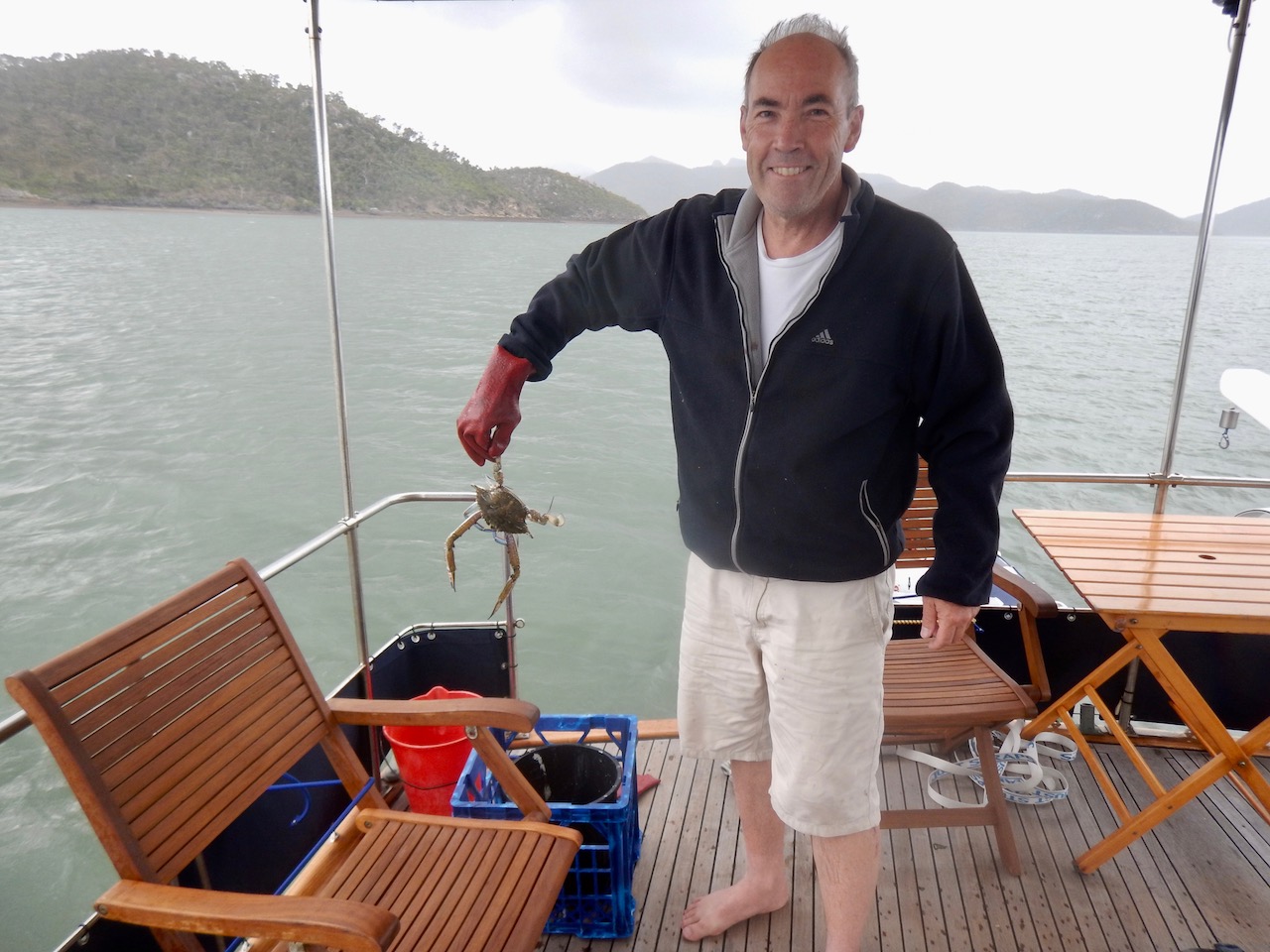
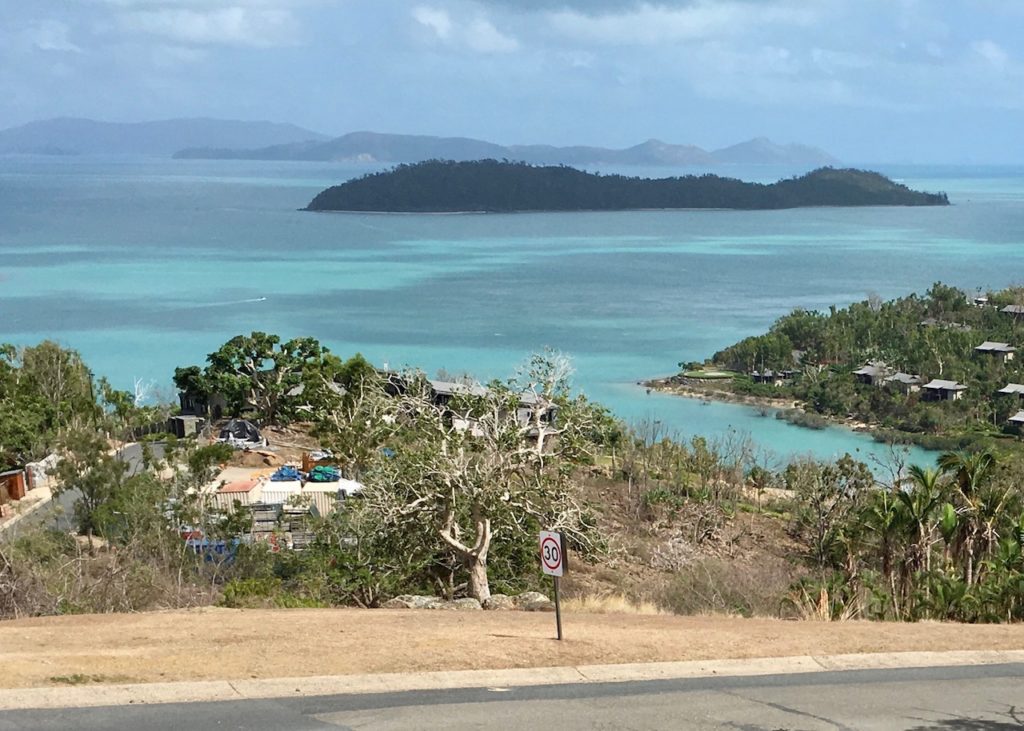
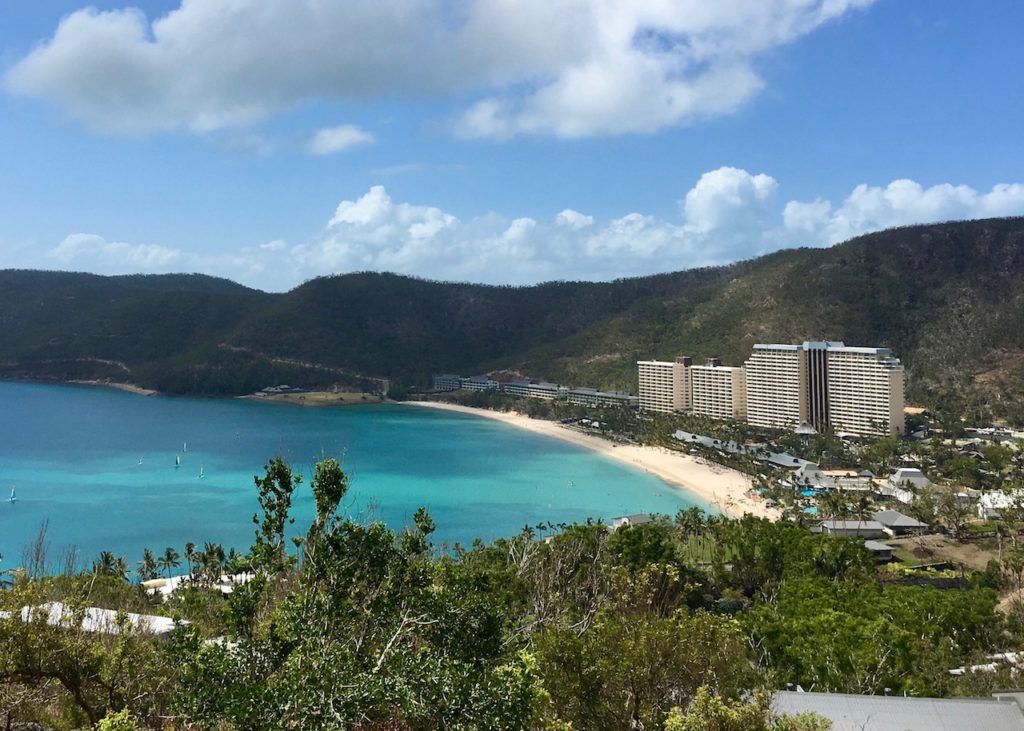
The wind eased in the afternoon so we picked up the crab pots: one nice sand crab and lots of tiddlers – all his children perhaps? We let him go to fight another day and put the dinghy up in the hope of getting away in the morning.

A Quiet Interlude

7th October
We started the day with a drive around the island to see what damage had been done and what was undamaged or restored.

The path of the cyclone
Restored and functioning normally

Some of the residents of Airlie Beach may be critical of the Oatleys for ‘pinching all the tradespeople’ but you have to admire what they have done since the cyclone. Most of the island is functioning as normal and the amount of restoration is incredible from infrastructure to landscaping.

What’s not to like about the Whitsundays and Hamilton
The marina sustained a lot of damage with one of the arms breaking away and, together with the boats moored to it, smashing it’s way into everything else. Now you wouldn’t know it had happened.

Happily moored in the Marina we entertained the Roses for morning tea and an inspection of Suzanne before heading to Plantation Bay on Lindeman Island for a couple of days of relaxation. We had a swim off the back of the boat and Lyndal, well dosed, retired to bed whilst Edgar caught up on his reading and paperwork.

8th October
A good night’s sleep, breakfast on the deck followed by a walk on the beach and a swim left us feeling relaxed and ready to face the onerous day ahead.

The wind had shifted slightly so we decided to move across to central Shaw Island and anchor off one of the beaches there. We were followed by the “Ngak Ngak’ , a very attractive 17m sailing boat which had anchored behind us at Plantation Bay. The yacht’s name Ngak Ngak comes from the sound of the white-breasted sea eagle and is an indigenous name for that bird. Artist Ginger Reilly Munduwalawala painted the distinctive logo on her side. The original painting hangs in the boat.

We headed in to the beach for another swim and then did some reading and relaxing before motoring down to Burning Point for some oyster gathering. Another feast was enjoyed by the two of us.

9th October
Woke to a beautiful still morning with scarcely a puff of wind and, after breakfast, headed to the beach for some shell searching and a swim. Too lazy to do anything else so just read and rested for remainder of the day.

Wind ripples on a still sea
A beach to swim close by

Started preparing the evening meal before an ominous silence indicated that the generator had switched off and, despite our efforts, would not switch on again. Fortunately the meal was far enough along to be edible.

Nothing to do but head for bed and plan an early start for Abel Point.

10th October
Off to Abel Point via Burning Point for Lyndal to collect some particularly fine shell grit (much to Edgar’s disgust). On the way tried to contact the local Marine engineers and electricians to see if we could get anyone to look at the generator – a lot of weaving and dodging but no one would commit in the near future.

On the way to Abel Point

Arrived in Abel Point about 12 noon and given an excellent berth only a hundred yards from the Ocean Club.

Our wee boat in among the big boys
That was the upside. The downside was that we continued our quest for diagnosing what was wrong with the generator and trying to find someone to have a look – no luck.

Spent the rest of the day trying to work out how we were going to get home with no generator. Replacement generator moving up the bucket list – flopper stoppers looking dodgy.

Decided to console ourselves by walking in to Airlie Beach for dinner. After several restorative cocktails, drinks and dinner caught a taxi back.

In need of a restorative drink. A Sorbet Mojito with White Rum and Blackcurrant Liqueur shaken with fresh lime, mint and lemon sorbet poured over ice and topped with soda – Holy Moly!

11th October
Another frustrating day trying to sort out the generator. No one able to help

12th October
A breakthrough in the morning when Edgar got the generator to start by holding the fuel shut off solenoid open but it would stop as soon as released. At least we now knew it was either the temperature or safety switches that were at fault.

First one to eliminate was the overheat sensor so Ed got some of Mike’s wire and connectors that he had purchased for the radio and bridged the current from the safety switch. Then it was hold your breath and switch the start and …… away it went!

Off shopping to stock up for trip back then to Hemingway’s to dinner to celebrate! We were only going to have oysters but couldn’t resist the crab linguine and a restorative (!) fillet of beef!

13th October
Decided to refuel for the trip back and so were on the fuel dock at 6am. Finally refuelled we left the marina at about 8.30am and headed for Hamilton Island arriving at about 11am.

We had drinks with George and Loy whilst we waited for Jon’s plane to arrive. He headed for the bottle shop and stocked up with some of his favourite wines to share with us, including a very delicious Leeuwin Estate Art Series Pinot Gris and a couple of lovely rosès.

Back to Plantation Bay for a swim off the beach and a walk then back to the boat for sunset drinks on the deck. We were the only boat in the Bay so very peaceful.

14th October
We started the morning with a swim off the duckboard and then, as the wind had changed a bit, headed for Burning Point at Shaw Island. Again we were the only boat there.

Went oystering (now have a special oystering kit consisting of two buckets, two screwdrivers, two hammers and a grapefruit knife!). Again very successful and we went back to the boat for an oyster lunch with one of the lovely rosès.

Our favourite anchorage at Burning Point with Plantation Bay directly above

The afternoon we headed into the beach for a walk and a swim and a last farewell to Shaw Island for this year.

Jon with Suzanne in the background
Another beautiful sunset saw us bedded down for the night and ready for an early start on the way home.

The Family Arrives

26th September
We left Nara and, having been advised that the Hamilton Island Marina was very busy and there would be quite a wait, anchored off Cid Island until we could get in to moor.

We had about a two hour wait and made it in just in time to meet the family. High excitement amongst the children who had come all set to (a) fish (b) swim and (c) drive the dinghy (Frankie). Lorna informed us she was going back in two days as she missed her toys and game boy. Mike and Cath were all set to kick back and relax and so we picked up some more very essential supplies (Nutella, Milo and red wine) before leaving for Stonehaven, where we anchored and headed to the beach for a swim and snorkel and to release some pent up energy.

For the next ten days it was full on. The children only seemed to have two speeds – collapsed or flat out!

Cyclone Lorna hits the boat

27th September

The gang of seven (plus Lyndal)
Off to Butterfly Bay again with our gang of seven and, having moored, off to the beach with all the snorkel gear. After some reasonably traumatic sorting out (Lorna insisted on being kitted out in pink) we took to the water for our first venture into snorkeling with various degrees of success!
The good oil on best places to dive and snorkel
Eventually, cold and tired, we retreated to the boat and headed for Langford Island. There was too much current to swim but feeding the batfish was a big hit! Lorna conceded she would stay until after my birthday.

28th September
After a peaceful night at Nara we set off for Whitehaven Beach and anchoring off the north end took the dinghy up Hill Inlet to the inside of a sand spit.

Approaching Whitehaven Beach
Lots of swimming, walking and shell collecting for the rest of the morning.
Hill Inlet
A little light refreshment
A relaxed father and children
In a world of her own
Cath, the Photographer
Children now introduced into the pleasure of jumping off the boat, which kept them entertained until we headed back to Nara in the early afternoon. More jumping off the boat and Lorna now staying until after Eleanor’s birthday.

29th September
Lyndal’s birthday. Presents and breakfast on the back deck before heading back to Whitehaven for the day – Mike now the skipper and looking decidedly more relaxed.

Our new Skipper
A good birthday present was the news that he had been made a full colonel!

Once again we anchored off the north end and took the dinghy further up Hill Inlet to a swimming hole off the beach, where we spent most of the day.

Beach camp
Our private waterhole
Perfect for showing Grampsy their paces
Frankie was fascinated by the soldier crabs and spent some time hovering over them to watch them freeze and then dig into the sand. On the way back the kids took turns being towed on the kneeboard, which was a big hit.
Last minute instructions from Grampsy
Frankie
Eleanor
Lorna
Such good fun

Reluctantly our crew finally agreed to get out of the water and we headed back to Nara for Nina’s birthday cake (courtesy of Cath and the kids) and Nina’s birthday dinner (courtesy of Cath and Edgar) with phone calls from the rest of the family.

30th September
We spent the day in Nara with Mike and Cath taking the kids down the inlet to the walk up to the aboriginal cave whilst Edgar and Lyndal relaxed on board. That afternoon Edgar took the children for a swim off the beach whilst the remaining adults relaxed – altogether a peaceful day.

Mike inspected the sound system and other various jobs that needed doing around the boat and we made plans to go into Abel Point the next day to pick up the necessary gear we needed to complete the jobs and replace the sound system. Mike’s years of working with the switchboards on his hobby of electric train sets has made him a pretty good electrician.

‘Rare Pleasure’ came in in the evening with the other two boats they were travelling with. Graham and Rhonda and Graham’s sister, Claire, came over for a sunset drink after the boat had been transformed from lived in to presentable and ship shape within minutes (Army colonels and Army colonel’s wives very good at this).

A very polite cockatoo joined the drinks party
Daintily accepting all tidbits

1st October
Back to Abel Point and whilst Ed sorted some thing out on the boat Cath, Frankie and Lorna did some washing and Mike, Lyndal and Eleanor went shopping.

Bunning’s first then Super Cheap Auto, Big W and Woolies were on the agenda for new showers, a new sound system, new togs for Lorna and more provisions. Eleanor picked out two new swimsuits for Lorna and found some funky sunglasses for Frankie. Sweet child that she is, she asked for nothing for herself but had been very taken with an R2-D2 key ring (big Star Wars fan) in Super Cheap Auto, which we surreptitiously purchased.

Back to the boat and to work. New showers first – which transformed our showering – then on to replacing the sound system. A project which evolved over the next couple of days as a new radio/bluetooth player was installed and all the speakers were replaced by Mike. In the end we had a beautifully working system albeit with a little crackling due to old wires and soundproofing – this he intends to fix at Christmas. In the mean time he put in a new switch for the waste pump and fixed the navigation lights -– what a handy son.

Takeaway pizza on the back deck and overnight at the marina.

2nd October
Leisurely start and off to Plantation Bay on the south side of Lindeman Island for the night. Arrived early afternoon and after much jumping off the boat headed in to the beach for a walk and swim. Watched a movie and off to bed ready for the much anticipated event of the trip – Eleanor’s birthday.

3rd October
Eleanor’s 10th Birthday.

The dawning of a new decade for Eleanor at Plantation Bay
A much celebrated event as our eldest granddaughter hit double digits! A hasty breakfast and then present time. She had already been given a camera as an early birthday present and she now received a much longed for pocket knife – which she promised to use in a very responsible manner! The R2-D2 keyring was received with great delight as was her elephant necklace and her beautiful glass dolphins.

More jumping off the boat and then into the beach at high tide for swimming, walking and kneeboarding. Cath and the kids had a go as did Edgar, who managed to get upright and jump the wake, which impressed his grandchildren no end.

We motored over to Burning Point on Shaw Island for an hour’s oyster collecting then back to Plantation Bay for an oyster entrée – 5 dozen between three. On the way back we spotted a boat looking like the Meander II in the distance, which reminded us to phone George and Loy. Turns out they were in Hamilton Marina so we arranged to meet at Whitehaven the next day.

Eleanor had her cake – chocolate with candles and smarties – and her birthday dinner and it was a very happy girl who went to bed that night.

October 4th
Mike, Cath, Eleanor and Frankie went ashore to climb the hill to the top of Lindeman and have a look at the views whilst Edgar took Lorna into the beach for a swim.

We departed about 10.30 for Whitehaven and anchored in just behind the Meander II on the south end of Whitehaven.

Edgar and Lyndal went over to say hullo to George and Loy and have a drink whilst Mike and Cath got the kids sorted out for a swim. Mike called over to have a look at Meander II and then went back to relieve Cath who also came over for a look. Altogether spent a very pleasant hour with the Roses before everyone headed back to the beach for a swim with the exception of Lyndal who had developed a sore throat and a nasty cough and thought it prudent not to swim.

This lasted until everyone came back and feeling hot and in need of a cooling off – and being a showoff – Lyndal decided to jump in the water off the bowsprit. With great trepidation Frankie was the next closely followed by Eleanor. Lorna had climbed outside the rail but was terrified of jumping. When told she didn’t have to wailed that ‘of course I do – I can’t chicken out’. Finally jumped with Cath (who blamed Lyndal for getting her in this position) and was so pleased with herself she did it several times more, then they jumped off the side of the boat and everywhere they could climb and jump. Lorna now decided she was staying on the boat forever and very put out when she found she was due to go home soon.

We headed back to Stonehaven about 4pm for the night and to get ready for an early start back to Butterfly Bay.

5th October
Lyndal’s bravado of the day before had paid the price and her sore throat and glands had now developed into a chest infection to be followed over the next couple of days with an eye infection and ear infection.

Lyndal now relieved of all duties and has adjourned to her cabin.

Meanwhile the remaining members of the party are taking it in turns to jump off the boat (the kids) and snorkel (the adults) in Butterfly Bay and are having a great time. After a couple of hours we set off again for Nara where the afternoon was spent swimming off the boat and exploring the reef plus some dinghy driving by Frankie, Eleanor and Lorna (bit nervewracking).

6th October
We set off about 7am for Hamilton to get the family on their 11.30 flight.

It had been a great ten days, enjoyed by all and very relaxing for Mike and Cath but the time was up and they were switching back into work mode when they left. Frankie was looking forward to going home, Lorna was mutinous (didn’t want to go) and Eleanor was in tears (didn’t want to leave us) when we farewelled them.

Ed and Lyndal hired a buggy and headed for the doctor who said that in her medical opinion Lyndal was a mess and prescribed antibiotics, steroids and an antibiotic eye treatment. Edgar prescribed lunch and a drink and a drive around the island – both treatments seem to work!

Lunch at Hamilton. Note the currawongs who were a real pest grabbing food of the plates

We checked out a couple of galleries whilst we were waiting for the scripts to be filled and were very taken with a glass lazy susan, which Edgar promptly bought for Lyndal as a birthday present – much to her delight.

Back to the boat and an afternoon nap for Lyndal whilst Ed went to have a chat with the Roses who were anchored opposite. We were supposed to have dinner with them that night but decided it wouldn’t be wise and instead had a light meal and early to bed.

The Whitsundays

19th September
A leisurely breakfast and a slow start saw us reluctantly leaving Shaw Island. We had had a very pleasant couple of days there and determined to come back with the family for some swimming and oyster picking!

Seeing as Scott was leaving us the next day we thought it would be nice to go round to Whitehaven Beach though the wind was not ideal. We went past Lindeman Island and Pentecost Island. By this time the Suzanne was rolling wildly and we made the decision that Whitehaven would be no good – with Scott declaring he would rather sit in a peaceful spot than be thrown around the cabin and he would visit Whitehaven some other time!

We diverted and headed up the Fitzalan Passage in a great deal more comfort. We passed Hamilton Island Resort and fully appreciated the destruction of Cyclone Debbie. We had seen signs of damage all the way up but never to this extent.
Ending up in the quiet waters of Nara Inlet, we stayed the night drinking the last of our gin and whiskey and partaking of the last of our perishable food. We had been ‘at sea’ for 9 days and were pleased to find that our water had held out well but the rubbish was taking over the boat!

20th September
Next day it was off to Abel Point Marina to drop Scott off and pick up Robbie. We passed a whale on the way that gave us a great display. Annoyingly I had only just started using my new camera and zoomed out rather than in, which somewhat negated the spectacular effect. Even more annoyingly this turned out to be the only whale we saw the entire time we were in the Whitsundays.

Last night on board with Scott and first with Robbie. We picked up some supplies and had a very enjoyable meal at Hemingway’s (thank you Scott). Great menu and good wines left us feeling well satisfied with the world.

21st September
The next morning we did some washing and had breakfast on the deck at the Ocean Club – a new initiative of Abel Point Marina that sets it apart from other marinas. What was originally destined to be a floating restaurant out on one of the arms has now been developed into an amenities complex with ensuite showers, a laundromat and picnic area with brunch provided and barbeque facilities for lunch and dinner. The laundromat has plenty of washing machines and dryers and whilst you wait you can breakfast on tea/coffee, fruit/yoghurt and croissants/muffins on the deck overlooking the marina. The cost to join? $10.
Robbie had requested a calm anchorage so we decided to go back to Nara Inlet.

Suzanne at Nara
There was an aboriginal cave with some paintings at the end of the Inlet, which we were interested to see. It was a fairly easy walk, though with my knees I found it a bit more challenging. Definitely worth the climb with lots of information and ancient cycads to see as well as the cave paintings.
Nara Inlet at dusk

22nd September
The following morning we headed for Whitehaven with Ernest at the helm – causing Robbie some nervousness! We anchored off the northern end of the beach and took the dinghy into a gutter, which was about waist deep and had a flat firm bottom – ideal for water walking and swimming. Also ideal for sitting on the edge drinking wine!

Cyclone Debbie had hit Whitehaven hard. With trees stripped bare and many of them dead it was quite a different spot from last year and whilst there are signs of recovery, it will be some time before it is returned to it’s former glory.

As it was a bit too rolly to remain at Whitehaven we decided to try Cid Harbour and anchored off Sawmill Beach.

Cyclone victim off Sawmill Beach
Edgar, Ernest and I decided to try the bush walk round to Dugong Bay but the light beat us and we had to return without reaching our destination. Robbie’s asthma was playing up and she decided to remain behind and look for shells – probably a wise move!

23rd September
The next day bright and early we headed for Butterfly Bay via Hook Passage.

Early morning departure for Butterfly Bay
We arrived just after eight and managed to secure a good mooring where (as there were plenty of free moorings) we remained until just after lunch, snorkeling and swimming and generally relaxing.
Escort into Butterfly Bay
Two sides of Butterfly Bay – the sheltered side
Two sides of Butterfly Bay – cyclone ravaged
Hayman looking ok from the sea but closed for the foreseeable future due to cyclone damage

Last night for Robbie and Ernest and they opted to spend it in Nara Inlet. When we awoke the next morning the water was so still and mirror like we could see the clouds and cliffs reflected almost perfectly. We spent the morning reading and chatting and departed for Abel Point in the early afternoon.

Pacific Dawn pays a visit to Airlie Beach

24th September
Another bout of washing and a big shop before the family arrived in a couple of days. We made sure we had plenty of snacks, biscuits, drink, chips and biscuits to keep the hunger pangs at bay with three small children as well as plenty of sausages, hot dogs and hamburgers.

We stowed everything away and once again adjourned to Hemingway’s for dinner, this time courtesy of Ernest and Robbie. Standouts were the Smoke Infused Rum smoked and served at the table in a very spectacular manner, the Mixed Dozen of Oysters and the desserts.

Smoky Rum

The oysters were different and very flavoursome. Edgar and I shared a dozen which consisted of one natural, one with pink champagne & lychee, one with Ora king Salmon and coconut granita, a chorizo oyster (which was a much nicer twist than Kilpatrick) and probably our two favourites -though they were all good – blue cheese with grape and cucumber, mirin and pickled ginger. The desserts were spectacular The Tropical Panna Cotta came in a glass sealed with the mango gel. The warm chocolate sauce was then poured on and melted it’s way down into the tropical fruit

Tropical Panna Cotta
Lemongrass Panna Cotta – Marinated Fresh Tropical Fruit – White Chocolate Passion Fruit Sauce – Mango Gel
Raspberry – Blueberry – Kaffir Lime Meringue with flaming Grand Marnier

25th September
We did our final wash and had breakfast on the deck at the Ocean Club, a bit of shopping then farewelled Robbie and Ernest and headed out to return to Nara Inlet and to get the boat ready for the onslaught the next day.

Percy Islands to the Whitsundays

Our intention when we left the Percy Islands was to stay in Curlew Bay, which read favourably. We arrived after a pleasant trip up with the odd whale and interesting island to see us on our way.

The gods watching over the islands. No wonder people were superstitious
It was a very pretty and tranquil spot .

Our stay lasted all of two minutes after we put the anchor down. It was just before 12 noon and a couple of good rolls and the memory of Keppel Island had us hauling anchor and hurrying on our way. We decided to head for Digby Island and shelter there. When we arrived it turned out to be only a little better, but it was now getting later in the day and hoping it would improve as the wind dropped in the evening we dropped anchor and headed to shore.

When we first rounded the corner to Digby it looked as if there were people camping all along the beach. What it turned out to be was the wreckage of a boat that had pulled anchor in the cyclone and the owner had not been able to start the engine and get away. It was still partially intact on the shore line and the whole beach was covered in the remnants of a life at sea.

The waves were breaking on the shore line which led to some interesting dismounts from the dinghy and some very wet walkers but it was nice to get ashore and we walked the length of the beach and had a swim before returning to the boat. As we headed back to the boat the “Rare Pleasure” arrived. Edgar and Scott had met the owners Graham and Rhonda last year in Rosslyn Bay and gone on board for a drink. They were travelling in a convoy of three boats but called in and had a drink with us before heading to dinner on one of the other boats. A lovely couple from Maryborough who we hope to see more of as they will be in the Whitsundays for some time.

The rolling didn’t improve during the night and we debated whether to stay or go. We couldn’t get the weather forecast but noticed that “Rare Pleasure” had departed about six. We called them up and they said it wasn’t too bad outside but by then we could see the seas outside the rocky reef and it looked a lot worse than where we were. Their boat was faster and had stabilisers and when we eventually got a forecast it was for 20 knot winds and up to 2 metre swell.
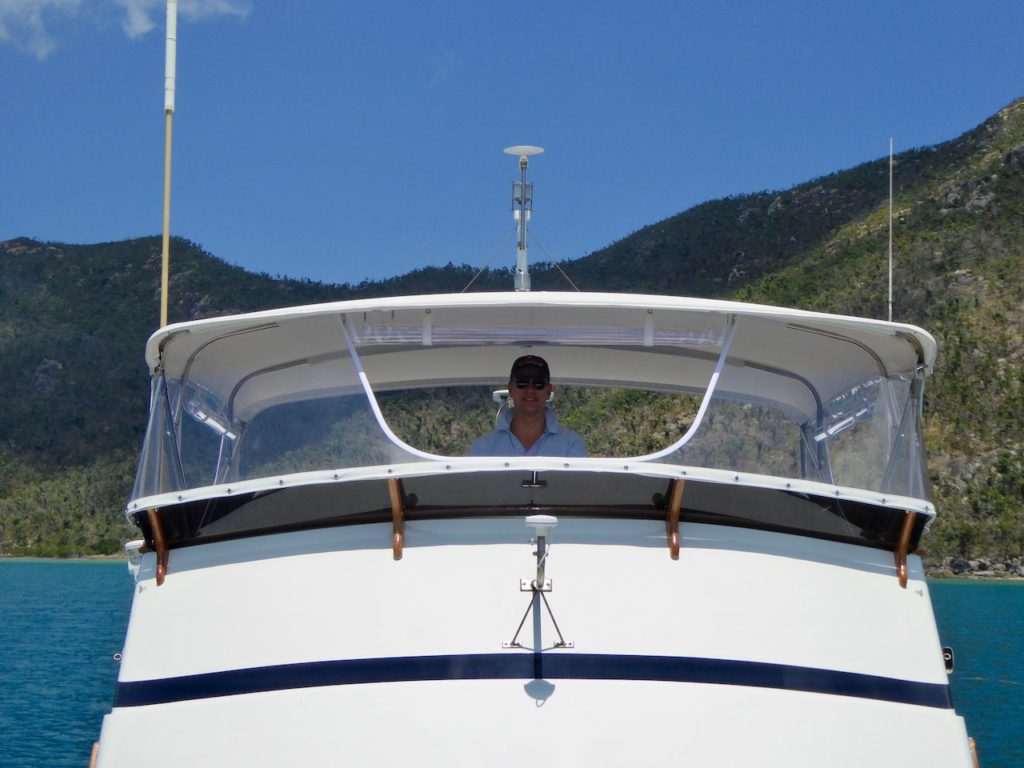
There was an unanimous decision to stay where we were and spend the day exploring the island so we packed up refreshments and once again headed for shore. We salvaged some benches and chairs from the wreck and set up camp under the coconut palms. The boys clambered up the rocky cliff to the headland whilst I made my way through a Pandanus grove and followed an overgrown track up to where they were. The Pandanus grove was home to hundreds of tiger blue butterflies and a number of lovely dendrobium orchids

and the walk over the headland uncovered lots of interesting native plants and an increasing amount of lantana and feral weeds! We trod very heavily in knee high grass whilst pondering whether there were snakes on the island and were quite relieved to reach our beach camp unscathed.
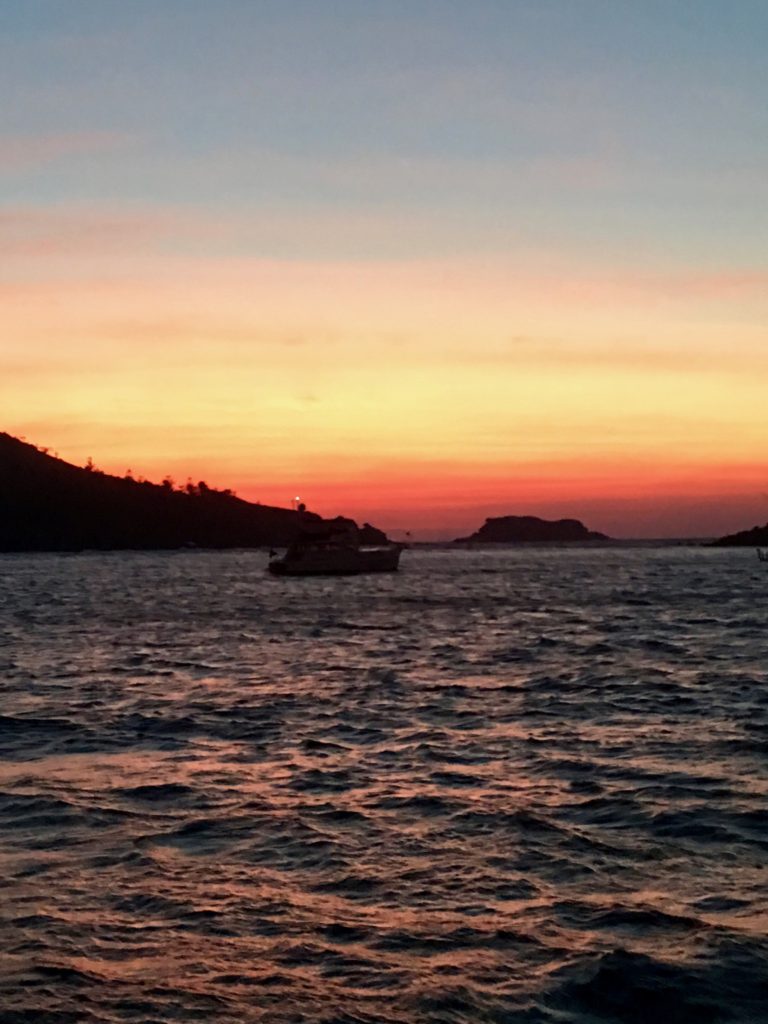
After a swim and relax we went back to the boat for a late lunch and a rather rolly rest and then Scott and I persuaded Edgar to take us back to the beach for a walk. The waves had increased and our dismounting was even wetter and more spectacular than before. Scott fell and the dinghy went over the top of him with Ed and I looking on horrified, but he emerged unhurt and laughing and we had a most enjoyable walk.

The winds and the waves had moderated the next day and just after sunrise we headed out for St Bees to anchor for the night. When we arrived at the anchorage it was still early, very windy and no beach to walk on so the crew, with little objection from the skipper, refused to lower the anchor and we kept going to Shaw Island which turned out to be a brilliant decision as the anchorage was calm and the beach beautiful.
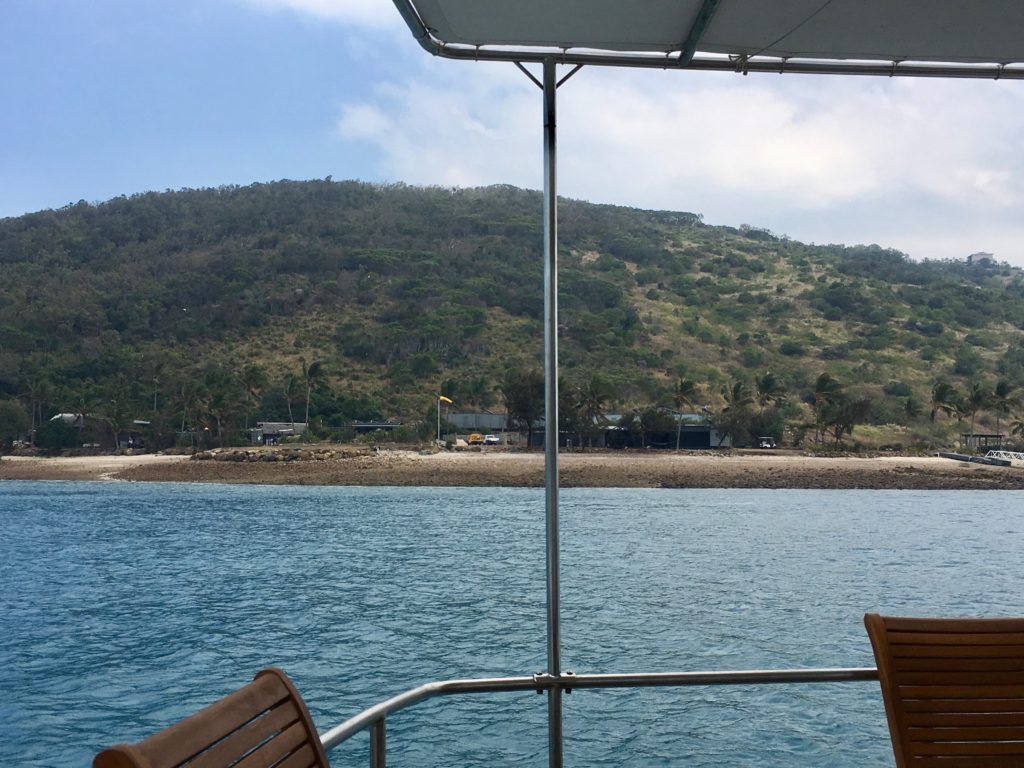
Airport at St Bees
Not much of an anchorage
We arrived at Shaw Island in time for sunset drinks. The next day after a substantial breakfast of sausages and eggs we set out to walk the beach and explore
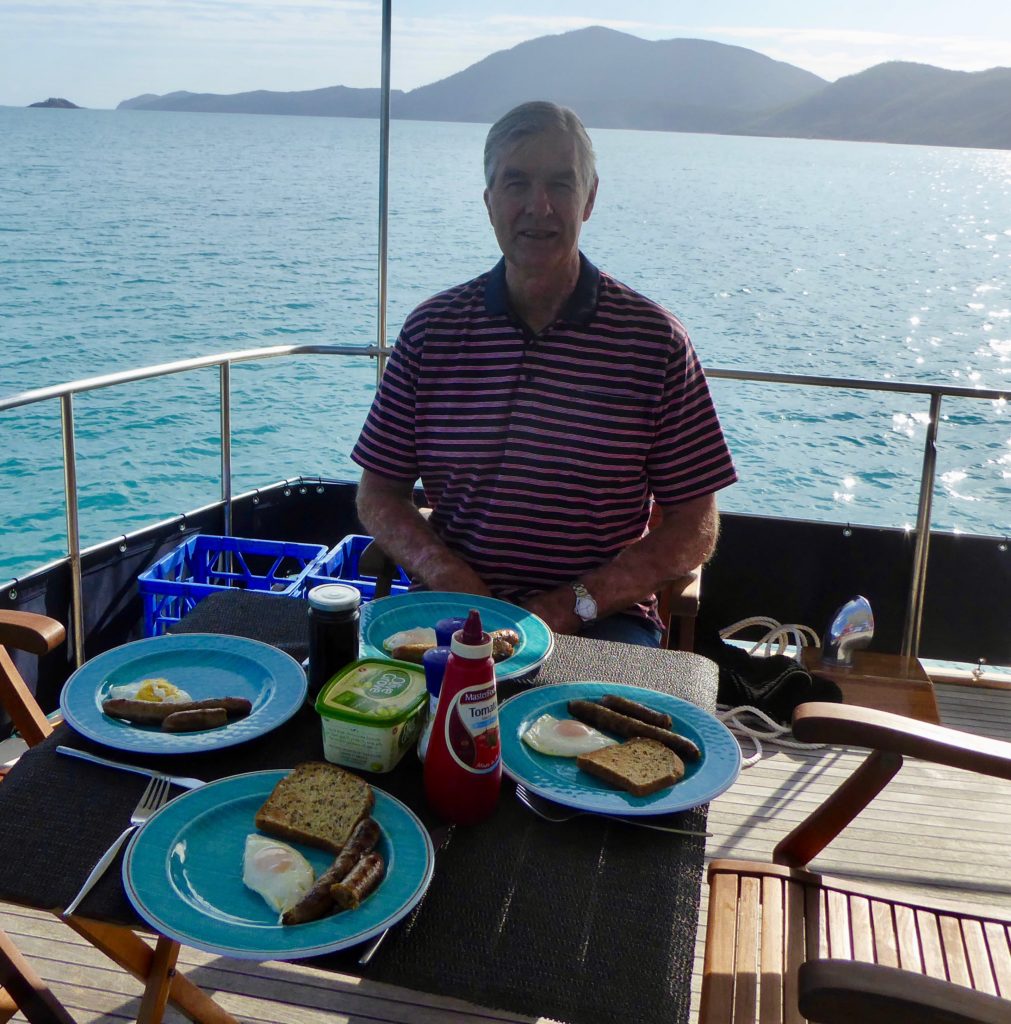
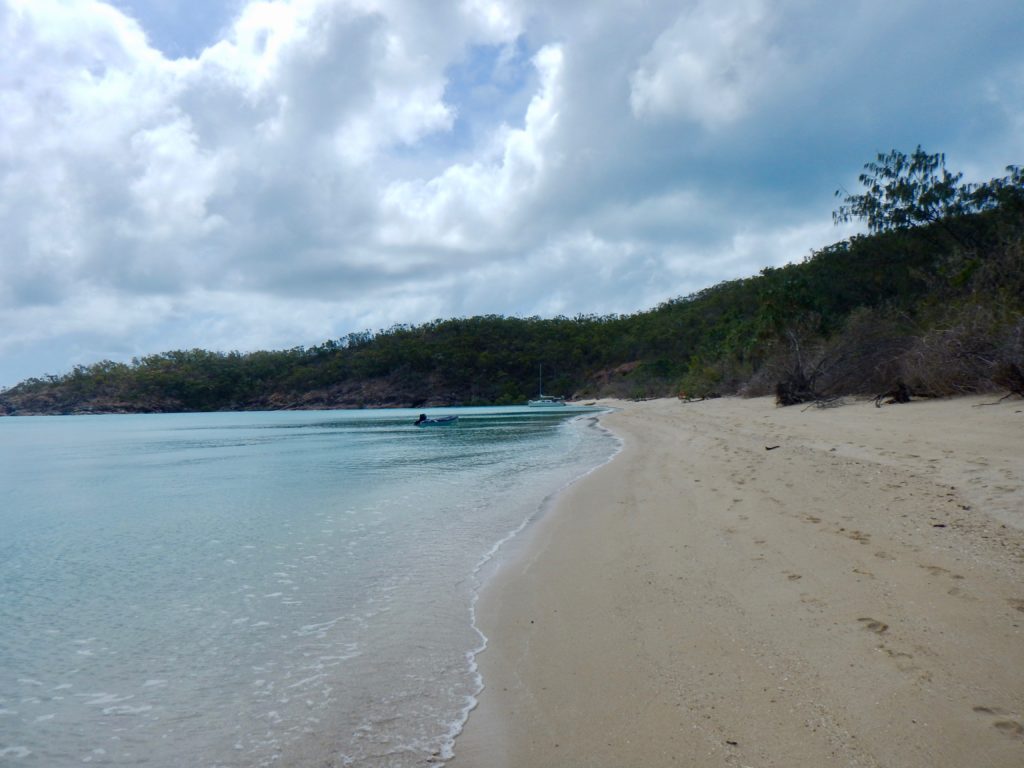
Lovely creek with turtles
Lots of sand dollars

Back on board Edgar took advantage of the still water to wash the salt of the boat, swab the decks and attend to some maintenance. Aided by the male members of the trusty crew they soon had everything shipshape but the crew were worn out and had to take a long rest. The next morning it was a leisurely morning watching the turtles disport around the boat before heading back to the beach to walk and swim. We had taken a bottle of wine and relaxed after several swims on the beach. We had noticed a German Shepherd on one of the bigger catamarans as we came into shore and later met Shadow and her owners. She had been cruising the Whitsundays for a number of weeks and seemed very at home on her boat. Whilst we were chatting with Kevin and his wife they told us of the bounty of oysters that were available on the rocks.
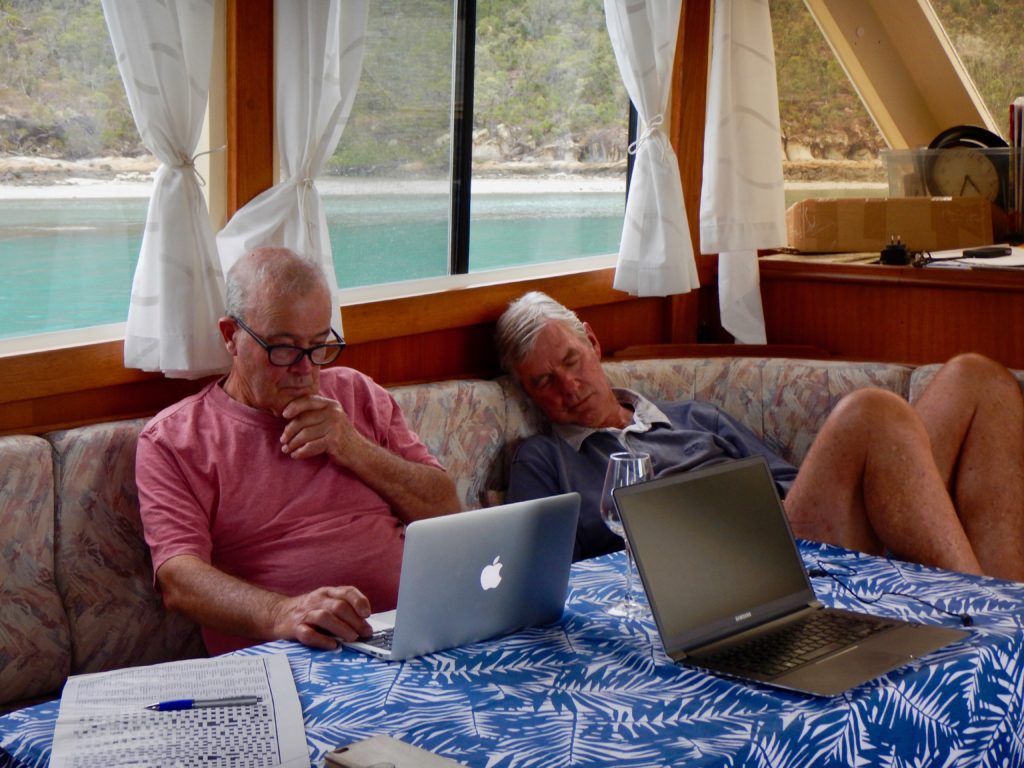
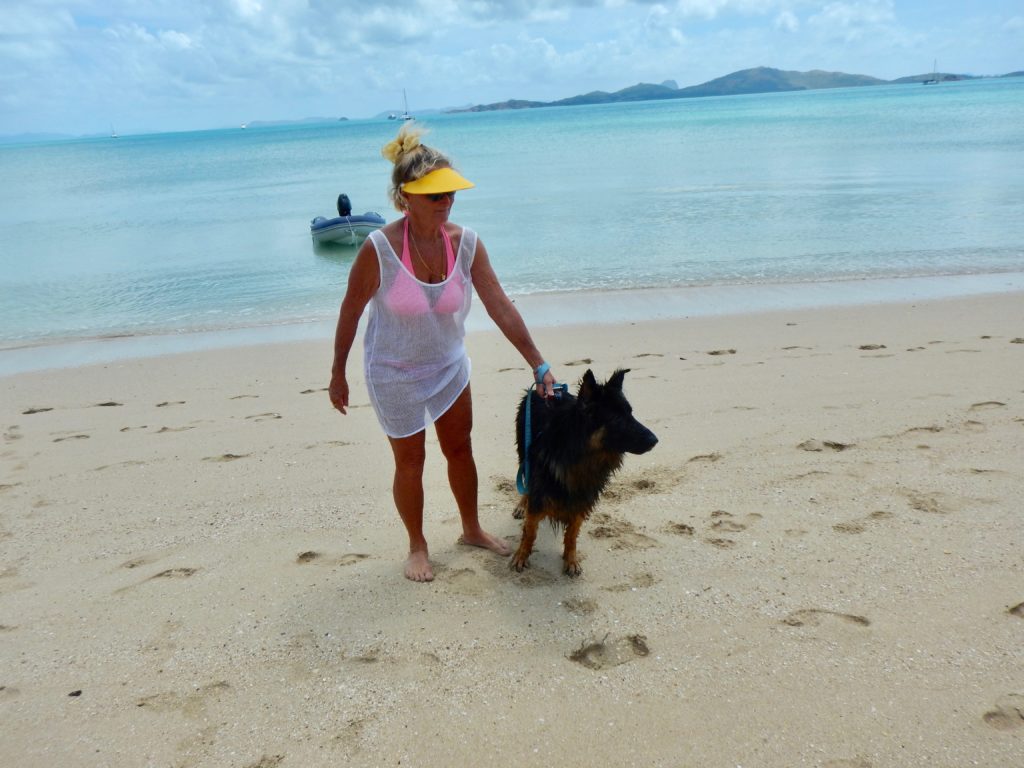
Under the able direction of our new found friends we set to and within about an hour had gathered over 60 oysters. As Ernest doesn’t eat oysters that left 20 each which were rapidly dispatched – there is NOTHING like an oyster straight off the rocks. Roast lamb and red wine completed our meal all set against a stunning background of sky and sunset. The next day after a tidy up and a quick swim it was time to depart. We left planning to come back within the next few weeks – bringing Mike back for the oysters and Jon back for the sheltered anchorage to get his sea legs before the return trip.
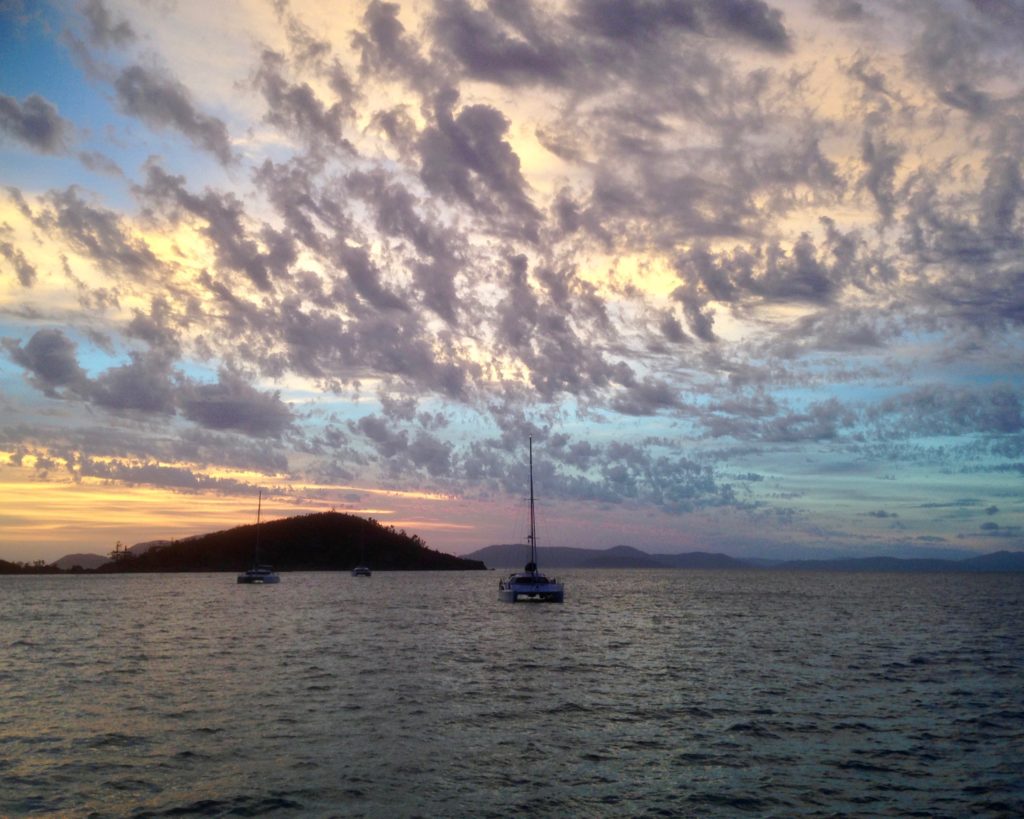
Gladstone to the Percy Islands

We stayed in the Gladstone marina for six days whilst the very capable company that serviced our engines last year now serviced our generator! A perished hose was found to be the culprit and the rest of the generator was checked and tested and we heaved a sigh of relief that it didn’t need replacing.

We put our time in Gladstone to good use – a trip to Harvey Norman to buy a kettle that wasn’t a power guzzler (and a very nifty travel steam iron – we are now travelling in style), the obligatory trip to Bunnings to gather a few more necessities and an essential trip to Dan Murphy’s to make sure we didn’t run out of gin, whiskey and other forms of alcohol. We also tried out some of the restaurants – The Dock got the prize for their Great Aussie 100% Black Angus beef burger with tomato, beetroot slaw, lettuce, cheese, bacon, crumbed pineapple, BBQ sauce & chips followed by chocolate gelato and a loooong walk through the East Shores Parkland.

Looking over the water and park
Hamburgers as they should be – served with a side of chips

Lyndal flew back to Brisbane for a couple of days and arrived back on the Saturday with Ernest and Scott, our crew for the next leg of our trip. During our absence Edgar had supervised the servicing of the generator and endlessly washed the coal dust off the boat (the only drawback to staying in Gladstone Marina, which is attractive and well appointed), topped up the water and got the boat ready for an early departure the next morning. Back to The Dock for another hamburger, a few nightcaps and then early to bed ready for the morrow.

We got away about 6.30am. The port marine traffic, development and other activity is constant in Gladstone. We passed a number of large bulk carriers heading in, refueling and going out as we made our way out of the harbour and to the Narrows.

The Narrows is a 40km channel between the mouth of the Fitzroy and Gladstone harbour on the inside of Curtis Island.

Entrance to the Narrows
It can be crossed at various locations at low tide and Ramsays Crossing is one of these.

John Bonar Peter Hamilton Ramsay (better known by his nickname ‘Alphabetical’ Ramsay due to the number of his Christian names) together with two partners, held the lease on Monte Christo Station, which was established on Curtis Island in the 1860s. Monte Christo was primarily a cattle station, but horses were also bred for export to India (probably for the British India Army). The crossing enabled cattle and horses to walk back and forth between the mainland and Monte Christo Station.

The last cattle crossing in 2014. Hard to believe a 45 foot motor cruiser passed over here with a little room to spare
Steamers travelling between Gladstone and Rockhampton used The Narrows during high tide. Its a popular high-tide shortcut for boats drawing 2 metres or less. Channels are pretty well marked nevertheless we took it carefully as running aground is not an option.
The same spot at full tide enabling vessels to cross over

We had debated whether to stay in the Narrows for the night, do a bit of fishing and relax in a smooth mooring or whether to go on to Keppel Island. On weighing things up we decided that the midges could be bad in the Narrows and we had never been to Keppel so would give it a go. A decision we would later regret!

We had decided to head for Svendsen’s Beach and take shelter there. When we arrived a number of other boats had obviously had the same idea and they were all rolling wildly. We tucked in as well as we could and – noting that a light stern anchor might be useful against swell penetrating around the point – Ernest and Scott were despatched in the dinghy to carry this out. With great bravado on their part they managed to get the anchor out but it made little difference and so we headed for shore and a long walk on something that wasn’t rocking and then adjourned to the boat, poured the rums, gins and whiskey, opened the red wine and resigned ourselves to a very rocky night. Some compensation was the sunset – which was a stunner!
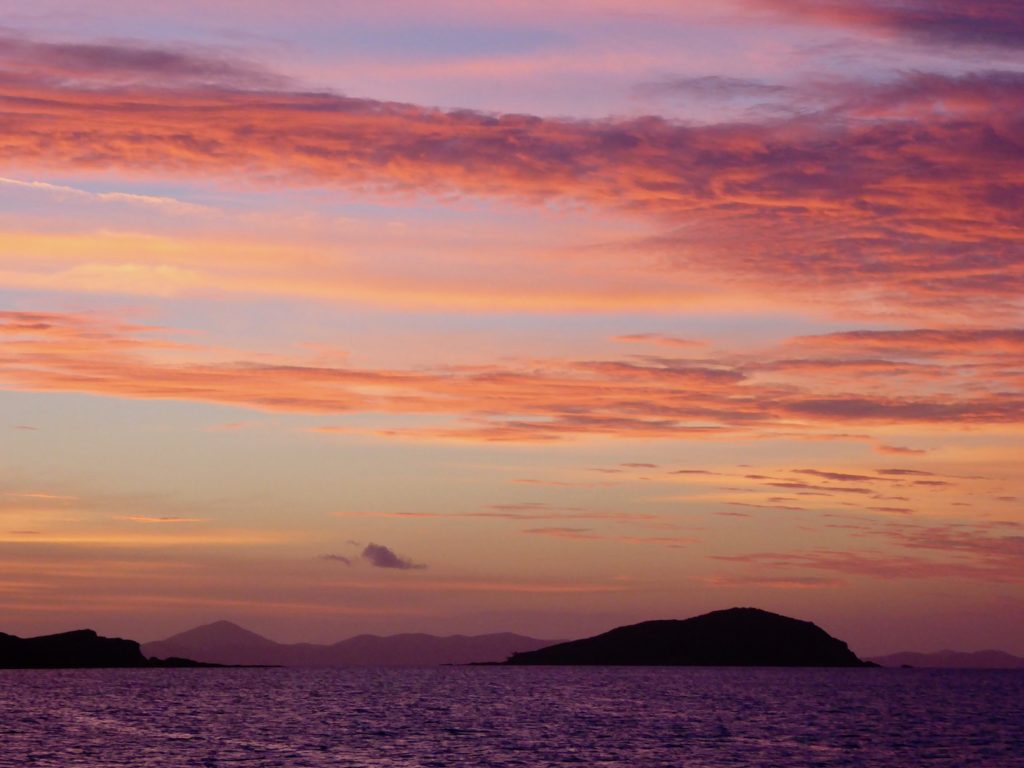
It was still dark the next morning when Edgar’s voice came out of the night. “I think we should leave at daybreak” – and so we did! We left as dawn broke and it was also stunner!

Maybe we should have stayed at another anchorage on the island – we noted some boats were anchored in front of the resort – or maybe it would have made little difference. In any event we will not be visiting Keppel again without flopper stoppers!

We had planned to stay at Rosslyn Bay, Yeppoon, for a couple of nights and visit Richard Wilson, but the weather forecast said otherwise and we ended up refuelling and travelling on. We wanted to get to the Percy Islands before a northerly front came through and the crew were angling for a quiet anchorage so we headed for Island Head for the night.

We had a pleasant passage with lots of whales and a good view of the coast.

Interesting patterns on the burning off at Tin Can Bay

We cruised past Pearl Bay, which looked lovely but not enough shelter, and headed right up the inlet to a quiet peaceful anchorage.

Pearl Bay
There was a gentle breeze blowing so the midges were not a problem and, after a long day, we retired for a peaceful night’s sleep.

Next morning we left for the Percy Group of Islands and in particular for White’s Beach at Middle Percy. It was a very still morning and there were a lot of turtles cruising around in the calm waters

Tranquil Waters inside Island Head
Heading outside
Not quite so tranquil but..
We had some whales for company

We had a good run with lots too see and some company on the way.
In what seemed a remarkably short time we saw the Percy Islands in the distance. The Percy Islands lie 122 kilometres south east of Mackay and are part of the Northumberland Group. They were surveyed by Matthew Flinders in 1802 and named after Hugh Percy, the second Duke of Northumberland. There are three islands in the Percy Group. Only the 2000 ha Middle Percy is inhabited and the others are National Parks, two of the oldest in Queensland. White’s Beach was all it promised to be. We were one of the first to arrive so anchored in a sheltered spot on the eastern end of the beach
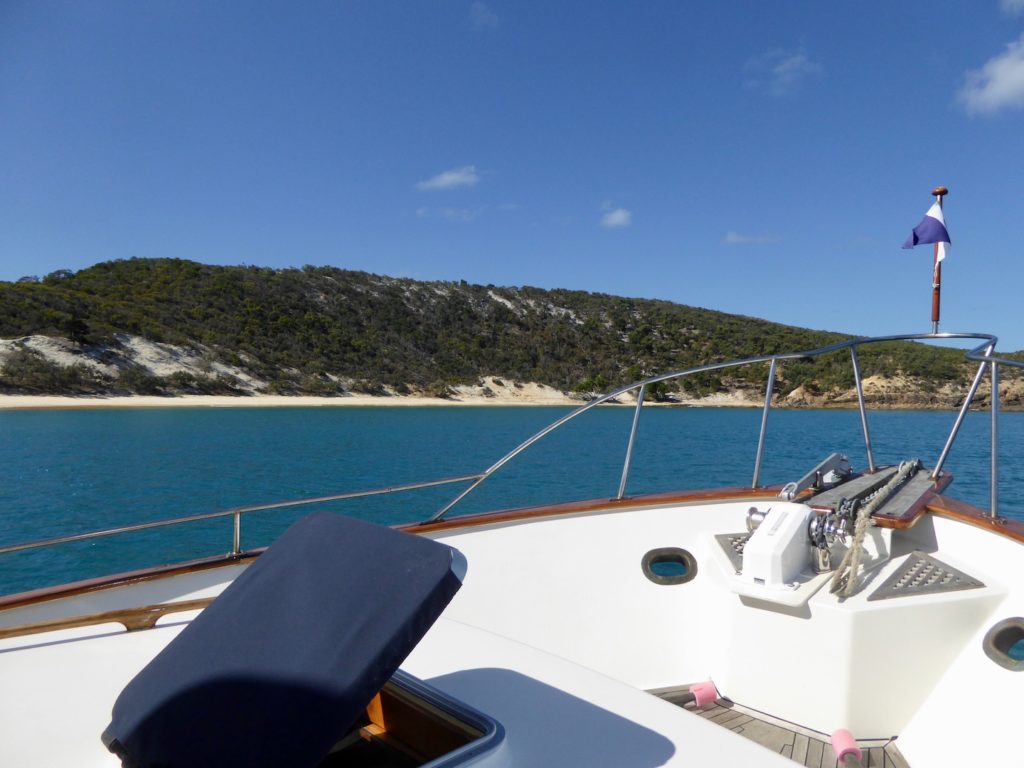
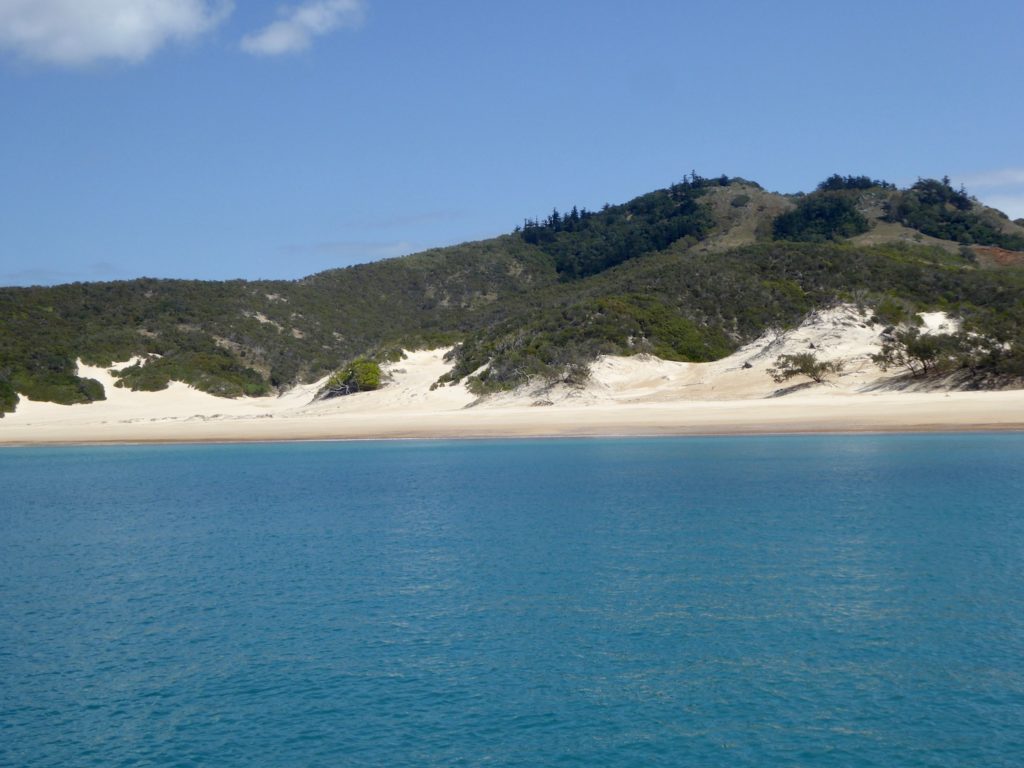
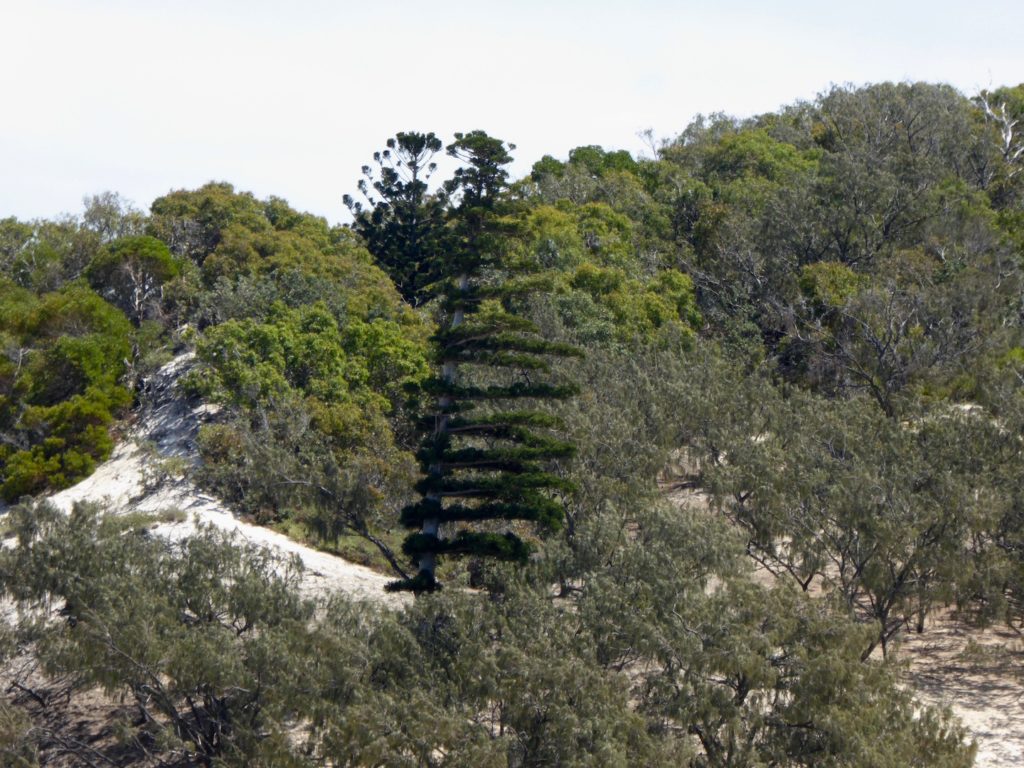
Dive over the side and swim to shore
.

Whites Beach is named after the White family who in 1921 emigrated from Canada via New Zealand and managed to make a living from sheep. They cleared the land by ring-barking trees to make paddocks for 2,000 head of sheep, a few cattle and horses.

We spent two nights at White’s Beach exploring the rocks and gullies, swimming each day and doing a bit of (unsuccessful) fishing.

We couldn’t help noticing the large number of goats on the island. In 1874 HM Schooner Pearl was given the mission of leaving goats and planting coconuts and other edible fruits from the Brisbane Botanical Gardens in order to provide food stocks for passing vessels plying the Queensland coast.

European settlement was actually established two years later, in 1876, and the goats utilised by the island residents to provide themselves and visitors meat, milk and skins for over 130 years. In 2011 the National Parks decided they could best manage the Island and against the wishes of the majority of main users of the Island – the cruising public. Changes include designating 83% of the previous land holding to national park status. That means the inhabitants are no longer able to manage the goats and other introduced animals including Rusa Deer and cane toads, and the rangers have yet to do any control.

Edgar and Ernest climbed the cliff face for some spectacular views

We are on the far right
.
A favourable weather forecast for the next leg of the trip saw us heading out once more but definitely a place we will return to.

We sailed round the Island and passed Rescue Bay and West Bay but didn’t go ashore so missed seeing the “settlement” developed by an eccentric Englishman, Andrew Martin who left his family back in England to sail around the world. He found Middle Percy Island, declared it paradise and stayed there for the next forty years. He planted coconuts and built an A-frame shed on the beach for visitors to use. The island became legendary amongst yachties as a wonderful anchorage with a hospitable, if somewhat unconventional, host. Andrew, who became known as “Lord Percy”, offered goat’s meat, fresh fruit and vegetables, honey and bread and meals at the homestead, an energetic 1.5km uphill walk from the beach.

Andrew became mentally ill and in 1996 set sail for England convinced that his country needed rescuing from the ills of the world. He returned a number of years later a disenchanted man suffering from schizophrenia and having been cheated out of his lease by a conman.

His younger cousin, Cathryn Radcliffe, who some years before had come out from England to see where her strange relative lived and stayed in Queensland, managed to get the lease back several years after he died. She is still living there on the 117Ha of Conservation Park granted to her for 20 years from 2012 to ensure ongoing maintenance and to protect the unique Cultural Heritage and Nature Conservation values of the Island. The famous A-frame on the beach is still there, festooned with hundreds and hundreds of bits of timber, flotsam and jetsam with yacht names and dates.

The Sandy Straits to Gladstone

The next morning saw us up bright and early and heading for Bundaberg. We had a good run north. We passed Hervey Bay in the half light and headed out of the shelter of the Sandy Straits – a little rolly but not too bad. The only objects of interest were a couple of whales, mother and calf, which followed us for a while and a very concerned fisherman in a very speedy runabout who had crab pots strung out across our route. He was well out of sight of land and in about 15 meters of water. This is an area that supports a number of spanner or frog crabs – which are a Queensland delicacy and no doubt his target.
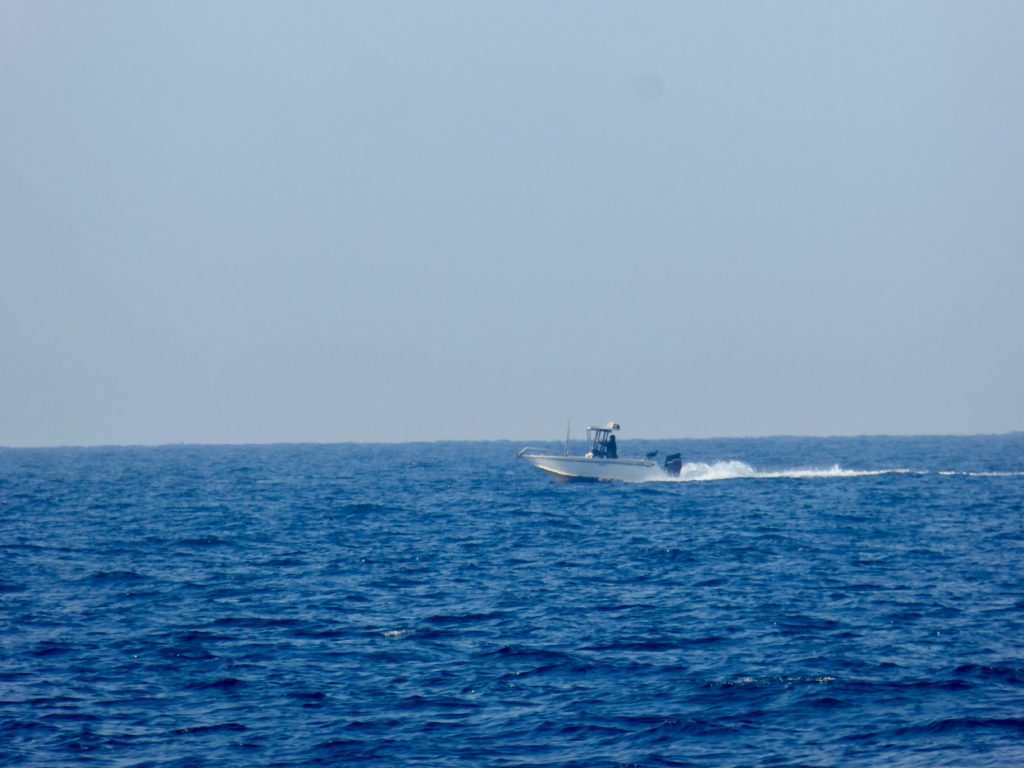
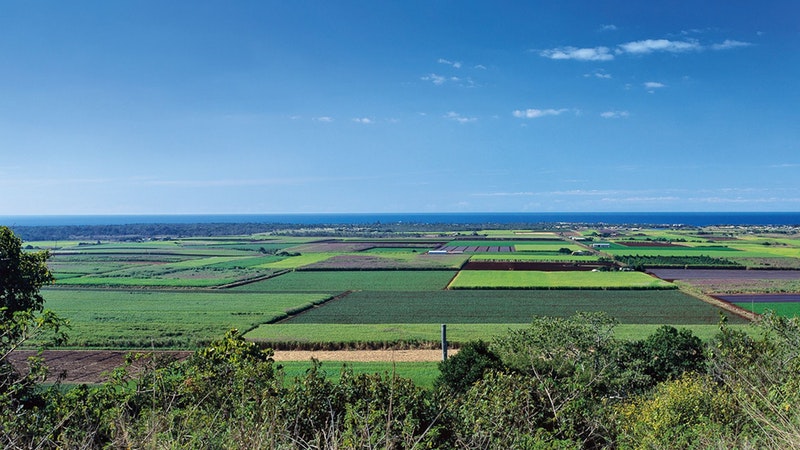
The Crab Catcher

We arrived in Bundaberg around 2pm and after securing the boat, I headed out for a walk around the headland through the park. All lovely and serene except for several pairs of extremely aggressive plovers who attacked me with great vigor whenever I got near their nests – which seemed to be dotted all over the park. My walk consisted of dashing from clump of trees to clump of trees (and spending some time in sheltering in the toilet block hoping they would lose interest) to escape their increasingly daring swoops.

After these exertions I headed for the amenities block for a lengthy shower and then we adjourned to the Marina restaurant for drinks and dinner. After a very lengthy wait – with me becoming increasingly annoyed – our seafood marinara arrived. I don’t think I have ever seen such a magnificent dish. My fettuccine was in a cream wine sauce and piled high with fish, scallops, prawns and crab and topped with two halves of a Moreton Bay bug – well worth the wait and so large and crammed with seafood I couldn’t finish it and resorted to eating all the seafood and leaving the pasta. Ed’s was the same in a tomato-based sauce.

We had given George and Pip Lewis a call on the way up and they arrived the next morning to take us on a tour of Bundaberg and then back to their farm for lunch. We checked out The Hummock, which is the remnants of an ancient volcano that has left rich volcanic soil for many kilometers around. This area is so fertile that it sells for $35,000 an acre and is used for sugar cane, sweet potato and increasingly Macadamia Trees. The Hummock also has a monument to Bert Hinkler and fantastic views of the surrounding countryside – being the only mountain for many kilometers.
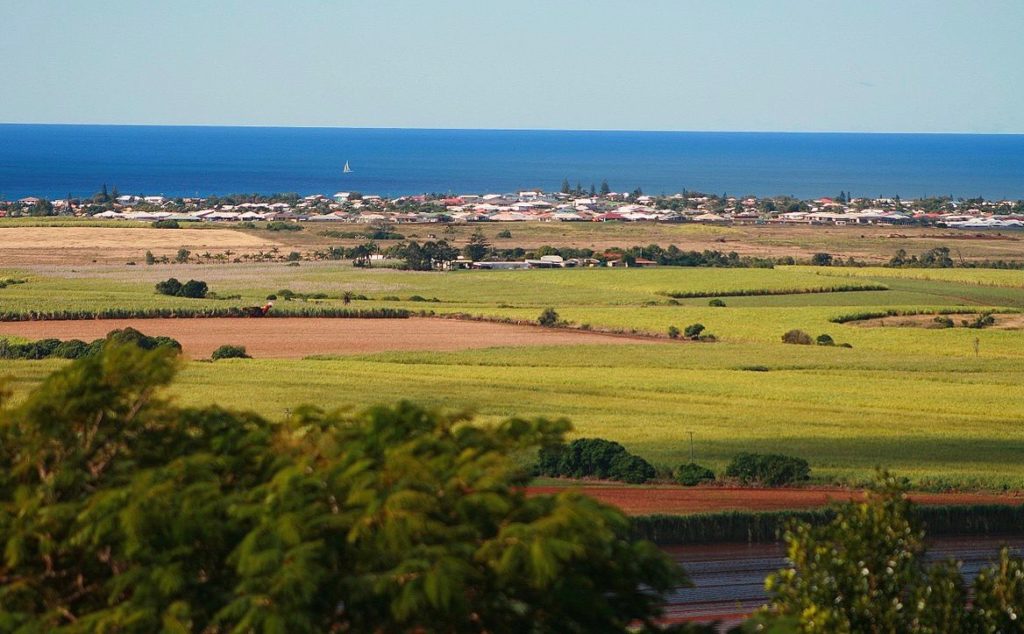
Views with Bargarra in the distance
We then adjourned to Bargara, a very pleasant seaside town, for coffee before heading out to George and Pip’s macadamia farm for lunch.

George and Pip work the farm with their son, who lives in the main house. George and Pip live in a house cleverly constructed from three shipping containers all neatly joined together and fitted out. The ceilings are high and the floor is the timber from the shipping container sanded back and polished. They have a verandah which looks out on to a large dam – currently housing a breeding pair of black swans and three cygnets. We had lunch on the veranda with a couple of their friends and Beth Newton, who we have known for about 50 years. Altogether a very convivial occasion with lots of reminiscences.

After lunch we did a tour of their plantation and watched the grafter ply his craft. All the trees are grafted on to a strong rootstock before being planted out. I’ve always been interested in grafting and watching the way he did it was very educational. Must give it a go when we get home!

We arrived back at the Marina in time for sunset drinks on the boat with their friends and after a light meal headed for bed and an early start for Pancake Creek the next day.

We have fallen into the pattern of early to bed and early to rise so the next day saw us up bright and early and away a little after sunrise. There was a bit of a breeze and the sea was very sloppy which was a bit uncomfortable but we were soon joined by a whale mother and calf and not long after that another crab fisherman in his speedy little boat. This one was not as wild and wooly as the previous one and had his crab dilly’s clearly marked with flags.

We curved back along the coast near Round Hill and admired the endless beaches – some 20 to 30 kilometres long.

Miles and miles of beaches
The town of Agnes Waters soon came into view. It and it’s companion town of Seventeen Seventy are popular coastal resorts up north. Agnes Waters is on the beach and is the last beach to have surf before the Barrier Reef blocks the waves. Seventeen Seventy is at the mouth of the Round Hill Creek and is very sheltered and popular with all sorts of water sports with kayaking being very popular. It was the second landing Cook made after Botany Bay in 1770, hence the name
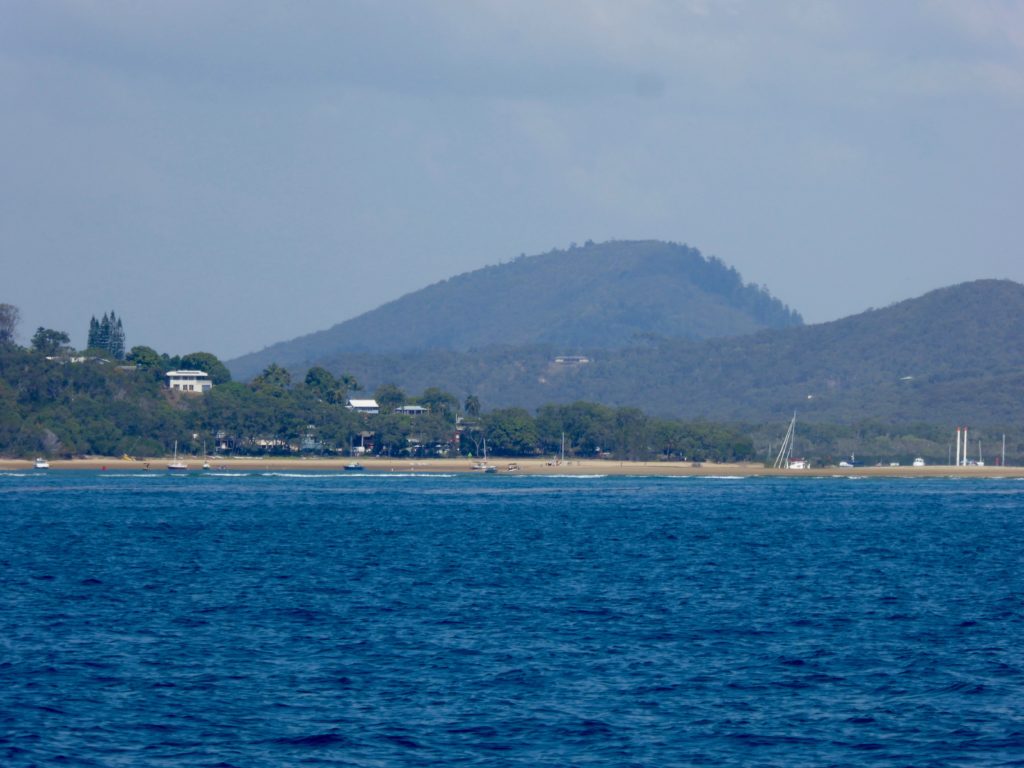
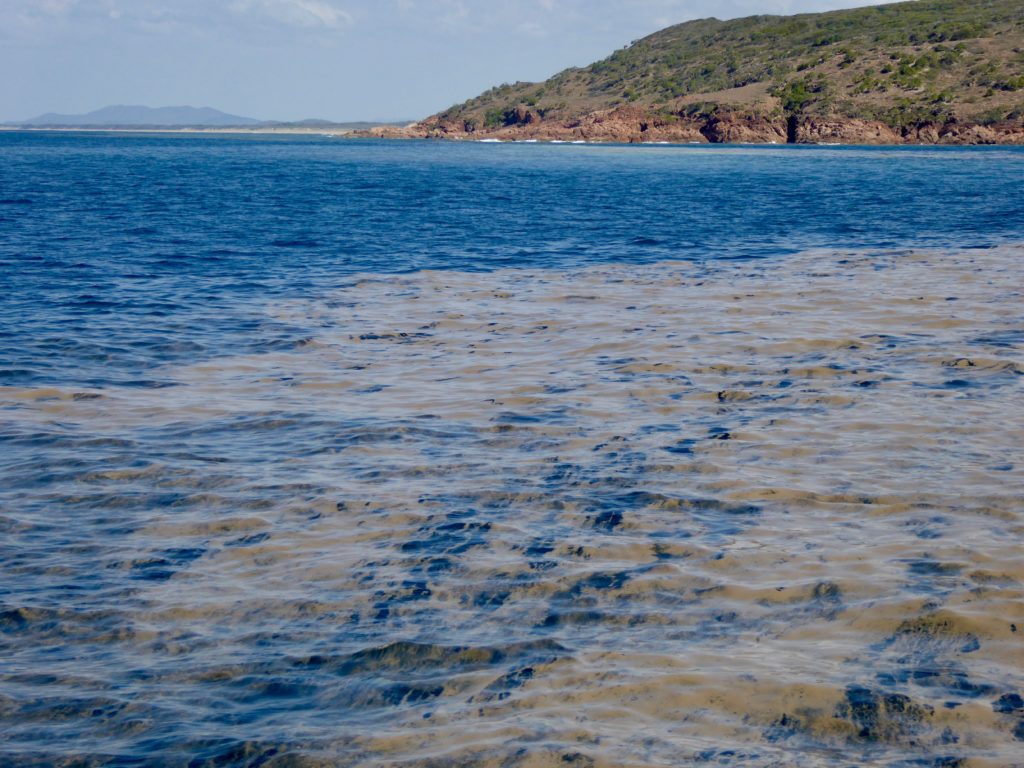
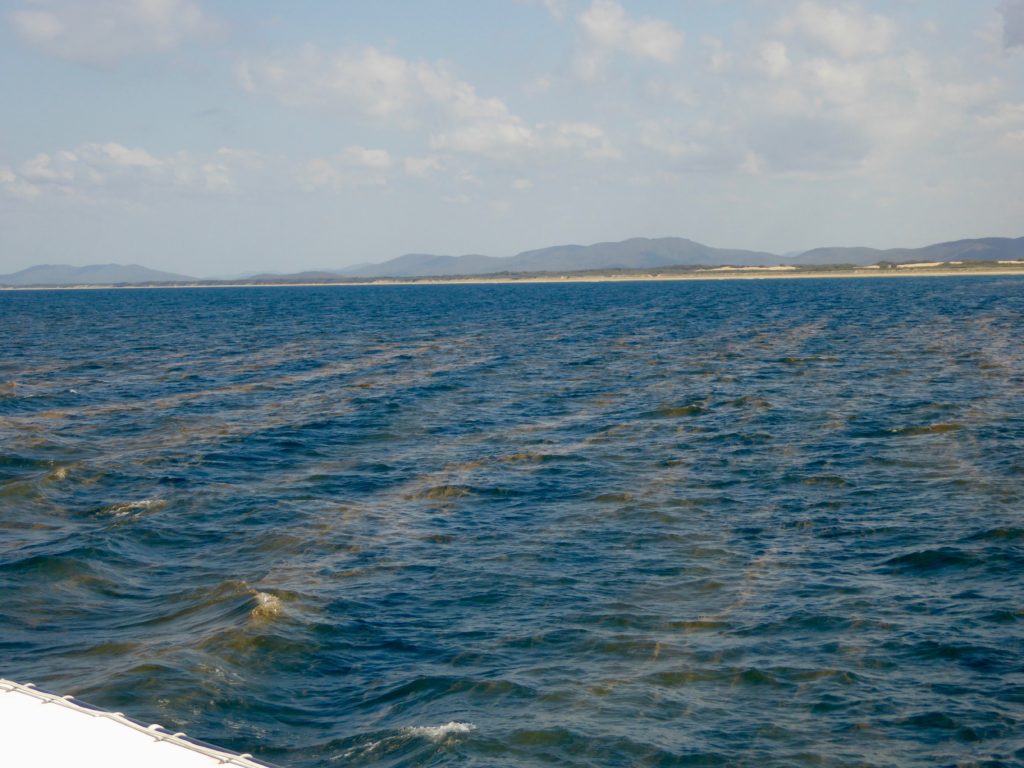
The ocean was full of coral spawn as we rounded Bustard Head, named by Captain Cook in honour of the bustard bird a landing party shot and ate, and headed for the entrance of Pancake Creek.

Bustard Head Lighthouse
All the way up we had been hearing boats on the radio advise that they had anchored at Pancake Creek and were logging off so we were relieved to see that there was still some room! We made our way right down into the creek, anchored and headed for the beach where we had a walk and a swim in beautiful warm water.
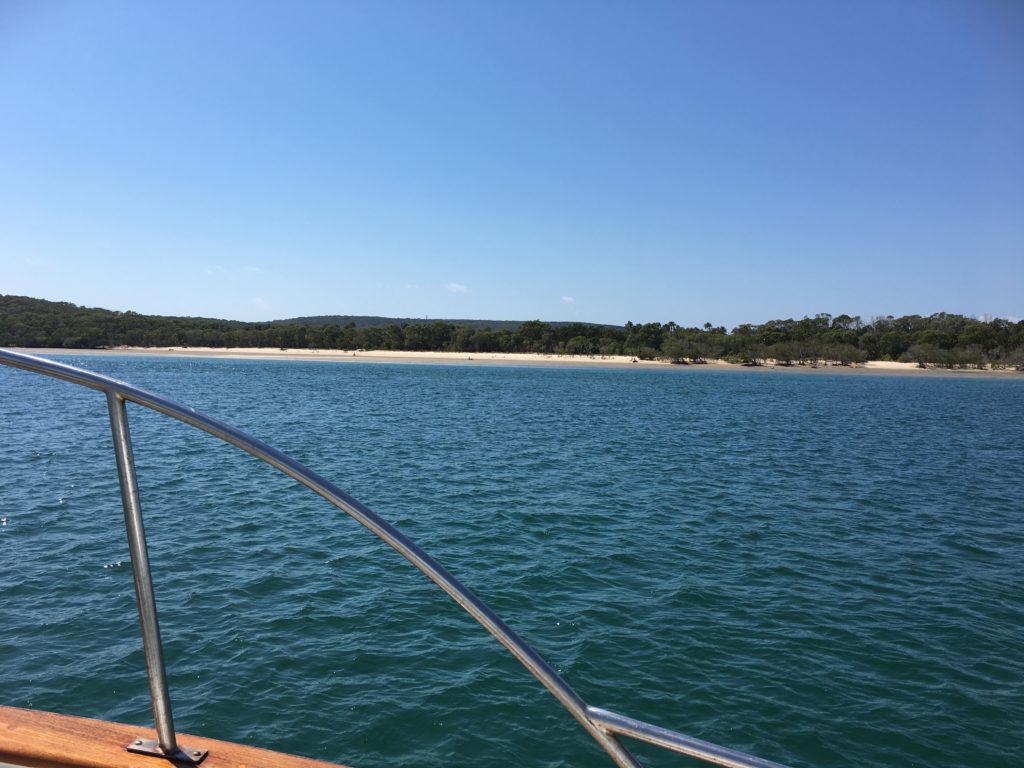
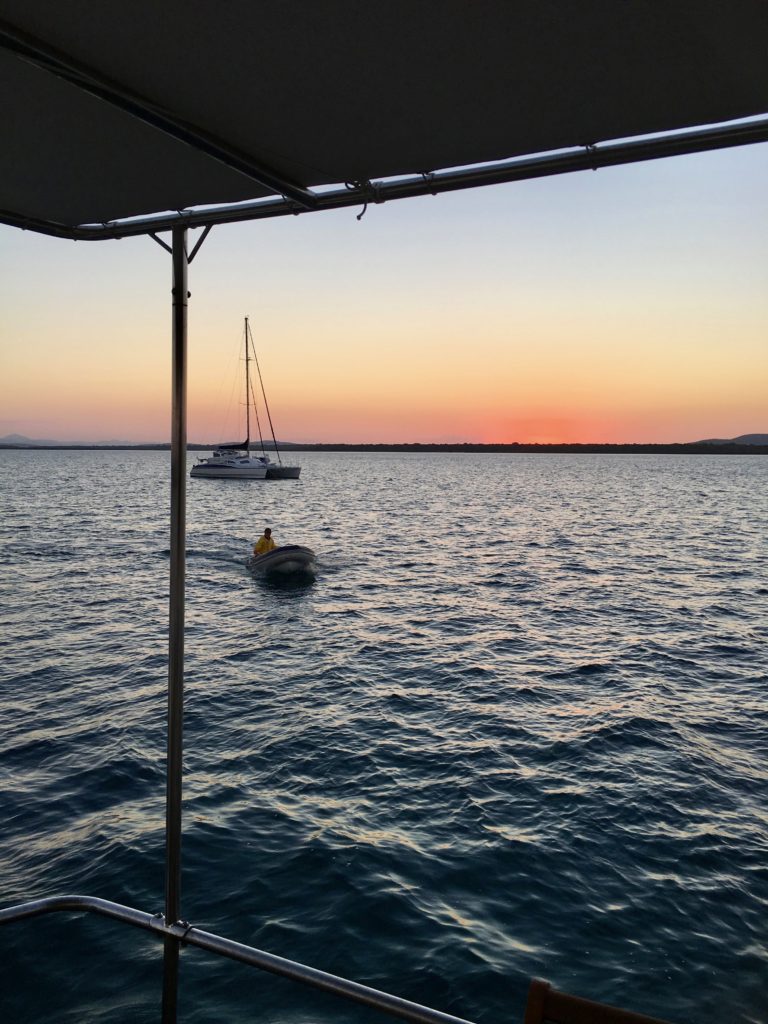
Back on the boat and it was time to try some fishing. Ed took the dinghy out and I fished from the back deck. Not a nibble. Is this the case of persistence pays off or do we just give up now!! Never mind – it was a beautiful sunset.
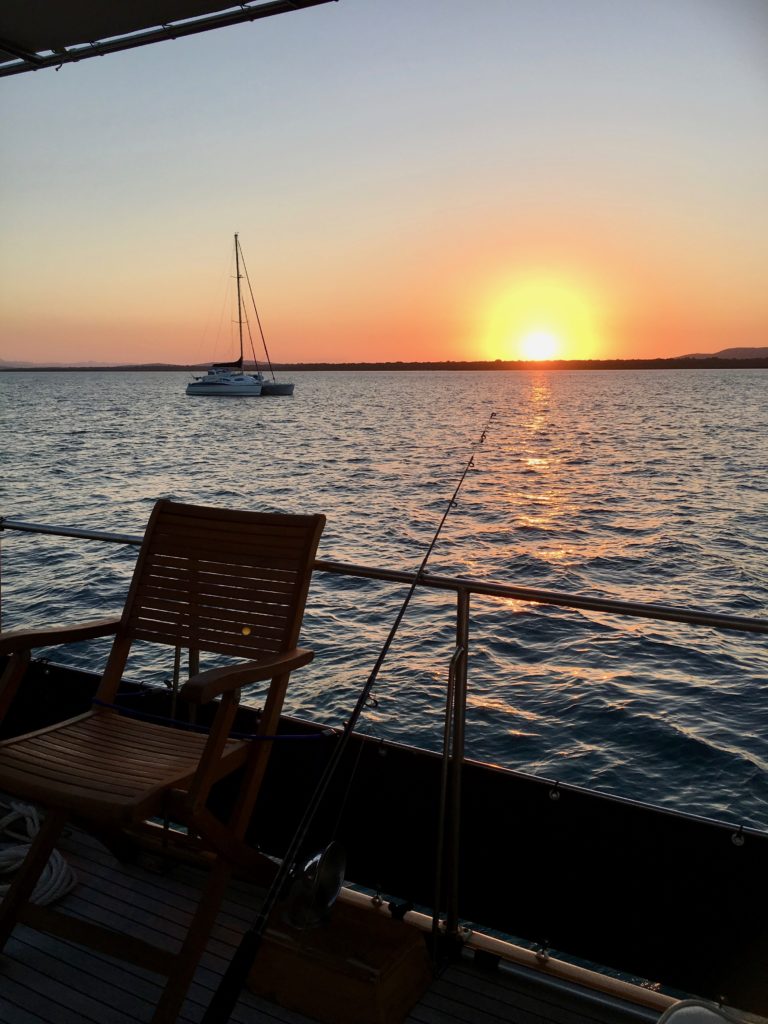
The next morning we went over to the sand spit beach which was really lovely. The tide was going out and there were lots of little crabs and shells. We rounded the point and the beach stretched out for at least five kilometres in front of us. We could have walked for hours but were a little concerned that our dinghy might end up high and dry so returned back to the boat.

We had had some trouble with the generator earlier, which kept cutting out, so with lots of frozen food on board we decided to head straight to Gladstone and shore power. We had already booked the boat in for a service at Gladstone so decided to bring it forward and see if we could get the problem solved.

Sadly we departed Pancake Creek – it is a great anchorage with lots of places to explore. As well as the beach walks there are walks to the restored lighthouse with lovely views down to Aircraft Beach. We had a smooth run with lots of whales quite close to the boat.
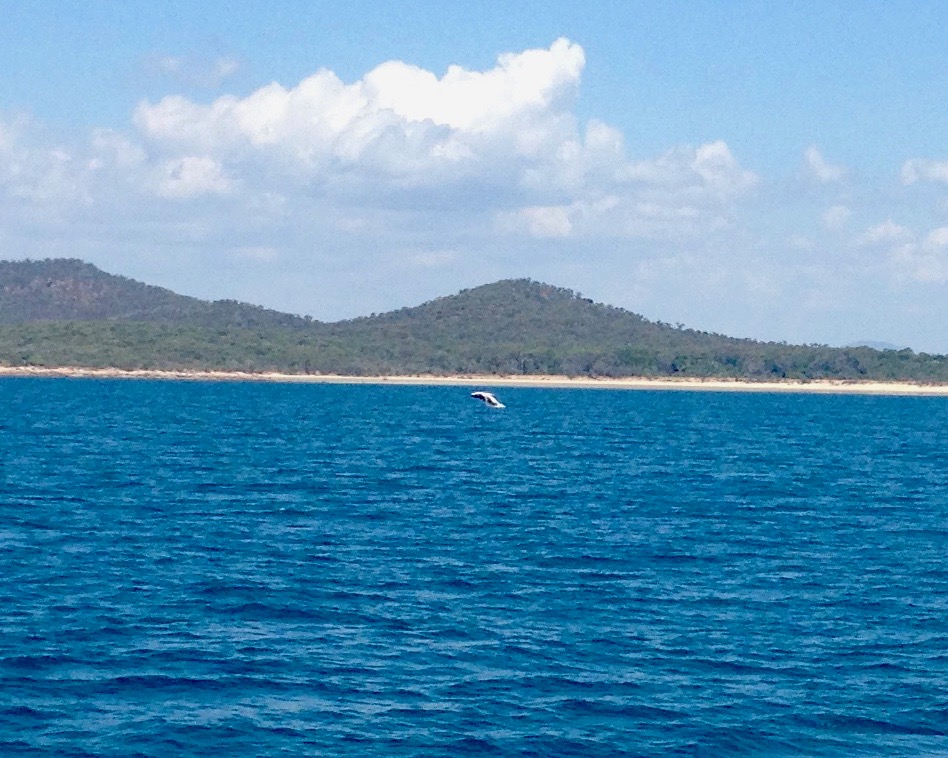
Calf leaping
A whale’s tail
We could tell we were nearing Gladstone by the number of tankers on the skyline! Sort of like welcome swallows but larger.

On the way we had a look at Lily’s Inlet as a possible anchorage. Looked lovely and quite sheltered but you would need to go in with the tide at least half as the entrance was very shallow. They recommend you don’t swim due to the number of sharks observed in the area. Point taken!

We are now at Gladstone Marina whilst we ponder our next move!.

Travelling North – Boating adventures to the Whitsundays and back

Edgar had spent weeks getting the boat ready, the new carpet had been laid, the new curtains were made and hung, Suzanne had had her bottom cleaned and been polished up until she shone. The freezers were packed with precooked meals and the fridge stocked with fresh provisions. There was lots of wine, gin, whiskey and beer on board. The family had joined us for farewell drinks and dinner. The boat was ready to go!
Unfortunately the weather wasn’t – with strong wind warnings the prospect of a repeat performance of last year kept us firmly in the marina until Sunday.

Which was probably just as well. Saturday saw us return home to a frenzy of cleaning and gardening. We were to be away for two months and had four lots of tenants in whilst we were away and house sitters were also coming to stay. Our water taxi departure time kept getting put back as we found more things to do – or seriously underestimated the time it would take to do things – until finally, with one minute to go, we caught the last water taxi off the island. Back to Woolies for last minute items and finally to bed at 11pm.

Sunday dawned and you couldn’t have asked for a more perfect day – the sun shone, the water sparkled and the seas were calm. We quietly slipped away just after 8am and headed for Mooloolaba – totally exhausted but buoyed up by the thought of the lazy days ahead. It was Sunday, 27th August 2017 and we were on our way.

Our usual ham and egg toastie for breakfast on the flybridge, a chance to start on one of the many books we had brought on board, a glass of wine with a leisurely lunch and all the while watching the ships and scenery slip by until we arrived in Mooloolaba around 3.30 pm.

A walk down to the shops where we were picked up by our trusty mate, Scott, who came to dinner laden with herbs, roses, fruit and wine. He was to join us later in the trip.

At just before 6am the next day we headed out for the Sandy Straits, timing our arrival at the notorious wide bay bar for just before high tide. We were not alone as a number of boats also quietly headed out in the same direction. We were treated to a glorious sunrise to start the day.

We were not alone

Farewell to Mooloolaba

The trip could not have been more different than last year which saw us crossing in the dark, rolling up to 30 degrees as we were broadside to the waves most of the way. This crossing had us in calm seas and we stayed close to the coast so we could watch the towns and scenery pass by. A couple of whales played near us and we finally crossed the bar and headed for Pelican Bay.

Tall ship passing the Coloured Sands

Pelican Bay is a good anchorage when the wind is in the east and has the added advantage of having a very long beach to walk on.

Bar entrance to the left and Pelican Bay to the right
It is tucked in behind Inskip Point and you can watch the cars being ferried across to Fraser Island – and getting stuck in the soft sand at the entrance to the beach. It is also a very popular camping and fishing area – though we have yet to see someone catch something worthwhile!! One lady fisherman had been fishing for several hours and the only worthwhile fish was taken from her line by a swooping pelican.
Pelicans waiting for a feed

We went ashore in the dinghy and walked for about an hour. It was a relief to stretch your legs after a day aboard.

Pelican Bay anchorage
Sunset at Pelican Bay

The next day, after a momentary scare with the fridge water pump not working, we went ashore again and had a long walk around the Point before pulling up the anchor and setting our course for White Cliffs anchorage.
Still waters of Sand Straits
Briefly considering Garry’s Anchorage for the night, we continued on to White Cliffs, only to discover the smoke we thought was from the mainland was in fact from burning off on Fraser and White Cliffs was surrounded by smoke. Deluding ourselves that a breeze would spring up and blow it away, we decided to anchor anyway.

Into the dinghy to place the crab pots and back on the boat to witness a very spectacular smoky sunset before dinner and bed.

The next morning we awoke to a white world – no breeze and the smoke had settled on the water. Fortunately not too much ash had settled on the boat and within a couple of hours the smoke had lifted and revealed a beautiful day.

Full of hope we headed for our crab pots only to find – nothing! Our deliciously smelly chops and chicken carcass had not received a single nibble. Nothing daunted we moved the pots and returned for breakfast on the deck. Quietly reading in the sun after breakfast we had a feeling we were being observed. Standing on the shore was one of the Fraser Island dingoes that had obviously made it’s way across the mud in the hope of a handout!
I spent the day following the adventures of Bill Bryson on the Road to Little Dribbling whilst Ed studied the anchorages on the way to the Whitsundays. We spent some time looking for pictures to replace the ones on the boat, which were faded and very brown and dreary. We wanted to depict early sailing ships that were significant to Australia and finally decided on “HMS Beagle” for our cabin, “The Duyfken” for the main saloon and three prints of boats of the First Fleet by marine artist Frank Allen – HMS Sirius, the flagship for the side cabin and HMS Alexander and HMS Friendship, both convict carriers for the front cabin – mmm does that say something?

That evening as I prepared dinner, Ed braved the rather cold wind to retrieve the crab pots and do some fishing. No success in other arena so it was lamb shanks and red wine for dinner. We had decided to push on to Bundaberg the next day as Saturday looked the best day for the run to Pancake Creek.