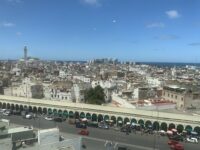
Rome


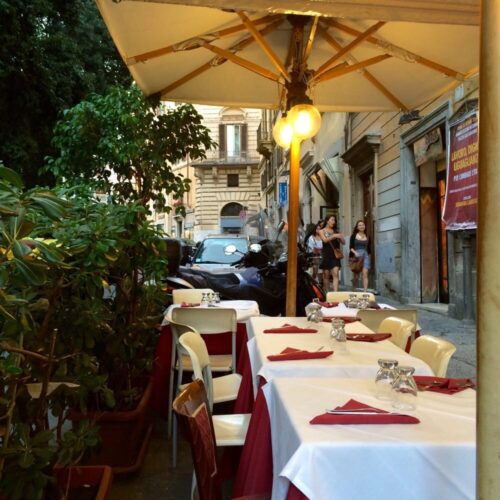
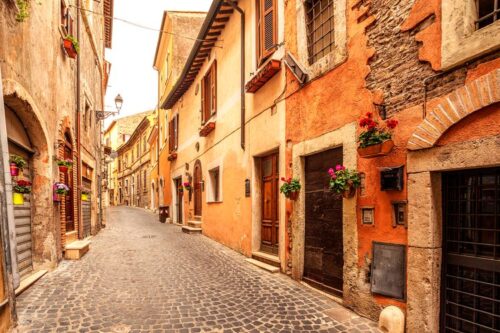
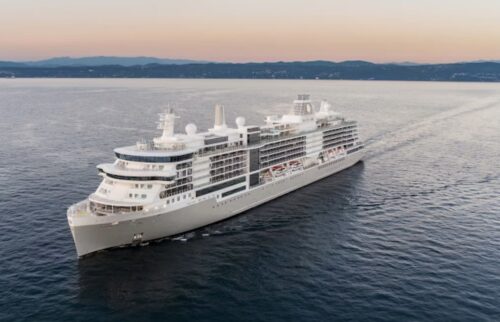
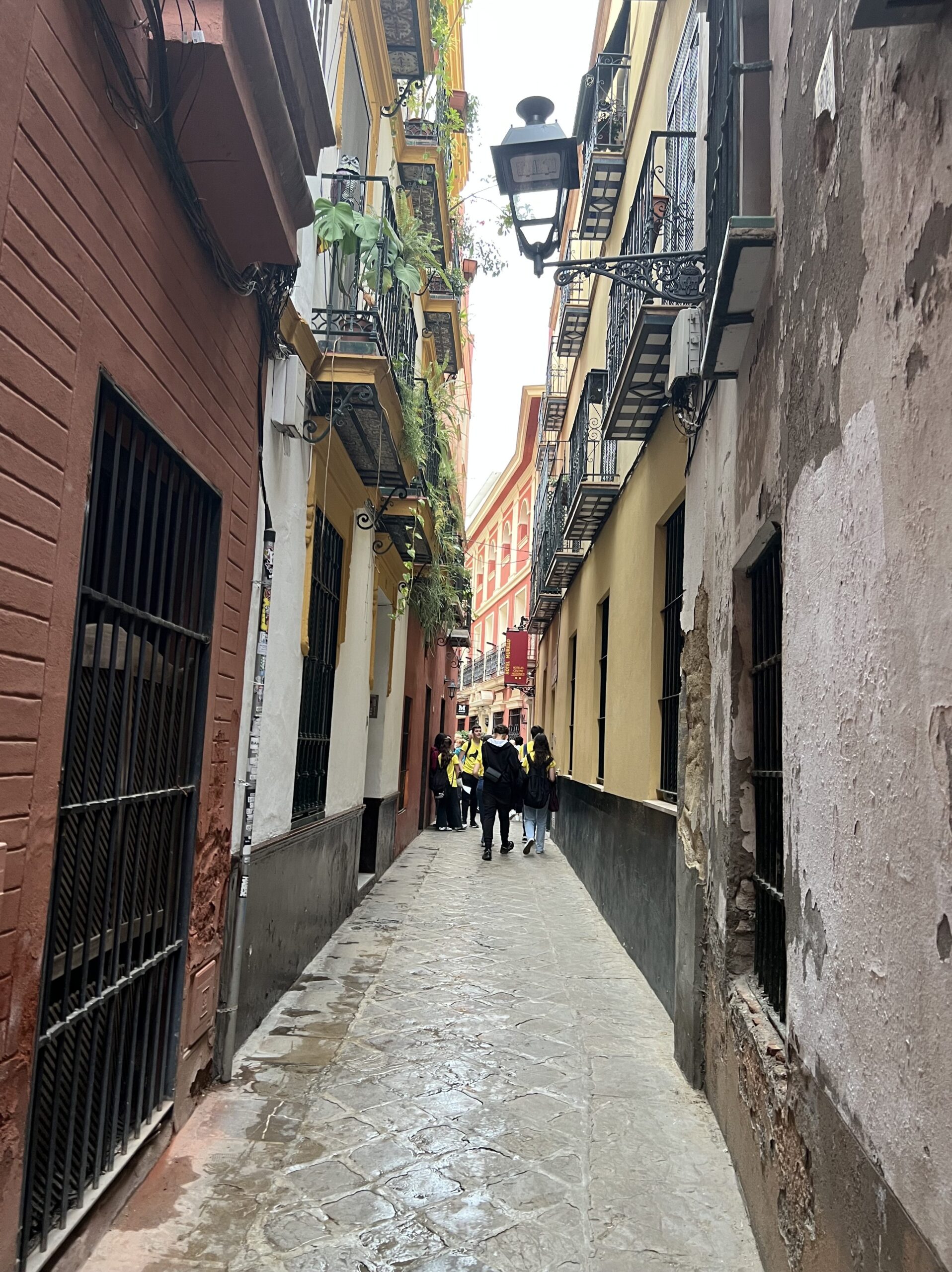
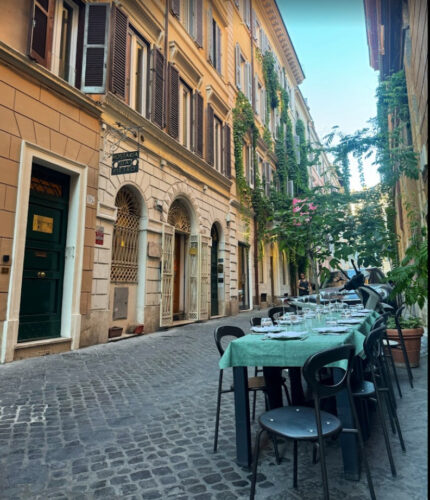
After a last breakfast on the Silver Ray and a well organised disembarkation, we were met by our Welcome Pickup driver and set out for Rome.  The Port is quite a distance from Rome so we spent an enjoyable hour checking out the scenery before arriving at our accommodation. It was located down a small cobble stone lane, non accessible to vehicles so was difficult to get our luggage in and out of but transformed into an excellent street restaurant at night.  Our check-in was 2pm but Matteo, our host, kindly agreed to meet us and secure our luggage so we could explore.
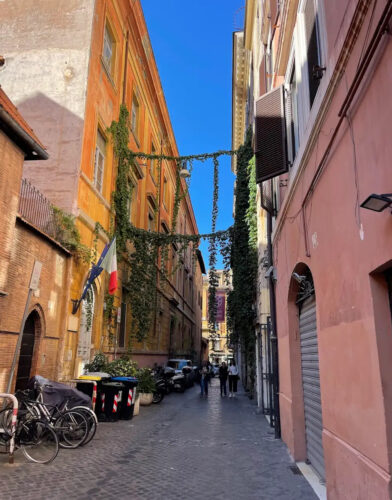
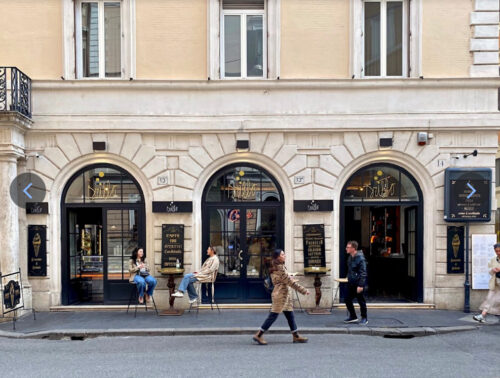
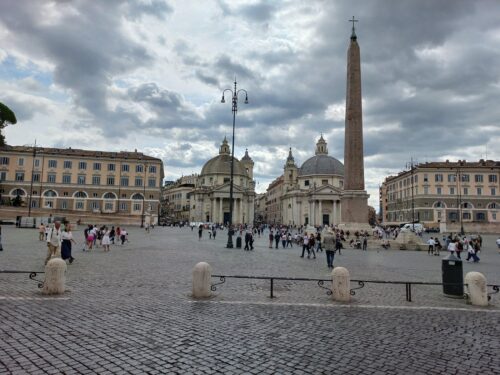
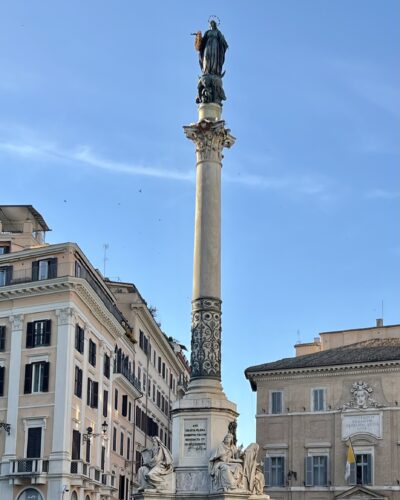
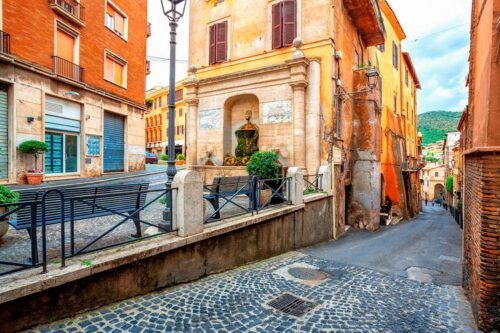
A few steps from the apartment was Via del Corso with its shops, cafes and gelateries so our first stop was for coffee whilst we contemplated our next move.  The Piazza del Popolo was nearby with its beautiful twin churches, statues and fountains. On the far side, tucked away, was the Leonardo da Vinci Museum.
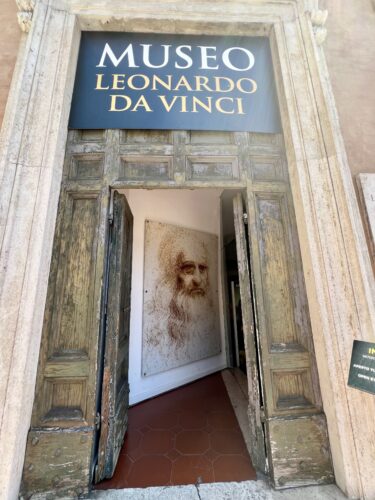
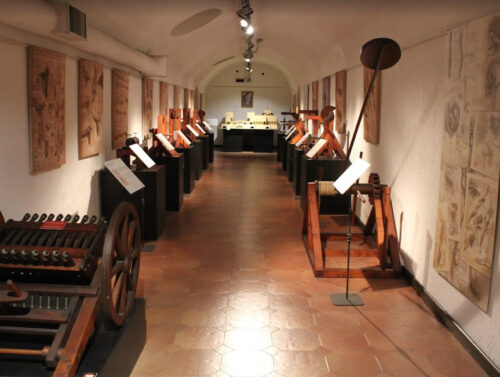
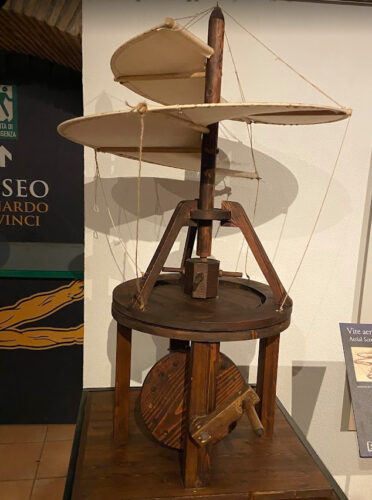
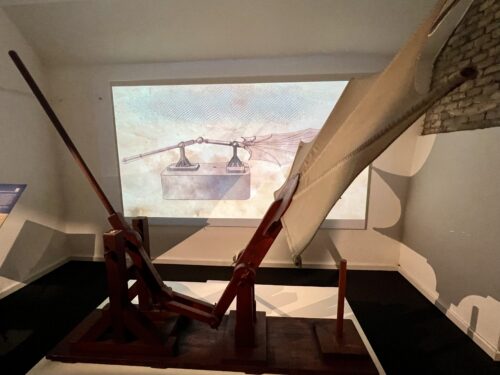
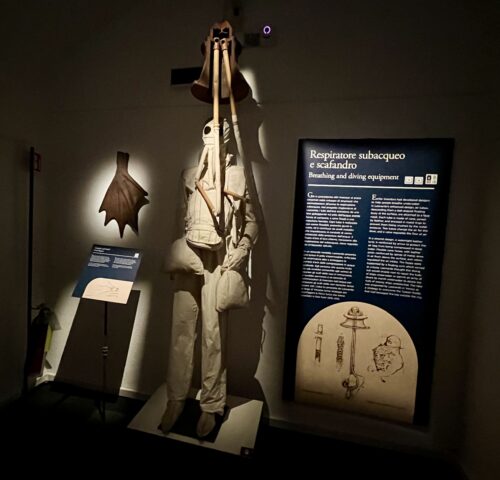
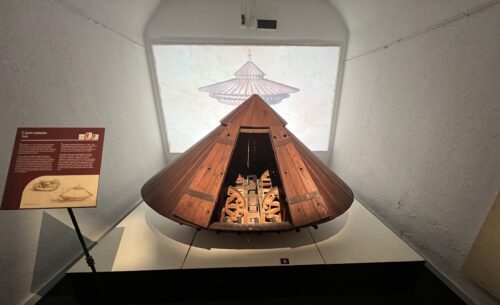
That’s as far as we got. The museum is dedicated entirely to Italy’s great engineer and artist, featuring a collection of more than 60 inventions modelled after Leonardo’s machines. There was so much to see with working models of many of his inventions plus drawing studies for some of his most iconic Renaissance paintings and impressive sketches of human anatomy.  It was quiet and cool and, unlike many of Romes attractions, not crowded, so you could take your time to study the intricate designs. 
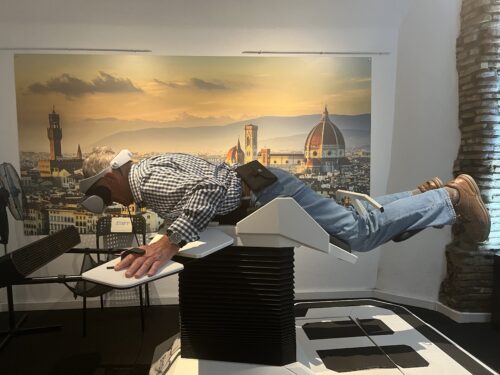
As a bonus there was a virtual reality flight experience offering a breathtaking journey back to Renaissance Florence. This immersive simulator allows you to soar above the historic city, providing a unique perspective on its architecture, landscape, and life during Da Vinci’s time. My control was not as good as it was could be and I ended up in the villas on the outskirts, flying through the gardens and courtyards.  A unique garden tour!
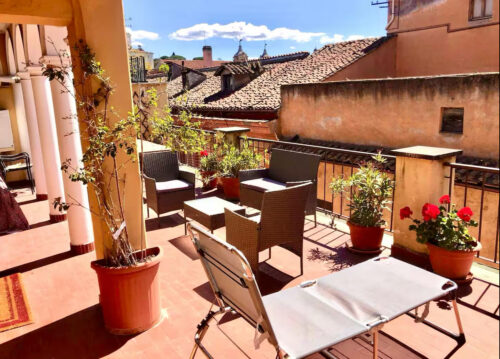
The hours to check-in passed quickly and, after purchasing the compulsory gelato, we headed back to our apartment and settled in. The apartment was comfortable with the standout feature being the roof top terrace with views over the Rome skyline. Over the next few days we virtually lived out there.
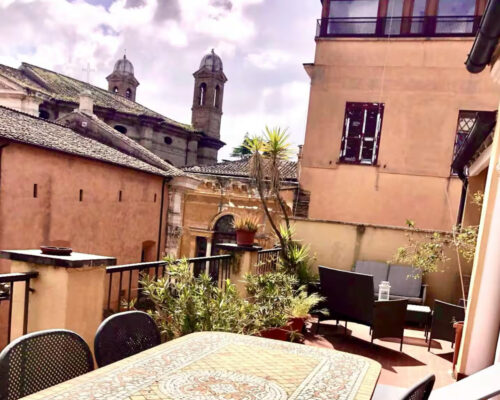
Dinner that night at Brills, a sidewalk café nearby and so to bed to get ready for our visit to the Vatican and the Basilica the next day.

31st May

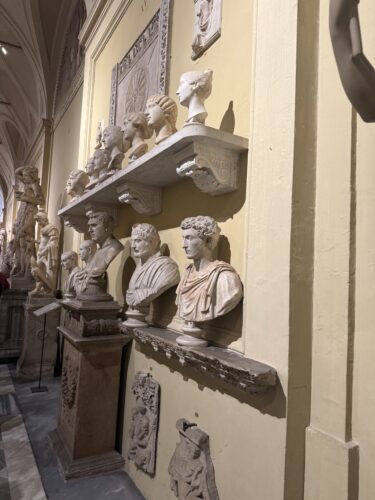
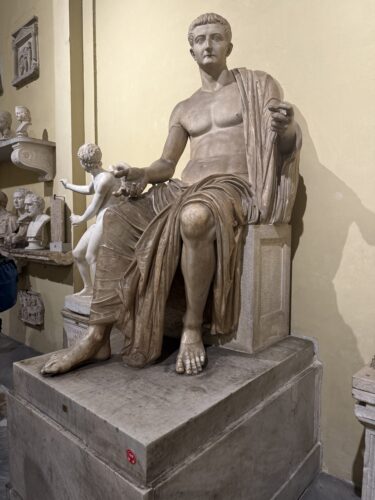
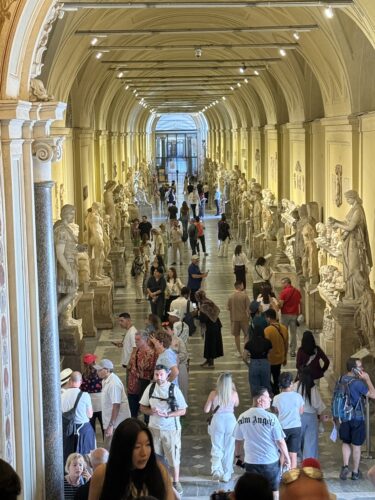
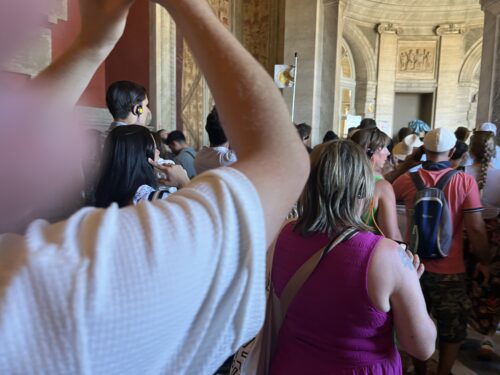
Despite our careful planning our visit to Rome did not run smoothly – starting with today. We made our way to the tour meeting point. It was hot and very crowded. Despite ‘skip the line’ tickets there was quite a wait to get into the Vatican and we were advised that the Basilica was closed due to the new Pope hosting an event, so everyone was being redirected to the Vatican Museum. 
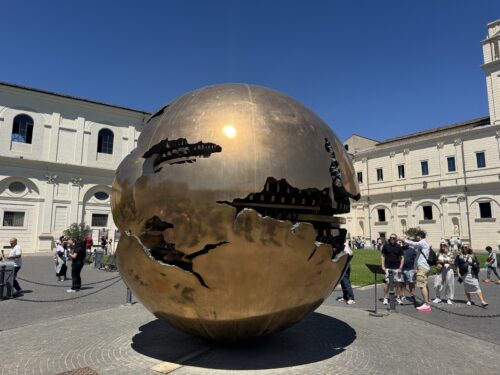
Though the tour started well, within 30 minutes the crowd started to build until there were so many people the only way you could see the exhibits was to hold your phone up, take a photo and look at the photo.  We lasted an hour before abandoning the tour and heading back to the apartment to relax in the airconditioning and get ready to entertain some friends we met on the Silver Ray.
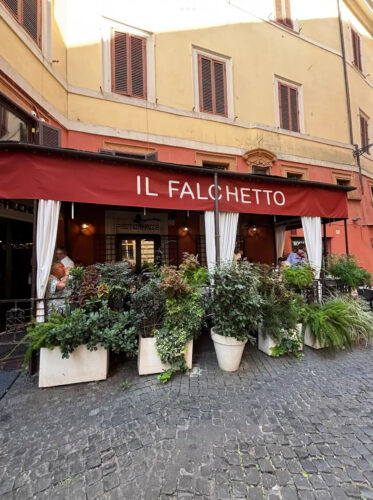
Though the day had been disappointing, things definitely looked up over a few drinks with good company and decidedly improved when we discovered our little lane way not only transformed to a restaurant but a highly recommended one. 

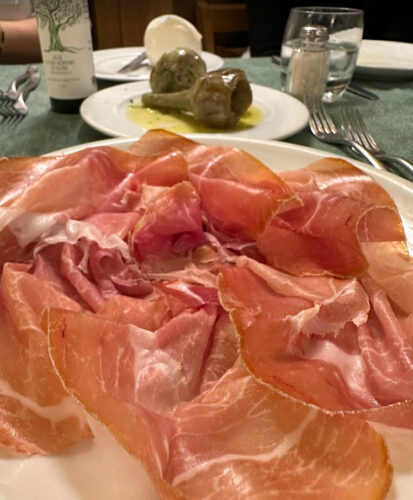
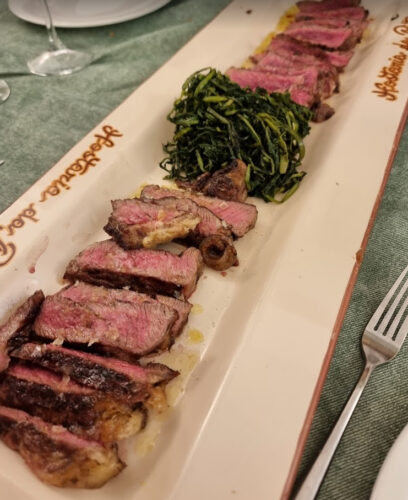
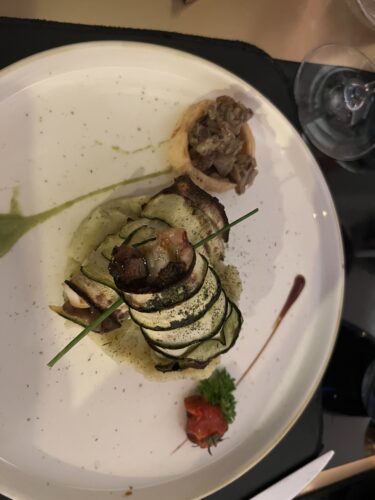
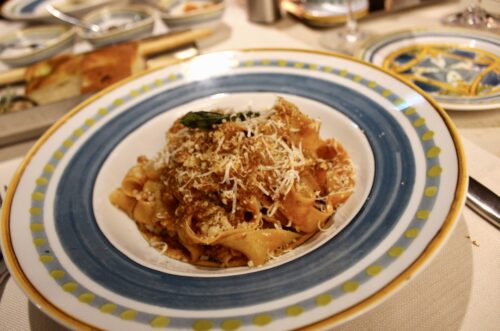
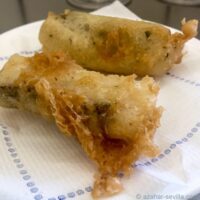
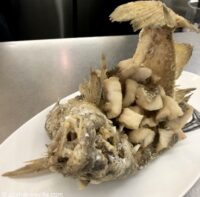
Our meal at Hostario Dan Pietro was excellent and didn’t disappoint.  We tried a number of beautifully cooked and tasty dishes and had several glasses of good wine.  Our apartment was only two doors down – not far to go home!

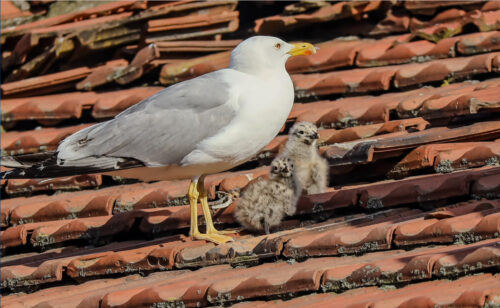
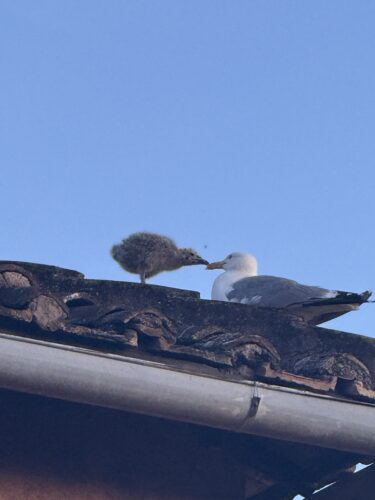
A lazy Sunday started with a leisurely breakfast/brunch on the terrace, reading and observing the seagull chicks as they made their wobbly way around the tiled roof.    
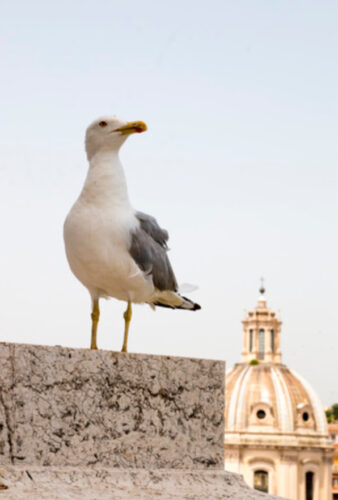
We had been curious about a clucking sound we kept hearing and finally worked out it was seagull chicks. There are thousands of yellow legged gulls in Rome and they nest and raise their young on the rooftops – a precarious existence.

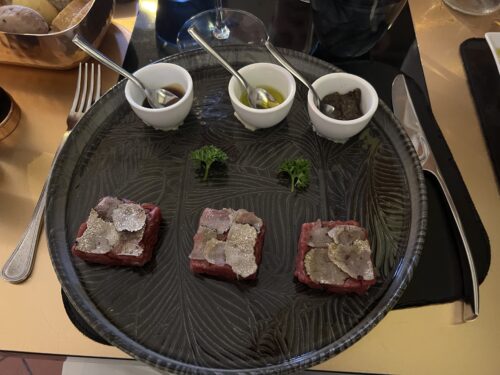
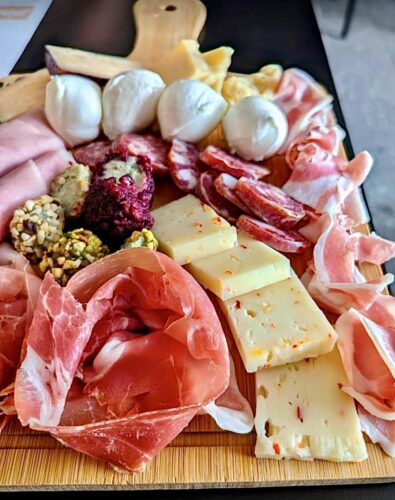
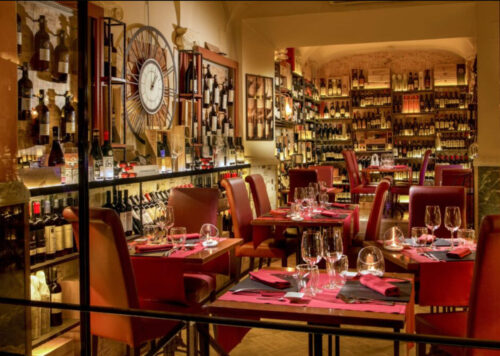
As the day got a bit cooler we took to the streets for a bit of shopping and some sightseeing and to try another of Matteo’s suggestions. The Ad Hoc Ristorante is housed in a 15th century building, not far from the Piazza del Popolo.  Their cuisine is traditional Roman, meat and fish and their specialty is the truffle.

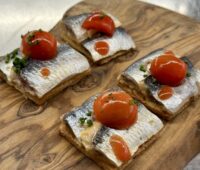
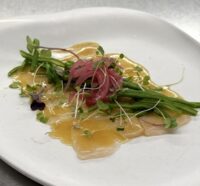
We were warmly welcomed and served several small dishes, all of which were delicious.
2nd June

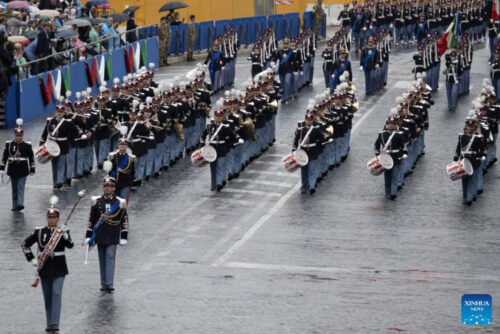
Our plan for today was to get up very early and to do our sightseeing before the heat and the crowds. Our miscalculation was that this was Italy’s national holiday, Festa della Repubblica (Republic Day). The celebrations include a solemn flag-raising, the President laying a wreath at the Altare della Patria, and a large military parade along Via dei Fori Imperiali, which meant the Forum and the Colosseum were closed as were many of the surrounding streets and the crowds were enormous.

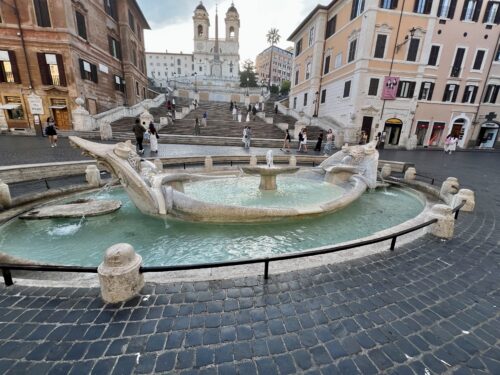
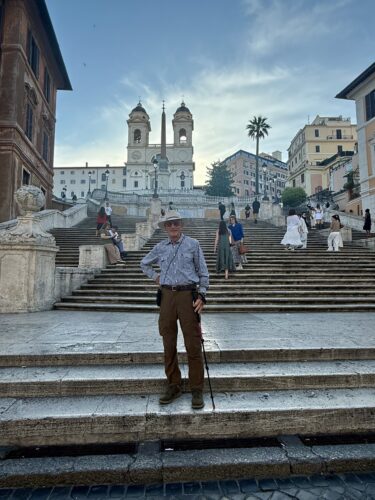
Blissfully unaware of what was ahead we set off about 6am.  This was Rome at its best. The street cleaners had been through and the streets were clean, the weather was mild and there were only a handful of people around.  We visited the Spanish steps,

window shopped our way to the Trevi Fountain admiring the architecture and ornate doors, windows and statues on the way.
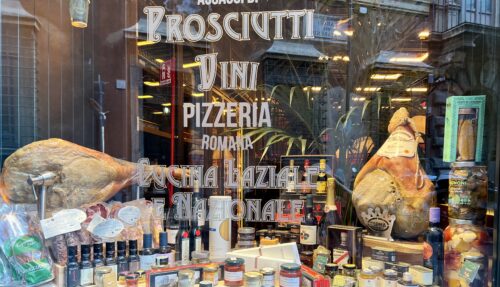
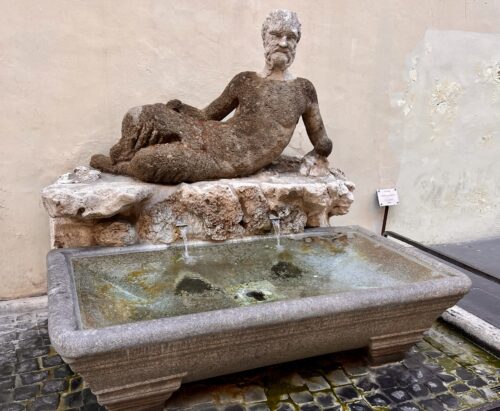
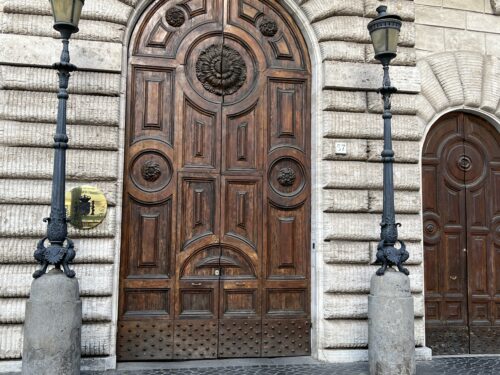
By 7.30 am the number of people out and about had increased but it was easy to get to the edge of the fountain to throw a coin or take a photo.
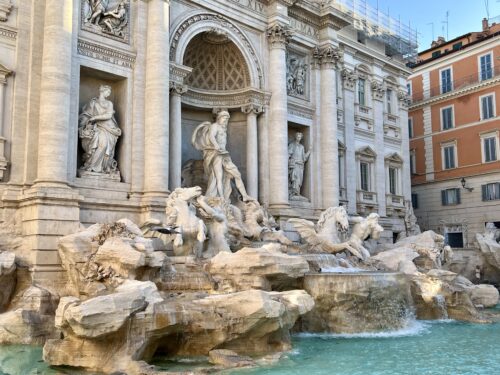
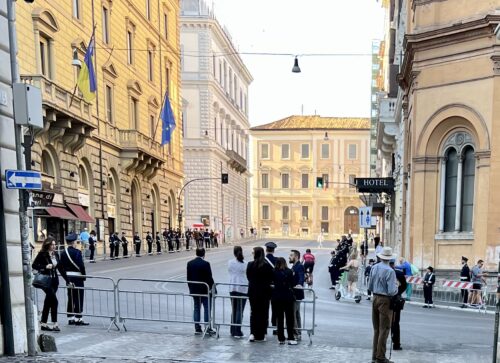
Our planned visit to the Forum and the Colosseum was on track and we were just congratulating ourselves when we reached Via del Plabiscito and found all roads did not lead to the Forum or the Colosseum.
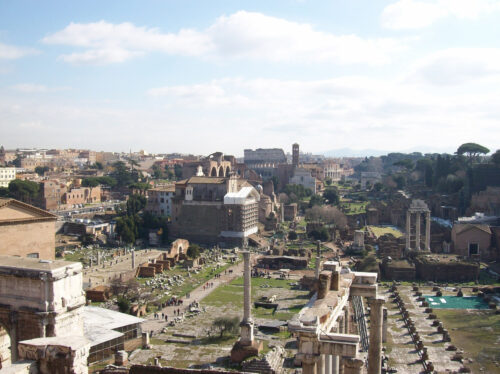
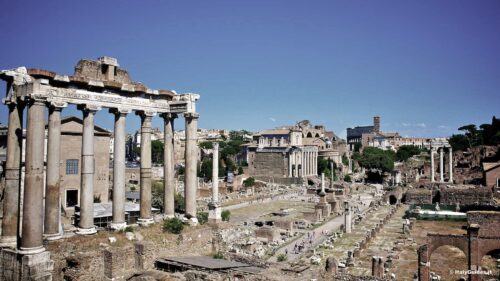
The route of the Republic Day Parade is lined with security and no one is allowed to cross.  By winding our way through the side streets we managed to find some vantage points to view the Forum

We arrived at the Colosseum in time to watch the firefighters abseil down the side unfurling a giant Italian flag as they went. An impressive display considering the coordination it would take to keep the flag level throughout.
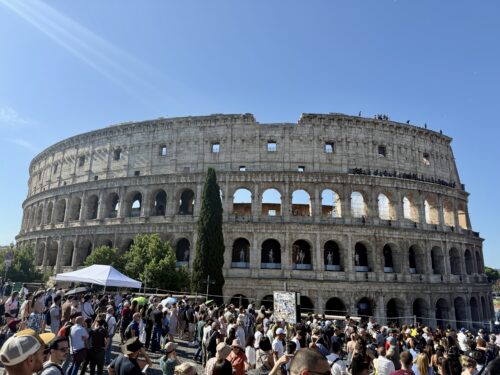
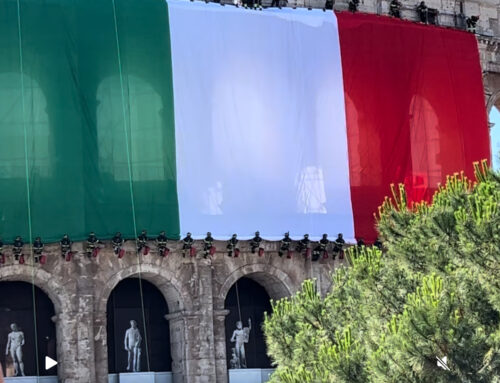
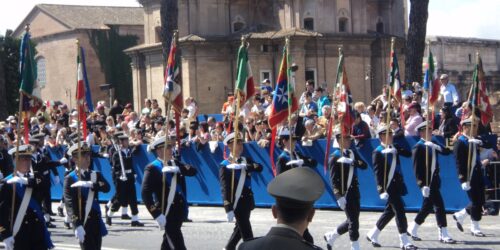
From our vantage point near the Colosseum we could see the marchers assembling for the Republican Parade.  The marchers in the Parade number over 1,000 and include members of the Italian Armed Forces, including military units and paratroopers, as well as all the police forces, the Vigili del Fuoco (firefighters), Protezione Civile (civil protection), and the Italian Red Cross. The parade also includes representatives from the United Nations, NATO, and EU military delegations.  

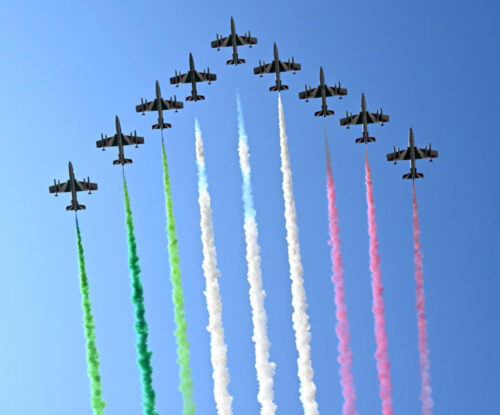
The day also featured a fly pass by the Frecce Tricolori aerobatic team. The Frecce Tricolori are widely considered one of the world’s best aerobatic teams, known for being the largest in the world with ten Aermacchi MB-339s flying in tight, complex formations. They are renowned for their skill and represent the Italian Air Force, showcasing both precision and spectacular flight maneuvers.

Whilst our day hadn’t gone exactly as planned and we missed out on visiting the Forum and Colosseum, there were no complaints (or not many).  We had been part of the celebrations and enjoyed a spectacular event.
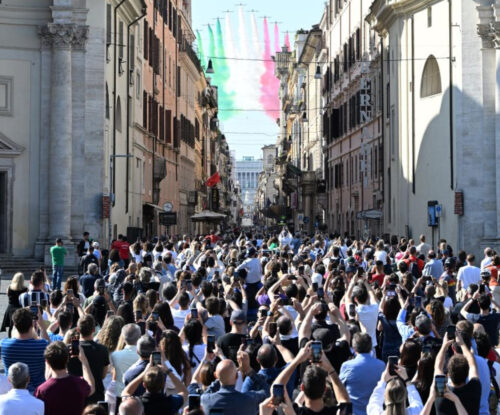
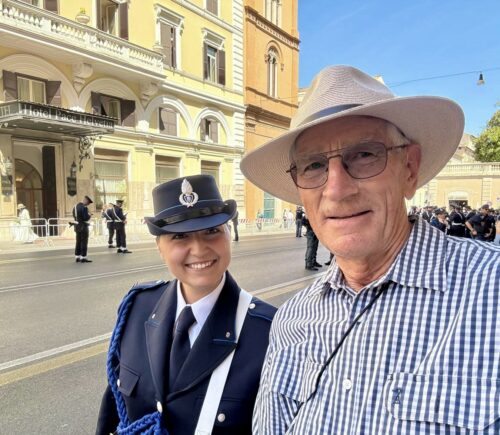
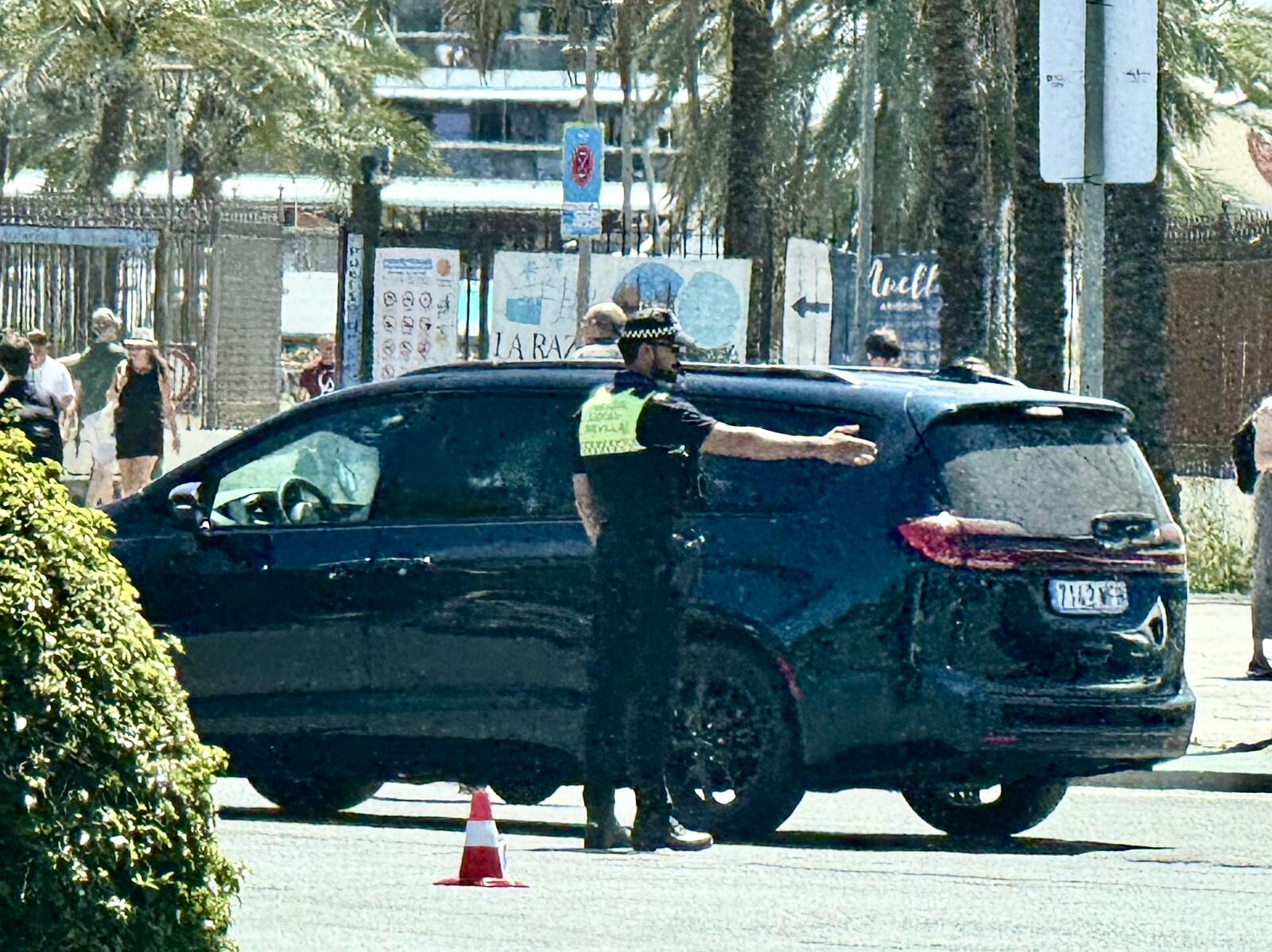
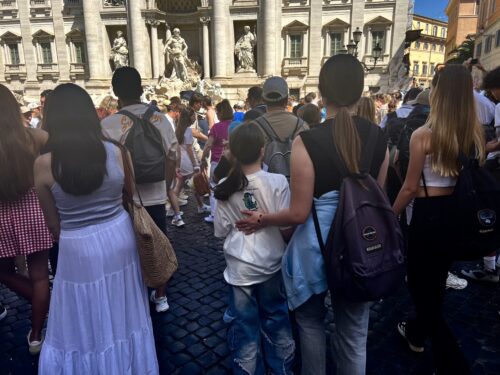
The trek back through the crowded streets seemed long and we were pleased to get home and put our feet up.  but we stopped to chat with some of the police who had been securing the route and found a pleasant stop to have a drink and a snack.  Not a chance of throwing a coin in the Trevi Fountain.
June 3rd

Our last day in Rome and it was out into the countryside.  I had visited Hadrians Villa and the Villa d’Este on a previous visit and was keen to make a return visit.

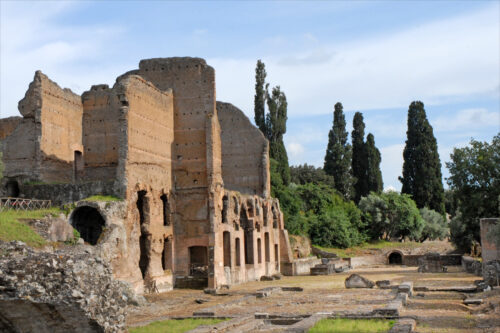
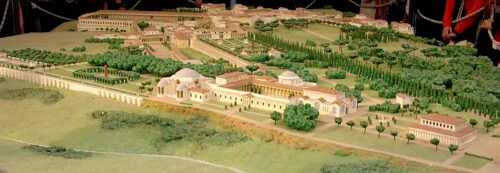
Hadrian’s Villa is an exceptional architectural legacy of the great Roman Emperor Hadrian. He travelled widely across the Empire in order to learn more about the different lands that he ruled over and this is reflected in the mix of Egyptian, Greek and Roman architectural styles in the villa,
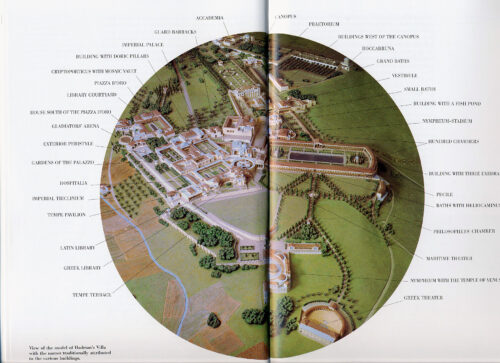
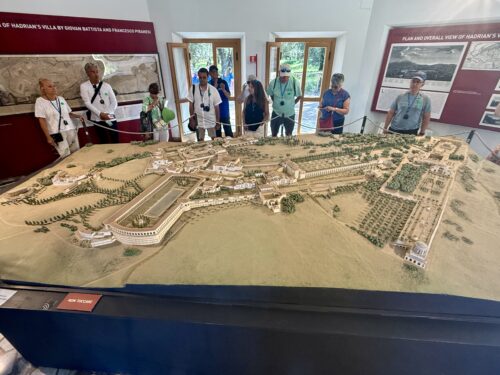
 Built as a retreat from Rome between 117 and 138 AD the remains of some 30 buildings extend over 120 hectares. It is one of the most impressive Roman villas ever discovered in terms of size. Although a lot of the villa has been excavated, many parts remain hidden and archaeological work continues to this day.
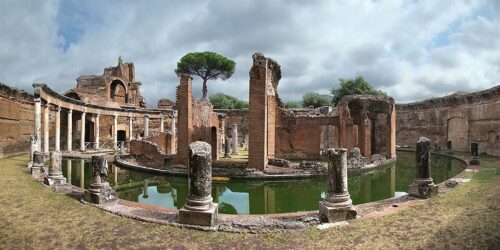
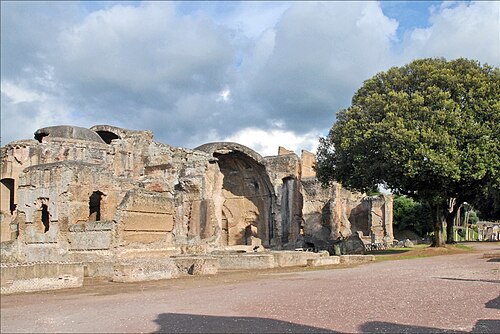
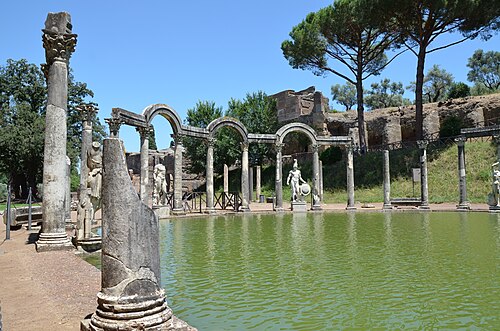
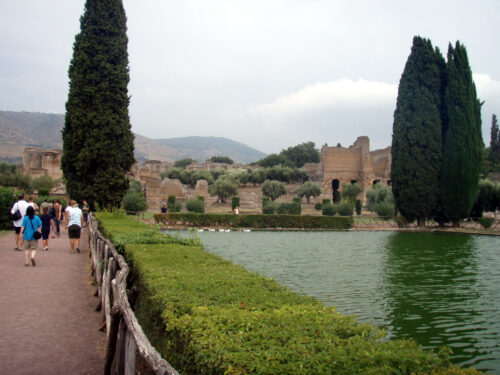
Some of the highlights of this site are the Maritime Theatre, the Great Thermal Baths, and the Canopus, which was inspired by an Egyptian city of the same name and whose long, reflecting pool is meant to symbolise the Nile. Other parts worth noting are the Pecile, which is a large garden with a swimming pool, the Imperial Palace complex, and the Nymphaeum, which is a monument dedicated to nymphs.
Villa d’Este

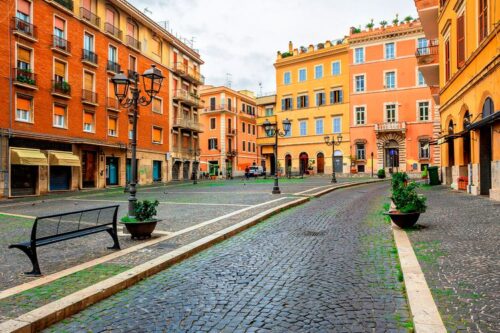
We had a wander through the winding streets of Tivoli
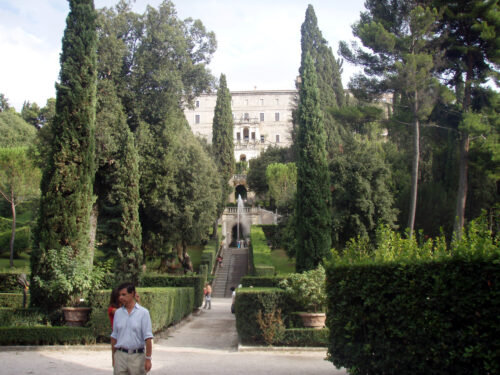
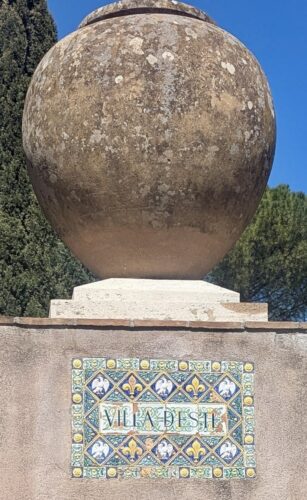
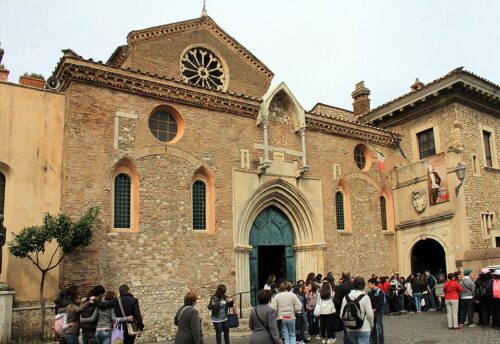
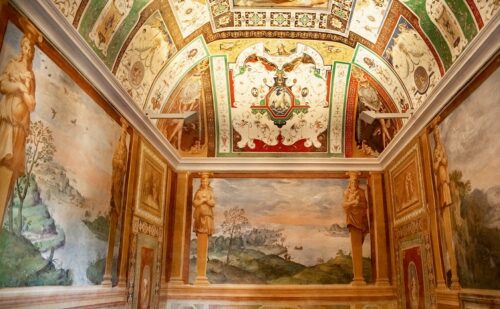
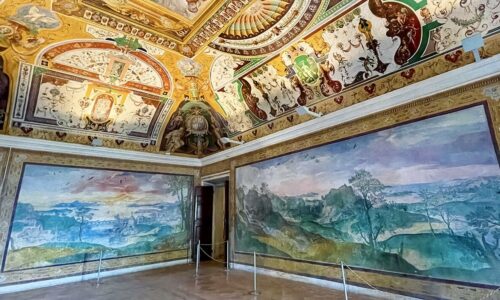
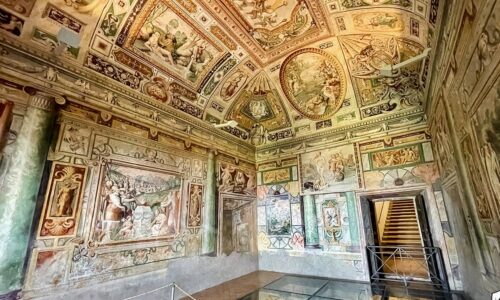
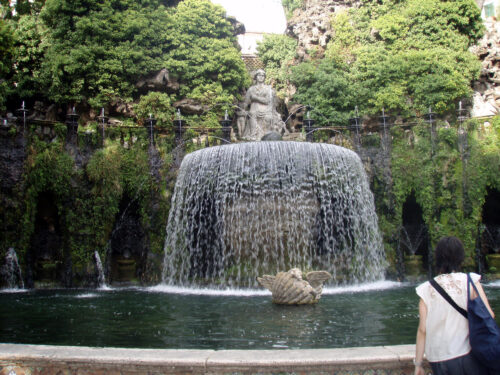
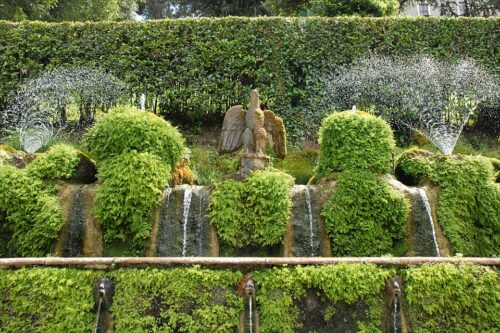
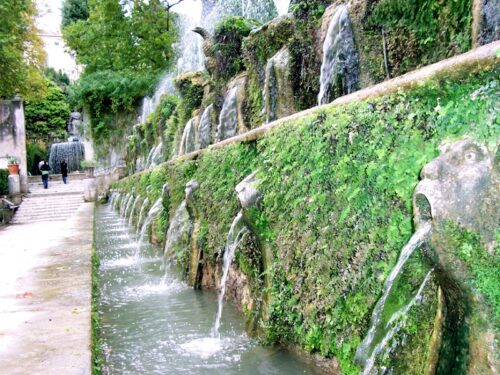
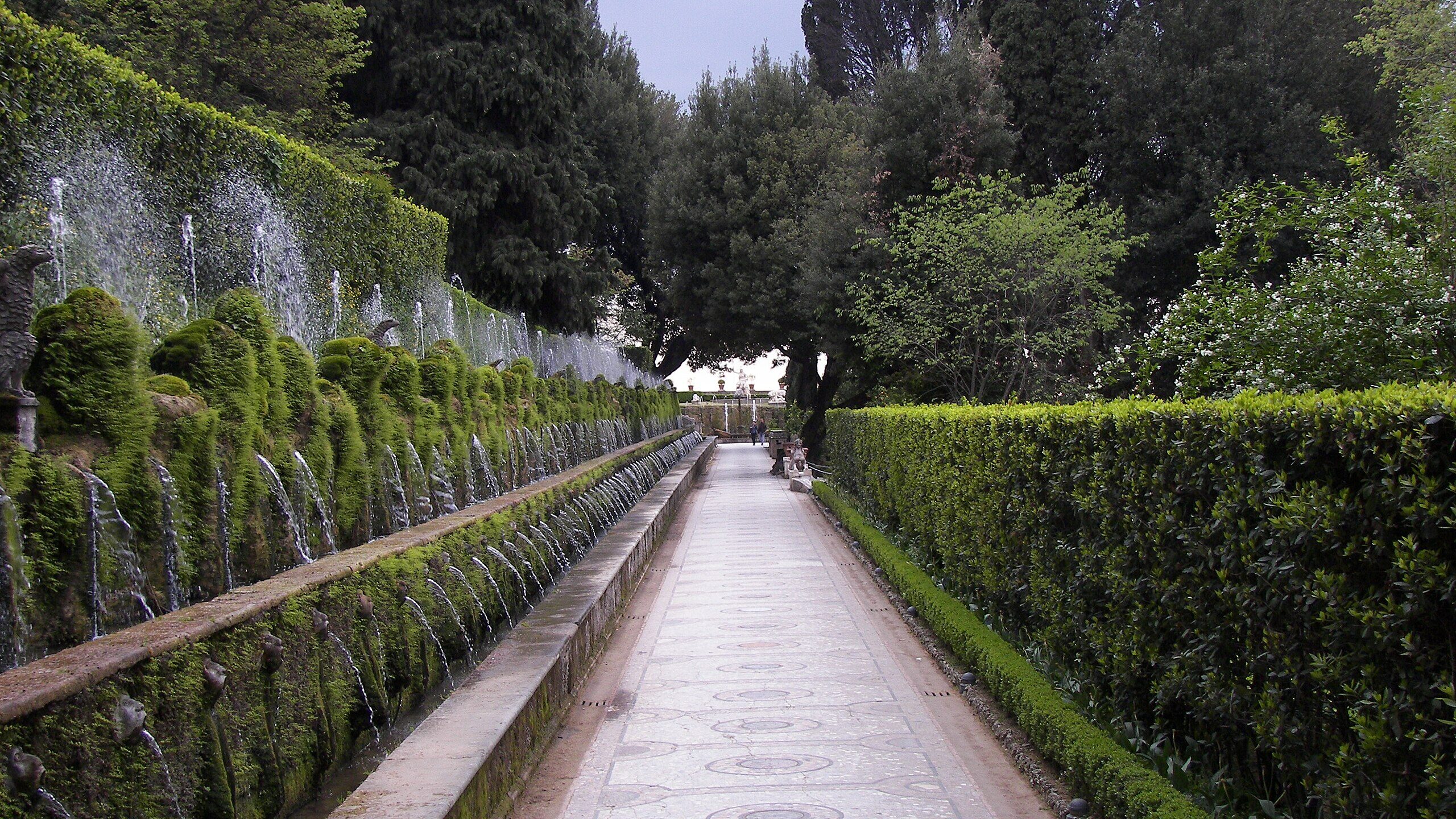
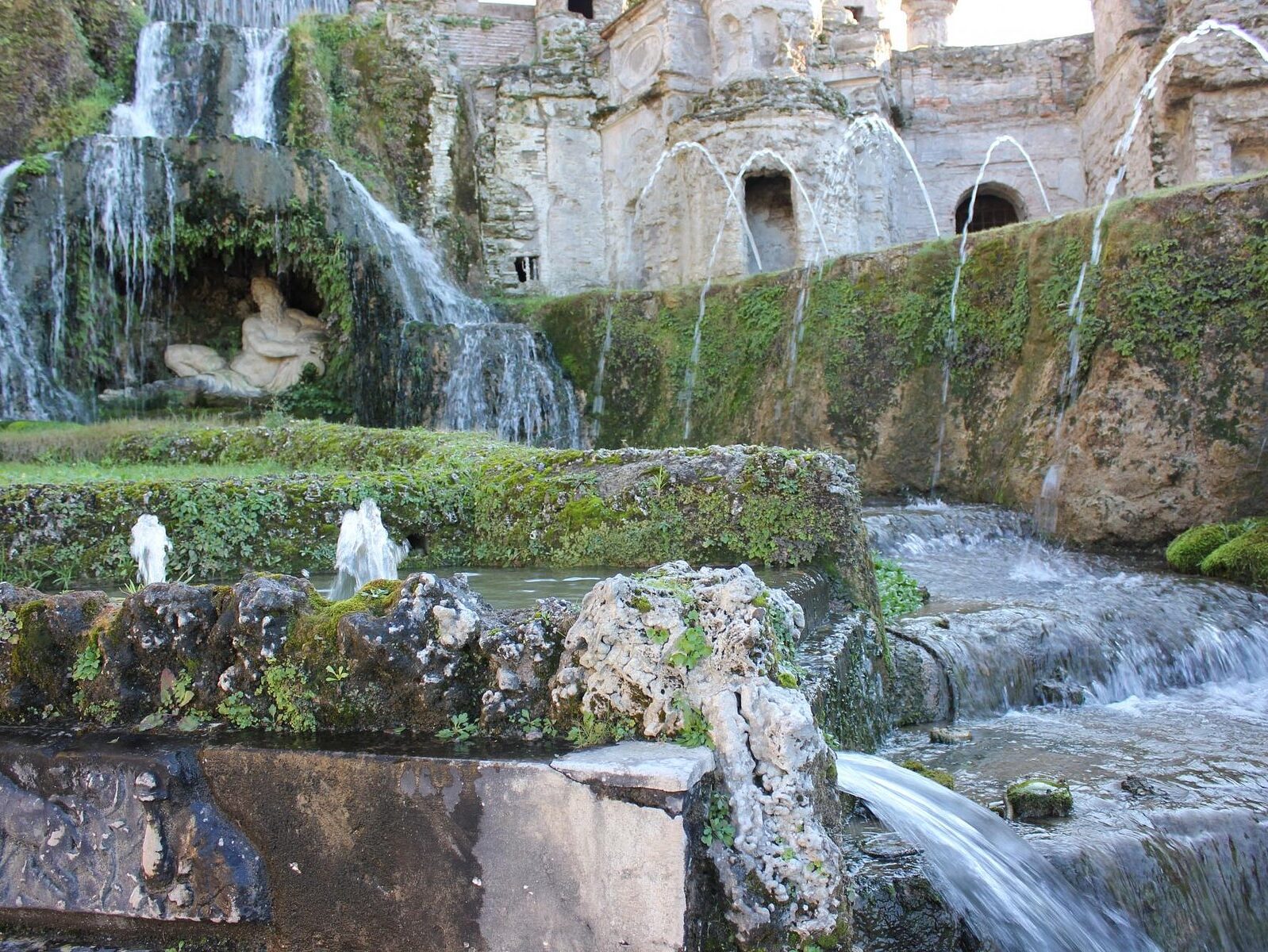
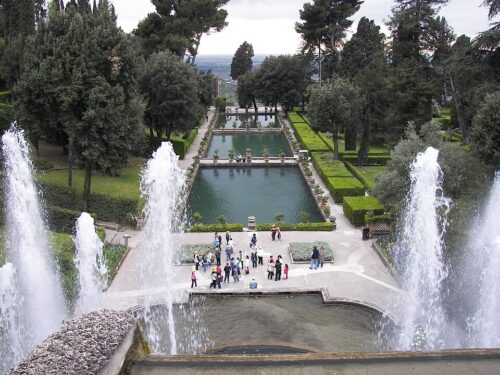
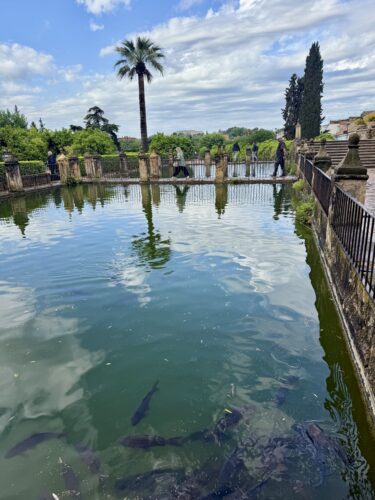
before entering the Villa d’Este, a masterpiece of Italian architecture and garden design famous for its terraced hillside Italian Renaissance garden and the ingenuity of its architectural features. The fame and glory of the Villa d’Este was above all established by its extraordinary system of fountains; fifty-one fountains and nymphaeums, 398 spouts, 364 water jets, 64 waterfalls, and 220 basins, fed by 875 metres of canals, channels and cascades, and all working entirely by the force of gravity, without pumps.
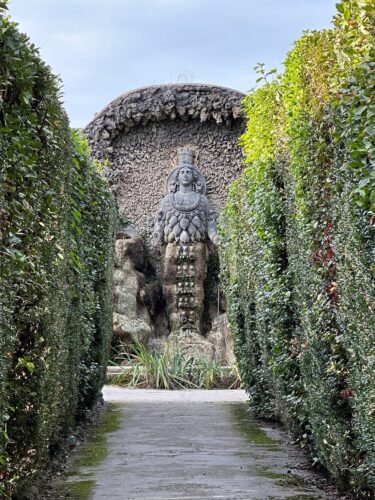
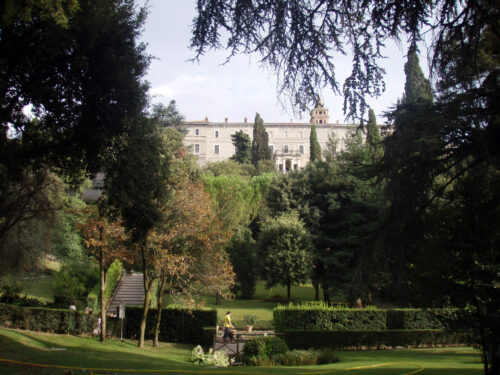
It is an incomparable example of a 16th-century Italian garden, which later had a huge influence on landscape design in Europe. It is now an Italian state museum and has been listed as a  UNESCO World Heritage Site since 2001.

The Villa was commissioned by the wealthy and influential Ippolito (II) d’Este, the son of the Duke of Ferrara and Lucrezia Borgia, and the grandson of Pope Alexander VI. The Este family were lords of Ferrara, an intellectual and artistic centre that attracted the greatest minds of the Italian Renaissance.

Teams of painters and stucco workers labored on the task between 1567 and 1572, under the direction of some of the Renaissance most famous painters – Girolamo Muziano, Livio Agresti, Cesare Nebbia, Durante Alberti, Metteo Neroni, and Federico Zuccari.[4] The painters were joined by sculptors Giovan Battista della Porta. Pirrino del Galgliardo, Gillis van den Vliete, Giovanni Malanca, and Pierre de la Motte. They were also joined by ceramists and mosaic artists, as well as fountain engineers, led by Pirro Ligorio. .

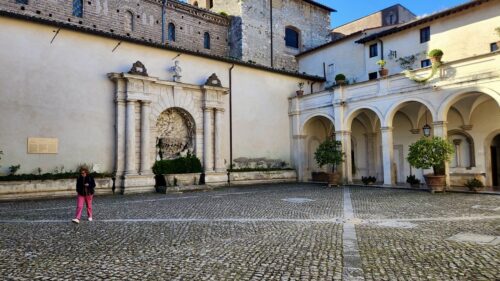
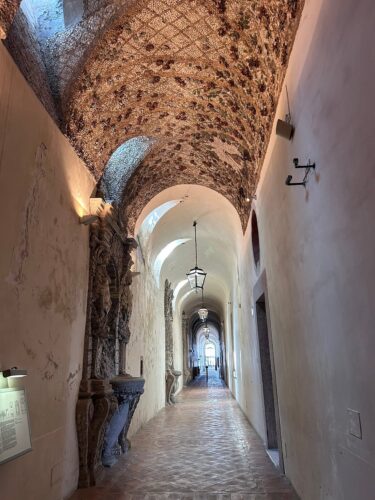
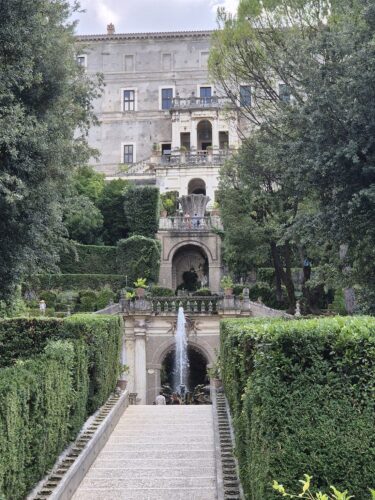
In the time of Ippolito d’Este visitors arrived at the bottom of the gardens, and ascended, step by step, to the villa, viewing the fountains and statuary. Today you enter through a modest doorway into the Courtyard and then into the building, where you can admire the large frescoed rooms. 

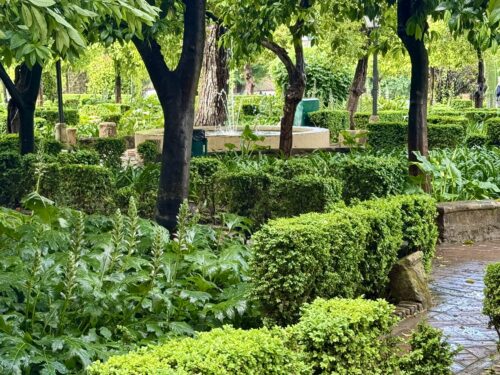
From there you continue into the wonderful gardens that form the scenic backdrop to the villa. The paths are defined by boxwood hedges and as you wend your way down the hillside you discover sculptures, mainly with mythological figures, caves, ornamental basins and above all the beautiful fountains. Everywhere there are numerous eagles and lilies symbols of the Este family.


The fame and glory of the Villa d’Este was above all established by its extraordinary system of fountains; fifty-one fountains and nymphaeums, 398 spouts, 364 water jets, 64 waterfalls, and 220 basins, fed by 875 metres of canals, channels and cascades, and all working entirely by the force of gravity, without pumps.
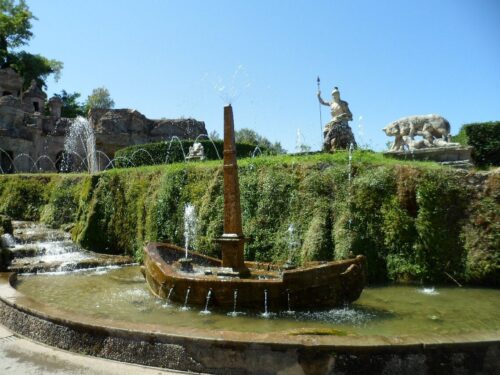
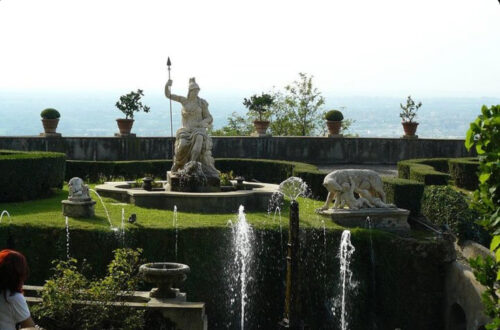
As his influence in Rome waned Ippolito spent more and more of his time in the villa, reading and meeting with the leading poets, artists and philosophers of the Renaissance. In the summer of 1572, he entertained one last important guest, Pope Gregory XIII. To prepare for the visit, the Cardinal redecorated the top floors of the villa and rushed completion of the dragon fountain. Soon after the reception, on December 2, 1572, the Cardinal died in Rome, and was buried in a simple tomb in the church adjoining the Villa.

The Villa had a chequered history after the his death, mainly due to the high cost of maintenance, and over the years it fell into disrepair and was restored only to fall into disrepair again. Many of the statues and paintings were sold to private investors, which was ironic considering he had in turn taken many of the marbles and statues from the nearby ancient Hadrian’s Villa, as a result of which the latter is devoid of most of its original features.

After the First World War, the villa was acquired by the Italian State, which began a major restoration in 1922. The villa was refurnished with paintings from the storerooms of the Galleria Nazionale, Rome. It suffered bomb damage in 1944 during World War II, and many of the walls were degraded in the  postwar years by environmental pollution, but campaigns of restoration and protection have preserved intact the famous features of the villa and gardens.
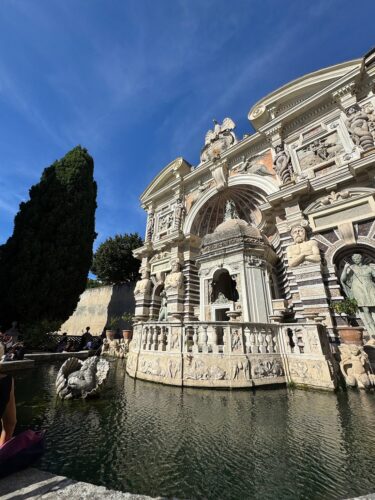
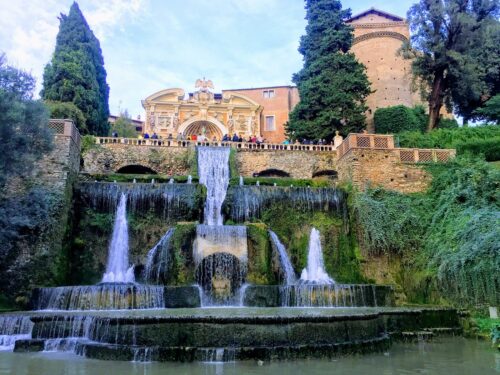
The water organ, which had not functioned for many years, was restored and now plays again each day for visitors.

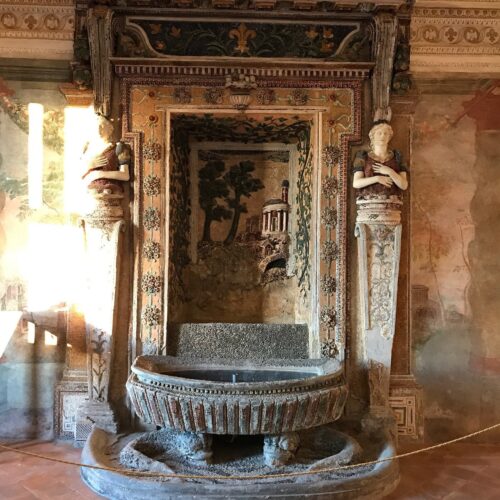
The Fountain of the Owl also produced music, thanks to an ingenious automaton made by the French fountain engineer Luc Leclerc. It featured twenty painted bronze birds placed in the niche, posed on two metal olive branches. Each bird sang an individual song, produced by piped water and air. A mechanical owl appeared, and the birds stopped singing; then, at the end of the performance, all the birds sang together. During restoration work the workers found some of the original mechanism that produced the bird songs, including the wind chamber, the tubes that moved the air and water, and the machinery that made the owl move. Using modern materials, they were able to make a new version of the old machinery so the birds sing and move again.
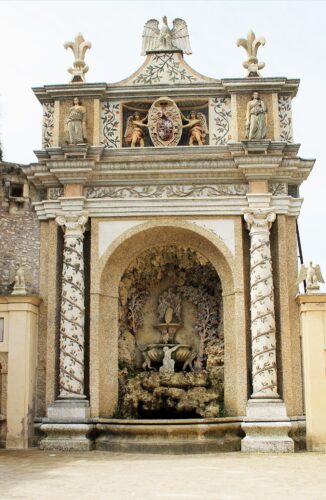
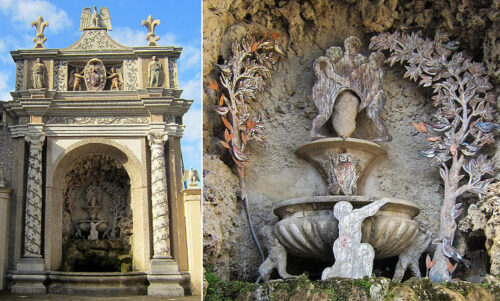
It had been a fascinating day with a lot to explore.  We had a quiet meal on our terrace, packed up and got ready for an early departure to Milan the next day.
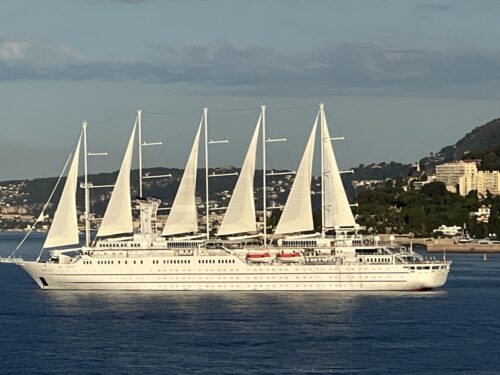
 

Sailing away on the Silver Ray – Part two

24th May

Monaco

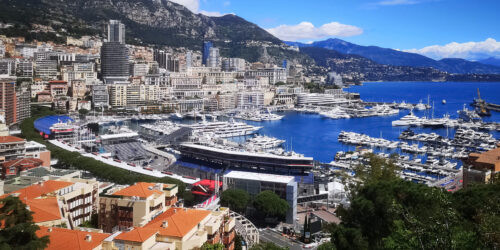
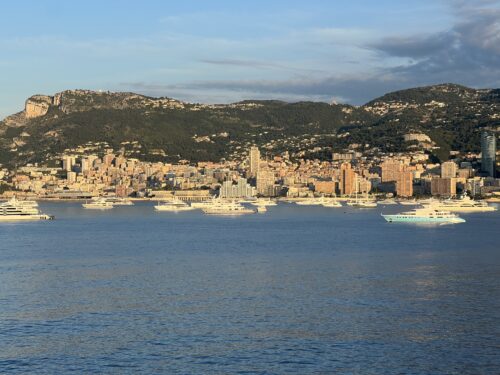
Our ship anchored around 8am, one amongst the many of expensive vessels that have arrived and continue to arrive during the morning. It was a beautiful day, sunny with a few clouds and not too hot – perfect for watching the Monte Carlo Grand Prix, the jewel in the crown of Formula One experiences. The race takes place on the streets of the one square mile country bringing normal businesses to a complete standstill and there is an excitement in the air which extends to visitors and locals alike.


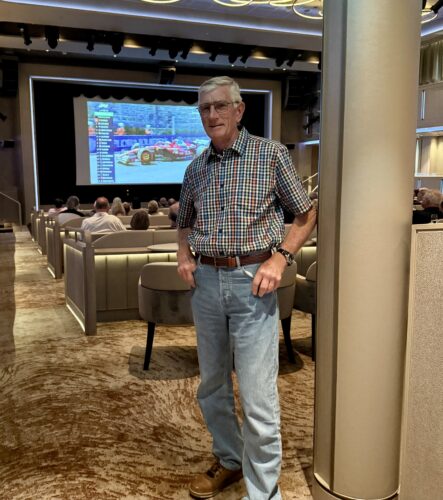
We had several options for watching the race.  (a) Silverseas had reserved a Private Rooftop, where you can, for a fee, immerse yourselves in the excitement of the race and experience the sounds and smell of diesel AND get to watch the Race, (b) find ourselves a spot along the track where we could experience everything and catch the occasional glimpse of a speeding car or (c) where we can experience the faint sound of racing cars and watch everything on a giant screen in the comfort of the Venetian Lounge.  Much to the disgust of our family we chose the latter and stayed connected with the progress of the Race during our time in port.


We did, however, brave the transfer launch where, with the ship rocking one way and the launch the other and with the able assistance of two crew on the boat and two on the launch, you waited until the decks were vaguely aligned and leapt across the gap. Being reasonably agile we managed, but you had to admire the fortitude of those who cast aside their walking sticks and threw themselves into the arms of the waiting crewmen with alacrity.


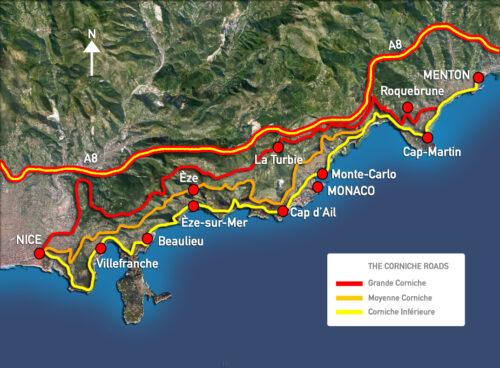
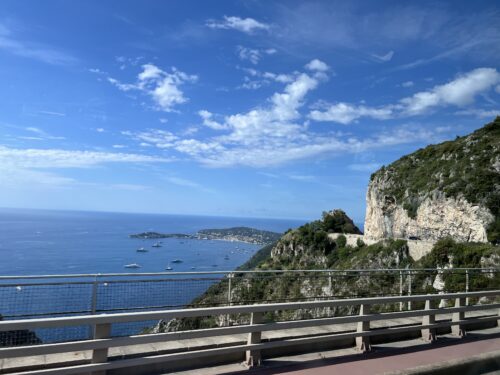
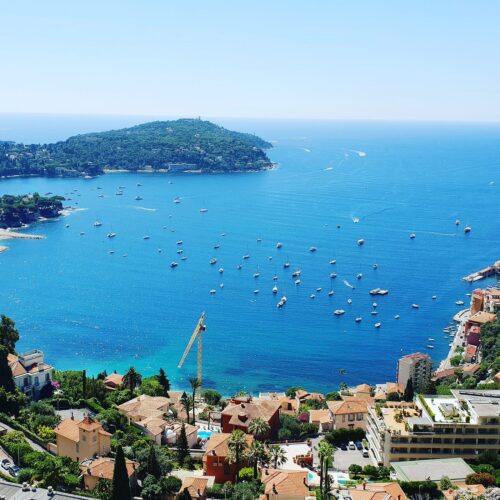
The practice runs hadn’t started yet so we had a quick look at Monte Carlo before going on to drive the famous Corniche Roads of the French Riviera, along cliff-side roads that offer spectacular panoramic views overlooking the coast and the Mediterranean.

The Basse, Moyenne and Grande Corniche are a series of parallel roads in the Maritime Alps linking Nice to Menton at different altitudes above the Mediterranean Sea. Each route has its charm, and you can see medieval perched villages, Roman ruins, elegant 19th-century villas, and exotic gardens.

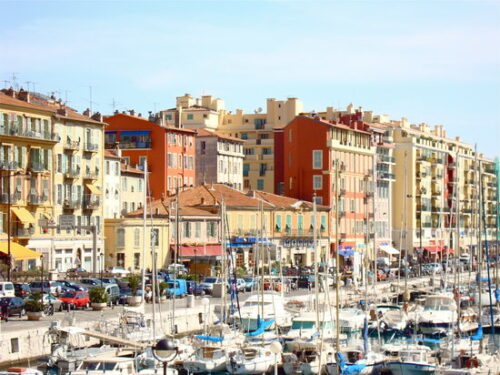
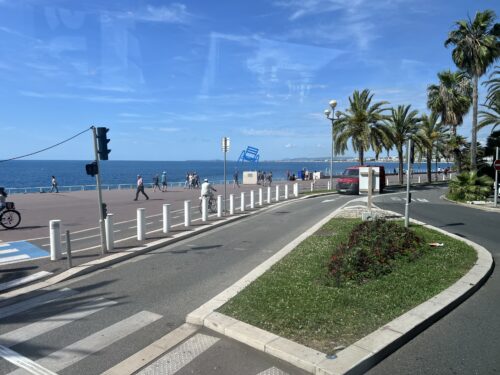
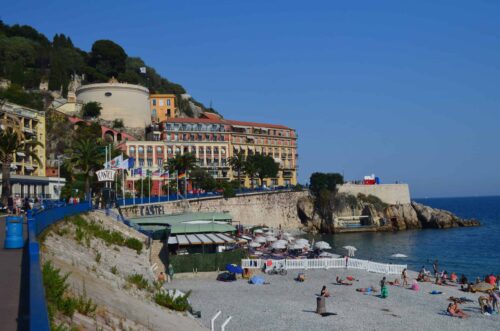
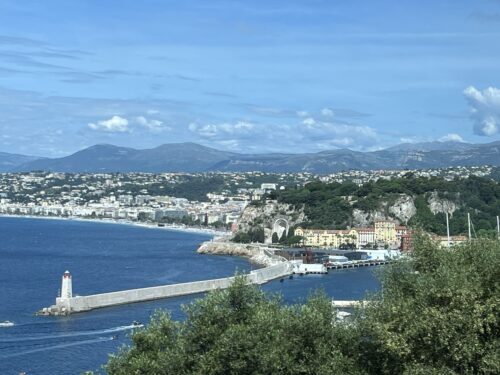
We started off at sea level with a visit to Nice.

The Corniche Inférieure or Basse Corniche is nicknamed the “Route du Bord de Mer” (Seaside Road). Running along the seafront it was laid out in the 18th century by the Prince of Monaco and passes through several famous sea resorts. There are numerous villas to admire along the road.

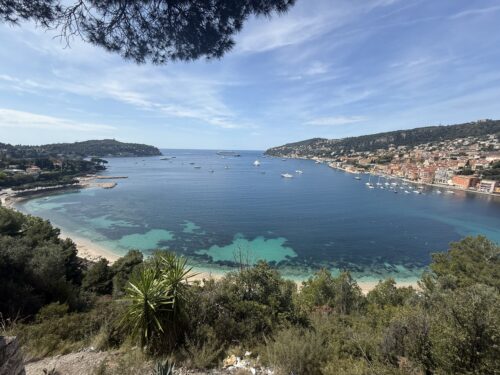
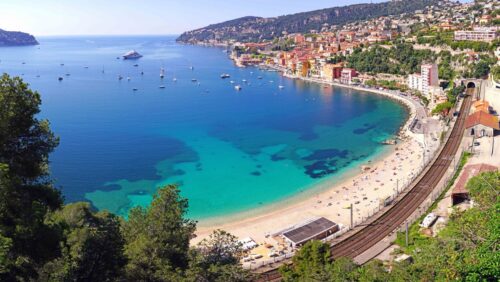
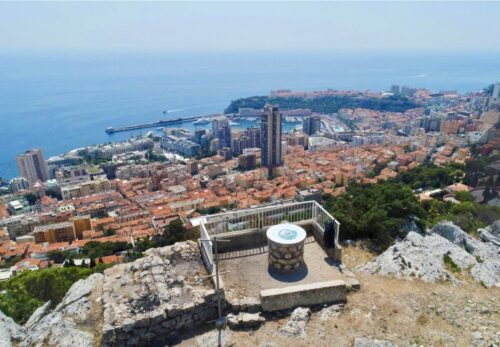
One of the world’s most famous scenic roads, the Moyenne Corniche was built when aristocratic tourism on the French Riviera was already causing too much traffic on the Basse Corniche. The route passes several spectacular viewpoints on the Riviera coast, including the Villefranche-sur-Mer lookout with views of the port and old town, the outlook at Eze before crossing the viaduct and the Mont des Mules car park, situated directly above Monaco, and  giving access to a small touristic circuit leading to an orientation table which offers  a panoramic view of the Mediterranean coast.

The Grande Corniche (Upper Corniche) was built by Napoleon I. It follows the ancient Roman route known as Via Julia Augusta. Running sometimes at 500 metres above the sea, it offers spectacular views over the Mediterranean coast and access to the old hilltop village of Roquebrune and its medieval castle.

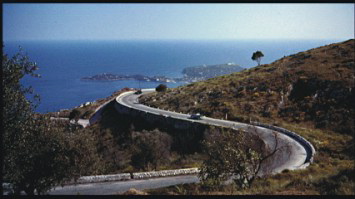
The roads of the 3 Corniches are inspiring in many ways and have seduced many directors who have used them as a film set. One of the most dramatic stretches of the road is around the Col d’Èze, a mountain pass 512 m high above the perched village of Èze. The road was featured in the James Bond movie “GoldenEye.” Other movies featuring these scenic routes include Transporter and Mr. Bean’s Holiday.


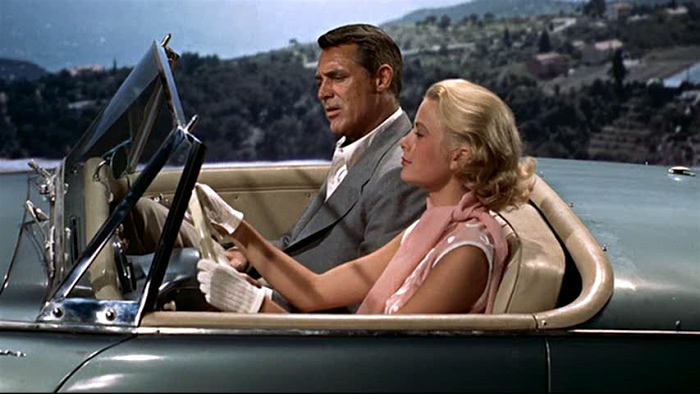
It was on the Grande Corniche, that Alfred Hitchcock shot one of the cult scenes in the movie “To Catch a Thief” starring Grace Kelly and Cary Grant. The movie highlights the road’s winding paths and stunning coastal scenery as Grace Kelly and Cary Grant drive their Mercedes 190 SL roadster at high speed between Eze and La Turbie during a dramatic chase. Today, many holidaymakers, infused with their glamour, approach the specialist Rent-a-Car Classic to hire a classic car – Mustang, Porsche Speedster, Alfa Romeo Giulia, and the famous Mercedes 190 SL – and drive through Hitchcock’s landscapes.

By the time we transferred back to the ship the wind had died down and it was far less dramatic crossing. It was also time for lunch, and we decided to try Atlantide, one of the main restaurants on the ship.


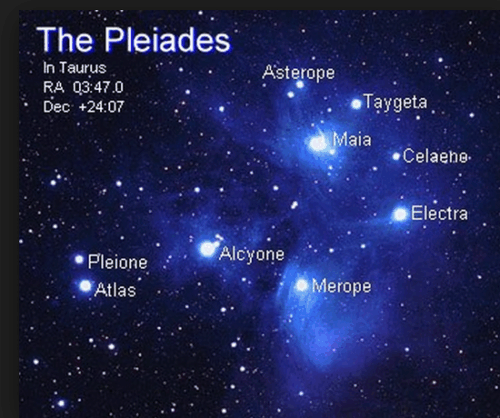
Named after the seven nymph daughters of Atlas and his wife Oceanid Pleione, a sea nymph, they were supposedly granted immortality by Zeus in the form of stars in the constellation of Taurus. Atlantide is an elegant bar and grill that incorporates the best that the sea has to offer. Dishes such as royal crab, lobster, and verbena-infused red snapper in a sea salt crust are offered alongside the best steaks.

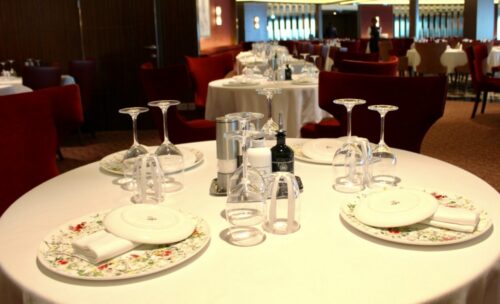
We arrived quite late, and things were winding down. The service was a bit slow, but we chatted with another couple at the next table and had an enjoyable lunch. I had the Lobster Bisque which was particularly good, and Ed had the Beef Tartare which he did not particularly enjoy. The standout feature of the meal were the plates, which were lovely!

After lunch we headed for our cabin for a rest and to listen to the faint whine of the cars as they raced around the track. Comfortably ensconced in our cabin I opted for room service for dinner whilst Ed went up to the top deck to listen to the cars and have a gin and tonic.

25th May

Monaco

A leisurely day on the ship. With the Grande Prix in full swing there was no point in going ashore unless you were planning to go to the race, so we caught up on our washing, caught up on our correspondence and visited the Optivum Spa – Ed to have a haircut and, seeing what a good job they did on him, I decided to have one too and so as not to waste a visit, partake of the Grande Prix beauty specials.

We had been advised that you would not have any problems with mosquitoes if you drank at least three gin and tonics a day so we went up to the pool bar with our books and tried to ensure we would be mosquito free while adding a few tapas plates for lunch. The final of the Grande Prix was being broadcast live at 3 pm so we made our way to the Venetian Lounge to watch the Race along with most others who had stayed on the ship.

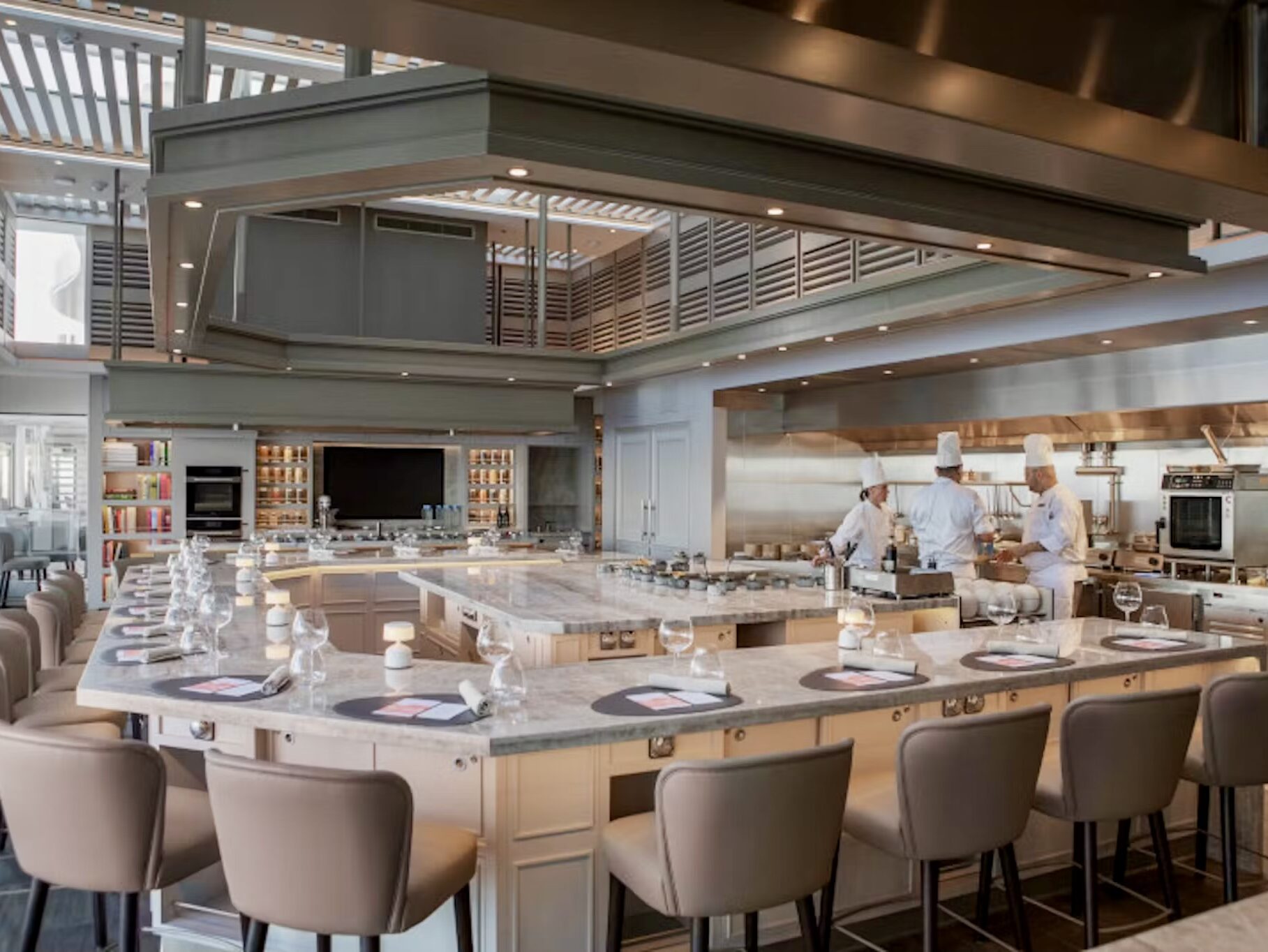
That evening was the second of our speciality restaurants. S.A.L.T. Chef’s Table.

This culinary program – whose initials stand for Sea And Land Taste – is an integral part of every new Silverseas ship and is still one of Silverseas main differentiation factors. There are three main venues.

 S.A.L.T. Bar applies the culinary program’s emphasis on regionalization to the drink menu, with cocktails inspired by local ingredients and customs.

S.A.L.T. Kitchen functions as a main dining room alongside the more traditional Atlantide, with the distinction that the restaurant menu is completely devoted to whichever region the ship is visiting. The venue’s name doesn’t do it justice – it’s a beautifully lit, elegant dining room that seats up to 160 guests for dinner. It offers two menus: Terrain, for dishes based on the latest port of call, and Voyage, which comprises the best recipes of each voyage.

S.A.L.T. Lab is the culinary program’s multi-use space. Passengers here can partake in hour-long hands-on cooking lessons that are centered around their destinations. At night, S.A.L.T. Lab turns into the Chef’s Table experience: a multiple-course dinner of small plates highlighting regional flavours and star ingredients, all accompanied by unique wines and cocktails.

The S.A.L.T. experience goes beyond the venues and features culinary lectures in the ship’s Venetian Lounge theatre, carried out by members of the S.A.L.T. program as well as guest speakers. For shore excursions, they identify the compelling food stories of a region and then seek out local experts who best represent that culture and cuisine. Passengers can select from a handful of S.A.L.T. culinary excursions offering visits to restaurants, farms, and markets, often with exclusive access.

Our evening began with a visit to the S.A.L.T. Bar where we ran into a couple of our friends. They were gaily mixing cocktails, using local ingredients and under the watchful eye of the senior mixologist – who was trying to reign in some of their wilder fantasies. We tried some of their inventions – some were incredibly good and some totally awful.

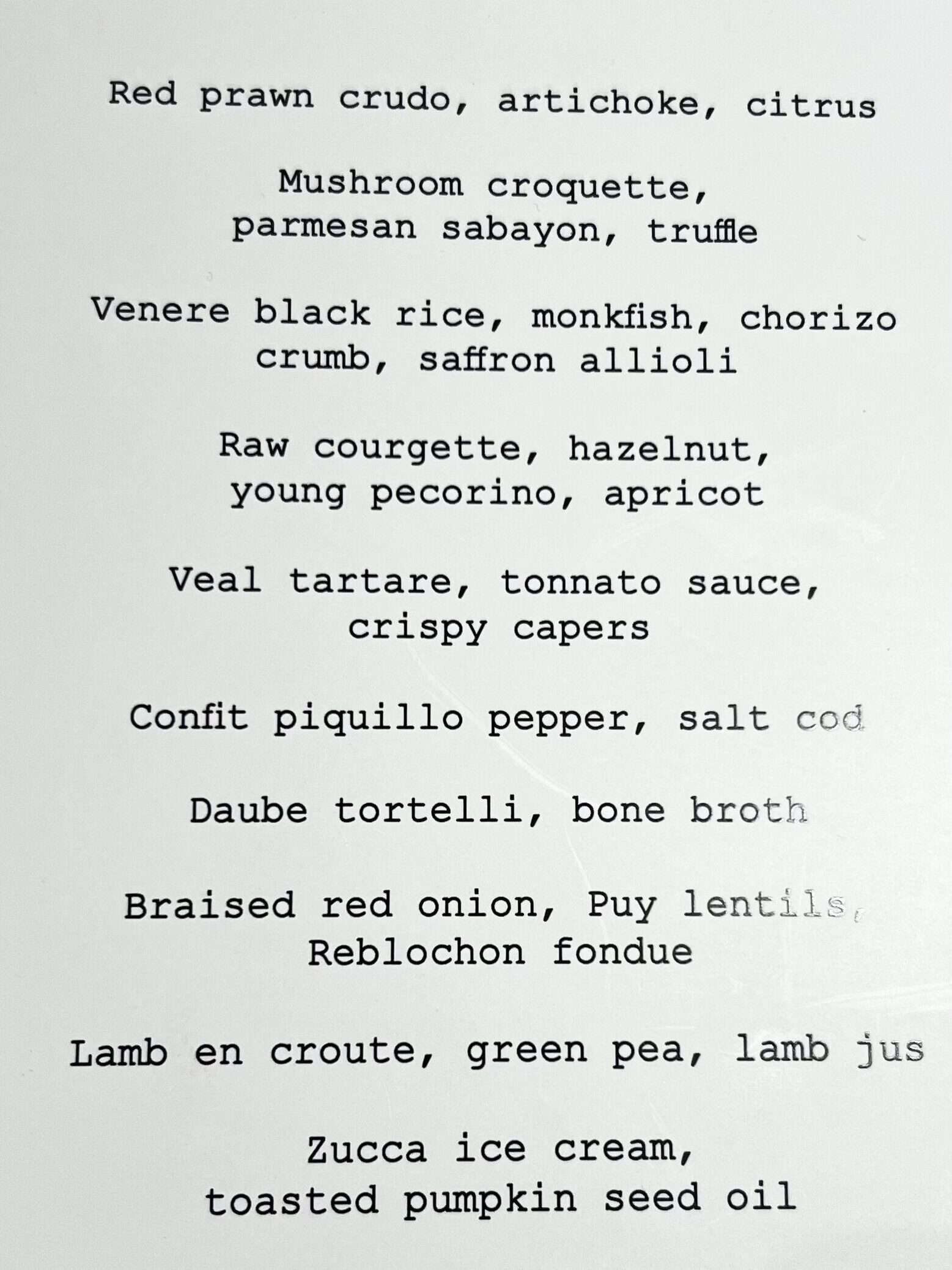
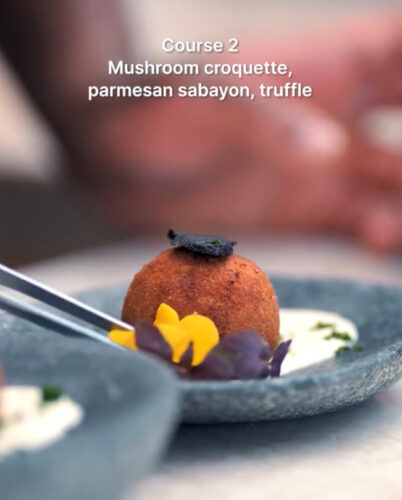
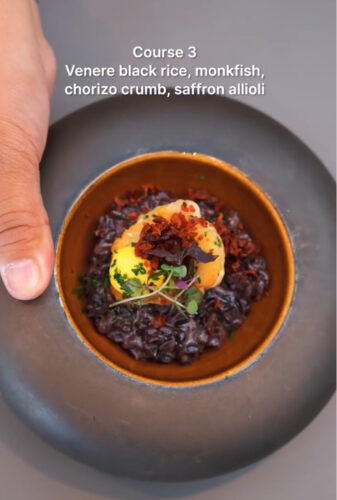
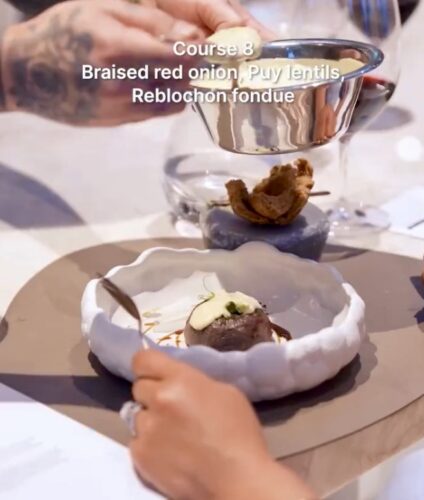
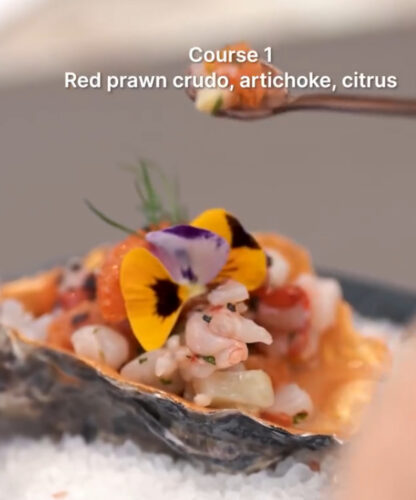
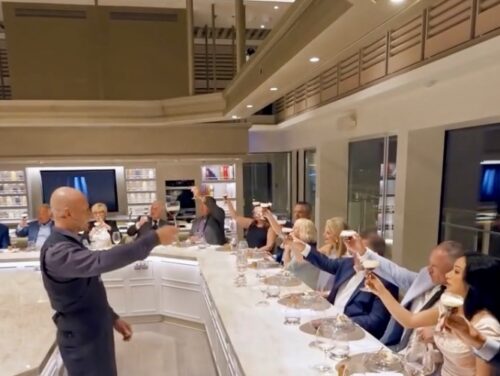
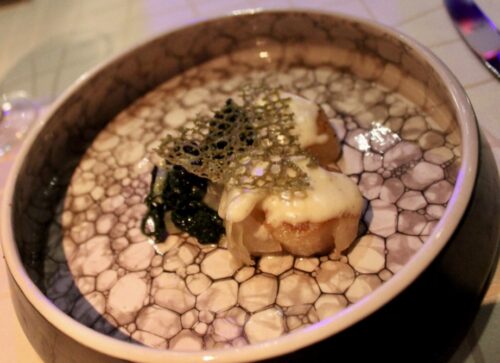
No foodie should miss this 11-course culinary extravaganza. Everything about the evening was exceptional, from the exquisite tasting dishes to the handmade bowls and plates they were served on as well as the accompanying illustrated cards and the entertaining commentary from the chef and his team. Because of the smaller scale of Chef’s Table, the culinary team can use some harder-to-source ingredients and be a bit more playful with the menu. This allows them to offer a creative interpretation of the cuisine of the region in a setting that encourages conversation and curiosity.

Once seated we were introduced to our Chef, sous chef, and the sommelier, who immediately mixed us a delectable cocktail consisting of rhubarb and ginger gin, champagne, lemon, and elderflower, which creates a spectacular cloud when it is poured!

The chefs and everyone involved in the program love to travel and find amazing tastes and ingredients along the way and the Chef’s Table format gives them a venue to share these discoveries with an intimate group of like-minded diners.

Conversation flowed freely between chefs and guests. Most of our companions were well travelled and appreciated delicious food and wine, which made for an interesting evening.

Whilst we were wining and dining the Silver Ray pulled up anchor and headed for our next destination – Saint-Tropez, a glitzy, glamorous coastal resort that is the French Riviera hotspot of choice for A-listers and flotillas of gleaming yachts.

26th May

Saint Tropez

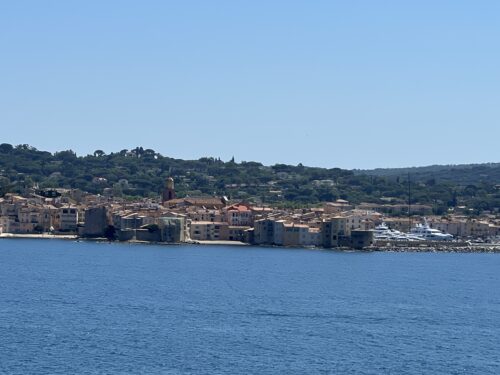
We watched our arrival from the terrace whilst breakfasting and admired the town that Brigitte Bardot’s famous presence lent a glamorous and steamy appeal to. She still lives there but it is rarely seen preferred to stay at home with her animals.

If she were to venture out, she would be spoiled for choice with a number of top-notch restaurants and bars to choose from as well as a plethora of shops and boutiques displaying some of the world’s most famous and expensive labels. Sidewalk cafes abound and you could spend hours checking out the boats in the Marina

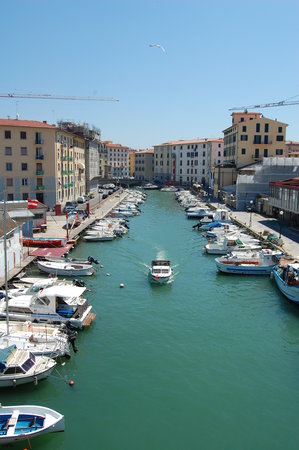
There were several organised outings in Saint-Tropez. Unfortunately, we missed a place in ‘the organised scenic stroll through the medieval streets including a wine class and tasting in a quaint village private terrace’  We did, however, score a seat on a trip to the lakeside town of Port Grimaud.  A unique project in its day, Little Venice of Provence is a popular well-visited place known for it’s laid-back way of life. We strolled along the canals, explored the flower lined alleys, counted the number of colours on each façade and took a canal cruise before returning to the ship.

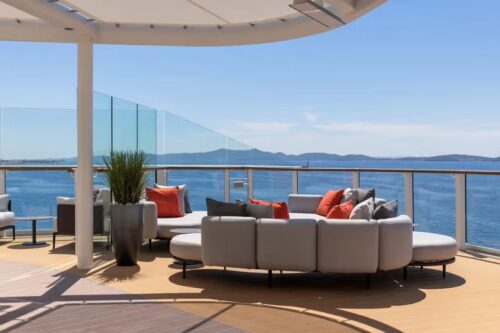
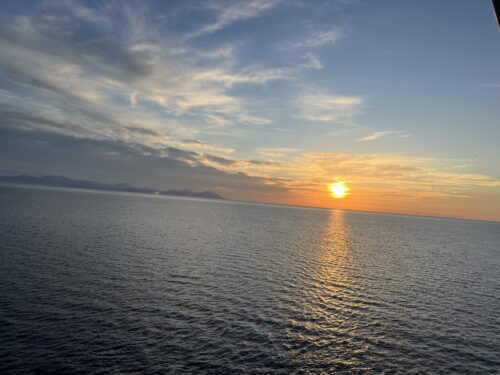
Unfortunately, Brigitte Bardot did not make an appearance whilst we were there, so we adjourned to the Dusk Bar to drown our sorrows. The Dusk Bar is a superb open-air sky bar with 270-degree, panoramic views from the stern. The Dusk Bar’s unobstructed views give you a wonderful view of sunsets at sea and is the perfect spot to watch Saint Tropez recede into the distance

27th May

Livorno

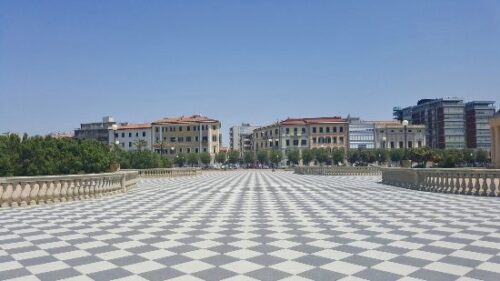
The ship is spending the day in Livorno, a historic port and beach gateway to Tuscany. In a flush of enthusiasm, we had booked a tour entitled ‘Florence on your Own’ without really thinking it through. We, or perhaps I should say I, had visions of wandering the streets of Florence with Rick Steves Audio Europe as a guide and stopping frequently at sidewalk cafes and bars – everything at our own pace!

This lasted until the morning, when Ed checking on times discovered that this was a full day tour – and a long one at that – and involved lengthy coach trips there and back.  Feeling slightly guilty we cancelled the tour and went back to bed with a book. By the time we resurfaced all the other tours had gone.  We only had a few more days before our cruise ended and so decided to have a more leisurely day. We caught the shuttle bus into Livorno for a wander around and a bit of retail therapy before returning to the ship. Little did we know that two days later in Rome we would be ‘visiting’ Renaissance Florence in a virtual reality experience that allows you to ‘fly’ over the city and visit all the places of interest!

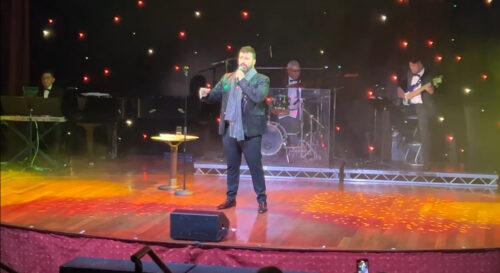
Giovanni Palminteri is a classical baritone, entertainer and actor who has performed his soloist concerts in opera houses all around the world. Tonight, he was performing Il Bel Canto in the Venetian Theatre and, after dining at The Grill, we found a seat, organised a drink, and sat back to enjoy the evening. He was amusing, entertaining and his selection of songs ranged from classical opera to songs from popular musicals. It was a wonderful show and received a standing ovation from the audience.

A wonderful way to end the day!

28th May

Today was a Day at Sea.  A chance to check out the Boutiques (which were closed whilst the ship was in port), see what was on offer in the Optivum Spa and chill out.

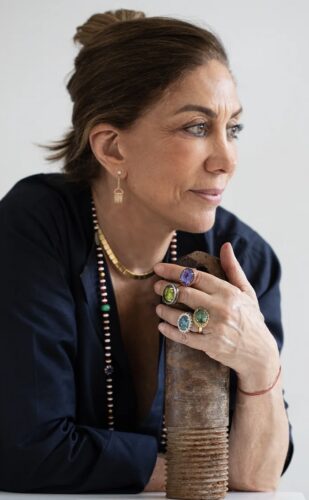
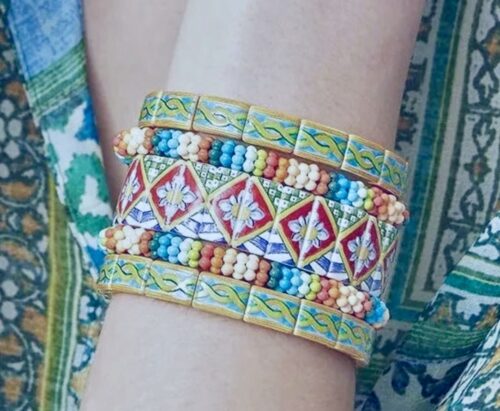
On display at the Boutique was ‘Jewellery for Every Day’ by Ileana Makri. Crafted for modern life and meant to be worn every day, her superb jewellery is produced in Greece, in collaboration with some of the nation’s finest artisans. A globetrotter at heart, Ileana travels extensively for design inspiration and to source the exquisite gems that feature in her fine jewellery collections. During the Covid pandemic, she turned to beading, leading to the creation of her more affordable Globetrotter Collection. Though I didn’t buy anything I was sorely tempted – particularly by some of the beaded pieces!

I thought I would give the Body Composition Analysis at the Optivum Spa a miss – not really wanting to know the answer – and joined Ed for lunch before returning to our cabin to rest up and prepare for the night’s festivities.

Showtime in the Venetian Theatre featured Motown. An upbeat, fast paced performance with memorable music ranging from the Supremes to the Temptations. Unfortunately, we could only stay for a brief time because it was time for our third speciality restaurant experience.

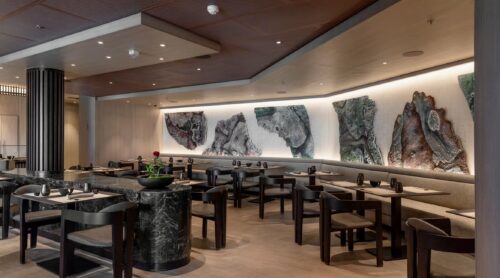
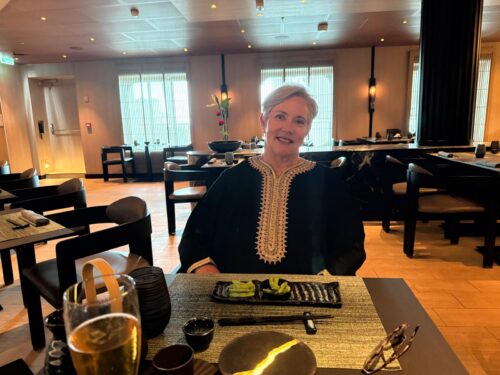
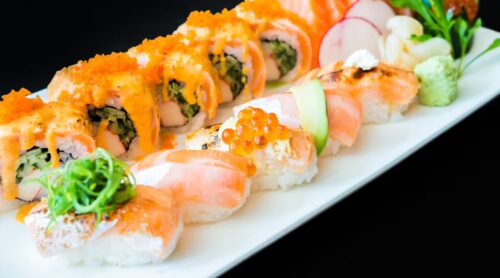
 Kaiseki Restaurant offers a multi-course Japanese dining experience. The fine art of Kaiseki lies in its meticulous preparation and beautiful presentation with dishes reflecting a passion for tradition. In the evening you can watch the skilled chefs at work around the central teppanyaki table producing dishes such as rock lobster, miso black cod, wagyu beef teriyaki and tempura ice cream. In short you are treated to a theatrical production of flavours, tastes, and senses in minimalistic, authentic Japanese ambience. We loved our evening. There are many who complain about the additional charge in the evening but without the theatre and flavours of the teppanyaki table it is just a Sushi Bar.

We left feeling well dined and went back to the Venetian Lounge where Sashell Beck, a talented soprano, was serenading the audience with her show ‘Opera meets Broadway’.  As well as a beautiful voice she has a natural stage presence and an amusing repertoire, and we loved her show.

29th May

Naples

We were in Naples for the day and didn’t waste a minute! The ship docked at 8.am and by 8.30 we were on our way to explore the life of 18th century European royalty!

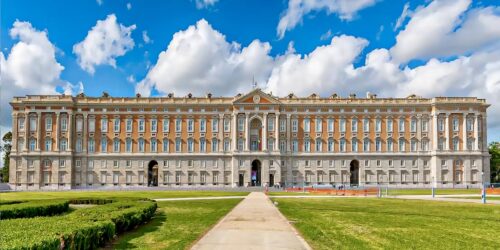
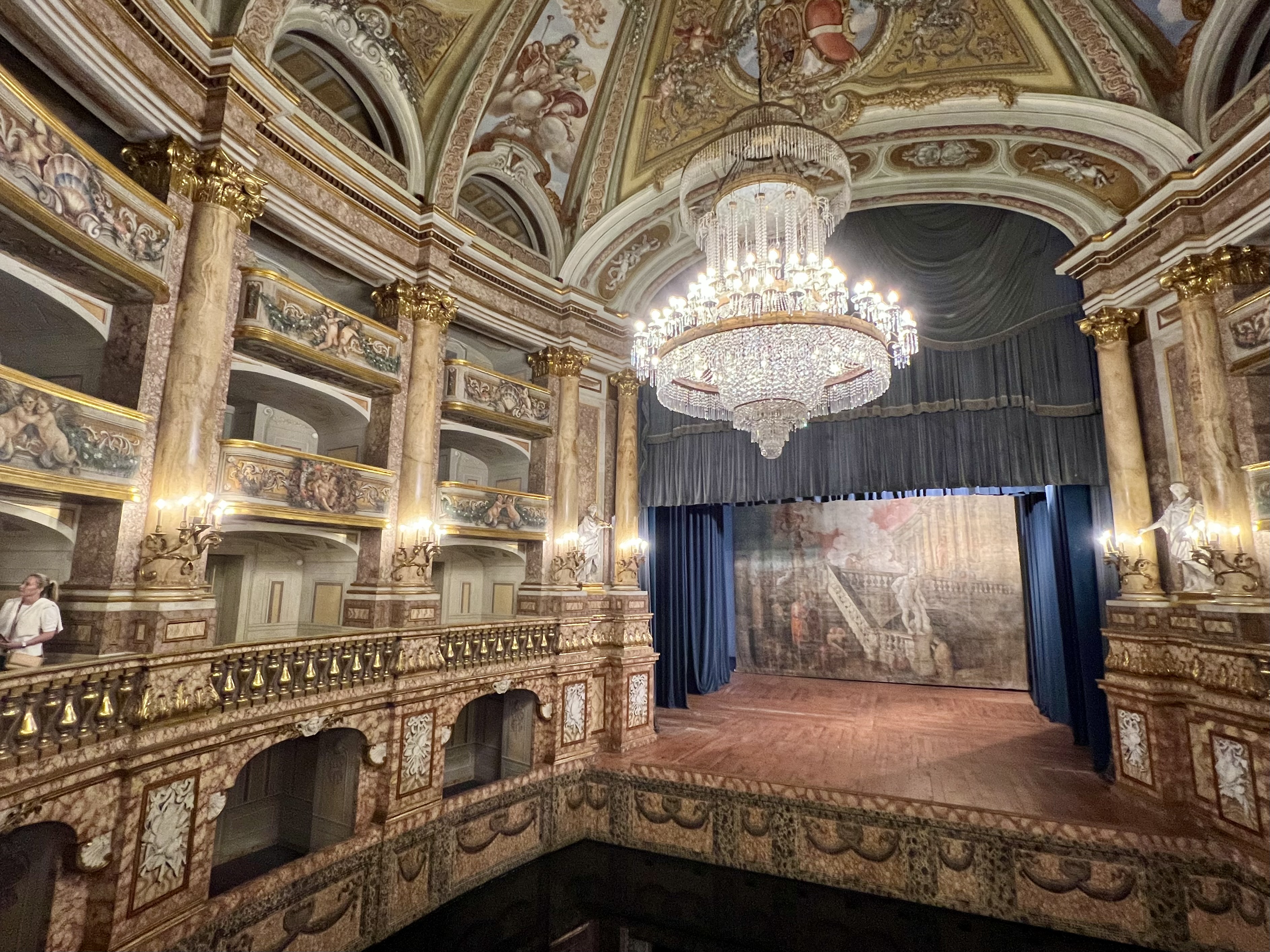
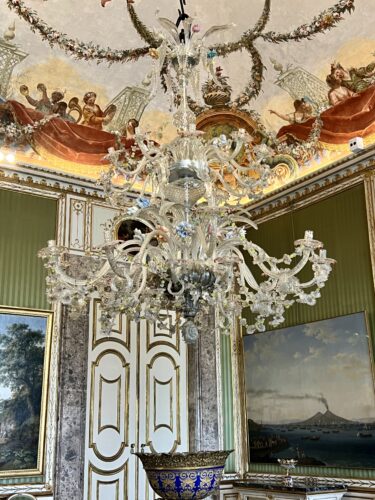
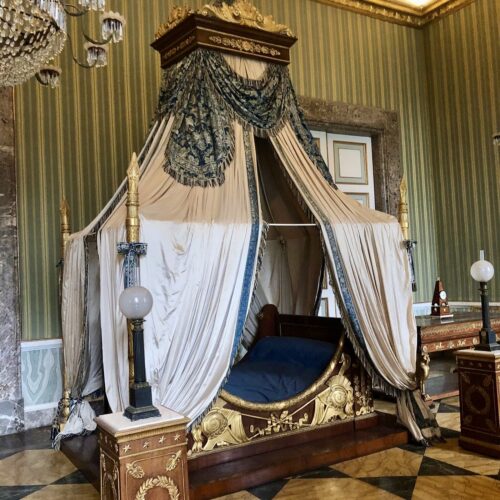
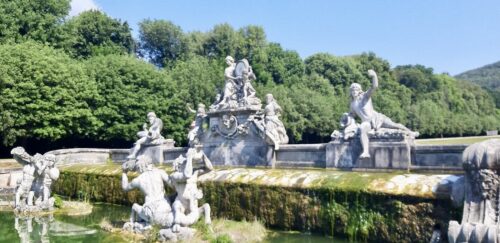
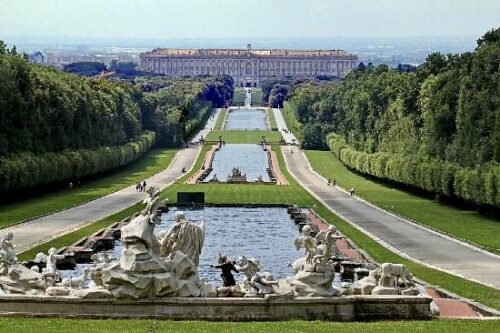
The Royal Palace of Caserta and its gardens are an UNESCO World Heritage Site. Often compared with the Palaces of Versailles and Fontainebleau, this incredible building was designed by the Campanian architect Luigi Vanvitelli, one of the most important exponents of the Baroque, who worked under the precise direction of the King of Naples, Charles of Bourbon.

The work began on 20th January 1752 and after some serious slowdowns was completed in 1845.  It is considered the last notable example of Italian Baroque architecture. We were to tour the Royal Apartments and then take a stroll in the magnificent gardens.

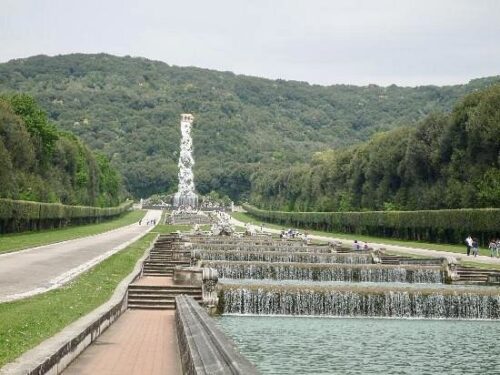
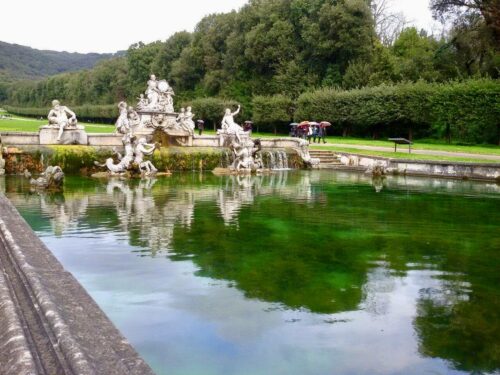
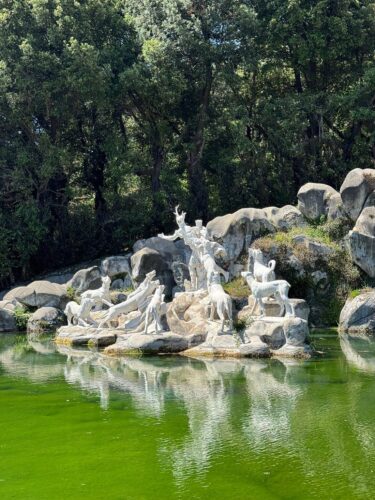
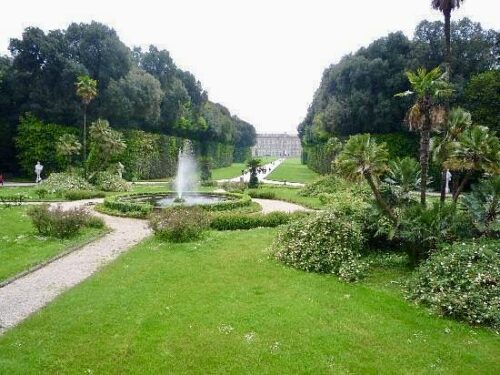
Theatricality, illusion, awe, and enchantment of the senses. These are the elements of the baroque garden, designed by Luigi Vanvitelli and completed by his son Carlo and built according to the wishes of the king and his successor Ferdinand IV,  the garden is a typical example of the Baroque extension of formal vistas and was inspired by the park of Versailles.  It stretches for 120 hectares (300 acres) and starts from the back façade of the palace, flanking a long alley with artificial fountains and cascades. There is a botanical garden called “The English Garden” in the upper part.

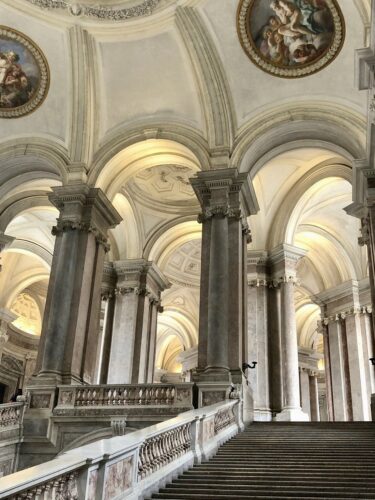
In 1998, the palace was a filming location for Star Wars: Episode I – The Phantom Menace, specifically as the interior of the Theed City Naboo Palace. In addition, scenes from Star Wars: Episode II – Attack of the Clones were filmed at the palace, specifically in the Upper Vestibule. It has also been the site of other notable films and television series, such as Mission: Impossible III and Angels & Demons.

We had a short walk around Naples before returning to the ship and starting the sad job of packing up. The ship was departing for Rome at 6pm. We wanted to watch the departure, we had organised dinner with some friends and all our luggage had to be in the corridor by 11pm.

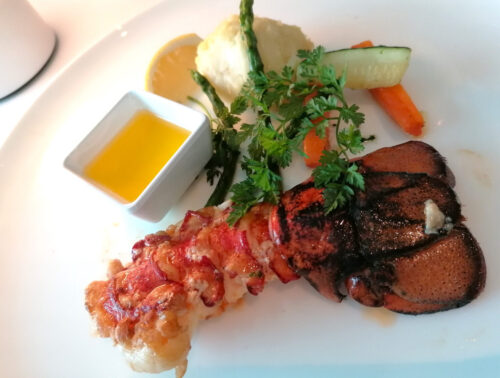
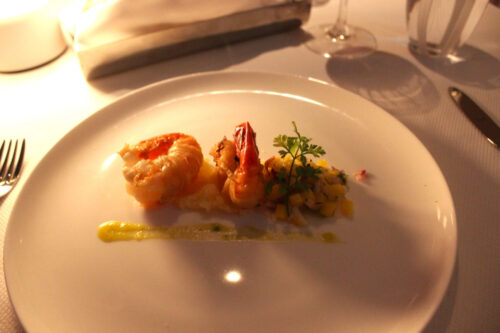
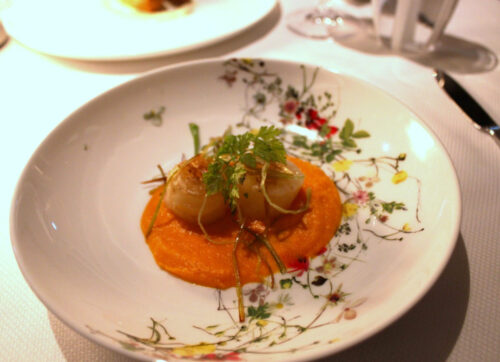
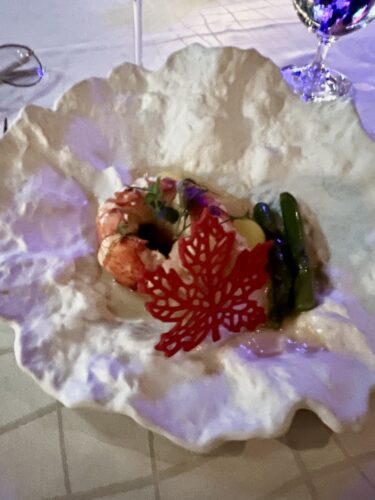
Our last dinner was at Atlantide and could not be faulted. We had had lunch there previously and it was below the standard of the other meals we had had on the cruise. The dinner was on quite a different level. We ordered mainly seafood and every course was superb! There were six of us at dinner and between us we ordered just about the entire menu. A succession of dishes appeared on the table to be admired – Laced Prawns, Seared Scallops, Grilled lobster tail, Crab and Chilled Cucumber and that was just the starters.  I had the lobster tail followed by an expertly boned Dover sole and the lemon meringue tart and Ed the seared scallops, a fillet steak, and the apple tart.

A memorable last meal!

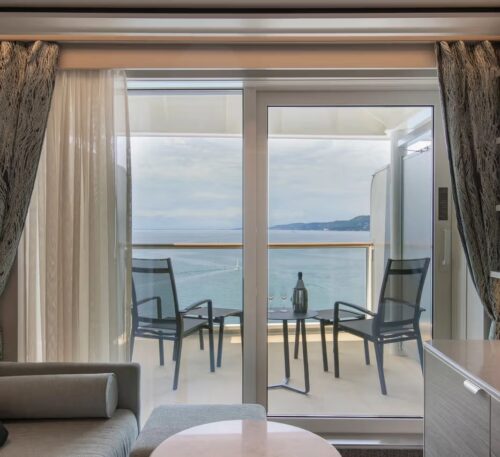
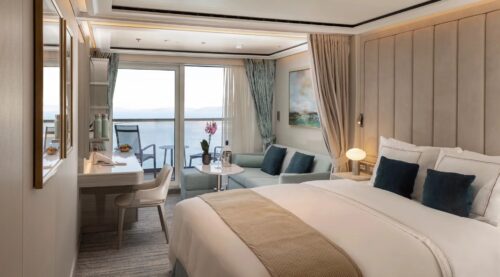
We made it back to the cabin in time to get our bags, suitably tagged, out. We slept our last night in our beautiful cabin which had been our home for the last twelve days. Our butler had provided our standing order for a thermos containing a warm drink and a snack for sleepless periods during the night.

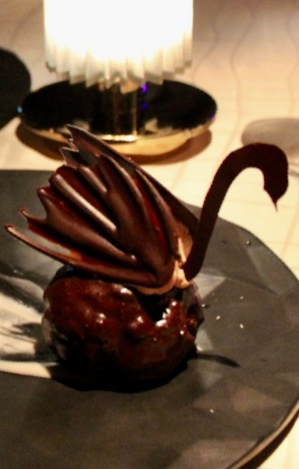
It had been an excellent cruise. Everyone on the ship had gone out of their way to make our stay memorable and they succeeded. If I had any regrets, it was that we didn’t participate in more of what was offered – out of ignorance more than anything. We received the Silverseas Chronicle every day and often just glanced at it, thus missing out on many activities that we would have enjoyed. I’m not sure how we would have gone with dance lessons with the Silverseas Dancers but it would have been fun to try and my sushi making would have definitely improved after sushi making classes as would my cooking repertoire after S.A.L.T Lab classes and how did we miss out on the Chocolate Extravaganza with its array of delicious deserts and the various wine tasting events.  Then there was the talk on Natural Relief from Arthritis, Back and Knee Pain as well as the walk-in Acupuncture Clinic which would have been a good follow up to the dance classes!

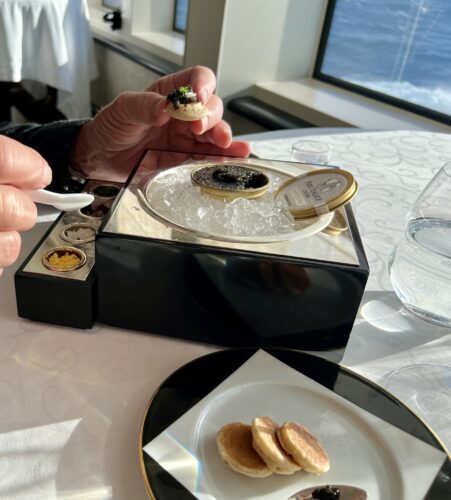
Being our first cruise, we were not quick enough to book into events that the seasoned travellers seemed to automatically know about and not being a big fan of coach tours we could have teamed up with another couple and taken a private car for not much more. But mostly I can’t believe that instead of/as well as a standard order for warm drinks we could have had a standing order for champagne and caviar on our balcony each evening 😳.

Sailing away on the Silver Ray

May 18th

Barcelona

We arrived early at the embarkation point, laden with luggage and feeling travel weary. We were greeted by big smiles, our luggage was whisked away and we were shown to an inviting and relaxing dining room to lunch whilst our room was made ready for us.

This is the only way to travel

After we had enjoyed our meal we made our way to our cabin where we were introduced to our butler and our room attendant.  The butler offered to unpack for us, which we declined, and then outlined his duties which basically consisted of meeting all our wishes however large or small.  The room attendant’s duties, as far as I could ascertain, were to keep the cabin immaculate and keep up a supply of fresh towels.

The beauty of unpacking when there is lots of space and hangers😊! 

We are now in the lounge sipping on a gin and tonic and facing the biggest decision of the day – which of the restaurants will we dine in? We settled on La Terrazia with its Italian influence for dinner and then an early night.


19th May

We woke the next morning to a glorious sunrise as we sailed into Le Palma.  Last night we watched as we slipped quietly away from Barcelona and headed out to sea. We had enjoyed our time there and would happily go back. Today’s decision was whether we did a walking tour of La Palma or an explore of what the ship had to offer.  We noticed another cruise ship had entered the port at the same time as us and disgorged about 3,000 passengers. By now we had done a number of walking tours so decided that the second option was preferable.


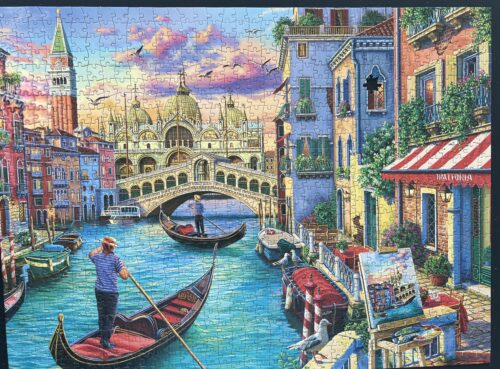
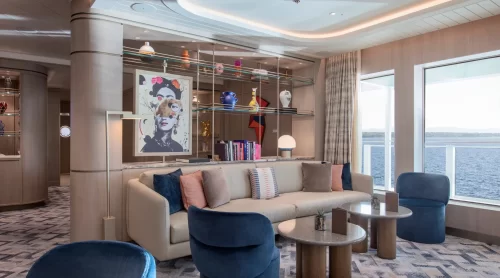
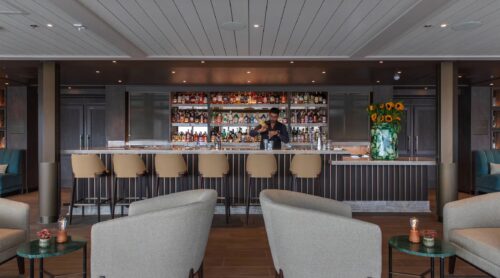
We tried the Pool Bar then the SALT bar and were heading for the Dolce Vita bar when we were sidetracked by the Observation Lounge. With a fabulous 270 degree view of what lies ahead and comfortable chairs, there is a small library, comfortable chairs to read, tables set up for bridge, chess, scrabble and at the end – jigsaws.  There was one in progress, about three quarter finished, with a sign saying ‘JIGSAW IN PROGRESS.  DO NOT REMOVE’.  Needless to say we couldn’t go passed and not progress the puzzle, so we added our bit and moved on to continue our ship exploration.

Apart from the 10 bars and lounges, there are 8 restaurants covering a variety of cuisines.  We discovered that if you overindulge you can go for a swim in the pool, walk the exercise track, detox in the steam room, unwind in the hot tub, or work out in the fitness centre.  If you are concerned about overindulging, Silversea offers a holistic approach to wellness that fully integrates exercise, fitness and spa therapies with health lectures and nutritious diningto help you maintain a healthy lifestyle, even while away from home. 😏

If you just want to indulge yourself there are a wide range of treatments offered at the Beauty Salon that will leave you relaxed and your hair and body in top condition or you can visit the two boutiques which offer a selection of cutting-edge fashions, jewellery, accessories, fine perfumes and cosmetics, all at duty-free prices. 🤩

In the evening there is live music in the lounges and as the night progresses you can do some gambling at the casino and rock the night away in the Panorama Lounge Night Club.  Then there is the Venetian Lounge, a place where the arts of theatre and music meet with full-scale productions and feature films. Paying tribute to a golden age of glamour, the Venetian Lounge offers cabaret seating, with tables and chairs placed between the rows of tiered banquettes. As the stage lights are dimmed you can soak up the atmosphere, relax, and enjoy a night of dazzling sights and sounds whilst you dine.

As if this was not enough, there were a choice of three to four shore excursions to choose from each day

 Will twelve days be enough?

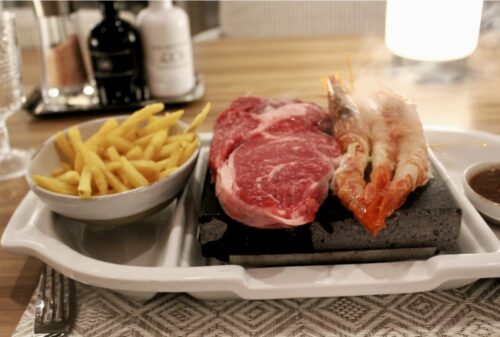
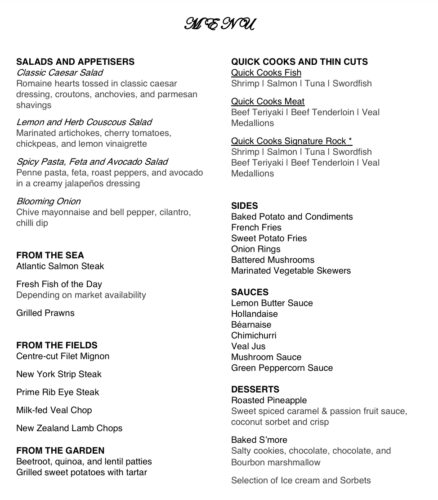
Not wanting to waste time checking things out we decided to dine at the outdoor restaurant The Marquee tonight. This casual dining restaurant serves a range of burgers and salads by day and turns into a Hot Rocks table BBQ concept by night. The Grill is quite simply the best place to eat if you like flavoursome meals cooked to perfection, a casual, laid-back atmosphere, and fabulous views.  There is a selection of meats and seafood that you can either cook yourself on the hot rocks or have cooked for you.  With a choice of fully loaded baked potatoes, fries or sweet potato  fries and either vegetables or salads as a side it makes a very satisfying meal.  A selection of desserts rounds off the meal.

20th May

Valencia

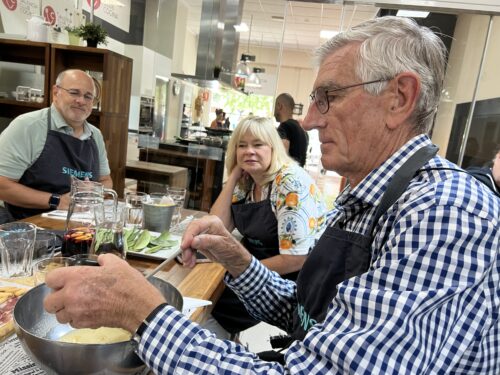
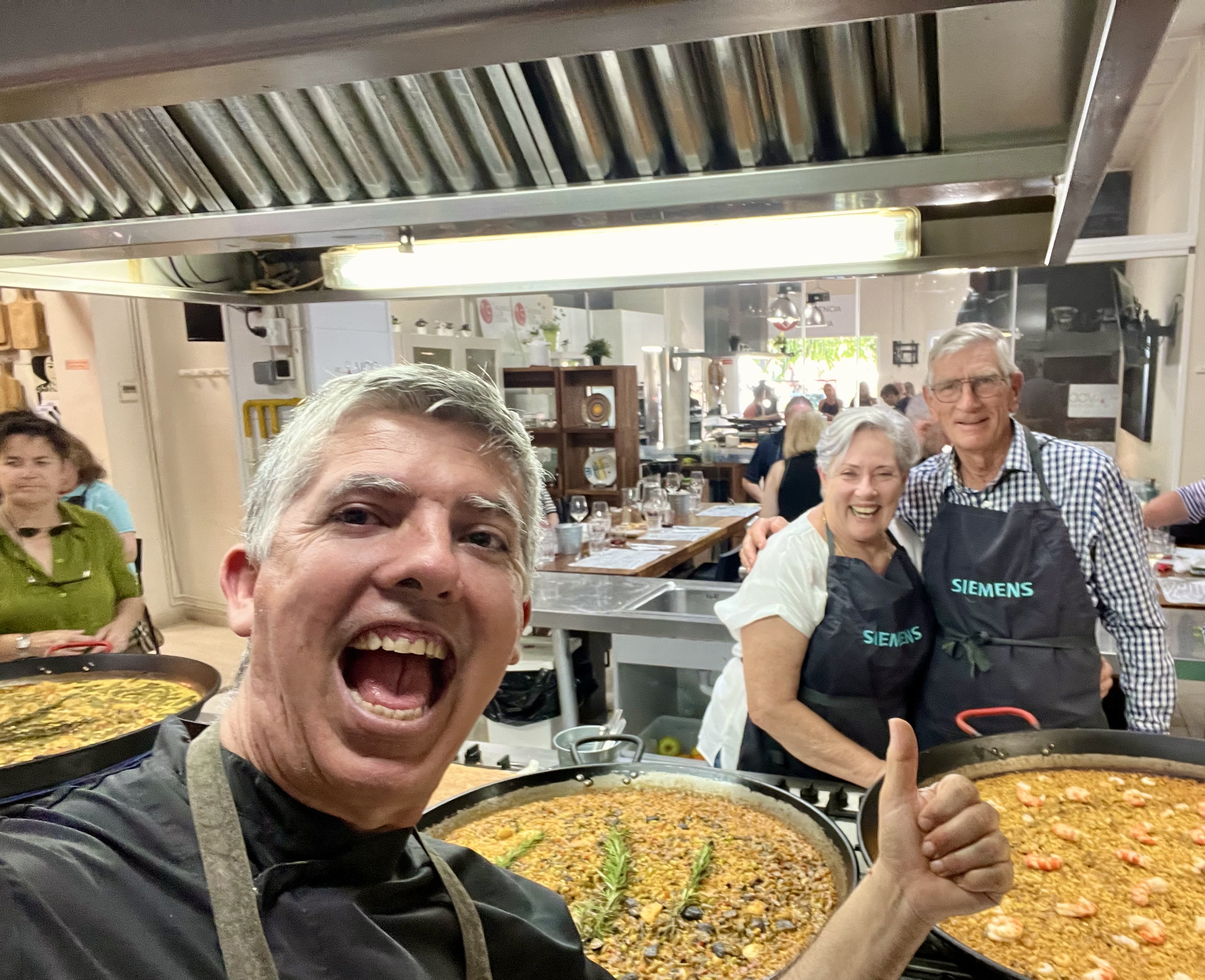
Today’s excursion was titled ‘The Art of Paella and Wine Tasting” and was a very light hearted and entertaining couple of hours as our rather motley crew attempted to produce the one and only authentic Paella Valenciana. From the very beginning we were left in no doubt that all the other paellas in all the other regions were a poor imitation of the real thing, which was only produced here in Valencia at the Valencia Club Cocina.

We spent two hours cooking up authentic paella, making a classic Spanish Tortilla, and baking a simple sweet cake. The chef was enthusiastic and exuberant, sharing tips and secrets, from picking the freshest ingredients at the market to perfecting our cooking techniques. It was fun, informative, and super delicious. Perfect way to spend a couple of hours together and dive into some amazing Spanish cuisine.

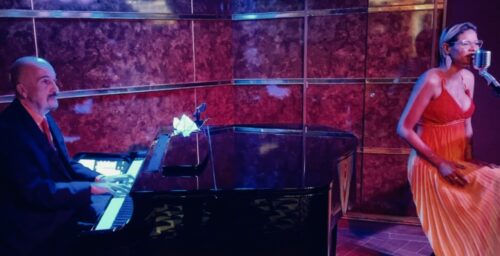
That night we had booked into Silver Note for dinner. Harkening back to the old days of dinner and dancing, this is an intimate venue that embodies a sense of glamour and fun. Jazz bands and soul singers play live music as you sample delicate tapas style dishes with a gourmet twist. You choose your dishes and they keep coming until you call a halt. The meal ends when you have had enough.  Dancing is encouraged on the small dance floor. Ed and I took to the floor, the only ones who did,  and received a round of applause for our efforts.

21st May

Cartagena

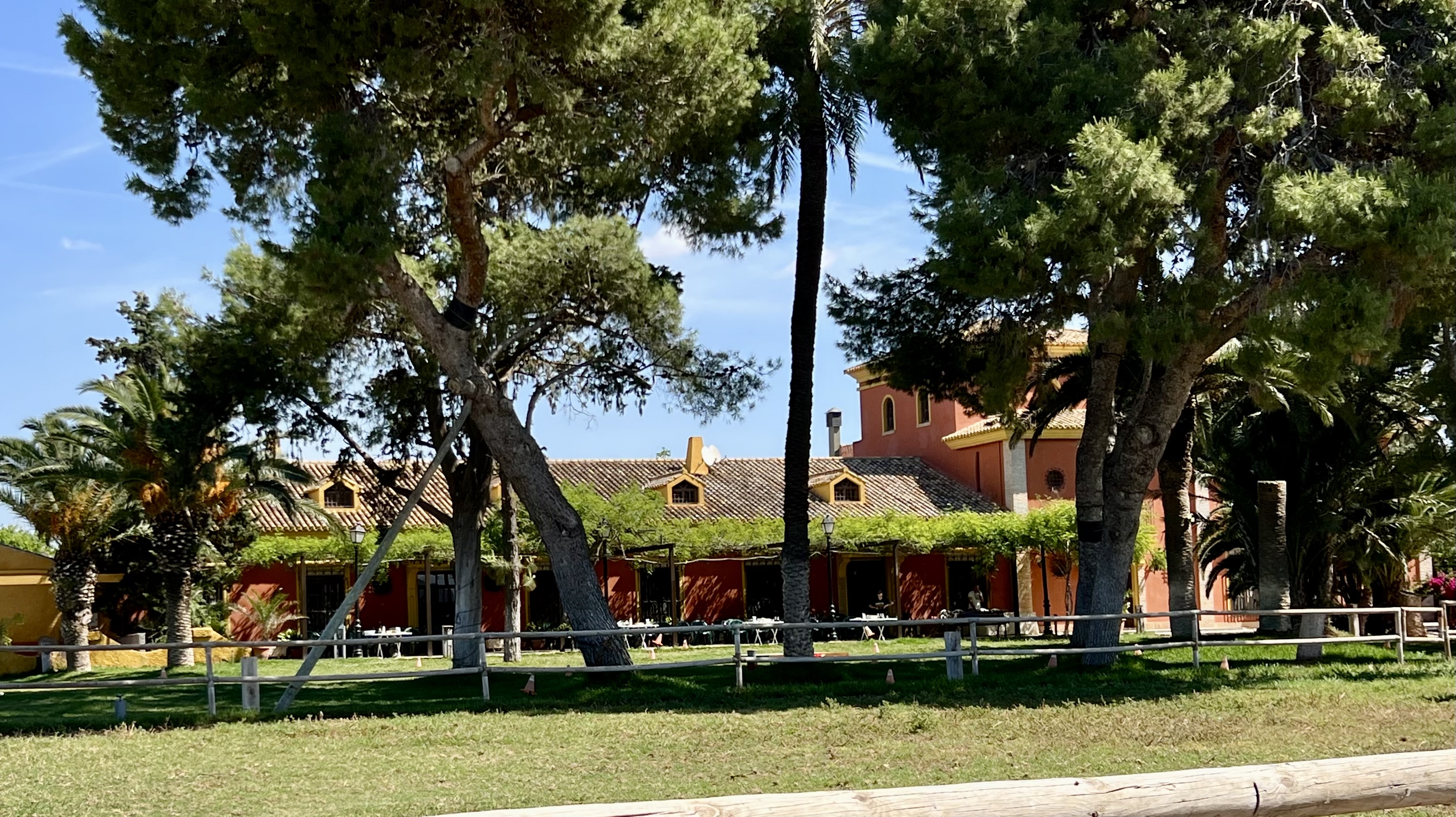
A leisurely start to the day as our chosen tour wasn’t until the afternoon. This was one of the tours that we were most looking forward to – a visit to one of the top Andalusian Spanish Horse ranches.

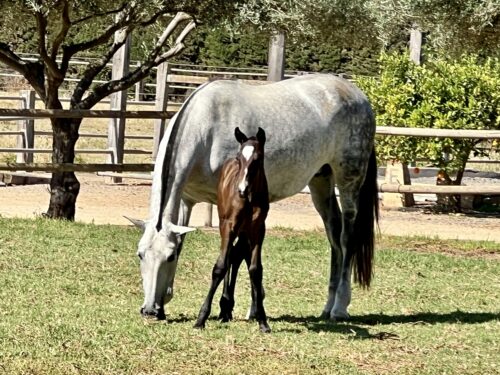
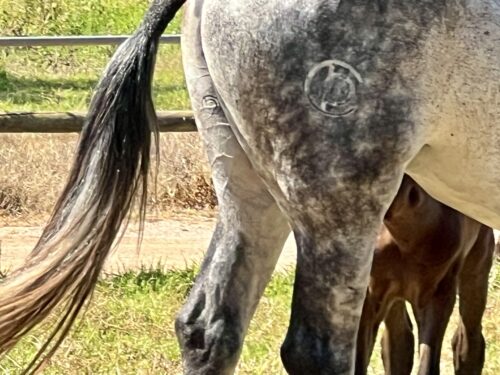
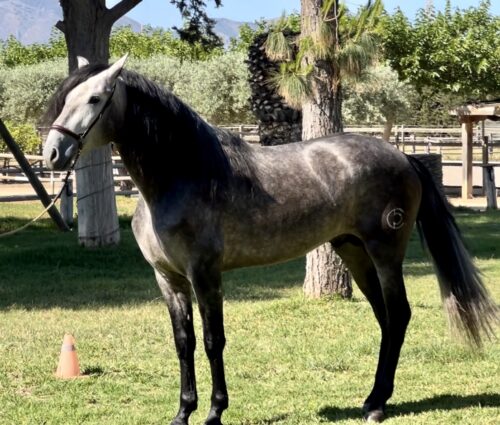
Just a couple of miles from the Port of Cartagena the ranch is known for its educational programs about the horses and breeding practices. The Conesa family focuses on Pura Raza Española (PRE) horses, which are highly valued for their beauty, intelligence, and versatility. Their carefully bred horses, with fine bloodlines and a graceful appearance, are exported to horse lovers all over the world.

We were greeted at their hacienda and sampled some of the local produce whilst one of the sons talked about the history, training and talents of purebred Spanish horses The PRE breed originated in Spain and is one of the oldest and purest lines of Spanish Horses in Europe. Some of the mares on the ranch are believed to be descendants of the Carthusian line, which is a bloodline group within the PRE, with documented lineage tracing back to the 15th century. This lineage has been bred and preserved by Carthusian monks since at least 1476 and represents only a small percentage of the overall Andalusian horse population.

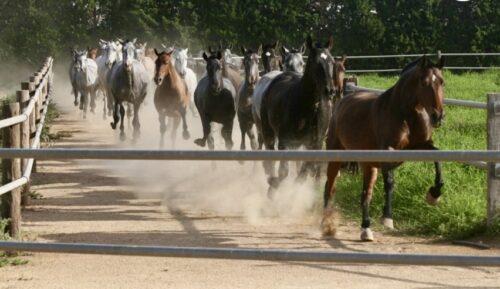
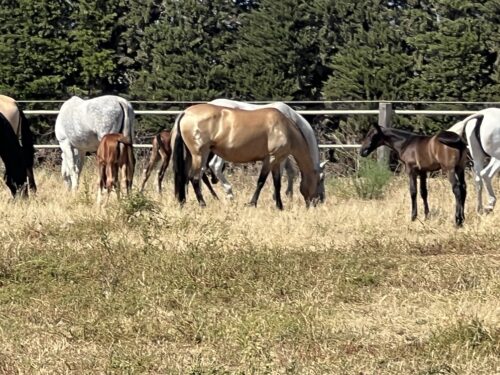
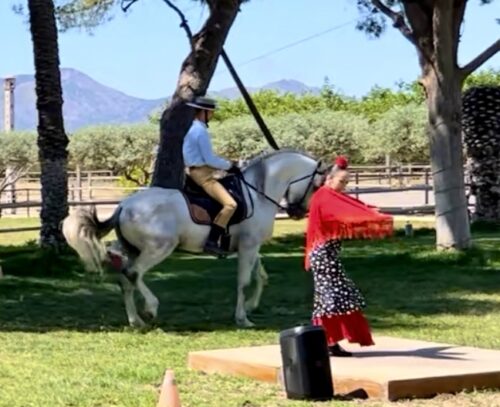
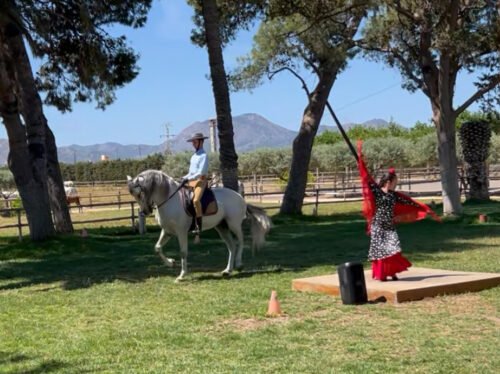
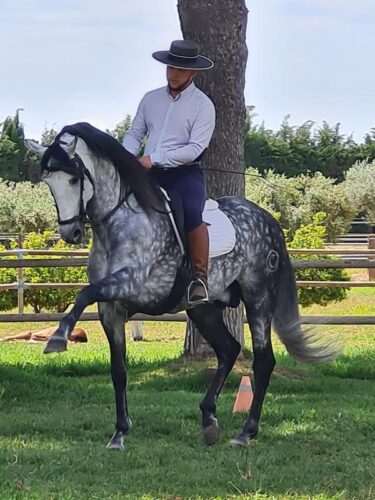
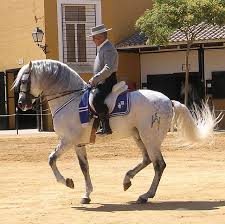
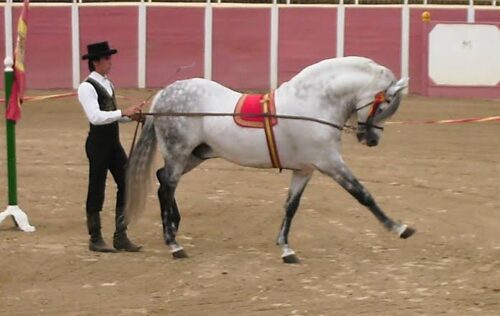
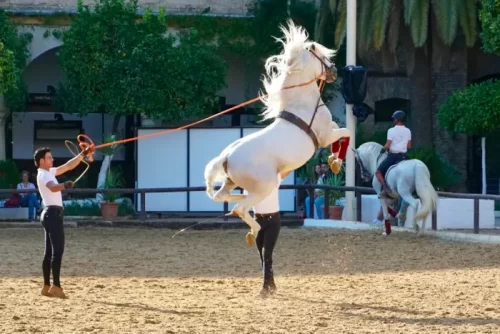
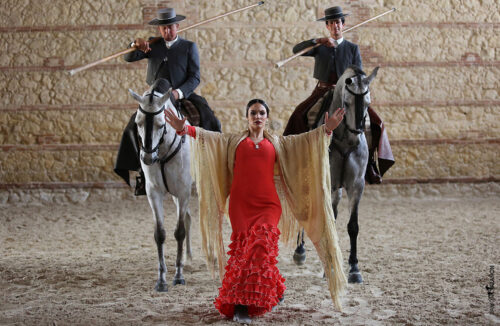
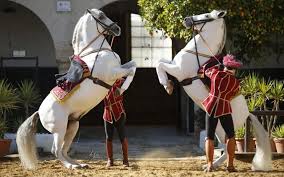
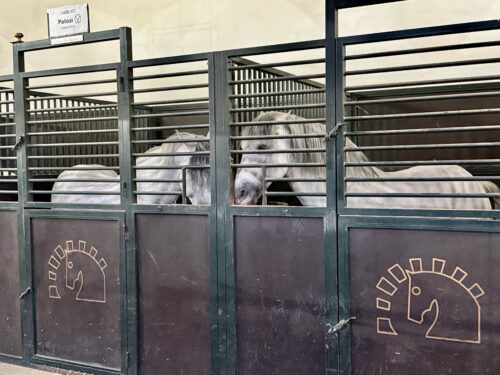
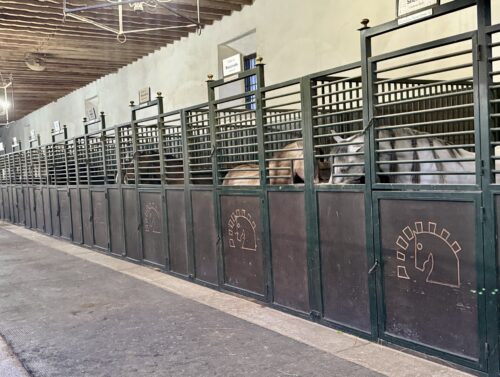
The Conesa family is also involved in showcasing Spanish horsemanship, including demonstrations of the “Spanish walk” and other skills. The family’s ranch is a place where visitors can experience Spanish horsemanship and the daily life of the ranch. We were introduced to some of the stallions, were able to look at and touch the brood mares who roam with their foals, watch the impressive mare and foal stampede and learn about the art of managing stallions. After a tapas lunch, including wine and an olive oil tasting, we were treated to a stallion performance coordinated with an Andalusian dancer.

Our guide was excellent and the general feeling on the coach was that this was one of the best tours that many of them have been on – and this was a very well traveled group.

22nd May

Our first day at sea with nothing to do but relax. After a leisurely breakfast we went up to the pool area and settled down with a book but it was a bit cold and a bit early to start drinking and we had only just finished eating. We wandered into the observation lounge and noted that the previous jigsaw was still there. No sign. So we packed it away and chose another more challenging one.

We soon found out there are two very social places on the ship – the laundry and the jigsaw corner. We were ideally located for the laundry, it being opposite us, and we made our mark the first day by inadvertently putting our wash on a 3 hour cycle tying up two machines for half a day. Rosanna, a fellow Australian gave us a lesson on the intricacies of the marine washing machine and dryer which we repeated to an endless stream of confused passengers, thus becoming experts in the laundry community.

Our jigsaw efforts resulted in us meeting a number of fellow passengers- some who stopped with words of encouragement and some who came and assisted.  The jigsaw evolved over a number of days. Whenever we returned to it it was more complete and occasionally there would be someone sitting there with a furrowed brow slowly progressing it. In our final push we were assisted by a young girl who was a whiz at fitting in those most difficult pieces.

Whilst dining at most restaurants on the Silver Ray are included in the price, there are three speciality restaurants which attract an additional charge, La Dame, Kaiseki and S.A.L.T. Chef’s Table. We had booked into all three and tonight was the first – La Dame.

Relais & Châteaux is an association of 580 exclusive independent hotels and restaurants in 65 countries. Its members strive to cherish and promote the joys and diversity of the world’s cuisines and strengthen the traditions of good hospitality. The association is also committed to cultivating and preserving local heritage and the environment.

In 2009, Relais & Châteaux signed the Ethic Ocean charter to commit to serving sustainable seafood. It includes commitment to stop serving bluefin tuna, helping prevent the collapse of the stock in the North-East Atlantic Ocean and Mediterranean Sea, allowing them to replenish.

In 2019, a petition, signed by Relais & Châteaux chefs, and in partnership with nonprofit BLOOM association, was presented to the European Parliament ahead of a crucial vote to ban the controversial electric pulse trawling fishing technique. A ban was introduced in mid-2021.

In 2020, Relais & Châteaux chefs pledged to participate in ‘le bar en hiver’ (seabass in winter), and decided to stop serving seabass in February and March. The initiative, in partnership with Ethic Ocean, protected the threatened species during its critical breeding season, allowing stocks to replenish.

 In November 2024, UNESCO and the Relais & Châteaux Association announced the signature of a partnership agreement to develop and implement joint projects supporting the sustainable conservation and use of biological diversity through the world’s hospitality and culinary traditions and savoir-faire.

Relais & Chateaux is known for its strict admission standards. In addition to complying with the commitments of the organisation it must offer unique luxurious facilities and exquisite cuisine.  

 La Dame is the only Relais & Chateaux restaurant at sea. According to the write up, it offers

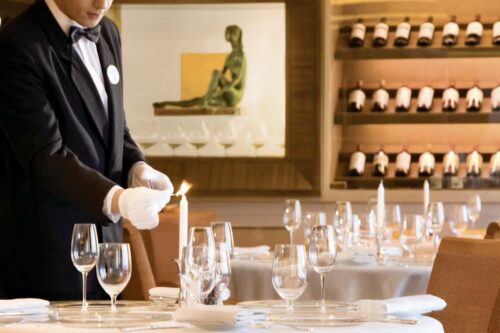
an extraordinary dining experience celebrating the world’s most distinguished wine regions and featuring the freshest locally sourced ingredients and finest artisan products available. This chic contemporary restaurant represents the highest expression of excellence, with crisp white table linens and impeccable white gloved service.”

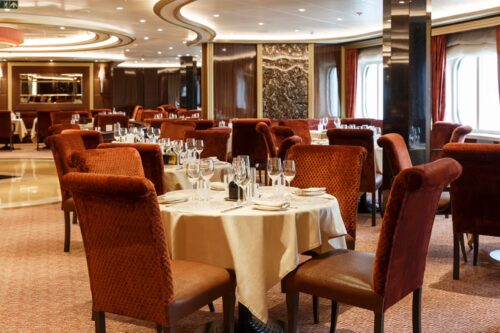
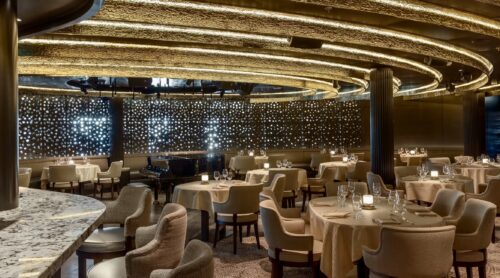
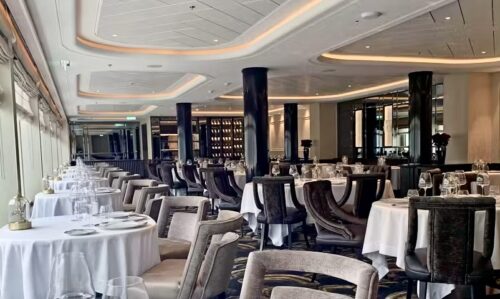
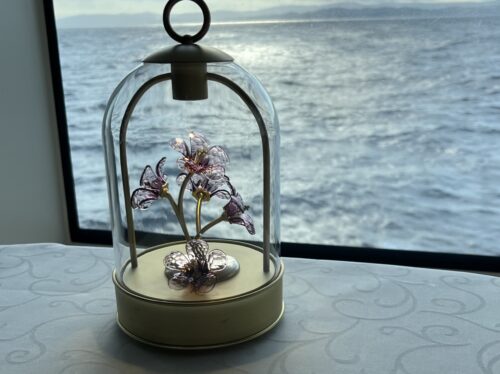
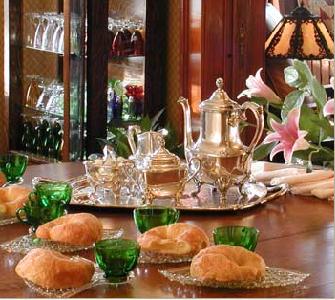
It was with great anticipation that we presented ourselves, attired in our best bib and tucker, at the restaurant to partake of this culinary feast. We were shown to a beautiful table by the window, set with the finest crystal and silver and with a stunning Lalique rose as a centrepiece.

We sipped on Bollinger champagne whilst we perused the menu trying to decide which of the dishes we would try. All of them looked interesting and it was a hard choice as you could order as many as you wanted, only limited by your capacity! We finally made our decision, and the sommelier was called over to assist us in selecting wines to go with our meal.

The next four hours past in gastronomical bliss ending with a range of liqueurs and a selection of petit fours.


23rd May.
Marseille

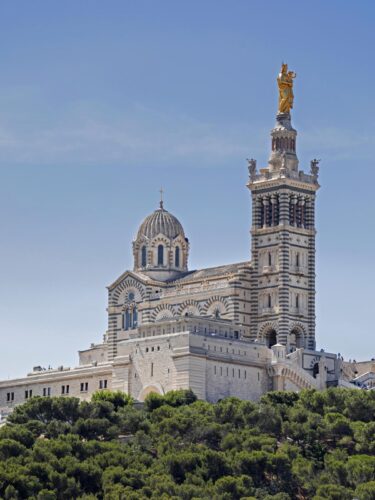
Up bright and early for our 8.30 departure on a tour titled Marseille Highlights. The write up advised us that Marseille is the second largest city in France and is among the most beautiful and historic locales on the Mediterranean coast. Our excursion will explore the panoramic beauty during visits to famous landmarks such as Notre-Dame de La Garde. Degree of Difficulty: Extensive activity.

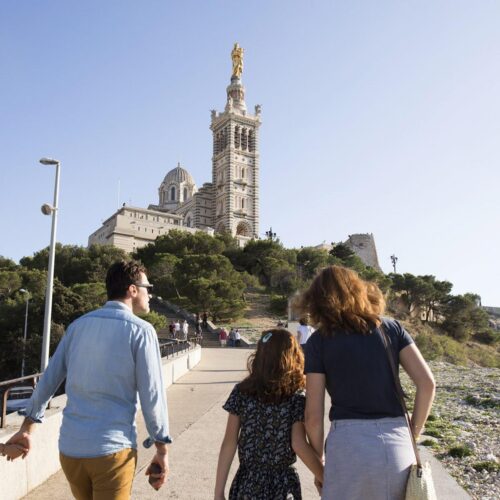
You’d think I would have learned by now!  Perched atop the city’s highest hill, the magnificent Notre-Dame de la Garde, or “la Bonne Mère” (the Good Mother), as it is called in Marseille, is visible from all over the Marseille, is one of the city’s most striking landmarks and is practically inaccessible except by foot or Le Petit Train, which is often overcrowded or simply doesn’t run to schedule.

I’ve got to hand it to the driver of the coach. He drove his coach through impossibly narrow streets and around corners that required three point turns in order to get us as close as possible, but the remaining walk was a steep track with many steps that went  for hundreds of metres –  and the only toilets were up near the top!

I didn’t even attempt it.  The sides of the path were strewn with collapsed tourists clutching their chests and gasping for breath and I wasn’t planning to be one of them.    I found a nice comfortable rock with a stunning view and Edgar went on ahead to see what was up there.

Emblem of the city of Marseille, Notre-Dame watches over sailors, fishermen, and the people of Marseille. Because of its external and internal architectural beauty, and magnificent 360 degrees view all over the city, the basilica is the most visited monument of the city of Marseille.

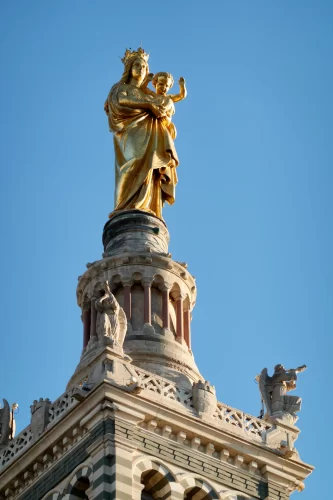
It was built on the foundations of an ancient fort at the highest natural point in Marseille, a 149 m (489 ft) limestone outcropping on the south side of the Old Port of Marseille.It is best known for its grand bell tower, which is capped with a gleaming gold statue of the Virgin Mary.  The golden statue of Mary dominating the basilica is 11.20 metres long and weighs nearly 9,796 kg! It was made by the Christofle company and needs to be gilded with 500 grams of gold every quarter century.

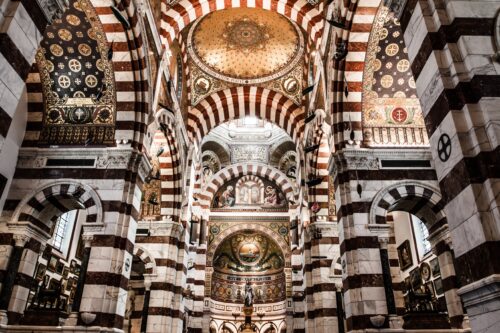
The basilica was built based on a Roman-Byzantine style (with domes, stones polychromy, golds, mosaics). Under the basilica, the crypt was dug directly into the rock. It was completed before the basilica. The difference in style between the crypt and the basilica is quite striking: on the one hand the basilica with its very rich and golden decoration, on the other hand the crypt and its very sober decoration, without paintings or ornaments.

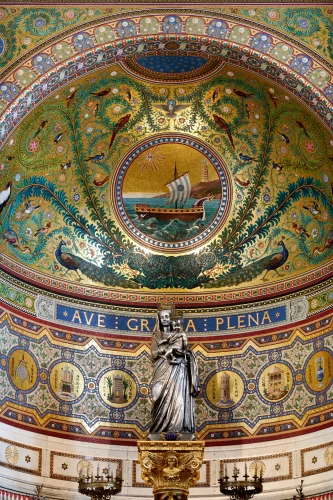
One steps inside the basilica and the alternating bands of red and white marble (Byzantine style) strike the eye. It is bold and breathtaking. Thousands of tiny tiles make up beautiful mosaic works – shimmering in hues of gold. In the apse, one of these mosaics depicts a ship sailing under the monogram of Mary. Birds and foliage surround the ship. The celestial guardianship of sailors is everywhere present here. 

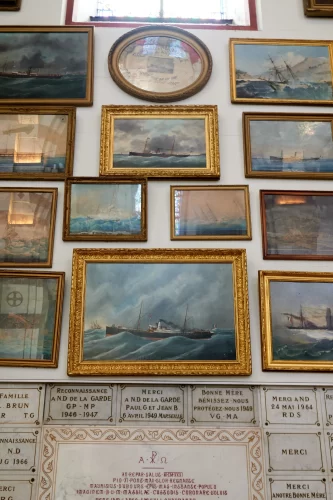
Suspended from the vaulted ceilings are mobiles of ships – models meticulously crafted and hanging in a line. The walls of the basilica are lined with paintings depicting scenes of perilous sea journeys, storms, rescues…stories of survival and faith. There are also plaques in tribute to Mary representing various eras and times in history. 

Once everyone had made it back to the coach we headed down to the Marina and the central shopping area.  Our mission was to find and purchase one of Marseilles most popular souvenirs, Marseille Olive Oil soap, which has magical powers when it comes to moisturising your skin and hair and also removes stains from clothes. It certainly does the former and when I tried it on an oil-stained silk blouse when the laundry failed to remove the stain it took it away completely! We have now used up all our supplies and are buying it online. Magic for removing makeup and stains on collars etc.

Back on the boat for a late lunch/ early dinner we decided to try the Arts Café as we were not very hungry after our feast the night before.

The Arts Café offers a casual lounge and bar setting for eating, drinking, and socialising, as well as a chance to lose yourself while reading up on all your favourite artists and art. Enjoy healthy snacks and smoothies plus hot and cold drinks, juices, pastries, and sandwiches in a light and airy space. Pop in for a late breakfast or afternoon snack, along with real Italian espresso plus a great range of teas.

We had a gin and tonic, followed by a light snack before going for a walk around the deck and retiring to bed to read and rest up for the next day.
Farewell Morocco & Spain


15th May

Our group had started to split up. Most of us got on the coach for the airport and Casablanca – some stayed behind to spend more time in Marrakech. Edgar and I headed for Casablanca to spend a night there before flying to Barcelona the next day.
Colourful Africa! We had visited Chefchaouen, the Blue City, with its blue alleyways and blue-washed buildings, Marrakech, the Red City, with the red colour of its city walls (as the sun sets, the colour deepens and the whole cityscape takes on a romantic rose-tinted hue all its own) and now were about to experience the White City.

The white city with its white walls and buildings

Casablanca is a cosmopolitan city that has become a go-to destination for business and leisure tourism and is a fascinating blend of European elegance and authentic Moroccan charm. The city center is impressive with a sweep of white coloured tall buildings along broad boulevards. The city is constantly evolving, with new infrastructure and improvements happening all the time – yet it never loses sight of its Moroccan soul.

We checked into our hotel, met up with our guide and set off to explore.

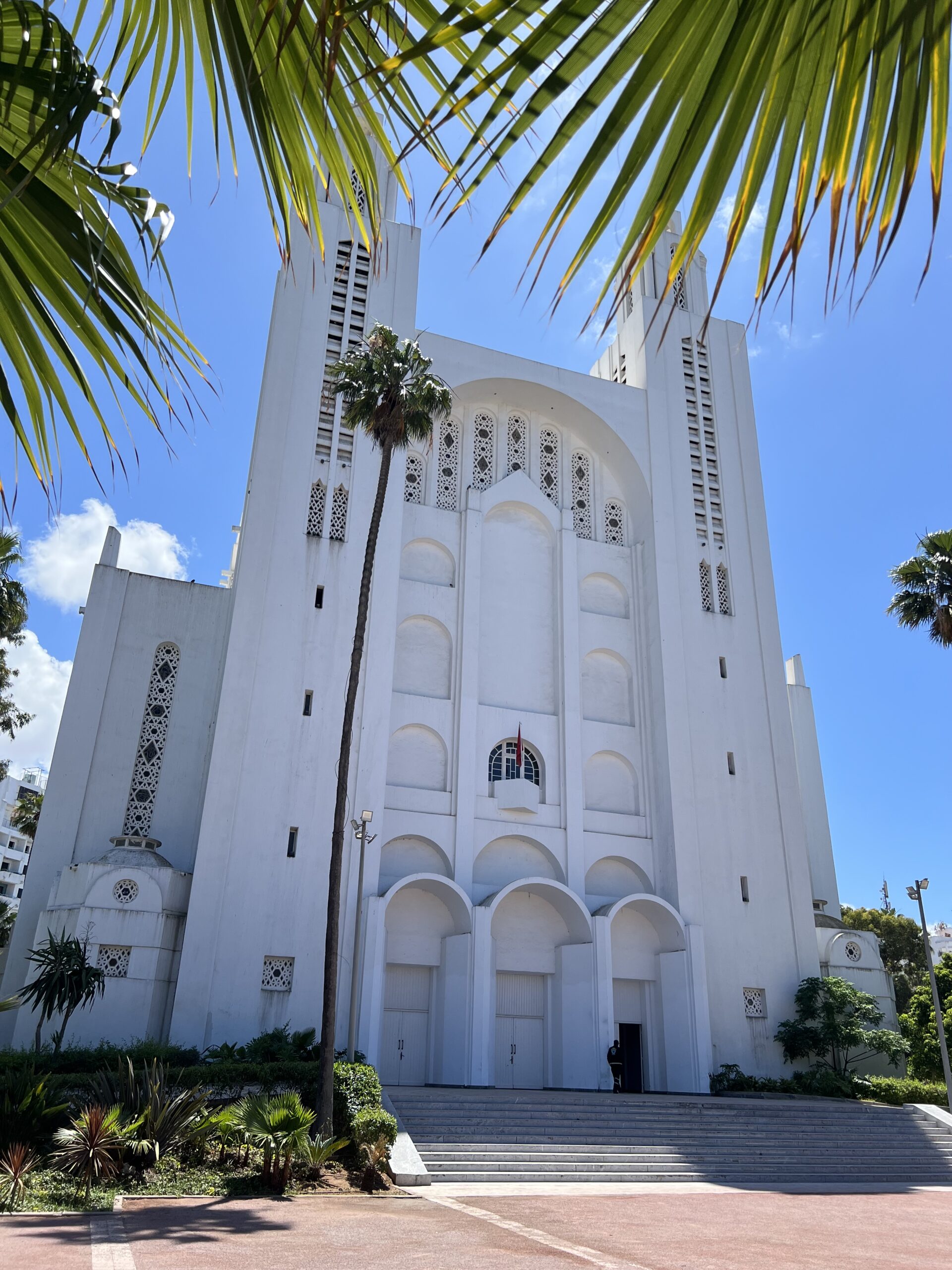
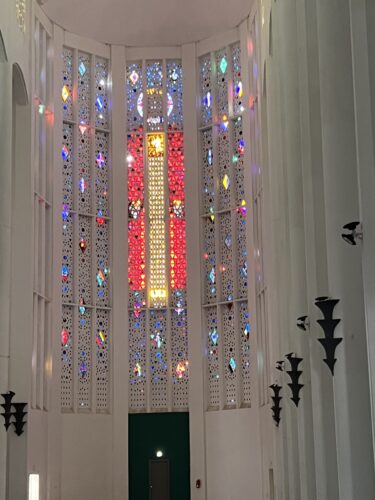
Our first stop was the Sacred Heart Church. Built in 1930, the church was designed in the Art Deco style and is the largest church in Morocco.  It is commonly referred to as a cathedral, although it has never technically been one as it was never the seat of a Bishop. The Cathedral ceased its religious function in 1956, after the independence of Morocco and became a cultural centre which is open to visitors of all faiths.

The beautiful coloured glass windows display flags from around the world – Danish, Swedish, Icelandic, Brazilian, and Norwegian – a good example of how Morocco embraces its international connections while honouring its heritage.

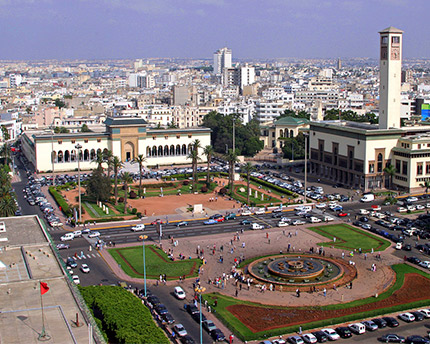
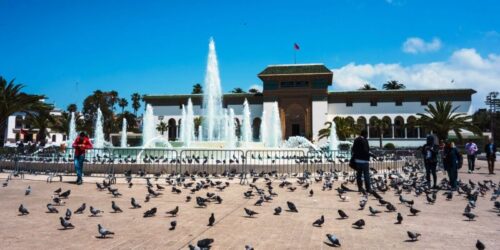
From the church, we went to  Mohammed V Square, a public square of historical and symbolic significance located in central Casablanca. The square is a tribute to Morocco’s rich history and heritage and is flanked by a collection of buildings that mix Art Deco elements with Hispano-Muslim, Andalusian, and neo-Moorish influences, and which now house some of the city’s most important institutions. The statue of King Mohammed V, situated at the center of the square is there to symbolises national unity, resilience and progress.

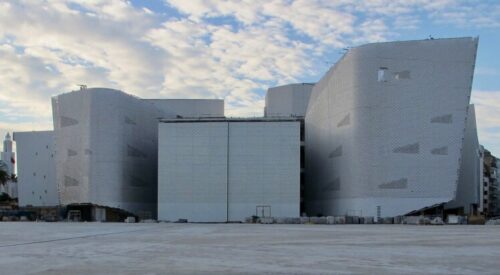
The large circular fountain in front of the Palace of Justice, in the centre of the square, is another of its distinctive features and occasionally provides a wonderful show with jets of water and music – unfortunately not whilst we were there.  At the western end of the square the modern Grand Theatre of Casablanca has already become the area’s new icon. Winner of the Pritzker Architecture Prize in 1994, the building is made up of several pavilions reminiscent of an ancient medina.

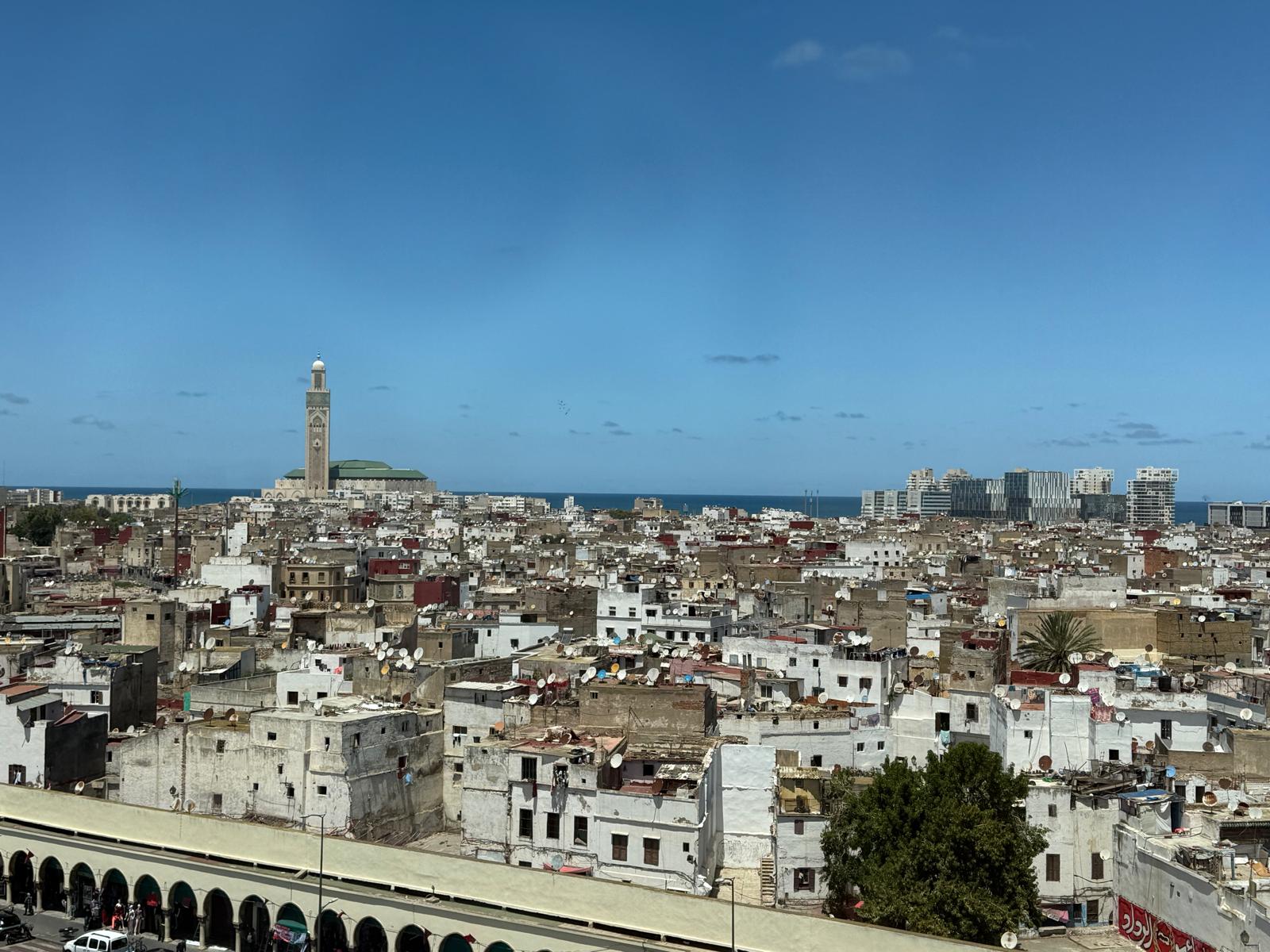
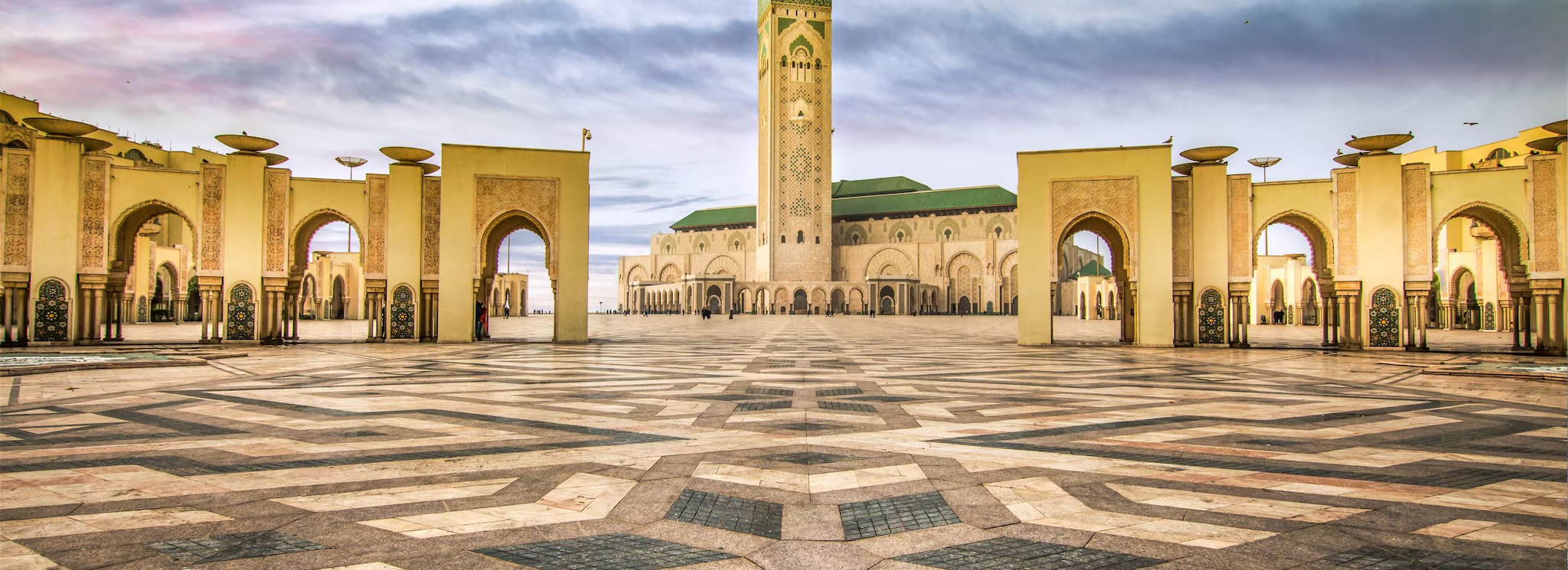
There is no question that the No.1 attraction in Casablanca is the Hassan II Mosque which we were heading to next. Towering over the ocean, this magnificent structure is easily seen from miles away. Commissioned by King Hassan II in 1980 and completed in 1993, the mosque was to emulate Moroccan culture and identity.

A massive achievement and structure, the courtyard surrounding the mosque has the capacity to hold 80,000 people and the mosque itself can accommodate up to 25,000 people. Next to the mosque, rising into the sky, the minaret is the world’s tallest at 210 meters. During the night, laser beams shoot towards Mecca to aid worshippers with the city’s correct direction.

The mosque can open its roof so you can look directly up at the sky, and in some places, you can actually look down and see the ocean below. Inspired by a quote in the Quran stating, “His was over the water” roughly half the mosque is built over the Atlantic Ocean. Hassan II explained that he wanted to build this mosque on the water, because God’s throne is on the water. Therefore, the faithful who go there to pray, to praise the creator on firm soil, can contemplate God’s sky and ocean”. This dual relationship between water and land is truly evident in some areas of the mosque that have glass floors allowing worshippers to pray directly over and look upon the ocean.

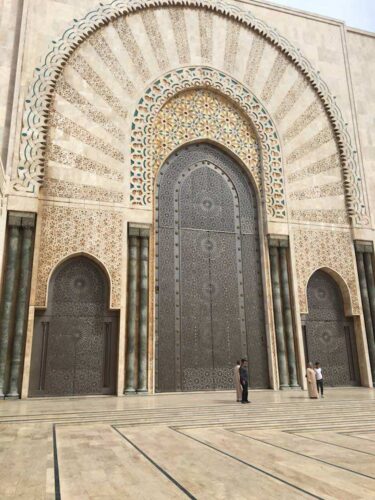
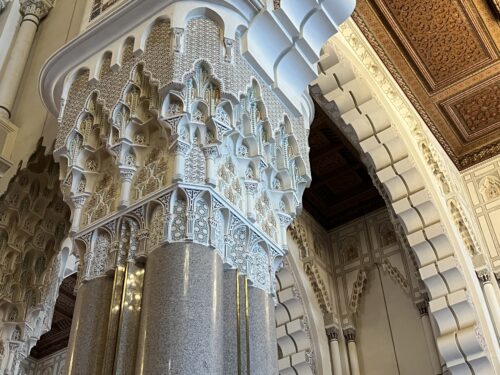
Inside the mosque maintains that old Islamic architectural touch while incorporating modern elements. Though enormous and daunting in size, extremely detailed mosaics, woodworking and stone carvings on a minute level are found throughout the premise. During construction, roughly 6,000 craftsmen and artists worked round the clock to fashion these decorative features. Exemplifying Morocco, the mosque is fashioned out of materials from around the country. This includes marble from Agadir, cedar from the Middle Atlas and granite from Tafraoute. The only imported items are glass from Venice used in the chandeliers and white granite used for the columns.

On our agenda was a visit to Café Ricks! If you’ve seen the classic movie “Casablanca” with Humphrey Bogart, this as the place where he says the famous line “play it again, Sam.” While the movie wasn’t actually shot in Casablanca, they’ve recreated the exact same café here but it sounded very touristy and we were running out of time so decided to explore the suburb of Anfa instead.

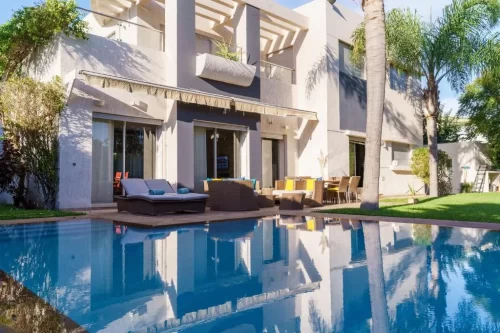
Anfa is one of the more exclusive neighborhoods in Casablanca. Known for its leafy streets and luxurious villas, Anfa captures the essence of modern Moroccan elegance. The area is a blend of the old and new, where traditional Moroccan architecture meets contemporary design, making it a fascinating place to explore.

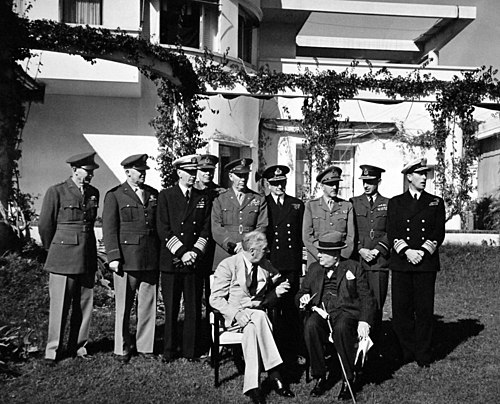
It was in Anfa that the Casablanca Conference was held. The Casablanca Conference was a meeting between U.S. President Franklin D. Roosevelt and British Prime Minister Winston Churchill that took place from January 14–24, 1943. While Soviet Premier Joseph Stalin received an invitation, he was unable to attend because the Red Army was engaged in a major offensive against the German Army at the time. Also attending were the sovereign of Morocco, Sultan Mohammed V and representing the Free French Forces,  Charles de Gaulle and  Henri Giraud though they played minor roles and were not part of the military planning.

Key decisions included a commitment to demand Axis powers’ unconditional surrender; plans for an invasion of Sicily and Italy before the main invasion of France; an intensified strategic bombing campaign against Germany; and approval of a US Navy plan to advance on Japan through the central Pacific and the Philippines. The last item authorized the island-hopping campaign in the Pacific, which shortened the war. 

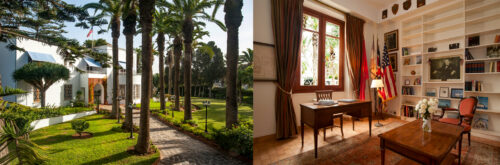
Whilst the original Hotel Anfa where the Conference took place is now an apartment block, many of the luxurious villas they stayed in are still in existence including the Villa Mirador where Churchill stayed, which is now the official residence of the U.S. Consul General in Morocco,  The picture on the right is where Churchill set up his traveling “war room” filled with maps of all theatres of war.

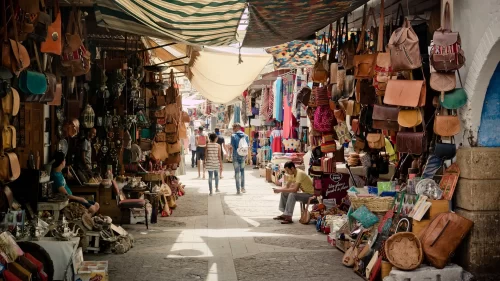
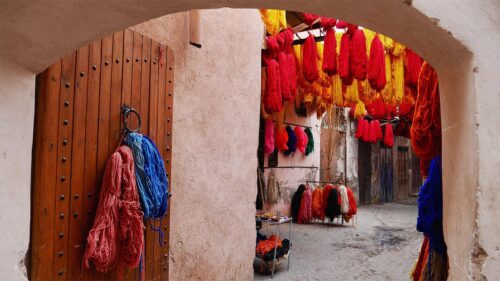
No visit to Casablanca is complete without a visit to one of the Souks and we were no different.  The Souk we visited was located within the medina, the old  walled part of Casablanca and it offered a vast range of products, including spices, leather goods, carpets, pottery, clothing, jewelry, and local crafts. 

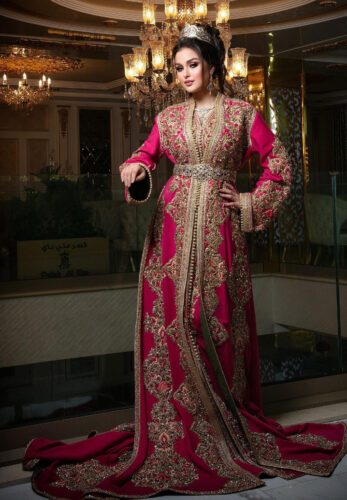
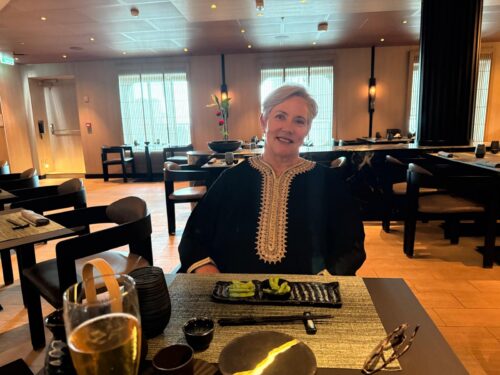
We wound our way through the narrow streets with merchants calling out and offering us all sorts of ‘unbelievably cheap’ deals – robbing themselves for our benefit! We finally stopped at a caftan shop.  It was one room wide and about 8 stories high. The cheapest caftans were on the ground floor and as you climbed higher they became more intricate and more expensive. The top floor housed the special occasion caftans, mainly bridal, and with a starting price of over $1000.

We didn’t make it to the top and settled for a creation of black silk and gold embroidery from the 3rd floor!

Wearied from the stress of bargaining we returned to our hotel to sort out our packing and travel arrangements for the next day.  The following evening we were back in Barcelona staying at a very comfortable Airbnb with an outside terrace, which was excellent for drying what seemed to be copious amounts of laundry.
Finally, with our bags repacked with clean clothes, we were ready to embark on the next part of our adventure.

Marrakesh and the end of our Garden Tour

12th May

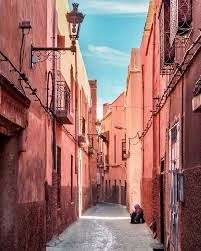
Part Berber, part Arab, part African, Marrakech is the heartbeat of Morocco, known as “The Red City” for the rose-coloured facades and medina walls.


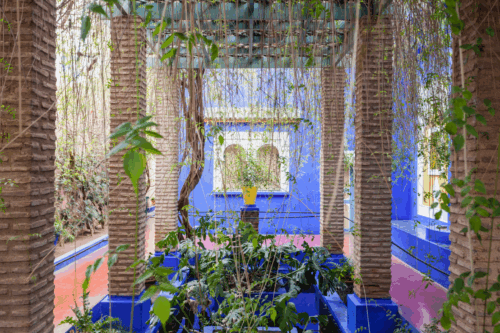
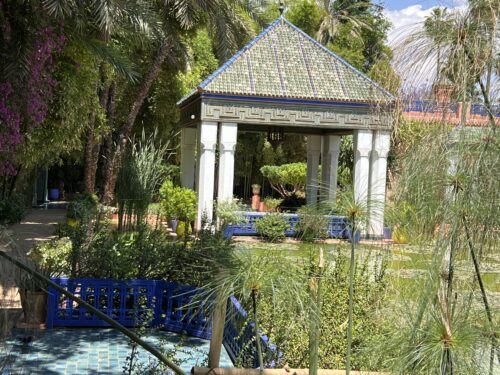
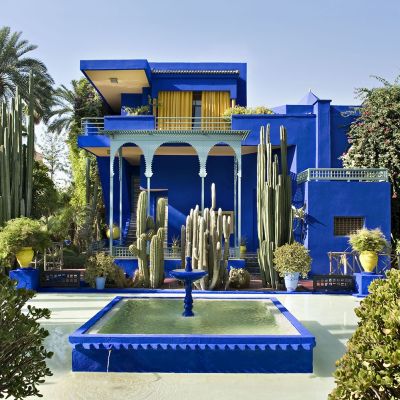
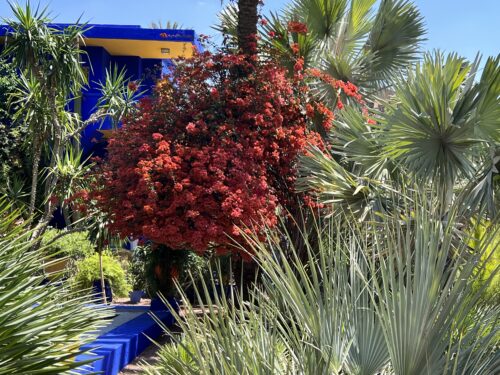
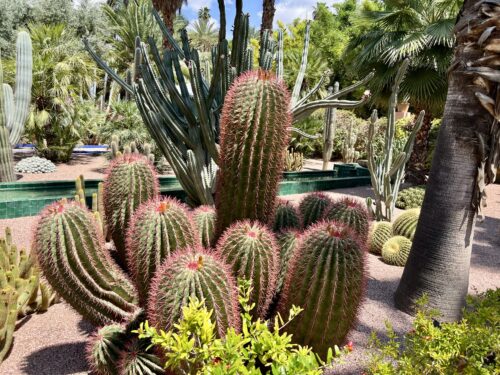
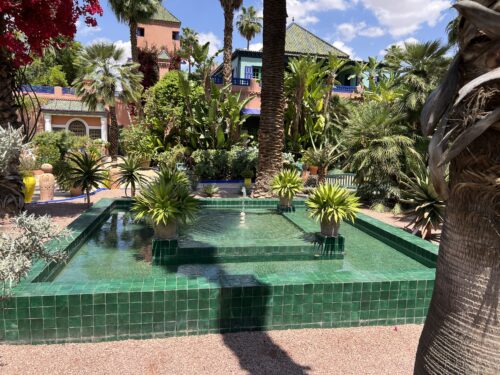
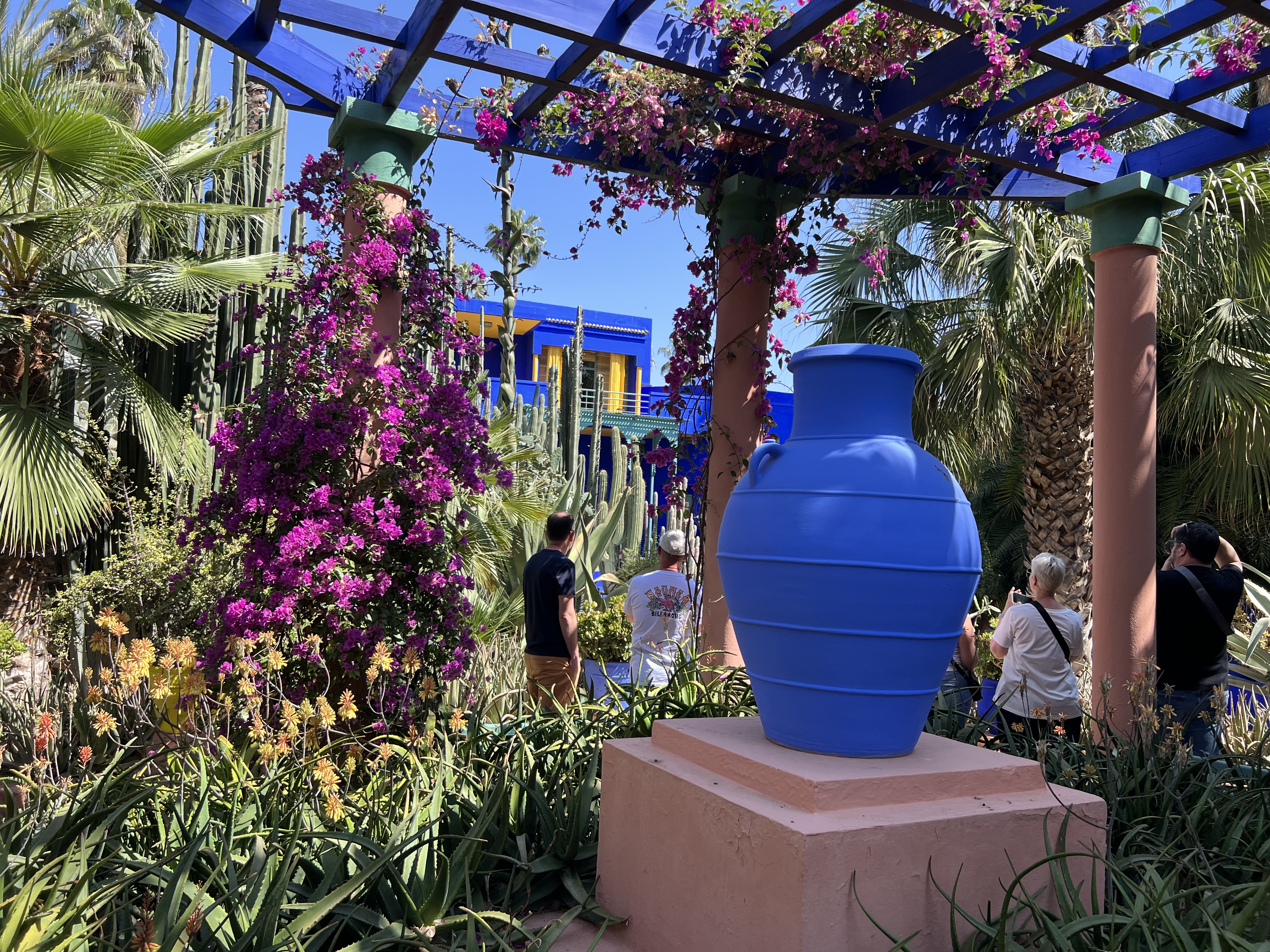
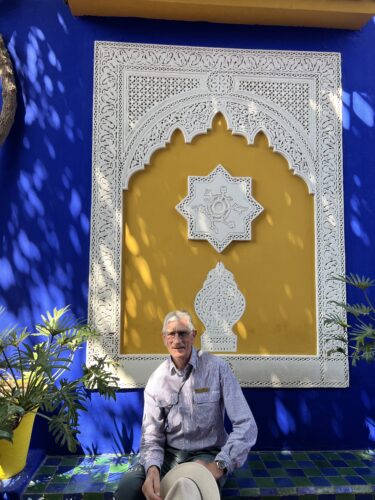
This morning we are to visit the famous Les Jardin Majorelle, gifted to the city by Yves Saint-Laurent and Pierre Bergé and, for me, one of the tour highlights.

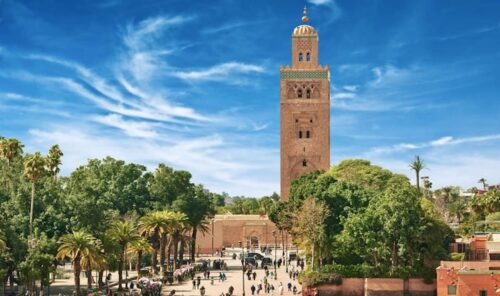
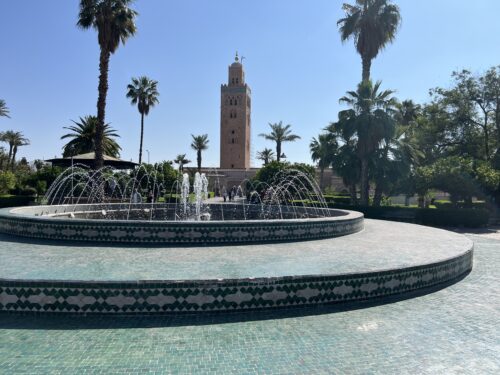
Our walk from the bus took us past the Koutoubia Mosque, or Booksellers Mosque, named after the booksellers who, since construction, have set up their stalls around the Mosque. It is set in gardens and is quite a pleasant walk.


The Majorelle Garden was originally designed by the celebrated French Orientalist painter Jacques Majorelle . As a young aspiring painter, Jacques Majorelle was sent to Morocco in around 1917 to convalesce from a serious medical condition. He travelled to Marrakech and fell in love with the vibrant colours and street life he found there.

He eventually decided to settle permanently in Marrakech and purchased a four-acre plot, situated on the border of a palm grove in Marrakech. Gradually, he purchased additional land and began planting a luxuriant garden which would become known as the Jardins Majorelle The garden became his life’s work and he devoted himself to developing it for almost forty years.

In the 1950s, Majorelle was forced to sell the house and land. After this, the garden was neglected and fell into disrepair. The garden and villa were rediscovered in the 1980s, by fashion designers, Yves Saint-Laurent and Pierre Bergè who undertook major garden restoration work to “to make the Majorelle garden the most beautiful garden, the one that Jacques Majorelle had thought of, envisioned”.


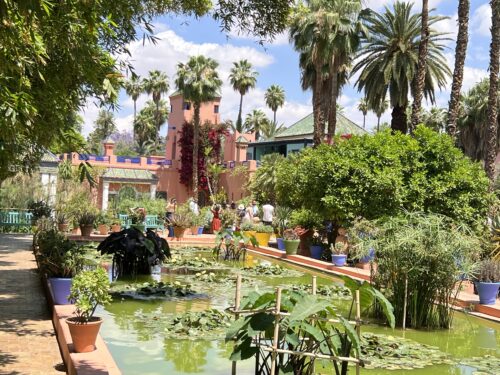
The gardens were as spectacular as we had been led to believe and everything was beautifully maintained. Though there were a lot of visitors, the staff kept the traffic moving so you didn’t have the impression of being crowded. You could spend time to look and photograph but it was a one-way street and there was no doubling back.

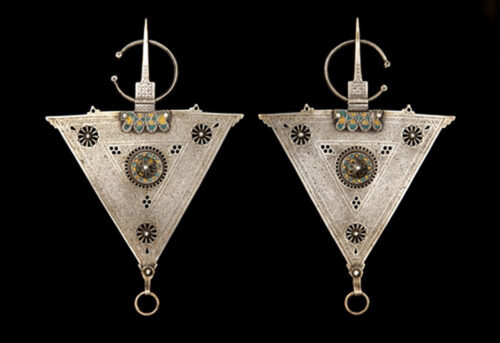
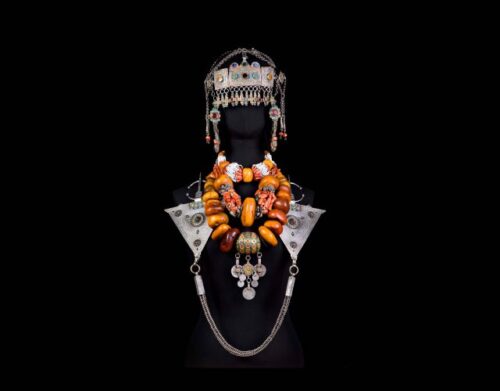
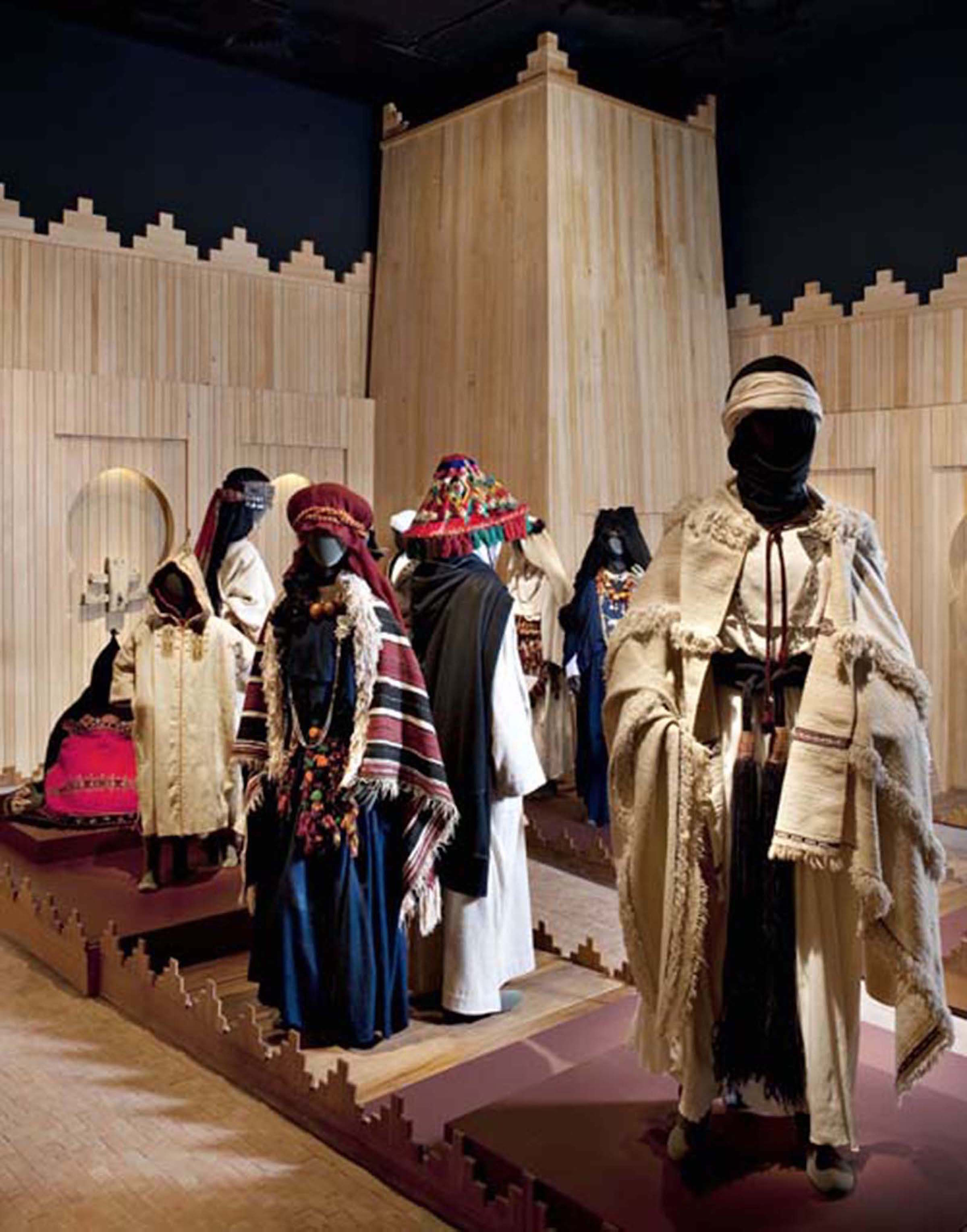
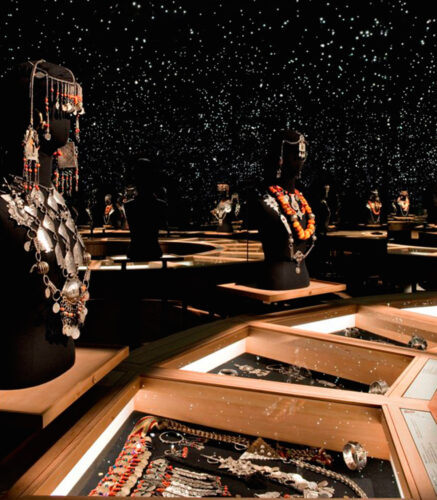
Within the gardens is the splendid Berber Museum with displays of exceptional jewellery and ethnic costumes. Next door is the museum dedicated to Yves St Laurent.

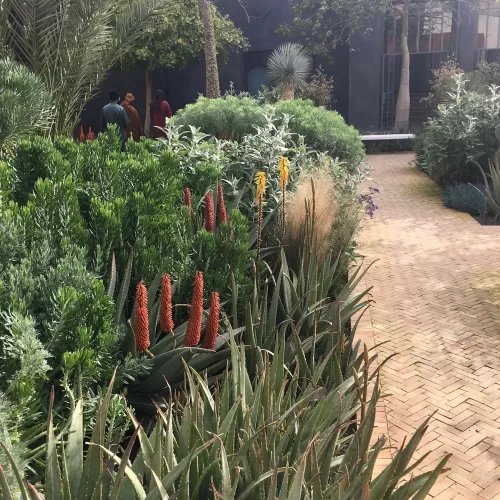
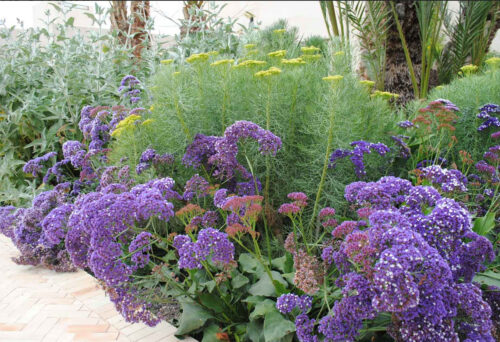
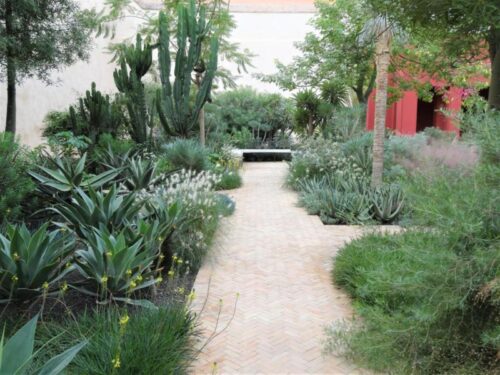
There was so much to see and as we wandered through the garden every turn showed something different

Contemplation at the end of the tour of the garden

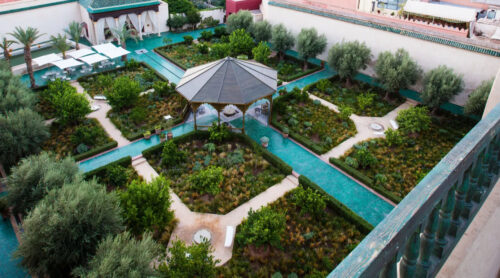
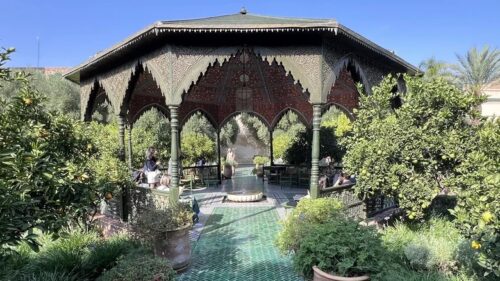
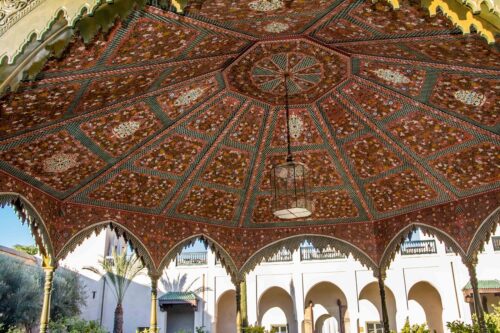
Rather reluctantly it was time to leave the gardens and head to our next destination. Some careful navigation through the streets brought us to Le Jardin Secret, which was, in the 19th century, one of the largest riads in the medina of Marrakech. It belonged to the Chancellor of Sultan Moulay ‘Abd-al-Hāfiz, who was the last sultan of Morocco before the French protectorate. The riad includes two courtyards. Both are sacred places and are different representation of paradise.

You enter through the first smaller courtyard which shows one view of paradise, as described in the Old Testament book of genesis, where “out of the ground the Lord God caused to grow every tree that is pleasing to the sight and good for food.”

The second courtyard is laid out according to rigid geometrical rules, in which the Muslim order asserts itself over the wild disorder of nature. 


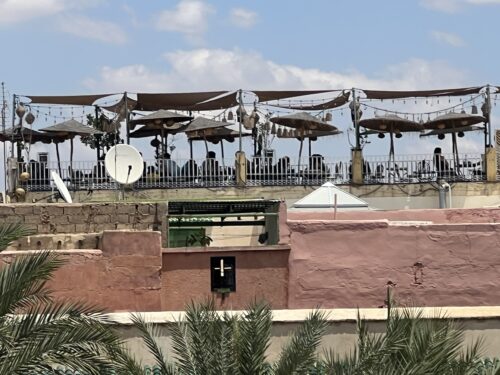
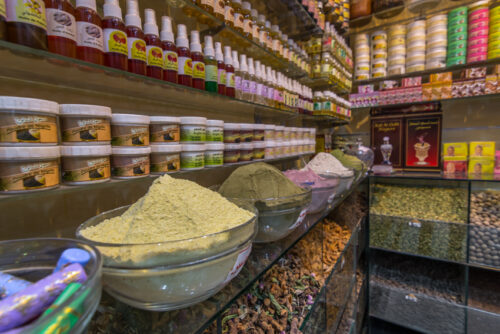
Having inspected the Courtyards we adjourned for lunch to one of the many rooftop cafes before walking back to our hotel via a Berber Pharmacy, which is a shop that specialises in nature remedies, herbs, spices and other traditional medicinal products

These pharmacies are a common sight in Morocco, especially in older areas and medinas. They are known for their aromatic and visually striking displays of jars filled with various powders, dried plants, and other intriguing items believed to have healing properties. 

The pharmacist wore a white coat, the spiel was slick, professional and entertaining. Was it a scam – probably. I bought an inhalant for Edgar, who had returned to the hotel to nurse his cold, some oils that promised to turn back time and had a neck massage. Did they work? The inhalant was powerful and certainly cleared his sinuses, the oils are a work in progress and the neck massage was great!

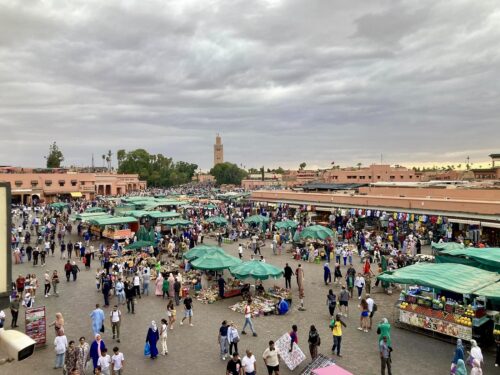
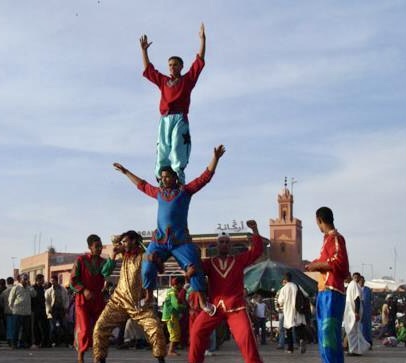
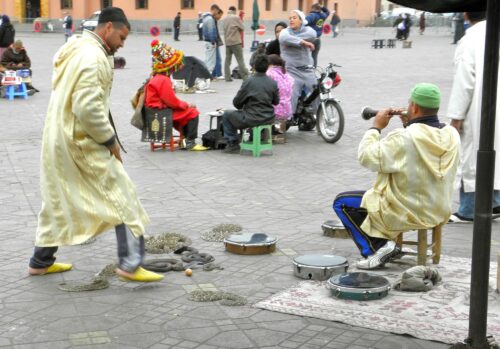
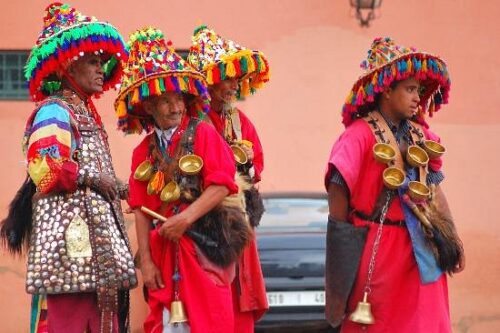
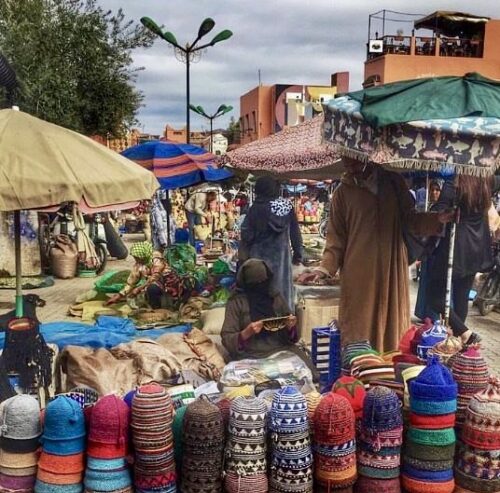
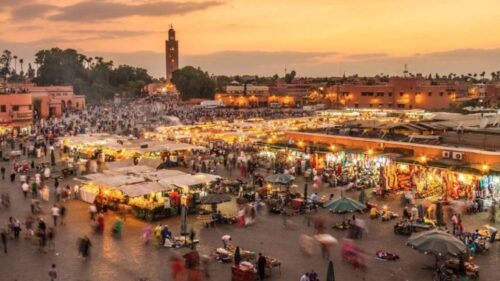
Our last stop was Djemaa el-Fna Square, where the Berber tribespeople come to sell their wares. Storytellers, acrobats, and entertainers attract the crowds.

It was interesting during the day but really comes alive at night

13th May

Today was a free day before the Farewell Dinner tonight. Most of us spent the day relaxing and getting ready for tomorrow’s departure.

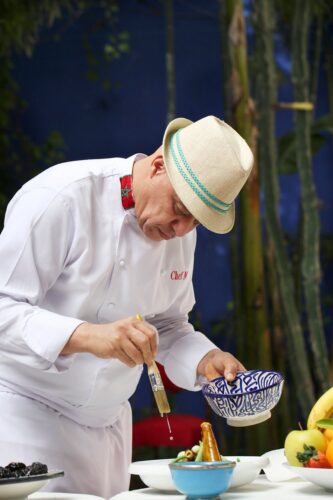
The dinner was held at Da Moha, a fine dining restaurant that specialises in Moroccan cuisine. Its renowned Chef, Moha Fedal, is one of the pioneers of modern Moroccan cuisine and has had restaurants in Paris and Madrid. He is highly awarded and has been on the jury of MasterChef since 2014. He offers a fresh approach to Moroccan cuisine, blending tradition with modernity.

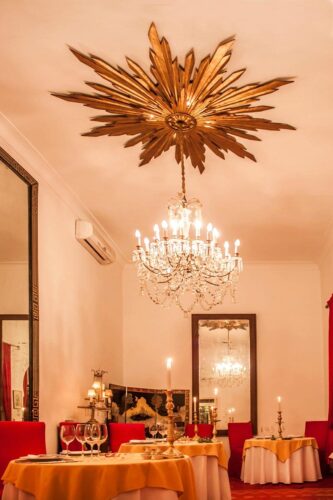
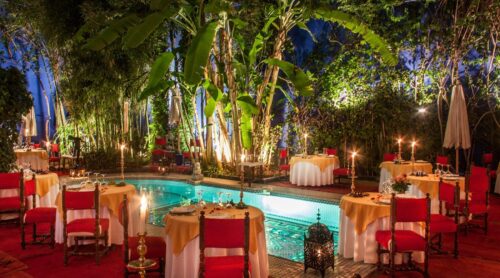
Located in the historic Dar El Bacha district, in the heart of Marrakech, Dar Moha is set within an 18th-century riad, once the home of famed designer Pierre Balmain. The restaurant opens onto a lush garden with a soothing fountain and a pool adorned with Moroccan zellij tiles. Inside, the dining rooms welcome guests under a Baccarat chandelier, surrounded by art pieces personally selected by Chef Moha.

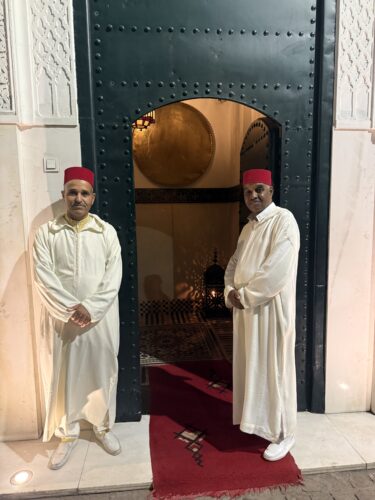
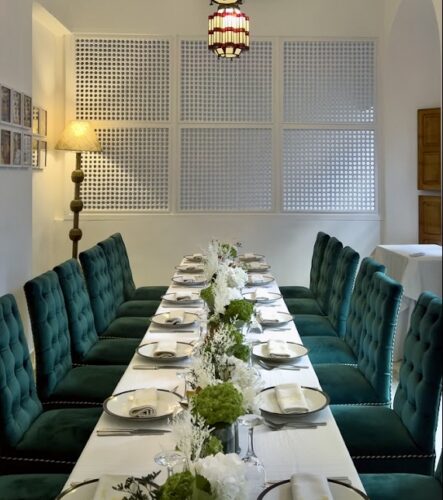
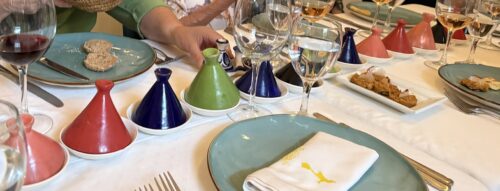
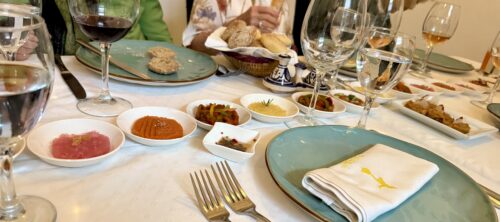
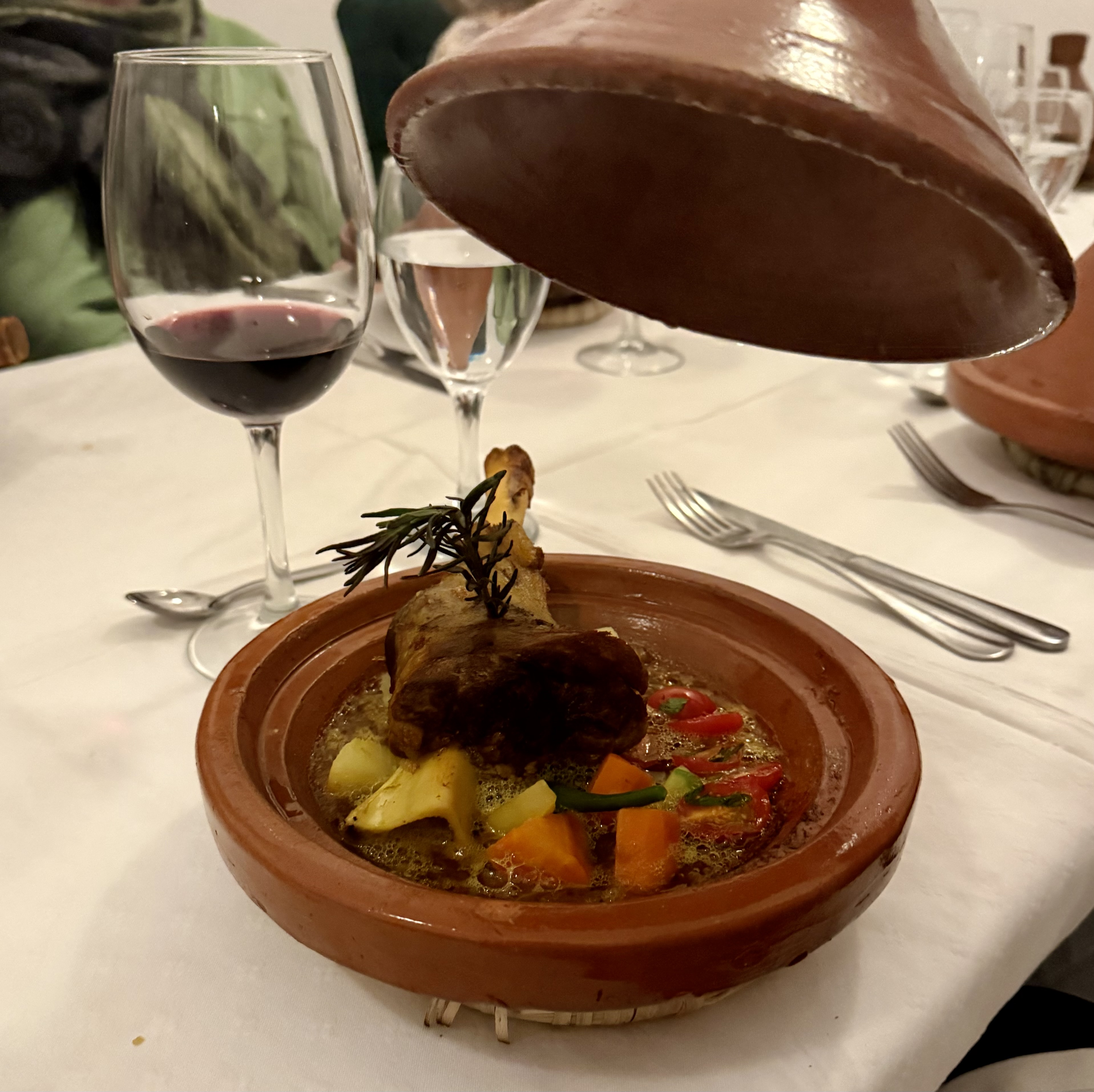
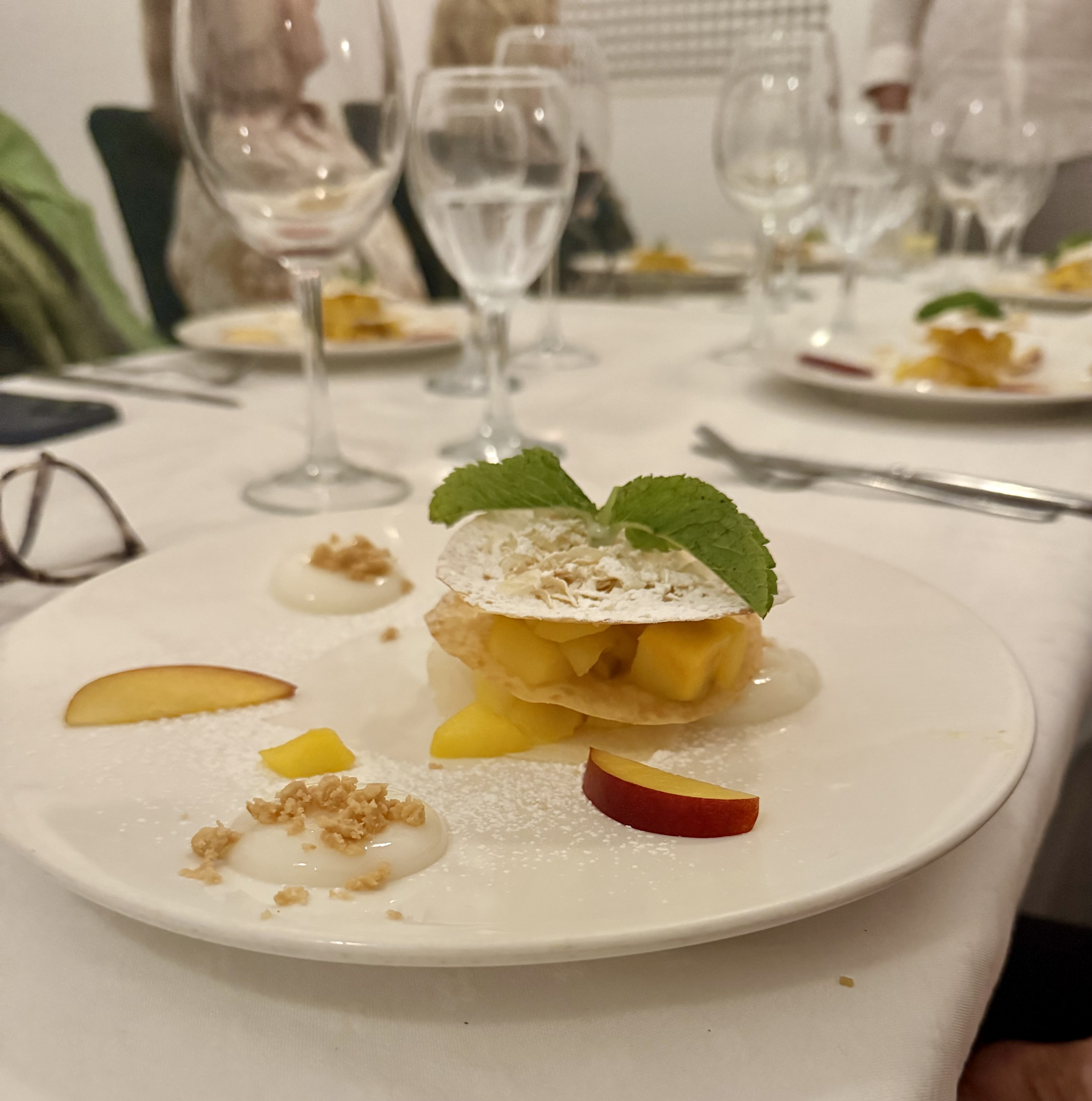
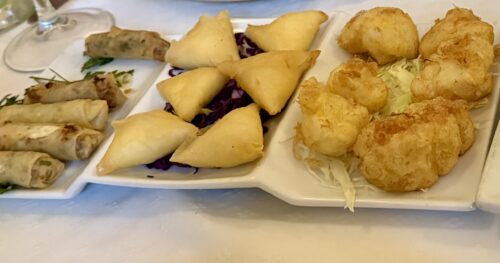
We were greeted at the door by two doormen who ushered us inside to a private dining room where we were seated and served a refreshing mint tea before the procession of food arrived – all beautifully presented and served with a flourish.

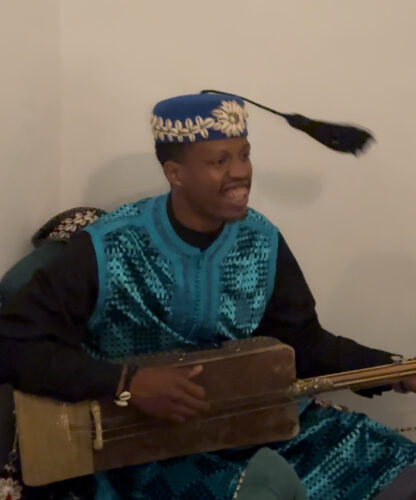
Whilst we were eating we were entertained by a trio of Ghana musicians who keep their tassels rotating in time with the music. Not an easy thing to do we found out.

Earlier we had caught a taxi to the restaurant. A hair-raising ride – particularly if you were sitting in the front seat!  Traffic in Marrakech is notoriously chaotic. It’s a mix of cars, scooters, mopeds, bicycles, horses, mules, carriages, donkeys, and pedestrians, all vying for space. It’s not that they don’t have road rules like everywhere else, it’s that they are totally ignored and not enforced. I asked the taxi driver if there were many accidents and he replied ‘many, many – everyday, all the time!’

So our group walked back to the hotel. A pleasant stroll through the night streets of Marrakech (as long as you eluded the cars, scooters, mopeds etc) and with that our tour was over. We had made some good friends and had some wonderful (and not so wonderful) experiences. Tomorrow it was off to Casablanca and then to Barcelona to join the Silver Ray, our cruise ship that would take us on the next part of our journey.

The Road to Marrakesh

May 11th

At dinner the night before we discussed what had been said in the car and inevitably the conversation turned to the King and women’s rights. One of the group said she had been told that the only reason the King supported women’s rights was that he had a 15 year old daughter and was concerned that she would be forced into a marriage with someone he didn’t approve of. She said that Morocco had an appalling record when it came to forced marriage, domestic violence and women’s rights in that it allows child marriages and polygamy, stigmatises and discriminates against children born out of wedlock, blocks marriages of women with men of different religions and disadvantages widowed, divorced or single mothers and their children, who therefore often find themselves in particularly precarious economic situations.

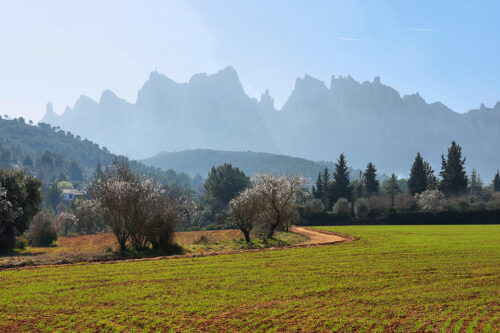
The green fields of Rabat

We asked Yassine about this and told him what was said about the King. He was vaguely amused at the comment and said there was no way the Kings daughter would be forced to marry – particularly to someone the King did not approve. The King had been very involved in progressing equal rights for some years.

He agreed that in its current form, the family law does not meet the requirements of a progressive country, but it is undergoing revision and there is a will for change. He also pointed out that there is a difference between Western idealism and Arab realism – that many who criticise his country don’t understand. A very high percentage of women (particularly in rural areas) are financially totally dependent on their families until they marry. Poorer families tend to marry daughters earlier to ease the financial burden and it was important financially for women that the family based culture remained. Change would only come with financial independence and that was reliant on a growing economy for Morocco and higher employment.

There is also a difference between forced marriages and arranged marriages. In his view arranged marriages were much more successful as the parents knew their daughters best and would choose a man who would respect them and could provide for them and their children for the future. Marrying for ‘love’ did not take this into account and, in his opinion, more often ended in divorce with all the economic ramifications. He has two daughters and it is obvious he would prefer a marriage with the family involved in the choice of husband.

His third point was that in a regional comparison, Morocco is one of the countries with the most progressive legal systems for women. They enjoy equal access to all functions in political and economic life, at least in legal terms. A quarter of the parliament is female and a high percentage of University students are female. Women of legal age have no guardian, enjoy freedom to travel, freedom to choose their profession and can run for all political offices. These supposedly trivial rights cannot be taken for granted in the Arabic-speaking world. 

His last point was that whilst women in Western Democracies had more freedom, the West also had big problems with a high percentage of marriages ending in divorce, domestic violence and homelessness. People in glass houses shouldn’t throw stones?

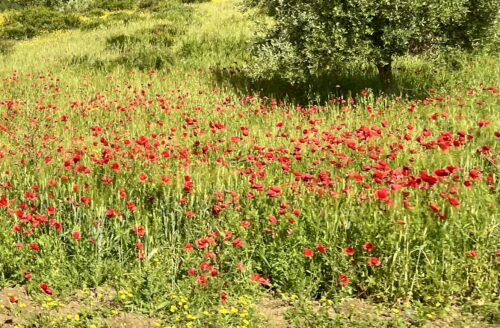
Wherever the soil is disturbed red poppies grow

We pulled over for a break after our discussion and moved on to other topics but I was interested in his views and did a bit more research.

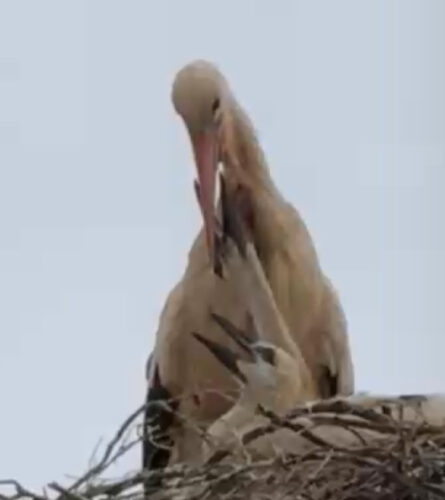
All along the road there are storks nesting on the power poles

Morocco is in the process of reforming its family law and the impetus for reform has not come from organised civil society nor – in the form of protests – from the streets, but from King Mohamed VI himself. In his capacity as political and spiritual head of state, he had called for the principle of equality to finally be realised and the Moudawana (the legislation that regulates the basic civil rights of women) has been revised and submitted to Parliment.

Nothing has happened as a result because the parties in the ruling coalition were too divided. So the monarch has repeated his demand and set the prime minister a deadline. A commission made up of representatives from various ministries and religious bodies had to submit a reform proposal for the Moudawana. This will be assessed by the king and returned to the prime minister. However, the public will only find out about this proposal when the prime minister submits it, presumably in a modified form, to parliament for approval and it is not yet clear when this will happen.

Whist the legal system for women are less discriminatory, in civil and criminal law, numerous discriminations and disadvantages against women persist, which are deeply rooted not only in the legal system but also in society. This can be exemplified by two of the currently most discussed passages of the family law – those on child marriages and inheritance rules.

The hottest topic in the reform debate is inheritance law. In Islam, women receive half of what the men entitled to inherit receive. So if a son and daughter inherit from their parents, the son receives 2/3 and the daughter 1/3 of the estate. If there are only female heirs, widows or daughters have to share the inheritance with distant male relatives of the deceased husband or father thus condemning them to economic dependence. Some women’s rights organisations have long denounced this as unfair and outdated. In contrast to other rules of Moroccan family law, however, the relevant provisions can be found verbatim in the Koran. Even progressive human rights organisations therefore often shy away from demanding equal rights for women in inheritance law.

In 2022, 44% of respondents in a representative survey stated that they were categorically against any changes to inheritance law. Only 36% said they could envisage changes. 20% abstained. In other words, when in doubt, the commitment to Islamic identity beats the desire for more equality.

On the one side of the discourse are conservative and religious forces that see the country’s Islamic identity at risk and warn that the country cannot allow what God has forbidden – presumably a reference to the Koran. On the other side, progressive and liberal organisations demand that the current law should no longer lag behind social realities.

Whatever the outcome, the reform process and the accompanying social debate in Morocco is remarkable in that region and attests to the country’s sincere desire to continue its extraordinarily successful development of recent years, not only economically but also socially.


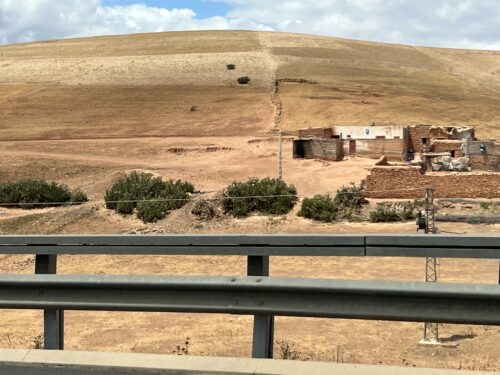
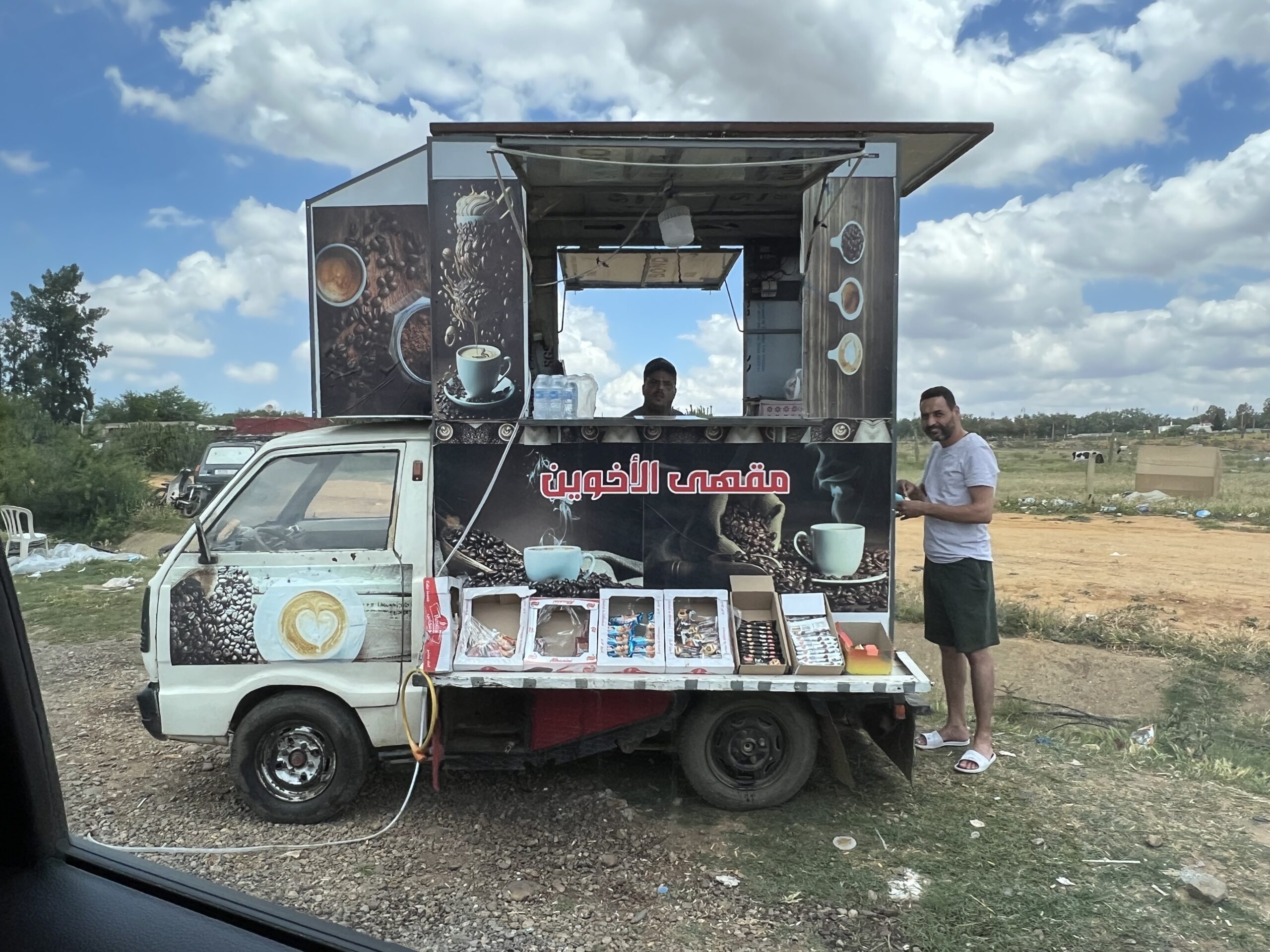
Whilst we were driving and talking, the countryside was gradually changing from green to brown. Marrakesh is known as the gateway to the desert and this was becoming very obvious. It didn’t look as if it would produce anything and yet the inhabitants appeared very resourceful. Long low sheds in the middle of nowhere with a silo beside them housed chickens and herds of goats were plentiful. There was even a van, in the middle of a long stretch of uninhabited road that produced, according to Yassine, the best coffee in Morocco!


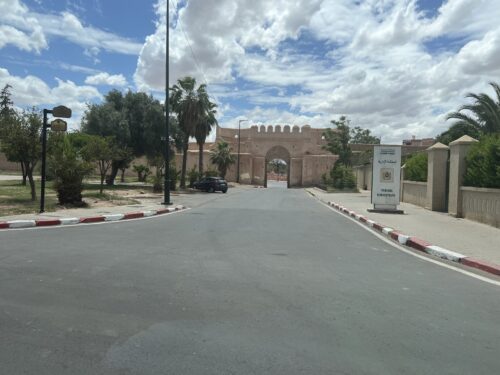
The brown suddenly transformed to green again and we had arrived in Marrakesh and ahead were the entrance gates to the city. It was time to farewell Yassine, check in to the hotel and join the group. It had been an enjoyable and educational couple of days

Tangier to Marrakech

7th May

It all sounded great but not for us. The day started early and ended late and involved a lot of walking. By now both of us were definitely feeling unwell and decided to have a day of rest by the pool and lazing around with lots of naps. We will probably never get back to Tangier and what we did see of it driving around looked interesting but that’s the way it is. 🙁

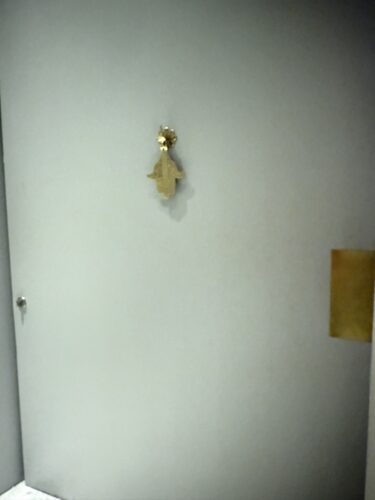
We had heard rumours of a hidden Speakeasy in the hotel, and had caught a glimpse when we were group dining the night before, so, with our appetite not completely gone, we went in search of some dinner. We were directed down a corridor where there was a plain door with a knocker.

All you had to do was knock three times!

and were ushered in and served cocktails and a traditional Moroccan feast. Hade we been in better form we would have done it justice but we did our best

As we were heading back to our room we ran into some of our fellow travellers. They hadn’t been back long and looked exhausted. We’d made the right decision.

8th May

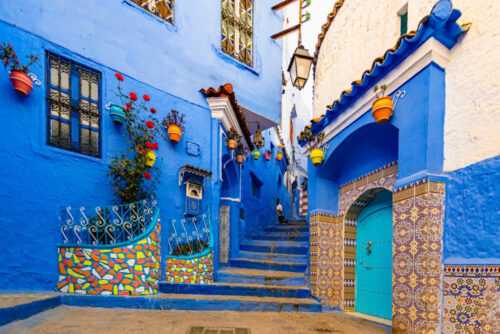
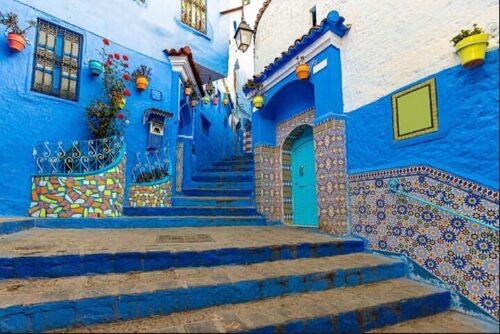
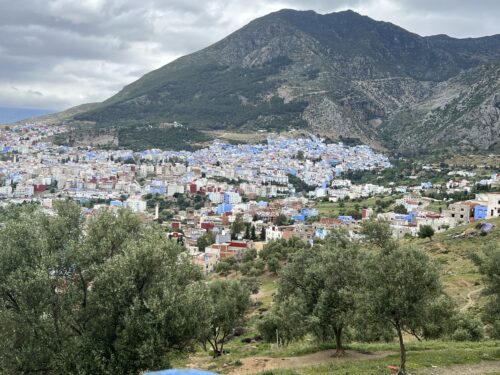
Off to Fes today with a stop in the famous ‘Blue City’ of Chefchaouen. Founded in 1471, it became a fortress from which Moorish exiles fought off Portuguese invasions of northern Morocco. We visited the remains of the original fortress, or kasbah, still standing today then wandered around the streets of the old town, where the buildings are painted striking shades of blue.

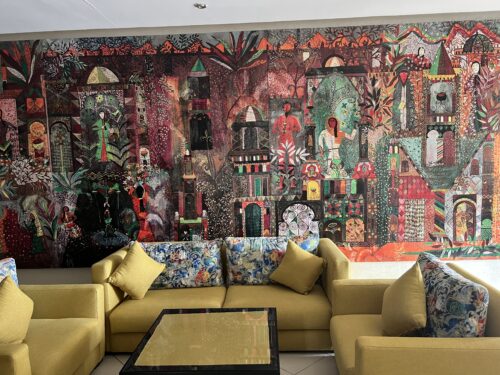
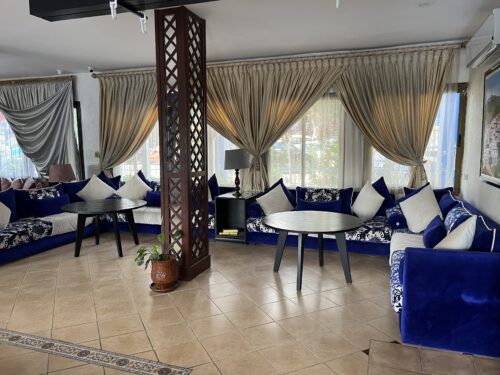
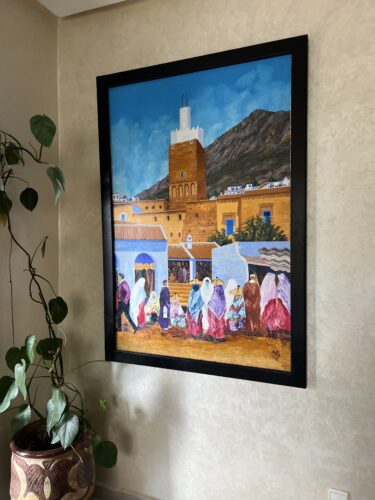
We called in to one of the blue hotels for a drink. The decor was interesting and I thought attractive.

We later joined the others for a smorgasbord lunch. There were a couple of other buses there too and lots of food. I wasn’t hungry and the food was heavy and a bit greasy so I didn’t eat much. About a hour into our drive to Fes I started to get violent stomach cramps and had to get the bus to pull over to a rather dilapidated service station.

Our guide was very concerned that the facilities would not be up to scratch and he wasn’t wrong! A dirty cubicle with a hole in the floor and a tap and a bucket. A couple of our fellow travellers had come down to assist me and I made it rather shakily back to the bus. Deep breathing and a few prayers got me to Fes without further incident but that was the final straw. Ed was really miserable with what he described as ‘the worst cold he had ever had in his life’ and I couldn’t face another two days travel by bus.

We told Matthew we would be leaving the tour and would meet them in Marrakesh. He, Xavier and Riad put their heads together and came up with a Plan B.

Friends in need

May 9th and 10th

The next day we spent in the hotel with lots of lying in the sun for Ed and a light diet for me. The day after they organised a private car with driver to pick us up from the hotel about 10 o’clock and drive us to Rabat for an early check in and to meet up with the others.

Promptly at 10 o’clock and obviously well briefed, a solicitous Yassine arrived and shortly after we were ensconced in a comfortable back seat with bottles of cold water and our luggage dealt with.

Whilst we missed out on guided tours of Fes and Rabat we learned a great deal about Morocco over the next two days. Yassine was a Berber, born in an oasis in the desert. He learnt his English working on film sets for, mainly, American companies. He also learnt to drive – a big step up for a boy from the desert. He worked in the film industry for a number of years during the shooting of, amongst others, The Mummy, Mission Impossible and Gladiator.

Realising that the tourism industry had a big future in Morocco he studied and became a licensed tour guide. He speaks three languages and is qualified to do city and desert guiding. Morocco is very strict about who can guide the tourists and doing so without a proper license can lead to imprisonment. He mainly does private work now with individuals or groups.

We asked him about the King. It was fairly obvious from talking to guides and hotel staff that the King was well respected and held in high regard by everyone we spoke to. His photo is everywhere, in pride of place, even in small shops. Yassine explained that the King was very progressive and determined to improve Morocco and the lives of his people. He is an astute businessman and has businesses operating across industries like banking, mining, real-estate, tourism, insurance, telecommunications plus substantial land holdings throughout Africa.

He had the foresight to invest heavily in the Port of Tanger-Med which is a crucial hub for global trade, particularly in container handling, and is the largest port in Africa and the Mediterranean. The port is a key link in the east-west maritime trade route and a vital link in global trade between Africa, Europe, Asia, North America and South America. Everything that goes through the Port adds to Morocco’s coffers and, like our guide and tour bus, every job that can be done by a Moroccan is done by a Moroccan.

A number of people proudly told us that the King ultimately contained the Arab Spring protests by implementing some reforms and that Morocco was not very affected unlike other countries which were now much worse off. This appears to be generally if not completely true. Certainly none of the King’s power was conceded.

My father always said, rather facetiously, that the best form of government is a benevolent dictatorship citing Singapore under Lee Kuan Yew. Maybe it is in this case. Certainly those who had been in Morocco five or more years ago say it has changed beyond recognition – for the better. The king has introduced progressive reforms that would never have passed if the country was a democracy, and he tries to counter the very strong religious right without antagonising it but gradually introducing reforms, which is the most pragmatic approach possible.

His long-term vision and programs (green morocco program, industrial acceleration plan, the transition into renewable energy…) have had a lasting impact on the country and the stability the comes from having a monarchy encouraged many big companies to invest in the country.

Rabat is the centre of government and the drive in was very attractive with wide avenues and green landscaping. We passed the entrance to one of the King’s palaces (he has a number of palaces in the Royal compound – this one was for visiting dignitaries). It was very well guarded – we noticed security was very tight all over Morocco.

I took a photo of the entrance and the guards. Yassine was a bit uncomfortable and told me that it was illegal to take photos of the police, the guards and the military. However he didn’t think they noticed and so we made it safely to our hotel to continue our recuperation.

Granada to Malaga and on to Tangier

5th May


Today we travel from Granada to Malaga with a stop for lunch in the pretty whitewashed town of Antequera. Antequera is known as “the heart of Andalusia” (el corazón de Andalucía) because of its central location among Málaga, Granada, Córdoba, and Seville.

After a quick lunch we visited the Municipal Museum of Antiquera which was inaugurated by the Prince and Princess of Spain and housed in the beautiful old Palace of Nájera After an expansion in 2009-2011, it was reborn as the “Museo de la Ciudad de Antequera”, and now covers five thousand square meters and stands out as an iconic Andalusian municipal museum.

Xavier, our guide, trying to get everyone heading in the right direction and on time

It is a very well organised local museum and definitely worth a visit. The Ground Floor and First Floor are about the early development of the area from Neolithic times through the Roman era and displays an impressive collection of Roman artifacts from the surrounding area, including glassware, jewelry, stone carvings and fragmentary mosaics. Its pride and joy is an elegant and athletic 1.4m bronze statue of a boy, Efebo. Discovered on a local farm in the 1950s, it’s possibly the finest example of Roman sculpture found in Spain.

Upstairs is a huge repository of religious items, from paintings to ornate silverwork. Floor Two is medieval Christian art and Floor Three displays artists from about the 1850s. The top floor is reserved for exhibitions of the work of world renowned Spanish artists.


You may disagree with the philosophy of bull fighting, but the bullring in Antiquera has been fully restored and is now one of the most beautiful in Spain. We had time to explore it and have a glass of wine before setting out for Malaga.


Warmed by the wine we got back on the bus for the remainder of the trip to Malaga. We went through some beautiful country with well established farms,

arriving in Malaga in the early afternoon and checked into our hotel, a restored old Andalusian palace in the old city.


On the agenda was a walking tour of Malaga and a visit to the Picasso museum. We had visited a Picasso museum in Montserrat and walking through the narrow cobblestone streets of Malaga held little appeal. On the other hand, the spacious room with a comfy bed and the very welcoming staff at the hotel held a lot of appeal.

6th May

The next morning we had to have all our luggage out by 7am and be breakfasted and ready to go by 8.30 so we didn’t lose our booking on the ferry across to Tangier, our gateway to Morocco. We were due to set sail at 12.00 pm. We arrived at 10am and the Ferry Terminal became our home for the next six hours as they kept cancelling and delaying ferries. We eventually boarded and settled down in relative comfort whilst one custom officer methodically and slowly processed every passenger (hundreds). Fortunately he finished before we got to the other side.

Morocco requires you to change your tour bus for a Moroccan tour bus and your guide for a Moroccan guide so we had all our luggage with us – in our case 4 cases – which we had to put in a container on the deck for the duration of the voyage. When we reached Tangier we were informed the lift was not operating and we would have to manhandle all our luggage down three flights of stairs. Thank god for teamwork!

If our impression that Morocco was a backward country was in place when we boarded our tour bus then it was soon dispelled on our drive to the hotel. Wide avenues with beautiful landscaping, parks and green spaces everywhere, people picnicking and playing sport and everywhere signs of progress and affluence. Our guide told us it was because of the King.

We arrived at our hotel, the Tazi Palace Fairmont Hotel, (without doubt the most luxurious of all our hotels) and met for dinner – except for those who got food poisoning from the tuna rolls in the ferry terminal – before retiring to bed. It had been a long day.

Grenada

3rd May

Grenada is our destination today with a stop to explore Priego de Cordoba.

Situated on the eastern side of the Sierras Natural Park, Priego de Cordoba is a town considered to be one of the most majestically beautiful in Andalucia. Baroque architecture predominates – so much so that the town is known as the ‘Baroque Jewel’ of Andalucia.


After admiring the town and it’s buildings, we continued our journey towards Granada driving through endless miles of well kept olive and orange trees and by mid afternoon the snow capped mountains of the Sierra Nevada mountains were in view.


Granada is situated in the foothills of the Sierra Nevada mountains. It’s known for grand examples of medieval architecture dating to the Moorish occupation, especially the Alhambra, a sprawling hilltop fortress complex encompassing royal palaces, serene patios, and reflecting pools. Also known for the fountains and orchards of the Generalife, the summer palace and country estate of the  Nasrid rulers.
We headed for the centre of town and after having a bit of a look around stopped for a rather indifferent lunch at one of the sidewalk cafes.

It was on one of the main streets opposite a lovely park and, being a festive day, many of the women and girls had dressed up for the occasion.


Not to be outdone, the men had groomed their horses and were putting them through their paces and generally showing off their horsemanship.

We stayed watching for a while until it was time to checkin to the Alhambra Palace Hotel – a stunning five star hotel situated only meters from the Alhambra and overlooking the whole of Grenada.


4th May

The day to explore the Alhambra and the Generalife gardens. Many of the group had joined the tour for this reason and there was a general air of excitement at breakfast.

A World Heritage site, the extraordinary Alhambra is regarded as being the Moors’ greatest legacy in Europe. Perched on a hilltop overlooking the city, this fortress and palace of the Nasrid sultans is a fine example of intricate stuccowork, elegant archways, and intimate courtyards.

The Generalife became a leisure place for the kings of Granada when they wanted to get away from the official affairs of the palace. In the Generalife there is no kind of decorative excess or points of interest in its architecture. Unlike the Alhambra, all the buildings of the Generalife are quite solid, but in general poor and simple. This indicates an intimate and peaceful atmosphere that the kings were looking for when they retired to these gardens to rest. There are only some decorative motifs of plasterwork, which are not very varied, but are exquisitely fine and tasteful.

We all agreed that these two gardens had been the highlight of the trip so far

Cordoba to Grenada

It’s the 2nd May. After the long day yesterday, and a night spent coughing and spluttering, Lyndal showed a marked reluctance to leave the comforts of the hotel,p so I joined the rest of the group for a walk through the old town.

Our eventual destination was the Gardens of Alcazar but there was plenty to see on the way there . Córdoba is an intriguing place that exudes history in every twisting lane and flower-filled patio of its old centre. With the Festival of the Patios in full swing many of the streets were decorated with flowers and a number of patios were open for viewing.


We passed The Alcazar de los Reyes Cristianos (Palace of the Christian Monarchs). With its thick defensive walls, it served both as a fortress and a palace. Roman and Visigoth ruins lie side by side with Arabic remains in this magnificent building. It is almost rectangular shape with its long walls made of solid blocks of stone and four corner towers.

The Tower of the Inquisition – one of the four towers.

It was once the favourite residence of Ferdinand and Isabella, who united the Spanish provinces of Aragon and Castile in 1469 and were also, incidentally, the first parents-in-law of England’s King Henry VIII, who married their daughter Katherine of Aragon. It was used as a royal residence and as the headquarters of the infamous Spanish Inquisition. The Alcazar was later used as a prison, but it now serves as a centre for Córdoba’s municipal government.


We didn’t go into the main building but stopped to inspect the Roman ruins and then entered the small Baroque chapel, the Hall of the Mosaics (formerly the Chapel of the Inquisition) where a series of Roman mosaics, discovered underneath the Corredera, are displayed around the walls.


Next on the agenda was a visit to the Gardens of the Alcazar. The original gardens comprised extensive vegetable gardens and orchards and were surrounded and protected by the walls of the fortress.

The current gardens are much reduced and are divided into three different levels, all of them housing fountains and big pools, as well as a rich variety of native flora. The garden’s borders have changed throughout history and its current appearance differs a lot from the original.


The Jewish community in Islamic Córdoba played an important part in the city’s life in such roles as administrators, doctors, jurists and poets. On our way back to the hotel we went through the old Jewish quarter, the Judería, which remains a warren of narrow medieval streets – some now lined with gaudy souvenir shops, others remarkably silent and calm.


The rest of the tour was planning to visit Medina Azahara, a fortified palace-city on the western outskirts of Cordoba. The city was built in the 10th century and covers 112 hectares. It was sacked during a civil war and remained abandoned for the next 1000 years. In 2011 work started to restore the city. Only about 10 hectares of the 112 hectares (0.43 sq mi) of the city have been excavated and partially restored, but this area includes the main palaces. A dedicated archeological museum, located on the edge of the site, was opened in 2009 and contains many of the objects uncovered in the dig.

Though it sounded interesting, after the mornings exertion I decided I’d had enough and made my way back to the hotel to join Lyndal for an afternoon of relaxation. Yvonne, a lady we had met on the Victorian garden tour, had managed to get three tickets for the Andalusian Equestrian Exhibition that night, which we were very much looking forward to.

In 1567, the Spanish Horse breed with formalized standards was created by Royal decree of Phillip II and the Royal Stables of Cordoba were established. This was the setting for the evenings performance. It proved to be everything we had hoped for. Yvonne had managed to get excellent seats and we were able to skip the very long queue to get inside.

The 70-minute performance seamlessly combines classical, cowboy, and high school dressage with the passion of flamenco. As the dancer moves in harmony with the horse, the result is a breathtaking display of artistry and precision

No photos were allowed during the performance so we just enjoyed the show. However there was an opportunity to download some photos after the Show.

Afterwards we went backstage to meet some of the stars.

Seville to Cordoba

An early start today with a fair distance to cover. El Coto Las Canteras in the hills above Osuna was an opportune time to take a break. An ancient quarry that has been providing building materials since before Roman times. Known as the “Petra of Andalusia,” for its stone reliefs and carved murals, it includes the ruins of the 17th-century Shrine of the Via Sacra.


Next stop Osuna, which has one of the best-preserved historic centre in Andalusia. San Pedro Street is one of the most beautiful. This broad and straight street is lined with palaces and stately houses of great splendour. Many of the houses have portals styled along Roman lines, family coats-of-arms over the doors and beautiful wrought-iron balconies.

Onwards to Cordoba, stopping to admire the old Roman bridge before entering through the city walls. Some free time to explore Cordoba’s historic center, one of the largest medieval quarters in Europe, and to grab a bite to eat before our scheduled visit to the Mosque Cathedral of Cordoba, (Mezquita).

The site has an extraordinarily rich history. It is believed that a temple to the Roman god, Janus, was here originally, until the Visigoths invaded in 572, when it was converted into a church. In 785, the church was converted into a mosque and rebuilt by the last descendant of the exiled Umayyads (a wealthy and powerful clan who formed the first Islamic dynasty before being overthrown in 750).

Exiled to Spain, the last surviving descendant, Prince Abd al-Rahman I, established control over almost all of the Iberian Peninsula and attempted to recreate the grandeur of Damascus in his new capital, Córdoba. He sponsored elaborate building programs, promoted agriculture, and imported fruit trees and other plants from his former home as part of his vision to elevate Cordoba as a center of science, culture, and arts.


The Mosque was expanded by his descendants over the next two hundred years. It comprises of a large hypostyle prayer hall, a courtyard with a fountain in the middle, an orange grove, a covered walkway circling the courtyard, and a minaret (a tower used to call the faithful to prayer) which has been enclosed and is now a bell tower for the Catholic cathedral.

The expansive prayer hall seems magnified by its repeated geometry. It is built with recycled ancient Roman columns of jasper, onyx, marble and granite from which sprout a striking combination of two-tiered, symmetrical arches, formed of stone and red brick.

In 1236, Ferdinand III of Castile conquered Cordoba, leading to the reconversion of the Mosque-Cathedral into a Christian church. Rather than demolishing it, Christian rulers opted to preserve and enhance its beauty with new spaces and monuments.

Altogether a fascinating part of the history of this part of the world. Our guide was obviously proud of the history and very knowledgeable…….and determined that we should take it all in. We did our best but it was becoming a very long day!

As the bus was unable to navigate the narrow streets it had gone direct to our hotel with our luggage which was now waiting in our rooms. We were assured that it was not a very long walk back to be reunited with our luggage and we could visit some patio entries on the way and have some wine whilst we viewed them.

Every pot has to be watered individually by hand

The streets were decorated with window boxes, the patios were lovely and the wine was welcome but not as welcome as the sight of the hotel as we stumbled round the last corner.

and the Garden Tour begins

It’s the 29th April and the Welcoming Dinner tonight is the beginning. We spent the day doing a bit of shoe shopping then relaxing on the Terrace, swimming (Lyndal went in – it was icy cold ) and reading and being thankful we had arrived before the blackout.

Our travelling companions arrived by various modes of transport. Those who had booked to fly were now on trains and those who were on trains waited for many hours at the train stations trying to get seats. One mother and daughter unable to find any transport took a taxi from Barcelona to Seville.

Matthew (our team leader) and Javier (our guide) spent the day tracking people down and getting them to the hotel. As we gathered for the Dinner all but one were present and she was on track to arrive the next day. We were a group of 17 – mainly Australian and mainly women – from diverse backgrounds and many extremely well travelled. Some were on their 10th Ross Tour overseas and were old hands and one of our friends was there from our last tour.l
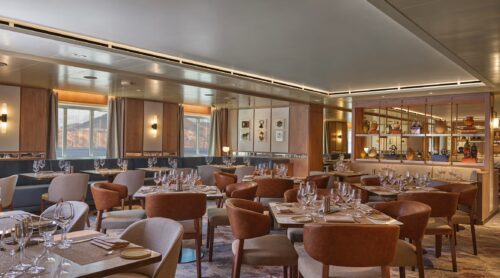
We started as we were to go on – walking through the narrow streets to the selected restaurant. (Our bus couldn’t get through the narrow streets of most of the towns so we walked everywhere). Our restaurant, Cabonata, was a seafood restaurant with a Michelin Star and each course was superb.

After several glasses of good wine we headed back to our hotel. Matt and Javier were like a couple of sheep dogs trying to get everyone headed in the same direction. It was a very convivial start to our tour.

The next day we boarded our bus to visit two renown courtyards. The first stop was the Hospital de los Venerables. Originally it was developed to house destitute elderly priests in the 16th century but, other arrangements being made, it is now the Seville Cultural Center with a sunken courtyard that is a beautiful blend of cloister and patio.

We explored the Santa Cruz quarter, Seville’s picturesque medieval heart and checked out the Cathedral, ending up back in the Plaza de Espana. We spent a little time there looking at the tiled alcoves that feature colourful murals of Spain’s provinces and then it was our time to enter the Real Alcázar de Sevilla.

We headed back through the gates in the city wall, lined up and had our passports checked against our tickets and went though a metal detector before entry.

The Alcázar of Seville is recognized as the oldest royal palace in Europe that is still in use. The upper chambers of the Alcazar are still used by the Spanish royal family as their official residence in Seville. It is one of the best examples of architecture in the style of Mudejar (the Moorish style). The original palace, called Al-Muwarak, was built by the Almohades in the 12th century. Since construction, it has been constantly reworked and expanded, acquiring new stylistic features. It is a stunning building set amongst beautiful gardens, also Moorish-style.


The Palace and gardens were the primary filming location for the Water Gardens of Dorne in the fictitional kingdom of Dorne in Game of Thrones. Specific scenes were shot in various areas within the palace, including the Grotto Gallery, the Baths of Doña María Padilla, the Dance Garden, and the Hall of Ambassadors. 

Returning to our hotel, we decided to give further exploring a miss. Lyndal was sneezing and had a sore throat – the first sign of the head cold and chest infection that were to plague us for the rest of the tour.


Off to Seville

26/4 : We got to the station about 7am for the 8.30 train which was just as well because the check in security was similar to an airport. The swiss pocket knife in my big suitcase (for corkscrew and apple peeling duties) was spotted and very reluctantly handed back. The Spanish high speed rail network is the longest in Europe with trains travelling up to 320km/h. The 828 km to Seville took 5 hours with half a dozen stops so we averaged 165 km/h – makes our trains look pretty pathetic. It also made photography from the train rather difficult with very blurry foregrounds !

The first part of trip was surprisingly bumpy and rattley, bit like the Vietnamese train, except about 100 times the speed ! It smoothed out later. The country of the central uplands of Spain was very hard and rugged with rather anaemic cereal crops and a lot of olive plantations. It improved further south with extensive citrus plantations and later on in Andalusia we saw much beautiful country.


We arrived to find Seville in a state of high excitement. The Grand Final between Barcelona and Seville was on that night and fans were pouring in to show support for their teams. The train station was very busy and the taxis in high demand. After being rejected by a number of taxis, due to the amount of luggage we had, we were finally whisked away to our hotel by a charming young man who became even more charming in Lyndal’s eyes when he battled back through the traffic 20 minutes later to return her phone that she had left behind in the taxi.

Our hotel was situated in a beautifully renovated old building in central Seville.

Once you were inside it was quiet and peaceful with just the sound of running water in the central courtyard

When we had settled in, we ventured out into the crowded streets, found a tapas bar, and sat back to watch the passing parade. That night Barcelona beat Seville by a narrow margin and when we woke the next day the streets were virtually empty.

We decided that the best way to get our bearings was to do a circuit on the Hop on Hop off bus and decide what we wanted to see the over the next couple of days. The only hitch in our plan was that the stops were very badly marked and we spent a lot of time chasing red buses before we finally cornered one.

It was hot on the bus so after one circuit we hopped off and adjourned to the El Cairo to try their highly recommended paella. It is made fresh to order and we were warned it would take about an hour so we partook of a couple of their highly recommended gin and tonics and passed a very painless hour watching the parade of immaculately dressed Sevilleans gathering for lunch.


The 1929 Iberian-American Exposition was a big event in Seville and in preparation they renovated much of the southern part of the city. The centrepiece is the beautifully landscaped Parque de Maria Louisa, so we made that our destination for the day’s exploring.

It was originally the gardens of the Palace of San Elmo and extensively renovated by one of Seville’s leading landscape designers. Ten countries built pavilions in and around the Park for the Expo and today many of the pavilions remain and are in use either as Consulates or museums. The Argentinian Pavilion is a school for Flamenco.💃🏽. The buildings have also been featured in a number of films, including Lawrence of Arabia, The Wind and the Lion and Star Wars: Episode II- Attack of the Clones. The most featured of them is the Plaza de Espania.


The famous Plaza de Espania which chronicles each of the regions of Spain in ceramic provincial alcoves and benches.


The park is amazingly beautiful. There are lush plantings of palms, orange trees, Mediterranean pines, and stylized flower beds with bowers hidden by vines. Paths meander through linking numerous tiled fountains, pavilions and ponds. Everywhere there are benches to sit on and admire the various features and the many monuments. The narrow roads resound to the clip clop of horses as the carriages pass by and the mounted police keep vigilance.

When we arrived there were fountains running everywhere……

At about 1pm all the fountains turned off. We speculated whether (a) they were saving power (b) they were saving water (c) they were worried about evaporation (d) they hated all the tourists

Disappointed but not overly worried we continued on our way

It wasn’t until we went to call a taxi that we realised we had no internet and no way of finding our way back. We managed to scramble on to a hop-on hop-off where we had a birds eye view of total chaos

The blackout covered Spain, Portugal and part of France. All the shops and restaurants were closed. Lifts had stopped working with people stuck inside. It lasted for 6 + hours. We made it back to our room (fortunately we were only on the second floor) and waited in the dark until the power came back on – thanks to Morocco we were among the first to get power. We ventured out again looking for a meal, most places were shut but the Red Steak was operating and we had a very nice steak with barbequed vegetables.

It’s been a long day

More Experiences in Barcelona

The next day (24/4) Lyndal decided she had done enough walking and had a day off to explore the comforts of our Apartment, so I took the hop on/off bus for a look around the city. Notable in Barcelona are the hundreds, indeed thousands of motor scooters lining the sidewalks – a popular and very practical mode of transport in the narrow streets. Compared to those you see in Australia most of them are more substantial, more like step through motorcycles.

The bus took me passed most of the sights we saw with our guide on the first day but I got off for a couple of hours at the Maritime Museum, which is recognised as one of the finest maritime museums in the world. It was most impressive and interesting, going back to the days of Columbus when Spain was a great power.

In the evening we were looking for a nice meal, not too heavy. I had a walk around the area and spotted a nice Sushi restaurant.

The puffer fish in the window should have warned us. Not your usual sushi chain

So we dined there and it turned out to be very nice indeed, beautiful food

– and also rather expensive, which we would have known if we read the reviews before we went, not after.

Well it was worth it!!

The next day Lyndal had booked a coach tour to Montserrat monastery and a vineyard about an hour’s drive out of Barcelona.

It was to these mountains that a Benedictine monk fled with the monastery’s most treasured possession. A small wooden statue of the Madonna and child that is believed to have been carved in Jerusalem at the beginning of Christianity. Found in a cave centuries later, a small chapel was built to protect it, which over the years evolved into the Montserrat Monastry and attracts millions of pilgrims each year


The monastery is at 1,240m near the top of a granite mountain – a spectacular setting. It was also rather cool naturally and since I failed to take note of the elevation I went up there without my jacket, so had to buy a jumper from the monks who cleverly kept plenty in stock. Spectacular buildings and a beautiful cathedral, most of which had to be rebuilt after being destroyed by Napoleon’s troops because it was seen as a political centre for the Spanish guerilla resistance.

The arched building is the only original part not destroyed by Napoleon’s army

Many of our group chose to hike down to the sacred caves but we chose to explore the Museum of Montserrat, which has a wonderful art collection with more than 1,300 works on display by great artists such as Caravaggio, El Greco, Dalí, Picasso, Degas, Monet and Renoir. 

It also has static and interactive displays showcasing the Monastry’s thousand year history as well as a soundproof cubicle where you can lie back and immerse yourself in the music and voices of one of the oldest choir of boys in Europe. The Montserrat boys’ choir of altos and sopranos are renown around the world for the high standard of the music they produce.

Needed another day at least!

We were to rejoin the coach at the bottom of the mountain so took the mountain tramway down – rather a thrilling and spectacular train ride.

From there we went to a one of the local vineyards for wine tasting and lunch.

After tasting some very nice wines we looked through some of the original old barns and wine making equipment before sitting down to a delightful multi course lunch. Then it was back to town for a quiet night to get ready for an earlyish start in the morning for the Seville train.

Barcelona

A leisurely start to the next day with bacon and eggs for breakfast and a lot of lying round reading and sorting things out.  At about 11 o’clock we roused ourselves, repacked our leave-behind bag with our boat and wedding attire and set out for the Lockering depot.  

After a rather rocky start (due to miscommunication we were in the wrong depot) we managed to deposit the bag and head off to go sightseeing. It’s a neat system. You enter your special pin and the front door opens, you enter it again inside and a picture of a locker appears with a number.  Tap the picture and the numbered locker opens. You deposit your bag, close the locker and depart.

This was the day that Barcelona celebrates the Festival of Sant Jordi.  It is an immensely popular festival that combines culture and romanticism, celebrating both World Book Day and Valentine’s Day. On this day, it is customary for couples to exchange gifts: traditionally the men receive a book and the women receive a rose. Book and flower stalls are set up along the streets and all over the city are people carrying a red rose.

Many of the houses are decorated with roses and Gaudí’s Casa Mila is one of the finest, so that is where we headed first. Then off to window shop down Passeig de Gracia , a wide tree lined avenue with a large number of buildings renown for their originality, beauty and history and a paradise for luxury shoppers, as they house many of the well known high end brands.

Placa de Catalunyai is a large square in the centre of Barcelona generally regarded as the city centre and known for its monuments, fountains and pigeons.  It is where many of the city’s most important streets and avenues meet and where Passieg de Gracia ends and La Rambla begins.

 La Rambla is considered one of the best-known streets in central Barcelona. A tree-lined pedestrian street, it connects the Plaça de Catalunya with the Christopher Columbus Monument at Port Vell.   It is a tourist hotspot, always full of people strolling among its dozens of kiosks, flower stalls, artists, living statues, terraces, restaurants, and shops.

.

About halfway along was our destination, Mercado de Boquera, a large public food market featuring every type of food you could wish for.

There we had a late lunch of seafood and fresh fruit

and purchased provisions for breakfast, lunch and dinner, as well as wine and chocolates, before catching a taxi home, laden with purchases and rather footsore. We had walked about six kilometres.

We are off again!

We are off on the first leg of our journey- cruising over the Timor Sea on our way to Singapore and thence to Barcelona and our adventures initially in Spain and then on to Italy, France, UK, Denmark, Holland, Germany and Switzerland.

We are going to be away for 3 months and are combining a tour of the Gardens of Spain and Morocco with a Mediterranean Cruise, a wedding in Scotland and a Rhine River Cruise.  In between we will be travelling by train through Italy and France, driving through England and Scotland, flying to Denmark and Holland and exploring Switzerland by train before flying home in July.

We managed to fit everything we needed for hot and cold weather and casual and dressy occasions into our suitcases, without going over the weight limit, left our home and chooks in the care of some good friends, farewelled family and in the predawn headed for the airport.

Ahead we have a 9 hour layover to experience the attractions of Changi Airport before departing at midnight for Barcelona.

Edgar : Across Australia we flew over country very familiar to me – Emerald, Clermont , Cape River, then west of Charters Towers and on towards Darwin past the southern Gulf. This is country I had flown over for close to fifty years, first in our little single engine Beech Bonanzas at lower altitudes and later in the Beech King Air at high altitude. A well worn road.                

With admirable efficiency Singapore Airlines delivered tasty meals, clean toilets throughout the flight, a speedy exit, good advice on what came next and let us loose in Changi Airport. A little shopping, a visit to the Crystal Garden and the Butterfly Gardens and we settled down in the Ambassador lounge, where for a small fee we got two free alcoholic drinks each, a very adequate meal and comfortable chairs to wait out the remaining time.

The next 15 hour midnight to dawn flight was, as expected, tedious and offered little sleep.   We arrived late due to headwinds,  but were through immigration, collected our luggage and exited via the Nothing to Declare gate in less than 30 minutes.  We were met by our Welcome Pickup driver and within minutes were on the road on our tour of The Highlights of Barcelona

Bhagwant had lived in Barcelona since he was a boy, and his obvious love and pride of the city showed as he shepherded his, somewhat jet-lagged, passengers around. Some of the highlights we explored then and some we noted for later, but it was a terrific way to spend the time before we could check in and to get advice and information from a local.

Our last stop was the Gothic Quarter.  Cars are not allowed in the narrow streets so the plan was for him to drop us off on one side and pick us up on the other and he would  stay with the car and luggage.  He gave us a list of places to see that formed part of a map from one side of the Gothic Quarter to the other and with some trepidation sent us off

We negotiated the first couple of turns following the clues

A great place to stop for a couple of baguettes with delicious filling, a coffee and a syrupy hot

It’s a fascinating place with lots to see and we eventually made it to the other side to be met by a somewhat relieved Bhagwant who, I think, had been a little doubtful that this rather vague couple would make it!

By this time our Airbnb was ready.  It was housed in a beautiful old building surrounded by other equally beautiful buildings


Though true to the photos, it was rather poorly equipped, which probably explained the reasonable price for a two bedroom, two bathroom apartment within walking distance of the city centre.  However it was clean and the beds were comfortable and, after a quick visit to the nearby supermarket, we crawled into them for a well-earned sleep.

………….. and Flowers

After two full days, day three was a day of rest and some shopping to help stock the pantry and freezer before the baby arrived. Andrew and Christine had chosen the dishes they would like so it was off to No Frills for the basics (like many stores in Canada they don’t take Visa – so there went my supplies of cash) before we moved on to Loblaws for a much superior shopping experience. Back to the house for an afternoon of chopping and sautéing and then generally lazing around.

Day four and we were once more back on the train. Toronto has an excellent rail system that is generally under utilized and once we had worked out the intricacies of the Pronto card we found this the best way to get around. Our destination was the Allan Gardens to be followed by lunch in the city.

It was a very pleasant walk through the Park. The trees represent the northern tip of the Carolinian forest with species such as black cherry, American beech, red oak, sugar maple and sassafras. Most are over one hundred years old. It is also home to three varieties of squirrel, the gray, the black, and, unique to this park, the red tailed black squirrel as well as home to the city’s largest flock of pigeons, a roving peregrine falcon and a statue of Robert Burns. It was named after George Allan, a former mayor and senator who donated the land. The Allan Gardens Conservatory is over 100 years old with a garden-filled greenhouse that covers over 16,000 square feet displaying seasonal plantings as well as a permanent plant collection of botanical importance. Rare tropical plants from all over the globe are nurtured inside five greenhouses.

The entrance to the Conservatory is through the Bee Gardenswhere hundreds of varieties of plants and flowers attract bees and butterflies. There are a number of bee hotels of various shapes and sizes to house solitary bees, which make up over 85% of the bee population.

The Victorian style conservatory, known as the Palm House, was built in 1910 and houses bananas, bamboo and a huge Screw Pine. The Cool House has a waterfall, small pond and citrus trees and the Southern Tropical House has a waterwheel and tropical orchids and bromeliads whilst the Northern Tropical House has varieties of hibiscus, datura and cycads. The Arid (Cactus) was moved from Exhibition Park in the 1950s and has a wide variety of cacti and succulents.

We had a very pleasant couple of hours wandering through the Conservatory. It is a popular spot for photographers of both people and plants and has plenty of places to sit and view the displays of plants.

Back into the real world of Downtown Toronto we headed off to find some lunch. The neighbourhood looked rather seedy as we headed down Dundas Street

Mombasa Beauty Salon – not sure about booking in here
but the Grand Hotel in Jarvis Street looked inviting and we had a lovely relaxed lunch there.
It would be worth booking into the hotel just to swim in the pool!
We chose to sit inside in a very pleasant dining room overlooking the outside dining area.

That afternoon we set off for the Toronto Botanical Gardens. Our route took us down Bayview Avenue, one of the wealthiest areas in Toronto where homes sell for mega millions. Arriving at the Botanical Gardens we found our old friends Zimsculpt were about to open an exhibition. Based in Harare, ZimSculpt is passionate about promoting the work of some of the best Zimbabwean sculptors by holding exhibitions around the world and making sculptures available for purchase online. They currently represent over 200 sculptors and boast the largest Zimbabwean sculpture collection in the world. Run by Vivienne and her husband Joseph, they tour around the country, hand selecting every single piece that is displayed.

On our last trip to Canada we called in at the Van Dusen Gardens and bought a rather large sculpture of two lizards on a rock. We were lucky that time in that the exhibition was closing and we got the lizards for a good price, which included the shipping of the 126kg sculpture back to Australia. This time we were out of luck as the exhibition was just opening and the only affordable piece for us was already sold.

Alas, we missed out!

The Toronto Botanical Gardens covers about 4 acres and has 17 garden rooms. We spent some time wandering through the various gardens admiring the plantings and the statues before having coffee at the Garden Café.

All carved out of one rock!
Andrew’s favourite
After our coffee we did part of the Woodland and Bird Habitat Walk before heading back into the more formal gardens. Everywhere there were these fantastic sculptures
The kitchen garden
and we totally fell in love with one called Migration – unfortunately way beyond our budget even before we considered shipping it home.
Migration – swooping birds, wingtip to wingtip

Home to put our feet up, have a drink and discuss the day’s activities before dinner and bed.

Christine, wisely, decided to stay at home the next day when we headed for the inaugural Harold’s Fish Festival, which offered a “fusion of fish and seafood dishes with a perfect blend of wines, beers, and signature cocktails, bringing you a fish event like no other.” It was to be held at Ontario Place and we duly headed downtown in the train in search of this exciting event. Our other choice had been the “Beer Festival” and we could hear the music thumping as we got off the train

We spent hours wandering around Ontario Place, which used to be a very popular park and theme park. It is located on the shores of Lake Ontario and is build out into the lake on three artificial ‘barrier’ islands. I think the description that best fits it is ‘its like wandering through a post-apocalyptic landscape as it awaits redevelopment’. No cafes or anywhere to get some lunch except an upmarket restaurant or a pie cart. There are plans to redevelop it into a green space with free activities aimed at all ages but it has a long way to go. In the meantime it is a lovely park to wander it but not much to do.

We never did find Harold’s fish festival and later found it had been cancelled but they forgot to put the fact on their website. Disheartened we decided to head for the Sky Tower after briefly considering the Beer Festival but the day was hot so we decided to give it a miss.

Things brightened up when we came across Roundhouse Park a 17 acre park in the former Railway Lands. It features the John Street Roundhouse, a preserved locomotive roundhouse, which is home to the Toronto Railway Museum and, more importantly, Steam Whistle Brewing where you can sample the beers, have some lunch and do a tour of the Brewery. Having walked for miles we opted out of the tour but enthusiastically sampled the beers and had some lunch.

The Salmon Pond
On to the Sky Tower where we again faced disappointment. This time it was cost. Tickets to go up to the three levels were $60 each and the waiting time was about an hour unless we wanted to pay a rather hefty fee for an expedited trip. We had noticed that you could get a meal plus admission to the Sky Walk for $60 each and decided that that would be a better option at a later date.

Back home we picked up Christine and went back to the Toronto Botanical Gardens for an hour or so and to check out the ZimSculpt Exhibition, which had officially opened that day.

Ground hog day?
They had a gallery of smaller pieces and, after much consideration, we purchased a small carving of impalas before heading back home to get ready for our trip to Ottawa the next day.
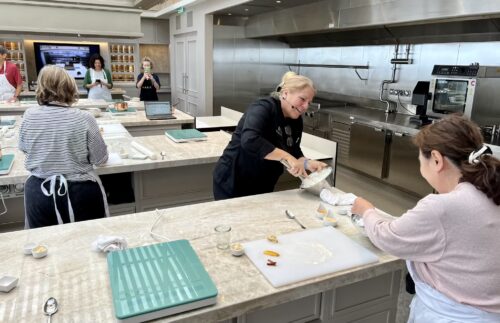
Food ……….

We had found that food tours were a great way to learn about a town and find the good places to eat so, having convinced Andrew that it was a good idea, selected the Culinary Adventure Tour of St. Lawrence Market. Christine had been told that the 200 year-old markets were a must-visit for anyone coming to Toronto.

We linked up with our guide, Leo, and the other four members of our party and headed for our first stop – coffee at Balzac’s Coffee Roasters. Named after Honoré de Balzac, a prolific and celebrated 19th century French novelist, whose prodigious output was famously fueled by copious cups of strong, black coffee consumed throughout the night, this popular café is situated in a beautifully restored heritage building with it’s large patio facing the St. Lawrence Market.
After we had indulged in some very good coffee (and Chia Latte) we gathered for a talk about the history of the Market and the surrounding area known as Downtown Toronto. The area formed part of the original city of York, and was later known as Old Toronto. In 1904 the Great Toronto Fire destroyed most of it and after the reconstruction it was amalgamated with other municipalities to become the modern day city of Toronto. We had a walk through the area past the Cathedral and some of the other historic buildings that the Fire had spared; including the flat iron building, which had a fascinating history. Originally the Gooderham Building it was built to house the Gooderham & Worts Distillery and is wedged between Front Street and Wellington Street where they join up to form a triangular intersection. The building is the focal point of one of Toronto’s most iconic vistas: looking west down Front Street towards the building’s prominent rounded corner, framed on the sides by the heritage commercial blocks along Front Street, and with the skyscrapers of the Financial District towering in the background.
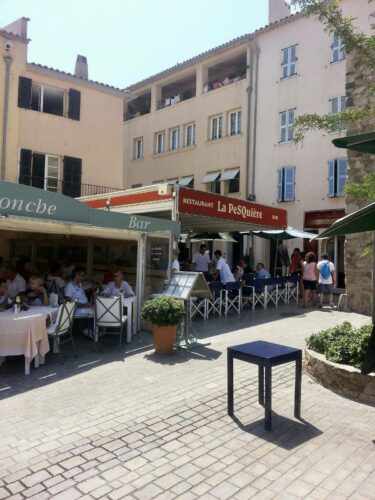
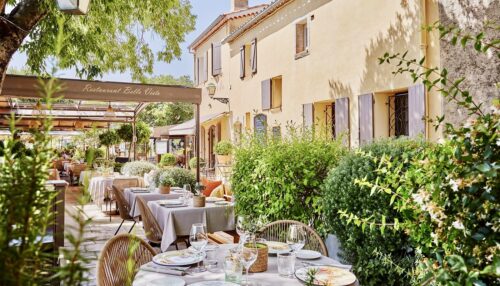
Distinctive mural on the back of the flatiron building and facing Berczy Park
The Gooderham family was a very prominent and influential family owning flourmills, schooners, the distillery and later branching into railways. The patriarch of the family was William Gooderham who with his son George was instrumental in starting the Bank of Toronto. Originally the building was very close to the docks and it is rumored that there is a secret tunnel linking it to the Bank. Supposedly liquor was smuggled out on the schooners and the money went down the tunnel to the Bank.
Off to St Lawrence Markets
St. Lawrence Market is an historic food market in Toronto’s Old Town. You can come to the market to experience the bustle of a traditional fresh-food market, sample everything from fruit to seafood, browse exhibits and antiques and improve your culinary skills. The market has three buildings to explore and a huge range of wares and cooking classes.

St Lawrence Market North has hosted weekly farmer’s markets and antique markets since 1803. It is currently being redeveloped and we went across to have a look at the plans and photos of the radically different building being constructed. In the meantime the farmer’s and antique markets are being held behind St Lawrence Market South.

The South Building

The South building was originally the City Hall and also housed the police station and jail cells. The old council chamber is all that remains of the original city hall and is located on the gallery’s second floor.

Council chambers at the end
It is now the venue for the food stalls, some of which have been there for thirty years. Spectacular butchers, dynamic fishmongers and a collection of unbelievable bakeries make visiting a feast for all five senses. It’s no wonder that National Geographic voted the market the world’s best food market.

Our first stop in this iconic market was to the Carousel Bakery to sample an iconic dish, Toronto’s Peameal Bacon sandwich, which is almost obligatory to eat if you visit Toronto.This was followed by a visit to Scheffler’s Delicatessen & Cheese to try their cheeses and charcuterie board. , Mike’s Seafood was very popular, particularly the Oyster Bar and the samples of hot and cold smoked salmon. We called in at European Delight to try their Pierogi, (little dumplings filled with a sweet or savour filling) and snacked on fruit and berries from the various fruit stalls before ending up at Churrasco of St Lawrence to try another of Toronto’s iconic dishes, Portuguese Custard Tarts. As we went Leo told us the history of the people who had, in many cases, run these stalls for generations.

After Leo had departed we explored the Markets on our own. I was keen to get some samphire or sea asparagus that I had spotted earlier whilst the boys headed for the meat section to buy a large steak for dinner that night. Christine and I split up in search of Cinnamon and Raisin Bagels but all the bakeries were sold out – we had been pipped at the post by Edgar who arrived with a bag full – he had bought the last ones in the Market!

We left the Market and headed for the train station detouring past Berczy Park. The distinctive feature of the park is a large, two-tier fountain with life-size cast-iron statues of 27 dogs and a cat. The dogs are all looking up towards a large bone perched on the fountain’s peak. The cat is looking north at statues of two small birds perched on the arm of a lamppost about 3 metres away from the fountain. Each of the dog statues contributes to the fountain function by sprouting water upwards from their mouths. The fountain also includes a ground level trough to provide drinking water for real dogs!

Checking out the German Shepherd
By now a terrible thirst had overcome us and the need to find a bathroom had driven us into a nearby Irish Pub where we tried a couple of different beers, and a gin and tonic, before heading home on the train.
Irish Pub in the British Colonial Building put a smile on this Irish girl’s face though she said it was a rubbish Irish Pub and nothing like the real thing
It had been a fun day and Andrew had really enjoyed the history element and completely changed his mind about Food Tours.

Toronto and Niagara Falls

Our flight from Juneau with Alaskan Air went off without a hitch and we had a very pleasant if somewhat late night at the Crowne Plaza in Seattle. Off to the airport to catch the Air Canada flight to Toronto the next morning and a slow check in was followed by total chaos. I know they are doing upgrades at Seattle Airport and they had five flights boarding in the same area but Air Canada’s boarding plan was random to the extreme and it took well over an hour to complete boarding a 737.

Things didn’t improve in the air and we were very relieved to arrive in Toronto and excited to see Andrew and Christine.

They had been allocated a lovely spacious home in a pleasant suburb of Toronto and we quickly settled in. Christine had prepared a delicious dinner and whilst we ate we made plans for the coming week. They hadn’t been in Toronto long and an unexpected trip back to Ireland had meant they hadn’t had a chance to look around, so it was new to all of us.

Niagara Falls was high on the list so we decided to go there the next day and we had had such successes with our food tours we decided to do one the day after that. Andrew was keen to see Montreal and Ottawa before he started his course so we scheduled those in as well as the Allan Gardens Conservatory, which had come highly recommended, the Toronto Botanical Gardens, also recommended, and the Sky Tower.

No time for lying around with so much to see and we were up bright and early the next day for the hour and a half trip to Niagara. We had looked on line the night before and had tickets for all the attractions so were anxious to get started. A quick breakfast at Maccas on the way and we were fueled and ready. We parked next to Dinosaur Land Put Put Golf and made our way to the Falls.
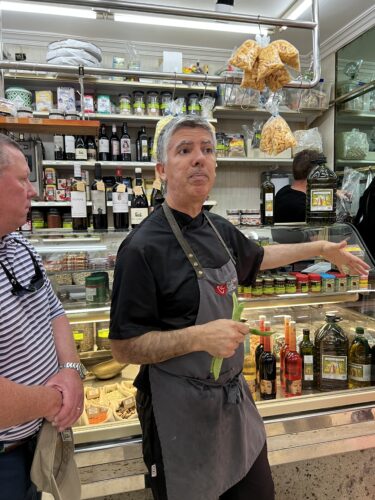
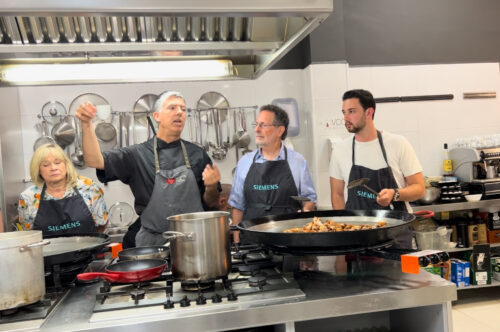
Andrew teasing his mother about missing the flame – the one in the background!

Niagara Falls is the collective name for three waterfalls that straddle the international border between the Canadian province of Ontario and the American state of New York. Dressed in attractive red ponchos we headed for our boat to take the trip under Horseshoe Falls.

It is obviously a popular cruise and there were plenty of people on the same mission. Fortunately we had got there early and the wait wasn’t too long before we off cruising past the American Falls, Bridal Veil Falls and on to Horsehoe Falls.
The American Falls is the second largest of the three waterfalls and the third, Bridal Veil Falls, is beside it. The volume of water going over the American and Bridal Veil Falls is an impressive 567,811 litres per second, which is approximately 10% of the flow from Niagara River. This coupled with the height of the Falls, 57 meters from the top of the Falls to the river, makes it a spectacular sight. Visitors can view the falls from the American side, where it is possible to approach to within several meters of the edge of the falls.

Behind the Bridal Veil Falls was a natural cave, the Cave of the Winds, some 40m high, 100m wide and 30m deep. Originally you could descend a staircase close to the falls and go behind into the cave where winds could reach up to 110kph. A rock fall closed the clave in 1954; today, the “Cave of the Winds” is the name of a tourist attraction near the same site. An elevator takes you down to the level of the Niagara River, where a series of redwood decks and platforms allow sightseers to walk right up to the base of the Bridal Veil Falls with water crashing down right on them and flowing beneath the decking. This is where we went the first time I visited Niagara Falls and I can still remember the massive power of the water.

If the American Falls is impressive, the Horseshoe Falls are awe-inspiring. With a height of 59 meters and a width of 793 meters, the average volume of water is 2,271,247 litres per second. They are one of the best-known and largest waterfalls in the world and approaching them in, what seemed, an increasingly small boat is quite an experience. The roar of the water is so loud you can barely hear and the mist so dense you can only make out shapes. A lot wetter thank when we started we emerge out of the falls and, passing the hydroelectric building, head back to where we started.

We wandered back along the top of the Falls, stopping to admire the Police Station

Perhaps Ben could put in for a transfer
and to grab a bite to eat before making our way to the top of Horseshoe Falls. Looking at the speed and volume of the water going over the edge you couldn’t help thinking it must have been a hell of a ride in a barrel!
We headed back to the top via the Incline Railway, which gave us a good view as we ascended, and walked back through the various hotel gardens, past the casino and on to the Skylon Tower. We had debated whether to have lunch there but the reviews were not good, so we only went as far as the Observation Deck where we had a terrific overview of the Falls and the Niagara River beyond.
And let’s not forget the dinosaurs

Niagara-on-the-Lake has a well deserved reputation for being the prettiest town in Ontario. It sits on the shores of Lake Ontario, at the mouth of the Niagara River and is in the heart of Ontario Wine Country. The flower-filled, tree-lined old town features 19th-century buildings and numerous boutique shops, boutique breweries and lovely restaurants. Near the river sits the 19th-century Fort George, which was built by the British to defend against American attacks.
We had chosen to have lunch at Treadwell’s Farm to Table Restaurant, which had excellent reviews. Stopping on the way to visit one of the wineries we arrived and were ushered to one of the tables on the patio where we watched the world go by whilst we partook of a very pleasant lunch washed down by local wines and beers.

After lunch it was time to do some window shopping. We visited the Christmas Shop, the Hat Shop and a number of other interesting little shops offering all sorts of delights.

The Christmas Shop
We finally took mercy on the boys and retired to the Exchange Brewery where we tried a couple of their flights of beer.

Feeling rather replete we went for a walk in Queen’s Royal Park on the edge of the lake. It was sunny and warm and there were a number of people swimming. It looked very inviting but we resisted the temptation due to the fact that it was a bit cool, the pollution level was only just above acceptable and we didn’t have anything to swim in.

Instead we decided to visit Wayne Gretzky Estates Winery & Distillery. Wayne Gretzky is a Canadian former professional hockey player and former head coach. Nicknamed “The Great One” he has been called “the greatest hockey player ever” by many sportswriters, players, and the league itself. Gretzky is the leading scorer in NHL history, with more goals and assists than any other player. At the time of his retirement in 1999 and persisting through 2017, he holds 61 NHL records: 40 regular season records, 15 playoff records, and six All-Star records.

The complex is the first of its kind in the region, featuring both wine and distilling production. Nestled among the vineyards, the distillery is home to state of the art distilling equipment, while the winery features a beautiful barrel cellar and collection of Wayne Gretzky memorabilia. You can enjoy a tour, wine and whisky tasting bars, good food and even participate in a cocktail making course. If you are feeling in an expansive mood you can go to the VIP tasting room and try the high-end wines. As is appropriate for such a highflying ice hockey player, the fountain in the courtyard turns into an ice rink in the winter.

We were a little late in the day to do any of the tours but the boys had a fine time at the whisky tasting bar trying out the different whiskies. Not being whisky fans Christine and I settled for one of their special cocktails!

Christine had only had a tiny bit of alcohol and was nominated to drive home. We had a fabulous day and will definitely be back to Niagara-on-the-Lake for another visit. There are still so many places we haven’t visited! For food we need to see Cheese Secrets, Greaves Old Fashioned Jams, Jellies & Marmalades, the Pepper Palace (for all things hot), the Rocky Mountain Chocolate Factory, Maple Leaf Fudge and the Fruit Shop Farm Market & Bakery; for clothes and gifts there is Irish Design, the Scottish Loft plus a number of galleries, micro breweries, restaurants and cafes and we definitely need to revisit Beau Chapeaux and the Christmas Shop. Then there are the wineries…………..

Might need to stay overnight!

Juneau

Our last day in Sitka dawned cloudy and showery, which was not what we wanted as we were flying to Juneau on Alaskan Seaplanes and were hoping for a clear sunny day so that we could enjoy the view on the way up the coastline. This was not to be as, although it was clear when we left and clear when we arrived, the middle part of the journey was above the clouds.

Leaving Sitka
What lies beneath
It was however a good indication of how necessary radar is in this part of the world as we flew among high mountain tops jutting out through the clouds and could only imagine what was below us.
Heading into Juneau
The Mendenhall Glacier

In 1906 gold rush pioneer John Olds built one of the grandest homes in all of Juneau, high on the hillside, overlooking the bustling waterfront. Now the Alaskan Capital Inn, this was our destination for our stay in Juneau. The Innkeepers, Linda Wendeborn and Mark Thorson, have preserved the early memories of this pioneer’s historic home in the décor and memorabilia offering a glimpse into another era.
After we had checked in and partaken of tea and coffee and some of the freshly baked biscuits and muffins (which were among the snacks and fruit left out for guest consumption and constantly replenished), we unpacked and headed down to the waterfront for Tracy’s Crab Shack and lunch.

Endless coffee, tea and freshly baked pastries

The waterfront was now completely unrecognizable with the rather ramshackle docks replaced by boardwalks and restaurants. Tracey’s was no longer a shack but a large custom designed building housing one of her four restaurants. The boilers were still going flat out but (maybe it was just our imagination) the crabs didn’t seem so fresh and the crab chowder was much more spicy.
Before
After

Still there was only one cruise ship in and the boardwalk was uncrowded and it was pleasant to stroll in the midday sun and take in the sights. Our crabs were still good and we greedily consumed a bucket washed down by some local beer.

After eating our fill, and more, we headed for the Mount Roberts Tramway, which is an aerial tramway that makes a six-minute ascent from the docks to a height of about 1,800 feet up Mt Roberts. A restaurant, theater, nature center and retail shops are located at the top of the tramway, as well as connections to trails leading both up and down the mountain. The view from the top is spectacular and we spent some time admiring it before heading into the retail section and purchasing a couple of short sleeve ‘souvenir’ t-shirts. The weather had been unseasonably hot and we were sweltering in our long sleeve shirts.

On the way out we called into a gallery displaying native art and were particularly taken by Richard Shorty’s work. A self taught artist, he was born in Whitehorse, Yukon Territory and belongs to the Northern Tuchone Tribe. Richard is one of the most sought after Native artists, with works in many galleries. He is very versatile, working on drums, paddles, masks, rattles in addition to his paintings and his pieces are collected internationally. Though we were restrained at this time we later purchased a print of his called ‘Cycle of Life’.

Up early the next morning we headed down the hill stairs to board the “Outward Bound” for our trip up the Tracey Arm Fjord and a visit to the Tracey Arm Glacier. We had done this trip previously and had thoroughly enjoyed it so were looking forward to doing it again. Being earlier in the season the boat was more crowded than previously but the crew were still friendly and efficient and the scenery still stunningly beautiful.

A little chilly
We passed the floating icebergs and waterfalls until eventually reaching the glacier. .There were plenty of fur seals watching us as we wended our way through the ice flows to get closer to the glacier. It had receded quite a bit since we were there last, but obligingly calved for us sending a wave of water towards the boat. We spent about half an hour there and about the same amount of time manoeuvring our way out before heading back.
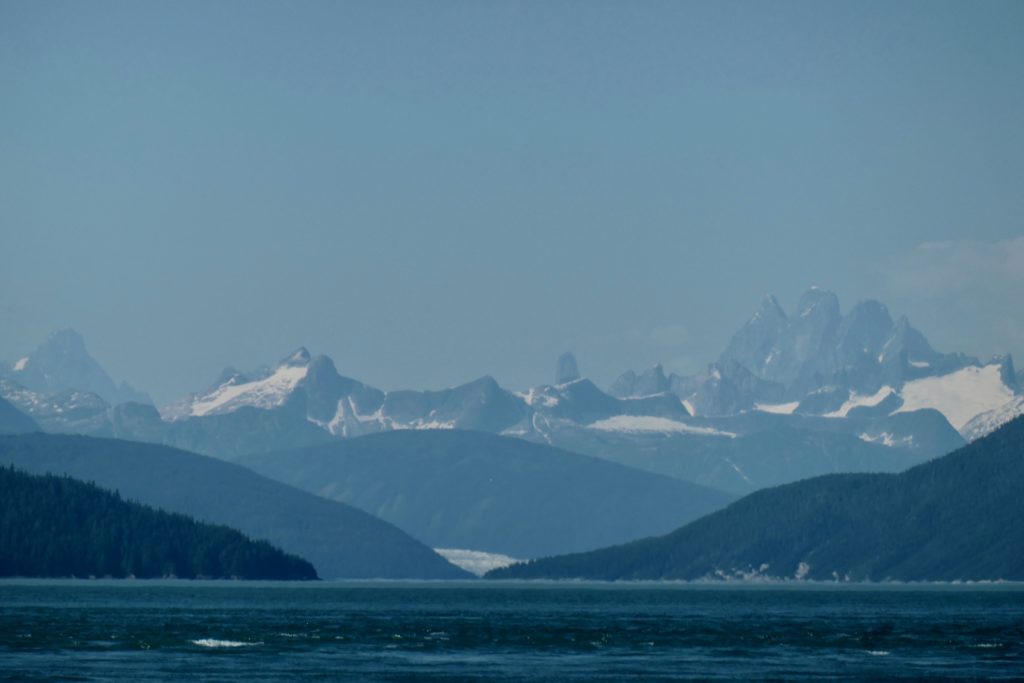
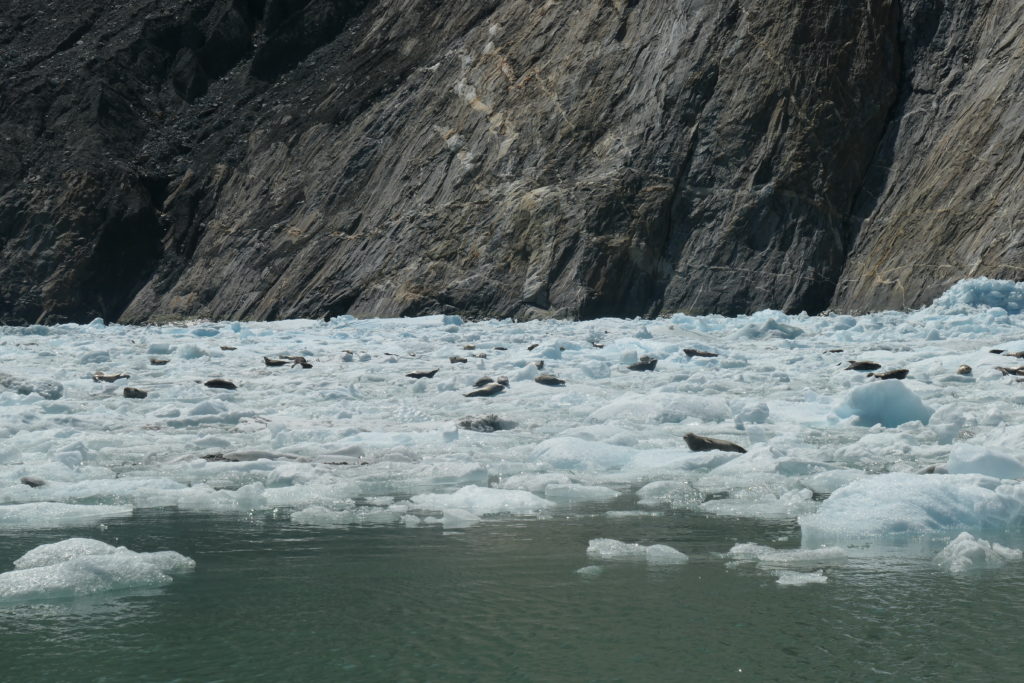
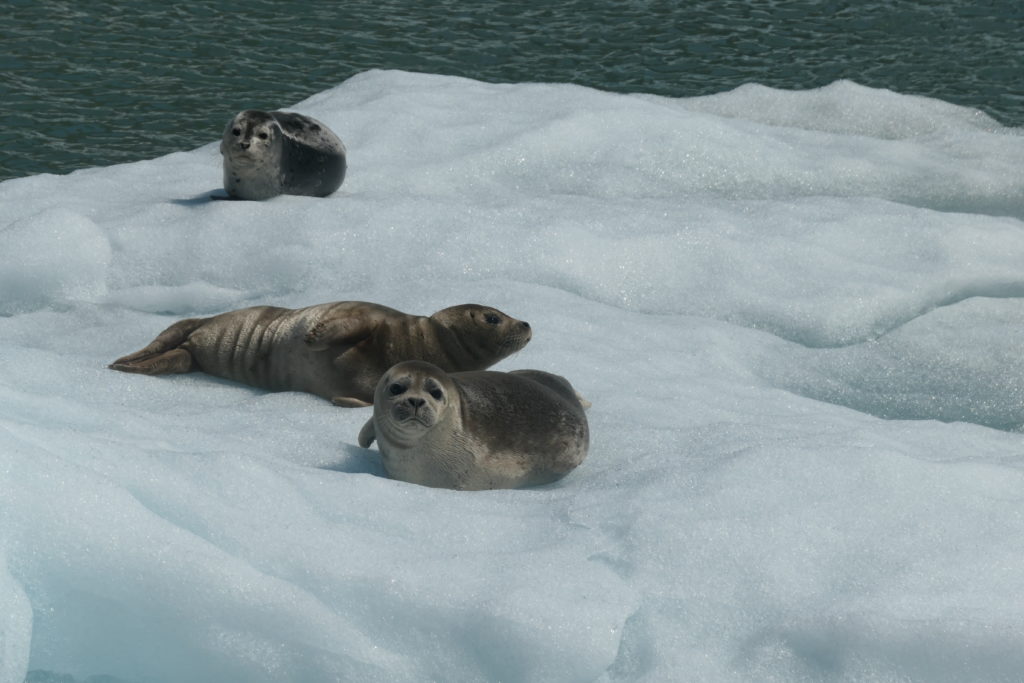
Our sister ship “Captain Cook” manoeuvring to get out of the ice flow
No whales or bears this time but on the way out of the fjord one of the larger icebergs split in two with an almighty crack and once again our boat was riding the wave.
Edgar with our Indian friends

On our return we had a bite to eat at one of the numerous restaurants lining the waterfront. During our absence another couple of cruise ships had joined the one already there and most places to eat were crowded. We climbed the steep hill back to the Alaska Capital Inn passing the lovely bear sculpture and the houses of parliament.

The Alaska Capital Inn is a true bed and breakfast experience. The aroma of fresh roasted coffee announced breakfast, which was served in the formal dining room with the table set with the finest china. Breakfast is a multi course affair. Our entrée was fresh local raspberries and cream with homemade granola, the main course was Oeufs en Cocotte served on a bed of potatoes with thick cut smoked ham and home baked rolls whilst the dessert was freshly baked cinnamon scrolls. You are encouraged to linger afterwards and enjoy coffee and conversation in an unrushed atmosphere, sharing plans with Linda and the other guests or recounting your previous days adventures.

We had decided to fly out that night to Seattle rather than catch an extremely early morning flight so I spent the morning lazing around the Inn catching up with paperwork and reshuffling my bags whilst Edgar went down the stairs again and had a look at the very fine Alaskan Museum. We had been there the last time we were in Juneau and found it very interesting but I balked at descending the hundreds of stairs to get there.

Our last meal in Juneau had to be Alaskan Crab and as Tracey owned a number of trawlers, hers were still considered the best. We headed for the smaller quieter venue with it’s outdoor tables and, what looked like, the original shack. It was situated away from the cruise ship docks. Unfortunately for us it was closed on a Sunday so we had to walk downtown to the other one. We had been warned that another cruise ship had come, there were now five in port and the docks were bedlam.
The tour operators’ tents were everywhere and in every spare space there were spruikers trying to sell tours and experiences. We had to push our way through, fending them off, until we reached Tracey’s. There, despite it being after 2pm, there was a long line reaching out the door. We went to another bar and had a drink and waited for things to quieten down. When we went back there was no line but every table was full. We decided that, seeing as we were there, we would have a couple of crab cakes and legs and eat them at the bar before leaving.

We did manage to get a table and enjoyed our meal but knew that we would not be coming back to this part of Alaska again. Whilst we were on the Outward Bound we had sat with a very pleasant Indian couple and their children. He worked for one of the companies owned by the cruise ships and spent his time divided between Alaska and the Caribbean and told us proudly that this was an expanding market. We had been told in Sitka that there was a strong push to put in bigger docks to cater for more and larger cruise ships.

If we had not been there before it became so popular, maybe we would have been more tolerant of the crowds and the hassle and the hard sell. Looking into the future, we will have to go further afield to find what we are looking for. One of the smaller Alaskan Marine Ferries, MV Tustumena, does a monthly run in the summer to Kodiak Island and out the Aleutian Chain, which might suit us better.

So it was farewell to Juneau and off to Toronto and to Andrew and Christine.